Klipsch Heresy II: The Iconic American Workhorse of High-Efficiency Sound
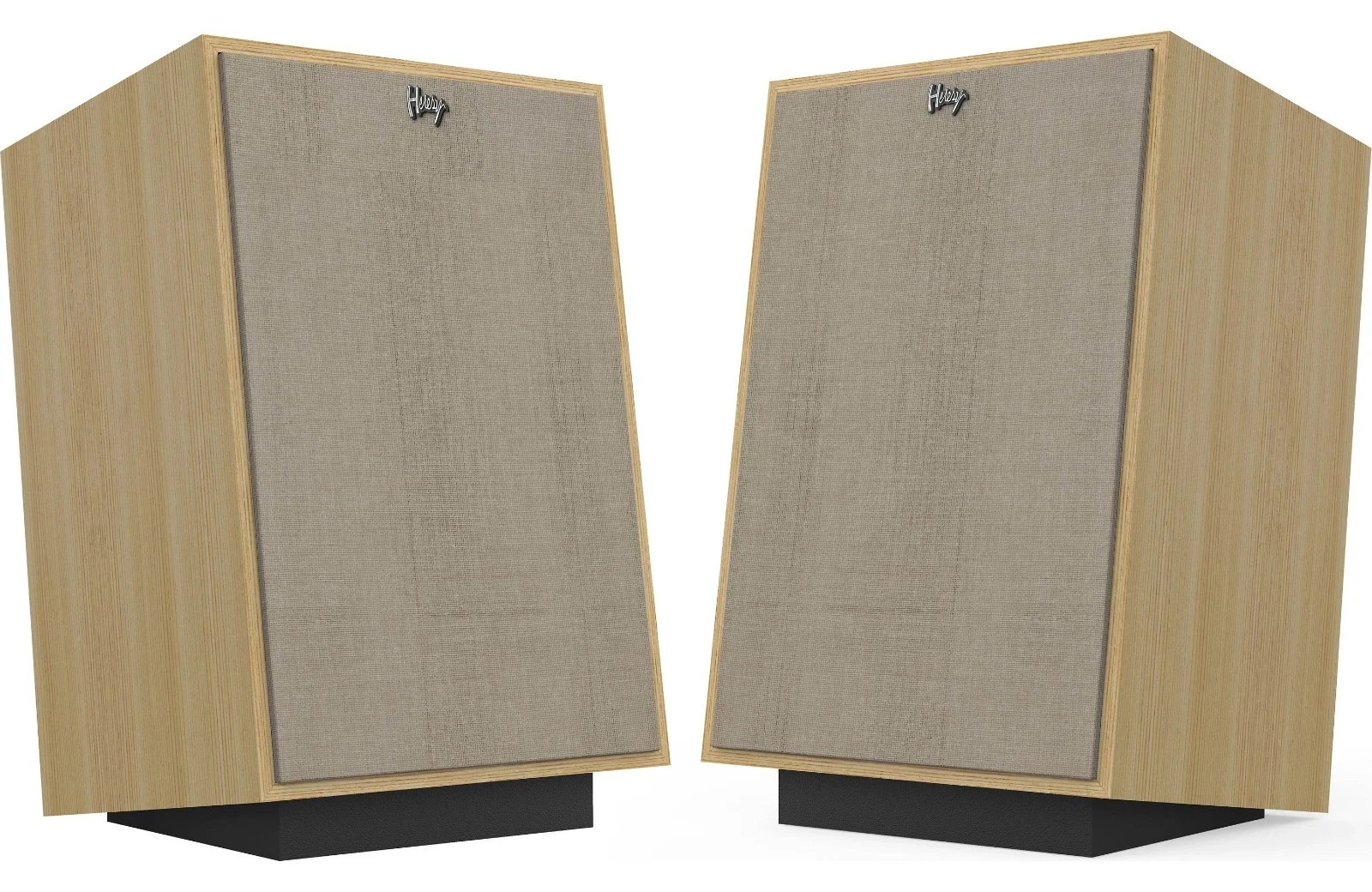
Few loudspeakers in the history of high-fidelity audio command the respect and enduring popularity of the Klipsch Heresy II. Released in 1985 as an evolution of the original Heresy (introduced in 1959), the Heresy II represents a golden era of American speaker design—engineered for maximum efficiency, dynamic impact, and long-term durability. Revered by audiophiles, musicians, and vintage gear collectors alike, the Heresy II stands as a testament to Paul W. Klipsch’s pioneering vision of high-sensitivity, horn-loaded loudspeaker technology made accessible for the home.
Historical Context and Evolution
Paul W. Klipsch, a visionary engineer and founder of Klipsch & Associates (now Klipsch Audio Technologies), developed the original Klipschorn in 1946—one of the first corner-loaded horn speakers and still in production today. The Heresy, introduced in 1959, was designed as a more compact, affordable alternative to the full-range Klipschorn, sacrificing some bass extension for room-friendliness and versatility.
The Heresy II, launched in 1985, refined its predecessor with modern materials and improved driver integration. Most notably, it replaced the original’s Alnico-magnet tweeter and midrange drivers with more powerful and reliable titanium diaphragm compression drivers using ferrite magnets. This upgrade enhanced output capability and durability while maintaining the signature Klipsch "liveness" and dynamic punch. The Heresy II remained in continuous production until 2005, when it was succeeded by the Heresy III—though many purists still regard the Heresy II as the sweet spot in the lineage.
Technical Specifications
| Feature | Specification |
| Model | Heresy II |
| Type | 3-way, bass-reflex, horn-loaded |
| Sensitivity | 99 dB @ 2.83V/1m |
| Nominal Impedance | 8 ohms (compatible with most tube and solid-state amps) |
| Frequency Response | 52 Hz – 20 kHz |
| Crossover Frequencies | 1.4 kHz (woofer to midrange), 4 kHz (midrange to tweeter) |
| Recommended Amplifier Power | 20 – 100 watts |
| Woofer | 12" fiber cone with rubber surround |
| Midrange | 1.75" titanium diaphragm compression driver with 90° x 60° Tractrix horn |
| Tweeter | 1" titanium diaphragm compression driver with 90° x 90° Tractrix horn |
| Enclosure | Medium-density fiberboard (MDF) with real wood veneer |
| Porting | Rear-firing bass reflex port |
| Dimensions (H x W x D) | 23.5" x 13.75" x 13.75" |
| Weight | 55 lbs per speaker |
| Finish Options | Walnut, black ash, rosewood |
Sound Quality: Power, Clarity, and Presence
The Klipsch Heresy II’s 99 dB sensitivity is its defining sonic attribute. This extraordinary efficiency means the speakers can produce high sound pressure levels with very little amplifier power—making them ideal partners for low-wattage tube amplifiers (such as vintage McIntosh, Audio Research, or EL34-based amps) as well as modern solid-state receivers.
Tonally, the Heresy II delivers a forward, dynamic, and rhythmically engaging presentation. The horn-loaded midrange and tweeter offer exceptional clarity and detail, particularly in the upper mids and lower treble, where vocals and acoustic instruments shine with lifelike immediacy. The 12" woofer provides solid bass down to 52 Hz, though it lacks the subterranean extension of larger floorstanders or modern powered subs—many owners augment the system with a subwoofer for full-range response.
Critically, the Heresy II avoids the sterility sometimes associated with high-efficiency designs. Its sound is warm, rich, and harmonically full, with a slight upper-midrange emphasis that brings instruments and voices to the forefront. This makes them exceptionally well-suited for rock, blues, jazz, and vocals—genres where timing, dynamics, and presence matter more than absolute neutrality.
Notable Features and Innovations
- Tractrix Horn Geometry: Klipsch’s proprietary horn design minimizes internal reflections and improves high-frequency dispersion, resulting in cleaner, more accurate treble.
- Titanium Diaphragms: More durable and responsive than earlier aluminum or Mylar domes, these drivers handle high SPLs with minimal distortion.
- Modular Crossover Design: The Heresy II uses a passive crossover with accessible, replaceable components—making repairs and upgrades feasible decades later.
- Real Wood Veneer Cabinet: Built with quality craftsmanship, the cabinet is both sonically inert and visually striking, especially in walnut or rosewood finishes.
Market Value and Collectibility
The Klipsch Heresy II enjoys strong collectibility in the vintage audio market. While never discontinued for long, their reputation has only grown since the 2005 introduction of the Heresy III. Well-maintained pairs in desirable finishes (especially walnut or rosewood) routinely sell for $800 to $1,500 per pair on the secondary market, with exceptional mint-condition units reaching $2,000 or more.
Factors influencing value include:
- Original finish condition (no veneer peeling or deep scratches)
- Presence of original grilles and feet
- Driver condition (especially the rubber surrounds on the woofer)
- Service history and recapped crossovers
Because they were widely produced and built to last, many Heresy IIs remain in circulation. However, original-spec models from the 1980s and early 1990s are often preferred over later production runs, which saw minor material changes.
Common Issues and Maintenance Tips
Despite their rugged build, aging Heresy IIs can develop issues:
1. Woofer Surround Deterioration: The foam or rubber surrounds on the 12" woofer often degrade after 30+ years, causing flapping or distortion. Refoaming or reconing by a specialist (e.g., Audio Classics or The Speaker Exchange) is a common and cost-effective fix ($75–$125 per driver).
2. Crossover Component Aging: Electrolytic capacitors in the passive crossover can dry out, leading to dull sound or tweeter failure. Recapping the crossover with modern metal-film and polypropylene capacitors ($150–$250 per pair) restores clarity and reliability.
3. Tweeter Diaphragm Tears: Rare but possible, especially if overdriven. Replacement or repair of the 1" compression driver is possible but more involved.
4. Grille Fabric and Feet: Original grilles may have torn fabric; replacement kits are available from Klipsch. Rubber feet can harden and crack—silicone replacements are a simple upgrade.
Regular cleaning with a wood-safe polish and keeping the speakers away from direct sunlight and humidity will preserve both appearance and performance.
Comparison to Similar Models
| Model | Sensitivity | Bass Extension | Horn Design | Notes |
| Klipsch Heresy III | 98 dB | 50 Hz | Improved Tractrix, modern materials | Smoother top end, but some say less "excitement" than II |
| Klipsch Cornwall II | 100 dB | 45 Hz | Larger midrange horn, dual woofers | Bigger, deeper, more powerful—ideal for large rooms |
| JBL L100 Classic | 91 dB | 45 Hz | Not horn-loaded (conventional dome) | Warmer, smoother, less dynamic than Heresy II |
| Altec 604E | 97 dB | 55 Hz | Dual concentric design | Legendary studio monitor; more neutral, less bass |
The Heresy II strikes a unique balance—more compact than the Cornwall, more dynamic than the JBLs, and more affordable than vintage Altecs. Its combination of efficiency, build quality, and sonic character makes it a standout in its class.
Final Thoughts
The Klipsch Heresy II is more than a speaker—it’s a piece of American audio heritage. Designed for durability, engineered for impact, and loved for its soulful, energetic sound, it continues to win converts over 40 years after its debut. Whether you're pairing it with a vintage Marantz receiver or a modern tube amp, the Heresy II delivers a listening experience that’s immediate, engaging, and deeply satisfying.
For vintage audio enthusiasts, it represents one of the best values in high-efficiency loudspeaker design—a true classic that remains relevant, repairable, and thrilling to listen to. If you find a well-cared-for pair, don’t hesitate: the Heresy II is one vintage gem that truly earns its legendary status.
eBay Listings



As an eBay Partner, we earn from qualifying purchases. This helps support our independent vintage technology research.
Related Models
- Klipsch Forte III
- Klipsch KLF-20
- Klipsch KG-2 (1990-1995)
- Klipsch Belle (1985)
- Klipsch Cornwall (1959) (1959)
- Akai AM-2850 (1975)
- Akai AP-206 (1975)
- Nakamichi BX-1 (1985)
- Acoustic Research research-ar-17 (1978)
- Acoustic Research AR-19 (1994)