Klipsch Cornwall II: The Epitome of High-Efficiency American Hi-Fi
The Klipsch Cornwall II stands as a towering achievement in the history of American loudspeaker design—a powerful, dynamic, and deeply musical floor-standing speaker that carries the torch of Paul W. Klipsch’s revolutionary vision. Introduced in 1984 as an evolution of the original Cornwall (1959), the Cornwall II refined its predecessor’s legendary horn-loaded design for modern amplification while maintaining the high sensitivity and visceral impact that audiophiles and music lovers have revered for decades.
Historical Context and Development
Paul W. Klipsch, an audio pioneer and engineering maverick, founded Klipsch & Associates in 1946 in Hope, Arkansas. His philosophy—“Efficiency is everything”—led to the creation of the Klipschorn, a corner-horn speaker introduced in 1946 that remains in production today. The original Cornwall, introduced in 1959, was designed as a free-standing alternative to the Klipschorn, offering similar horn-loaded performance without requiring room corners.
The Cornwall II, released in 1984, was a significant upgrade over the original model. It featured updated drivers, a revised crossover network, and improvements in cabinet construction and finish quality. The Cornwall II was part of a broader modernization of Klipsch’s professional and consumer lines during the 1980s, a period when the company began to embrace new materials and manufacturing techniques while staying true to its horn-loading heritage.
Produced until 2002, the Cornwall II bridged the gap between vintage craftsmanship and modern reliability. It was succeeded by the Cornwall III in 2003, which introduced further refinements but retained the core design language and performance ethos.
Technical Specifications
| Feature | Specification |
| Model | Cornwall II |
| Type | 3-way, bass-reflex, horn-loaded |
| Sensitivity | 102 dB @ 1W/1m |
| Nominal Impedance | 8 ohms (compatible with most tube and solid-state amps) |
| Frequency Response | 45 Hz – 20 kHz |
| Crossover Frequencies | 600 Hz (woofer to midrange), 1.4 kHz (midrange to tweeter) |
| Tweeter | 1" titanium diaphragm compression driver (K-77-T) with 90° x 90° Tractrix horn |
| Midrange | 1.75" titanium diaphragm compression driver (K-55-T) with 90° x 90° Tractrix horn |
| Woofer | 12" long-throw spun-cast aluminum cone with dual neodymium magnets |
| Enclosure | Bass-reflex with rear-firing port |
| Recommended Amplifier Power | 20 – 400 watts |
| Dimensions (H x W x D) | 32.5" x 14.5" x 13.5" (82.5 x 36.8 x 34.3 cm) |
| Weight | 64 lbs (29 kg) per speaker |
| Finish Options | American walnut veneer, black ash, rosewood |
Sound Quality Characteristics
The Klipsch Cornwall II is renowned for its high efficiency, dynamic punch, and lifelike midrange clarity. With a sensitivity of 102 dB, it can produce room-filling sound with just a few watts—making it a favorite among tube amplifier enthusiasts. The horn-loaded midrange and tweeter deliver exceptional detail and speed, with a forward, engaging presentation that brings vocals and instruments to the forefront.
The 12" woofer provides solid bass extension down to 45 Hz, though it benefits from room placement and, in larger spaces, a subwoofer for the deepest octaves. The bass is tight and articulate rather than overly warm, aligning with Klipsch’s emphasis on accuracy and dynamics over coloration.
The Tractrix horn design—featuring a mathematically derived flare for minimal sound reflection—contributes to a clean, coherent wavefront and controlled dispersion. This results in excellent imaging and a wide "sweet spot," allowing multiple listeners to enjoy a consistent soundstage.
Overall, the Cornwall II excels with rock, jazz, blues, and acoustic recordings. It renders electric guitars with startling realism, captures the breath of a saxophone, and handles orchestral crescendos with authority. While not "neutral" in the modern analytical sense, its sound is musically engaging, rhythmically alive, and deeply satisfying for those who value emotional connection over clinical precision.
Notable Features and Innovations
- Horn-Loaded Design: The use of compression drivers with Tractrix horns ensures high efficiency and low distortion, allowing the Cornwall II to play loudly without strain.
- Dual Neodymium Magnet Woofer: A rarity for its time, this powerful 12" driver delivers strong bass response with excellent transient control.
- Modular Crossover: The Cornwall II uses a modular, point-to-point wired crossover with high-quality components, making repairs and upgrades more accessible.
- Handcrafted Cabinet: Each speaker is built with multi-layered MDF and real wood veneer, finished to a high standard for both durability and aesthetics.
- Rear-Firing Port: Enhances bass coupling with the room and allows for flexible placement, though distance from the wall is critical for optimal tuning.
Market Value and Collectibility
The Klipsch Cornwall II is highly collectible among vintage audio enthusiasts. In excellent condition, a pair typically sells for $1,800 to $3,000 on the secondary market, with prices influenced by finish, originality, and driver condition. Walnut models are the most sought after, especially those with the original gold-badge branding.
Collectibility is driven by several factors:
- Historical Significance: As a direct descendant of Paul Klipsch’s original designs.
- Build Quality: Superior to many modern mass-market speakers.
- Compatibility with Tube Amps: A major draw for vintage hi-fi and single-ended triode (SET) amplifier users.
- Durability: Many Cornwall IIs from the 1980s and 1990s remain fully functional today.
Well-maintained pairs with original drivers and crossovers command premium prices. Refurbished units with upgraded components (e.g., new foam surrounds, modern capacitors) are also popular but may not appeal to purists.
Common Issues and Maintenance
While robustly built, the Cornwall II is not immune to age-related wear:
- Woofer Surround Deterioration: The original foam surrounds can dry out and crumble after 20–30 years. Re-foaming or reconing is a common and effective repair.
- Tweeter Diaphragm Fatigue: Early titanium diaphragms may develop micro-cracks, leading to distortion. Replacement with modern K-77-T units is recommended if issues arise.
- Crossover Component Aging: Electrolytic capacitors can degrade, causing tonal imbalances. Upgrading to modern film capacitors can improve clarity and reliability.
- Grille Fabric Wear: The original woven grilles may fade or tear. Replacement grilles are available from specialty vendors.
Regular maintenance includes dusting, checking terminal connections, and ensuring the rear port is unobstructed. For long-term preservation, avoid placing the speakers in humid or sun-exposed environments.
Comparison to Similar Models
| Model | Sensitivity | Key Differences |
| Klipsch Cornwall III | 101 dB | Improved crossover, modernized tweeter, slightly warmer tonal balance |
| Klipsch Heresy III | 99 dB | Smaller, more compact; shares midrange/tweeter but uses 10" woofer; less bass extension |
| JBL L100 Classic | 88 dB | Lower sensitivity; more colored, "hi-fi" sound; less dynamic range |
| Altec 604-8H | 97 dB | Professional studio monitor; requires external crossover; more neutral but less bass |
| Original Cornwall (1959) | 100 dB | Rarer and more valuable; lower power handling; older materials and construction |
The Cornwall II strikes a near-ideal balance between the raw power of the Heresy and the full-range capability of the Klipschorn. It outperforms most vintage speakers in efficiency and dynamics, making it a standout for both vintage collectors and serious music lovers.
Conclusion
The Klipsch Cornwall II is more than just a speaker—it’s a statement of audio philosophy. Born from Paul Klipsch’s lifelong pursuit of efficiency, accuracy, and emotional impact, it remains one of the most compelling vintage loudspeakers available today. Whether you're pairing it with a vintage Marantz tube amp or a modern high-current solid-state receiver, the Cornwall II delivers a thrilling, immersive listening experience that few speakers—old or new—can match.
For those seeking a blend of American engineering, timeless design, and heart-pounding musicality, the Cornwall II is not just collectible—it’s essential.
eBay Listings
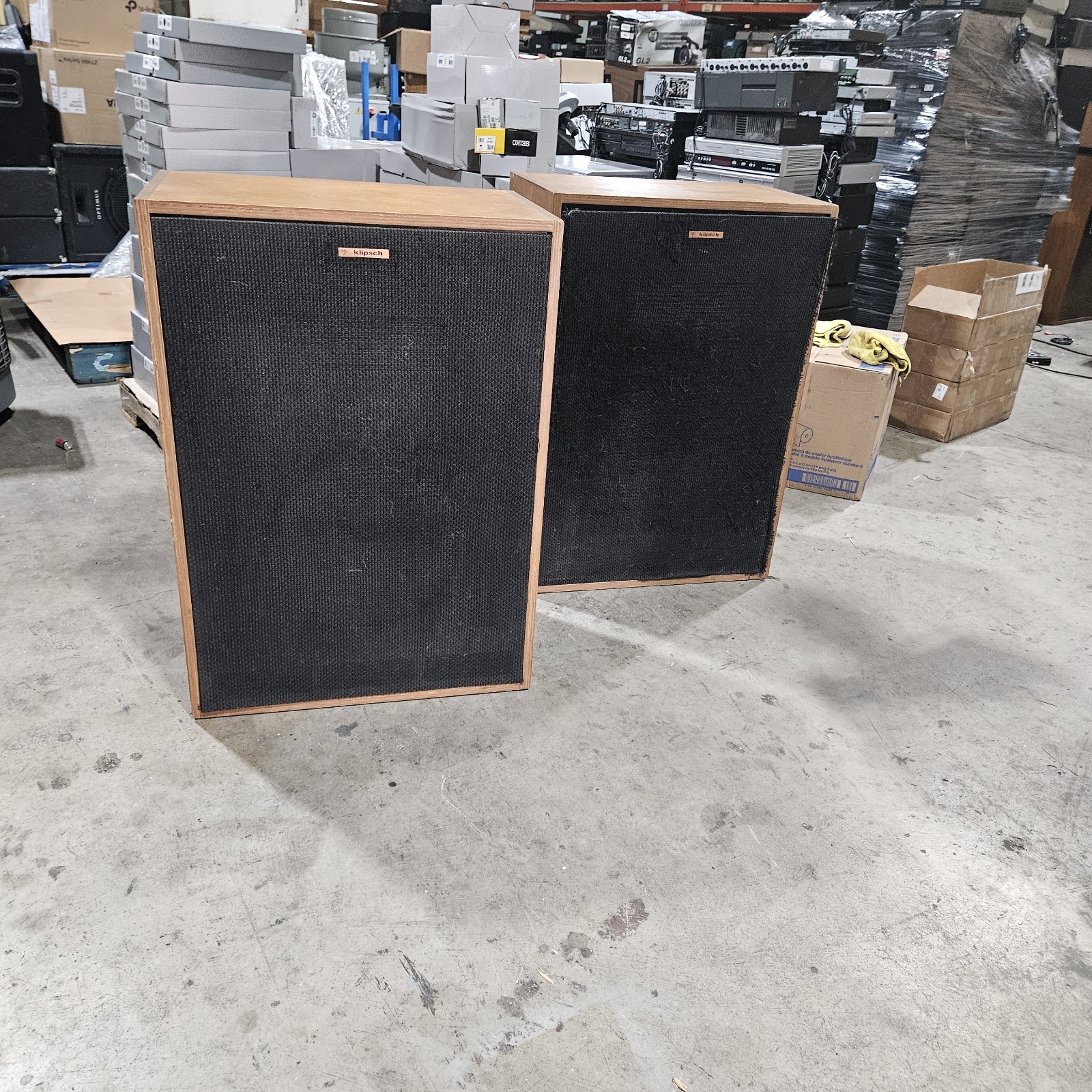

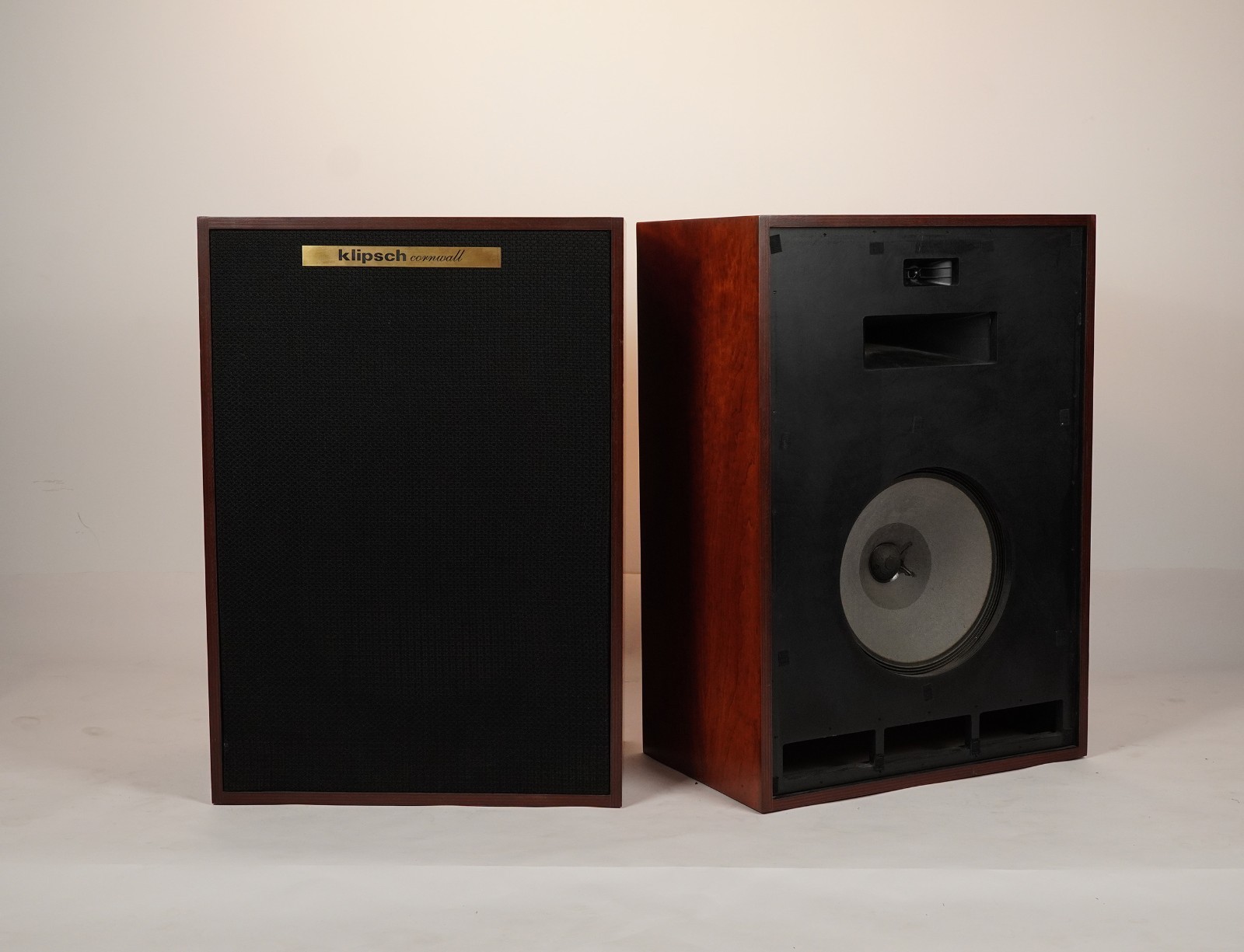
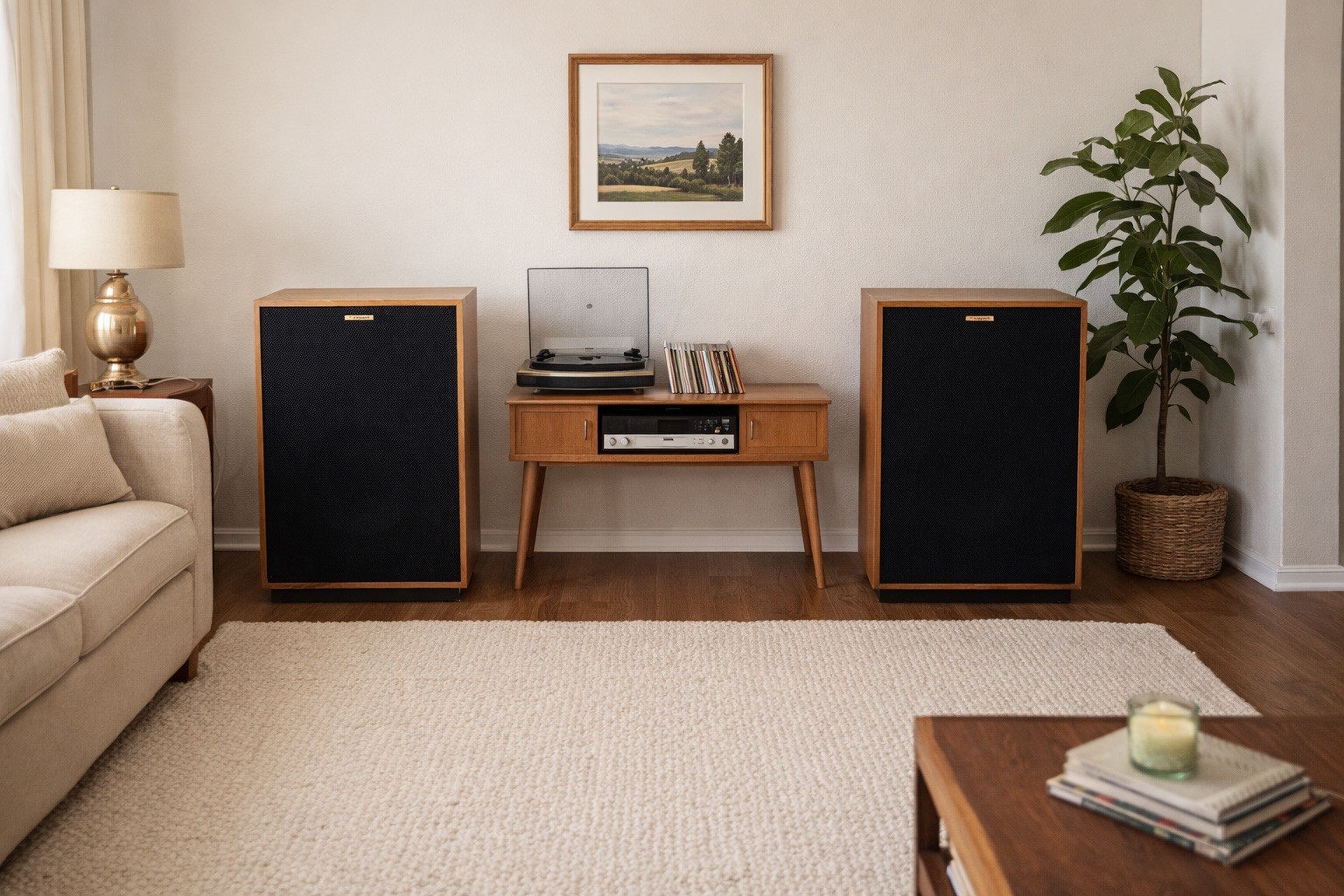
As an eBay Partner, we earn from qualifying purchases. This helps support our independent vintage technology research.
Related Models
- Klipsch Forte III
- Klipsch KLF-20
- Klipsch KG-2 (1990-1995)
- Klipsch Belle (1985)
- Klipsch Cornwall (1959) (1959)
- Akai AM-2850 (1975)
- Akai AP-206 (1975)
- Nakamichi BX-1 (1985)
- Acoustic Research research-ar-17 (1978)
- Acoustic Research AR-19 (1994)