Klipsch Cornwall (1959): The Crown Jewel of American Horn Loudspeakers
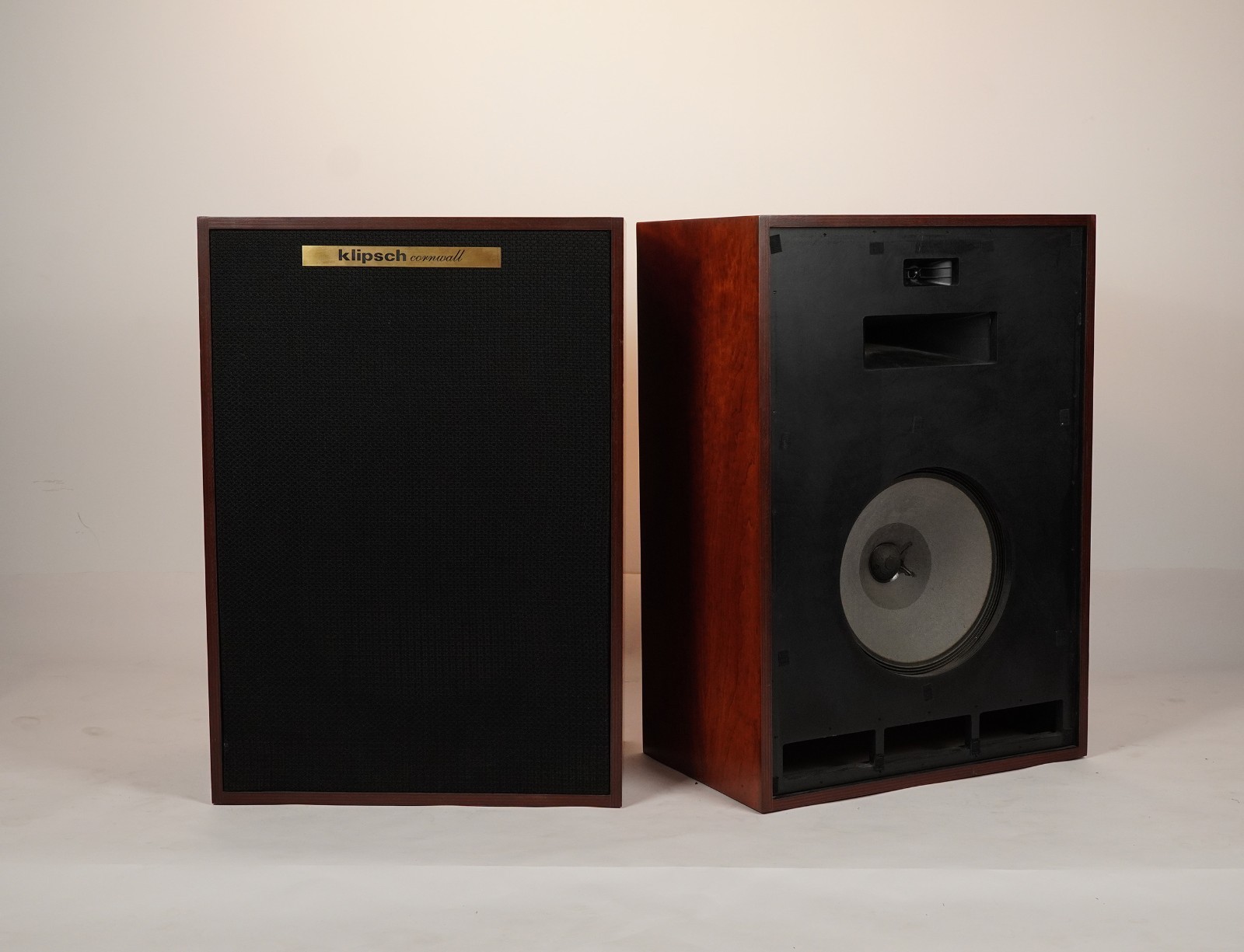
When discussing the pantheon of vintage loudspeakers, few names command as much reverence as the Klipsch Cornwall, first introduced in 1959 by audio pioneer Paul W. Klipsch. As a flagship model in Klipsch’s legendary lineup of horn-loaded speakers, the original Cornwall (often referred to by collectors as the "Cornwall I") represents a golden era of American high-fidelity engineering—where efficiency, dynamics, and realism were paramount. Though categorized broadly as "other" due to its unique hybrid design and historical significance beyond standard speaker classifications, the Cornwall stands as a towering achievement in loudspeaker design that continues to influence audiophiles and speaker builders to this day.
A Legacy Forged in Efficiency and Passion
Paul W. Klipsch, known affectionately as "PWK," founded Klipsch & Associates in 1946 with a singular mission: to reproduce live music with as much realism and dynamic range as possible. His breakthrough came with the Klipschorn (La Scala), introduced in 1946, which utilized corner-loading and folded horns to achieve full-range, high-efficiency sound in domestic environments. Building on that success, the Cornwall was introduced a decade later as a more practical, free-space alternative to the corner-horn Klipschorn—offering similar performance without requiring room corners for optimal bass loading.
The 1959 Cornwall was designed for audiophiles and music lovers who wanted the visceral impact of live sound in their living rooms. At a time when most speakers struggled to exceed 85 dB efficiency, the Cornwall boasted a sensitivity of 98 dB (1W/1m), allowing it to sing with just a few watts of tube amplifier power. This made it a favorite among early high-fidelity enthusiasts who prized the synergy between low-power amplifiers and highly efficient speakers.
Technical Specifications
| Specification | Detail |
| Model Year | 1959 |
| Type | 3-way, horn-loaded floorstanding speaker |
| Driver Complement | 15" woofer, 2" midrange horn, 1" tweeter horn |
| Crossover | Passive, 500 Hz / 4.5 kHz |
| Sensitivity | 98 dB (1W/1m) |
| Nominal Impedance | 16 ohms |
| Frequency Response | 45 Hz – 20 kHz |
| Enclosure Type | Bass-reflex (vented) with horn-loaded midrange and tweeter |
| Dimensions (H×W×D) | 33" × 17" × 14" (83.8 × 43.2 × 35.6 cm) |
| Weight | Approx. 85 lbs (38.5 kg) per speaker |
| Finish | Walnut veneer with black baffle |
| Recommended Amp Power | 5–100 watts (excellent with tube amps) |
Sound Characteristics and Performance
The sonic signature of the 1959 Klipsch Cornwall is nothing short of electrifying. Thanks to its horn-loaded midrange and tweeter, the speaker delivers extraordinary clarity, speed, and dynamic contrast. Vocals are rendered with startling presence—singers seem to occupy physical space in the room. Instruments like trumpets, saxophones, and strings leap to life with a natural timbre and projection that few non-horn speakers can match.
The 15-inch woofer, while not horn-loaded like the upper drivers, is coupled to a large vented cabinet that provides solid bass extension down to 45 Hz. While not as deep or controlled as modern subwoofers, the bass is fast, punchy, and well-integrated—perfect for jazz, rock, and orchestral music. The crossover design, though simple by today’s standards, is elegantly executed, minimizing phase distortion and preserving the time coherence that PWK so valued.
One of the most celebrated aspects of the Cornwall is its effortless dynamics. With 98 dB sensitivity, it responds instantly to musical transients—drum hits snap, pianos resonate, and crescendos unfold with breathtaking realism. This makes it an ideal match for low-wattage tube amplifiers like those from McIntosh, Fisher, or Marantz, which thrive when driving high-efficiency loads.
Notable Features and Innovations
The 1959 Cornwall was a masterclass in acoustic engineering, incorporating several innovations that set it apart:
- Dual-Horn Design: Unlike most speakers of its era, the Cornwall uses separate horns for the midrange and tweeter. The Tractrix® horn geometry—patented by Klipsch—ensures smooth high-frequency dispersion and reduced distortion.
- 16-Ohm Nominal Impedance: This was unusually high for the time and allowed the speaker to be driven efficiently by tube amplifiers, which typically had output transformers optimized for higher impedance loads.
- Modular Cabinet Construction: Built with robust plywood and finished in elegant walnut veneer, the cabinet was both acoustically inert and visually striking—designed to blend into mid-century living rooms.
- Passive Crossover with Minimal Components: The crossover network uses high-quality inductors and capacitors with a relatively shallow slope, preserving signal purity and phase alignment.
Perhaps most importantly, the Cornwall was one of the first commercially available speakers to bring theater-like dynamics into the home without requiring massive amplification—making high-fidelity audio accessible to a broader audience.
Common Issues and Maintenance
Owning a pair of original 1959 Cornwalls is a privilege, but it comes with responsibilities. These speakers are now over 60 years old, and several components may require attention:
- Woofer Surrounds: The original foam or treated cloth surrounds on the 15" woofers often degrade over time, leading to flapping or loss of bass. Re-coning or professional restoration is recommended.
- Midrange Diaphragms: The 2" compression driver can suffer from fatigue or tears in the diaphragm, especially if overdriven. Replacement or repair by a specialist is possible.
- Crossover Components: Capacitors may dry out, and inductors can corrode. A full inspection and recapping of the crossover is wise for long-term reliability.
- Grille Fabric and Finish: The original black grille cloth may be brittle or discolored. Reproduction grilles are available, and refinishing the cabinet can restore its vintage luster.
Finding original, unrestored pairs in good condition is rare and highly prized. Many surviving units have been professionally restored, which can preserve performance while extending lifespan.
Current Market Value and Collectibility
The original 1959 Klipsch Cornwall is a highly collectible piece of audio history. Unrestored pairs in working condition can fetch $2,500–$4,000, while fully restored, museum-quality sets often sell for $5,000 or more, especially if documented with original paperwork or rare finishes.
Collectors value the Cornwall not just for its sound, but as a piece of American engineering heritage. Its influence can be seen in every subsequent iteration—Cornwall II (1966), III (1976), IV (2002), and V (2014)—but the 1959 original remains the most revered for its purity of design and connection to PWK’s original vision.
Conclusion: A Timeless Icon
The 1959 Klipsch Cornwall is more than a speaker—it’s a statement of audio philosophy. In an age increasingly dominated by digital processing and compact designs, the Cornwall stands as a monument to analog purity, acoustic efficiency, and the belief that music should be felt as much as heard.
Its combination of thunderous dynamics, crystal-clear mids, and effortless high-frequency extension continues to awe listeners more than six decades after its debut. For vintage audio enthusiasts, the Cornwall represents the pinnacle of American loudspeaker design—a bold, uncompromising vision that still resonates today.
If you ever have the chance to hear a well-restored pair of 1959 Cornwalls driven by a quality tube amplifier, don’t hesitate. You’re not just listening to music—you’re experiencing audio history in motion.
eBay Listings

As an eBay Partner, we earn from qualifying purchases. This helps support our independent vintage technology research.
Related Models
- Klipsch Forte III
- Klipsch KLF-20
- Klipsch KG-2 (1990-1995)
- Klipsch Belle (1985)
- Klipsch Cornwall II (1984)
- Akai AM-2850 (1975)
- Akai AP-206 (1975)
- Nakamichi BX-1 (1985)
- Acoustic Research research-ar-17 (1978)
- Acoustic Research AR-19 (1994)