KLH Model 11 (1962–1969)
The world’s first transistorized portable stereo—clipped speakers, faux-leather suitcase, and all—this was dorm-room hi-fi that actually sounded good.
Overview
You unzip a Samsonite-style case, pop open the lid, and snap a speaker onto each end—suddenly, you’ve got a self-contained stereo system that looks like it rolled out of a 1960s college catalog. That’s the KLH Model 11, a portable phonograph that redefined what “compact” meant in the early days of stereo. Forget the wobbly suitcase players with tinny built-in speakers—this one had separate acoustic-suspension drivers, a real turntable, and a fully transistorized amplifier, making it a revelation in 1962. It wasn’t just portable; it was *serious* sound you could take to the dorm, the beach, or a friend’s apartment without sacrificing fidelity.
And yes, it cost a small fortune at $200 in 1965—over $1,800 today. But for that price, you got something no other portable offered: genuine high-fidelity engineering from Henry Kloss, the man who helped invent the acoustic suspension speaker at Acoustic Research before founding KLH. The Model 11 wasn’t a toy. It was a fully functional stereo system with FM radio, a built-in amplifier, and detachable speakers, all packed into a sleek, faux-leather case that doubled as protection and presentation. When closed, it looked like luggage. When open, it transformed into a mini hi-fi rig that could hold its own against many home systems of the era.
Positioned below the more luxurious Model 15 and Model 20, the Model 11 was KLH’s entry into the portable market—though “entry” is a misnomer given the price. It wasn’t the cheapest option, but it was the first to use all-transistor electronics in a portable stereo, eliminating the need for vacuum tubes and bulky power supplies. That meant lighter weight, cooler operation, and true portability with AC or battery power. While later knockoffs would flood the market with plasticky, record-chewing turntables, the Model 11 set the standard: solid construction, thoughtful design, and sound that rewarded careful listening.
Specifications
| Manufacturer | KLH (Kloss, Low, and Hoffman) |
| Production Years | 1962–1969 |
| Original Price | $200 (1965) |
| Type | Portable stereo phonograph system |
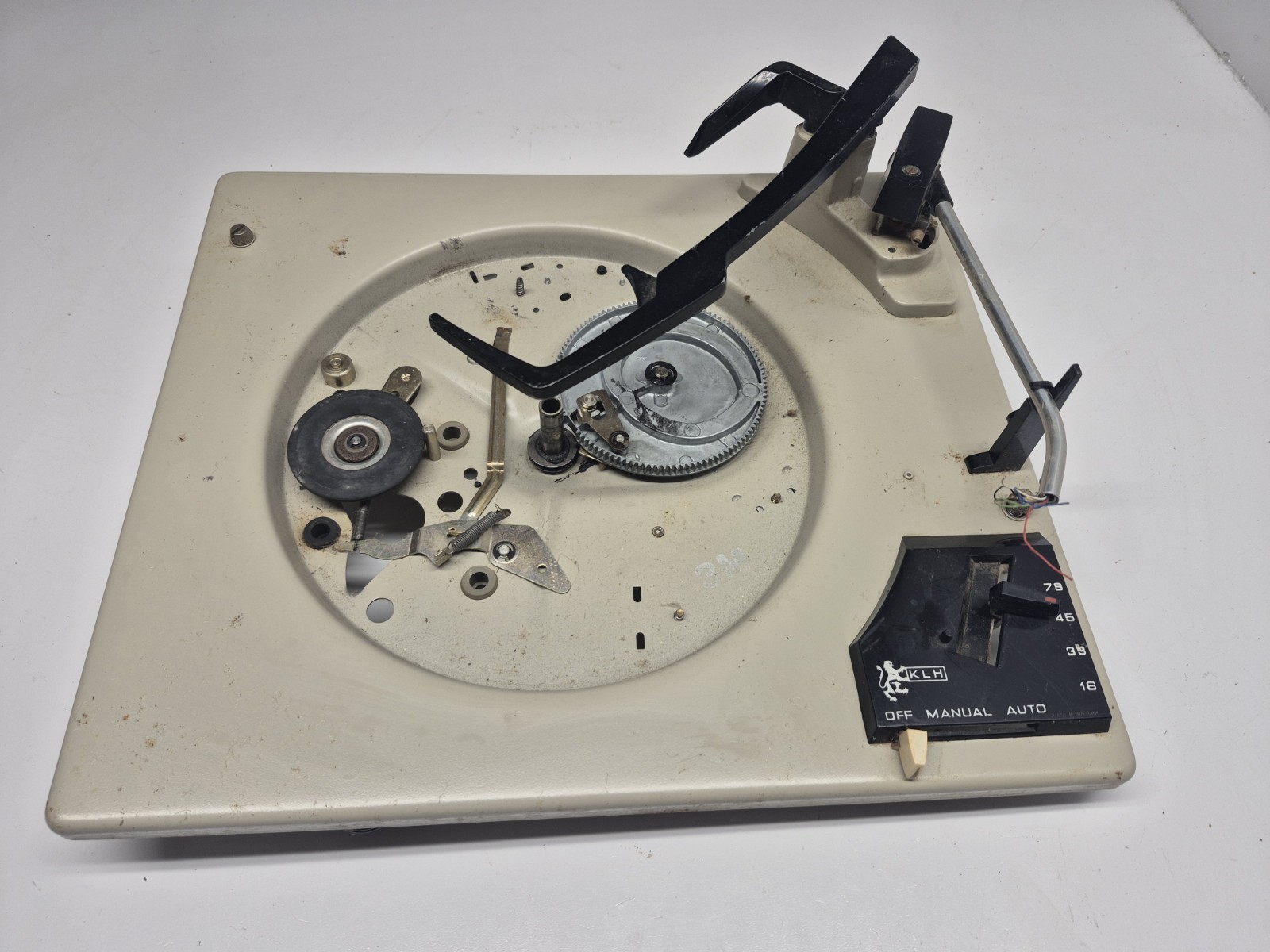
| Turntable | Modified Garrard record changer with 16, 33⅓, 45, and 78 RPM speeds |
| Cartridge | Non-removable Pickering V-15/AT-2 (integrated headshell) |
| Amplifier | Transistorized solid-state, stereo |
| Speakers | Two detachable acoustic suspension speakers with 3-inch drivers |
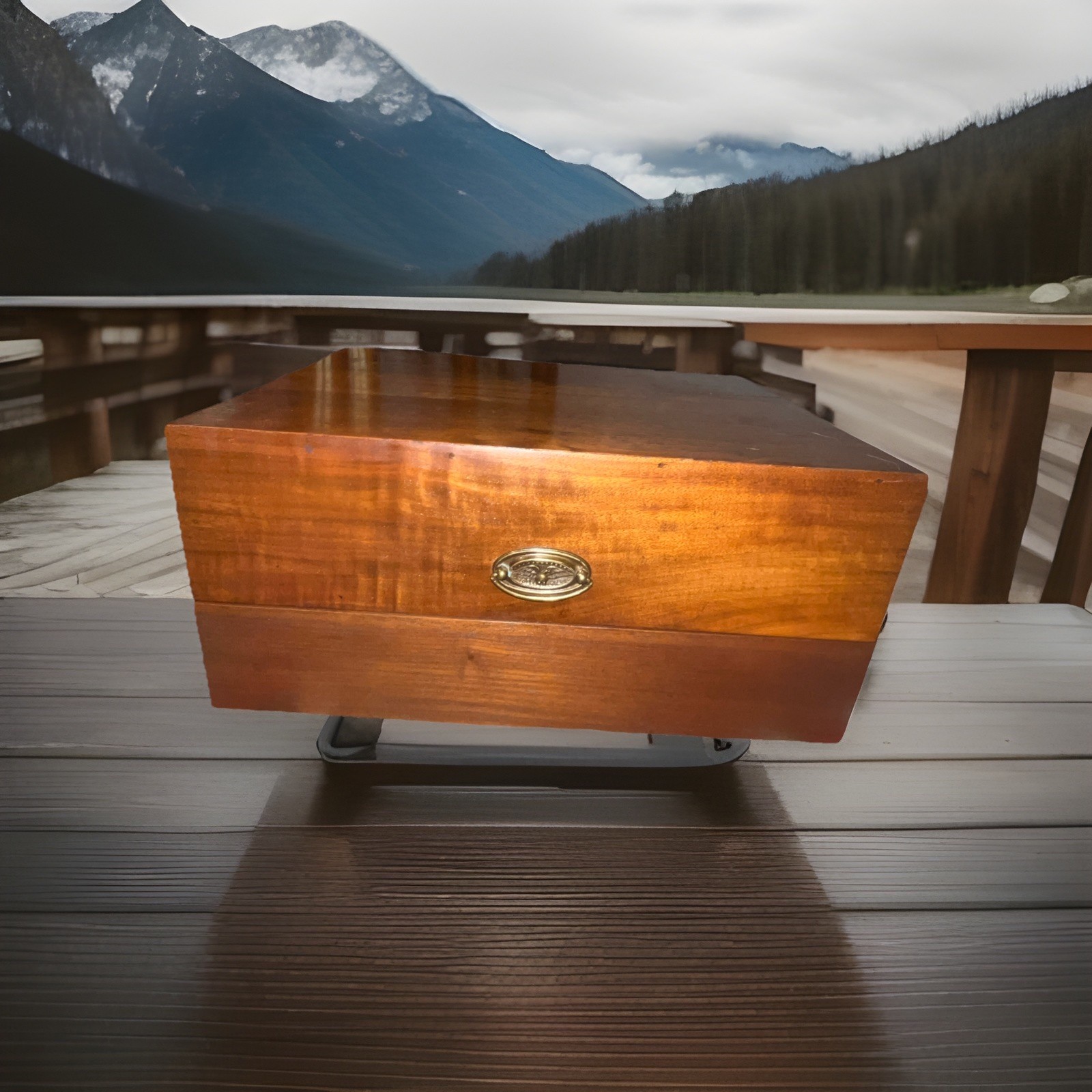
| Enclosure | Faux-leather covered suitcase with walnut-veneer control unit |
| Inputs | Phono (integrated turntable), FM radio, auxiliary input (later models) |
| Power Options | AC mains or external battery pack |
| Weight | Approx. 25 lbs (system with speakers and case) |
| Dimensions (closed) | 14" x 10" x 5" |
| FM Tuner | AM/FM or FM-only (varies by production year) |
| Special Features | Detachable speakers, vernier FM tuning dial (on later units), flip-up dust cover |
| Color | Mellow cream or ivory control panel with gray faceplate |
Key Features
Transistorized Before It Was Cool
The KLH Model 11 wasn’t just an early adopter of transistor technology—it was a pioneer. In 1962, most portable phonographs still relied on vacuum tubes, which meant heavy power supplies, heat buildup, and fragility. The Model 11’s all-transistor design eliminated those issues, allowing for a truly portable system that could run cool and quiet for hours. This wasn’t a gimmick; it was a deliberate engineering choice to deliver consistent performance without the maintenance headaches of tubes. The amplifier section, while modest in power, provided clean, low-distortion output that let the acoustic suspension speakers breathe. It was a system built for real music lovers, not just casual listeners.
Acoustic Suspension in a Suitcase
KLH didn’t compromise on speaker design just because the system was portable. The detachable speakers used the same acoustic suspension principle that made the brand famous—sealed enclosures with long-throw drivers for tight, controlled bass. For their size, the 3-inch speakers delivered remarkable clarity and low-end extension, especially when compared to the ported or open-back designs common in other portables. Because the speakers were separate from the turntable and amp, they avoided the cabinet resonance issues that plagued all-in-one systems. You could place them apart for stereo imaging, or clip them on for convenience—the flexibility was part of the genius.
Garrard Turntable with Real Fidelity
Inside the case sat a modified Garrard record changer, not some cheap OEM unit. KLH worked with Garrard to customize the mechanism with a low-mass tonearm and precision motor pulley to reduce rumble and wow. Paired with the Pickering V-15 cartridge—integrated as a non-removable headshell unit—the turntable delivered tracking accuracy and tonal balance that outperformed many home systems of the era. The 78 RPM capability was a nod to the lingering shellac era, and the 16 RPM option catered to spoken-word records and educational content, though that format never really caught on. Still, the inclusion showed KLH was thinking about real-world use, not just specs.
Historical Context
The early 1960s were a turning point for consumer audio. Stereo was no longer a luxury for audiophiles—it was becoming mainstream, and college students were among the first adopters. The KLH Model 11 arrived at exactly the right moment: a time when young buyers wanted quality sound but didn’t have space or budget for a full console system. Henry Kloss understood this. He’d already proven his ability to democratize high-fidelity with the Model Eight radio, and the Model 11 extended that philosophy into portable form. It competed not with tabletop radios, but with emerging Japanese portables and the growing tide of low-end record players flooding the market.
What set the Model 11 apart was its integrity. While companies like Sony and Philips were experimenting with compact systems, none matched KLH’s commitment to acoustic performance. The Model 11 wasn’t trying to be cute or retro—it was functional, elegant, and serious. It influenced a generation of all-in-one systems, even if most imitators missed the point. Later models like the KLH Model 15 and Model 20 refined the formula with better tuners and upgraded speakers, but the Model 11 was the original statement: portable didn’t have to mean compromised.
Collectibility & Value
Today, the KLH Model 11 is a sought-after piece among vintage audio collectors, especially in fully functional condition with original speakers and case. Survivors are relatively rare—not because they were uncommon, but because their age and complexity make them prone to failure. Many were used hard in dorms, stored in attics, or cannibalized for parts. Finding one that powers on, plays records, and delivers balanced stereo sound is a win.
Prices vary widely based on condition. Non-working units or those missing speakers can go for $150–$300. Fully restored, tested systems with original documentation and packaging can fetch $600–$900, especially if they include the battery pack or original stylus. The cream-colored turntable and gray faceplate are particularly desirable, giving the unit that authentic mid-century aesthetic.
Common failures include dried-out capacitors in the amplifier, worn belts in the turntable (though the Garrard mechanism is generally robust), and degraded wiring in the speaker cables. The non-removable cartridge is a double-edged sword: it prevents misalignment but makes stylus replacement the only upgrade path. Owners report that channel imbalance—often due to failing coupling capacitors—is a frequent issue, and recapping the amp is almost a prerequisite for reliable use. The faux leather can crack or peel, and replacement grilles are hard to find, though some specialists offer reproductions.
If you’re buying, test everything: all speeds, FM tuning, volume balance, and speaker output. Check for corrosion on battery contacts and ensure the case latches securely. A working Model 11 is a joy to own; a broken one is a restoration project that can cost more than the unit’s value.
eBay Listings


As an eBay Partner, we earn from qualifying purchases. This helps support our independent vintage technology research.
Related Models
- KLH KLH-21-System (1964)
- KLH model-12
- KLH model-21
- KLH model-345-(little-baron)
- KLH model-eight-fm-radio (1961)
- Akai AM-2850 (1975)
- Akai AP-206 (1975)
- Nakamichi BX-1 (1985)
- Acoustic Research research-ar-17 (1978)
- Acoustic Research AR-19 (1994)