Kenwood TS-940S (1985–19xx)
Eighteen and a half kilograms of 1985 Japanese transceiver engineering. Kenwood built it as the flagship for the ham shack.
Overview
Lift a TS-940S and the first thing you notice is the mass. At 18.5 kg, this is not a rig you slide around the desk on a whim. The weight comes from what's inside: a quadruple-conversion superheterodyne receiver, a 100-watt transmitter, and in the TS-940SAT variant a motorized automatic antenna tuner that adds another 1.5 kg and brings the total to 20 kg. Kenwood (then still Trio-Kenwood in some markets) built this in Japan starting in 1985, and the spec sheet shows the intent: a radio for the serious operator. Universal Radio's own catalog copy put it plainly, calling the TS-940S "a serious radio for the serious operator."
The receiver is where the money went. For AM, SSB, CW, and FSK the TS-940S runs a quadruple-conversion chain - 45.05 MHz down to 8.83 MHz, then 455 kHz, then a 100 kHz fourth IF. FM uses a triple-conversion path instead. Add an 80 dB image rejection figure across 1.8-30 MHz and you have a front end that can pull weak signals out of a crowded band. On SSB, CW, and FSK the set is rated at 0.2 µV for 10 dB S/N across 1.8-30 MHz, and down in the 0.15-0.5 MHz longwave region it manages 1 µV. On FM the 1.8-30 MHz figure is 0.5 µV for 12 dB SINAD. Those are quiet numbers for a 1985 transceiver, and they explain the reputation the 940 built.
Coverage runs the full amateur HF spectrum, 160 through 10 meters including the WARC bands, with general-coverage receive from 0.15 to 30 MHz. Tuning steps go as fine as 10 Hz, and frequency stability is rated at ±10 ppm from -10 to +50°C. Five modes are supported: AM, FM, SSB, CW, and FSK. Memory is generous for the period, with 40 regular channels in four banks, four program scan pairs, and battery-backed RAM storage. There's no dedicated repeater shift. Operators use VFO A/B split instead, which is the right approach for an HF rig anyway.
On transmit, the TS-940S is rated at approximately 100 W output on SSB (PEP), CW, FSK, and FM, with AM dropping to roughly 60 W. The 100% duty cycle rating means this transmitter is designed to key down and stay there, which helps for RTTY, AM, and long-winded CW operators. One source lists "250W PEP" as a maximum RF output figure, but that conflicts with the 100 W numbers that appear consistently across the manual and other documentation. Treat the 250 W claim as an input-power or marketing figure rather than a real output rating. Modulation is low-level AM, reactance FM, and balanced SSB, with factory FM deviation set at ±5 kHz.
Physically, the TS-940S is a 401 × 141 × 350 mm desktop box that runs on 120, 220, or 240 VAC through a standard 3-pin IEC C14 connector. Current draw is 80 W in receive and up to 510 W on transmit at full output. The antenna connection is a single SO-239 at 50 ohms, or 20 to 150 ohms when the AT-940 tuner is engaged. An external speaker connects via 3.5 mm jack at 8 ohms, and the internal AF stage delivers 1.5 W at 10% distortion into that load. That's not a lot of audio power, but it's adequate for communications work.
Key Features
The Quadruple-Conversion Receiver
Most transceivers of the era used a triple-conversion design. The TS-940S goes one stage further for its primary modes, adding a 100 kHz fourth IF after the 455 kHz third. The full chain runs 45.05 MHz → 8.83 MHz → 455 kHz → 100 kHz on AM, SSB, CW, and FSK, while FM stays at triple conversion. The benefit is selectivity: the 940's SSB/CW/FSK filter shape is rated at 2.4 kHz at -6 dB and 3.6 kHz at -60 dB, which is a reasonably steep skirt for the period. AM operators get a choice between narrow (2.4/3.6 kHz) and wide (6/15 kHz) response, and FM runs 12 kHz at -6 dB dropping to 2 kHz at -60 dB.
40 Memories in Four Banks with Battery Backup
Forty channels doesn't sound like much next to software-defined radios with thousands of memory slots, but in 1985 it was a serious allocation. The TS-940S divides them into four banks of ten, adds four program scan pairs, and backs it all up with a battery so your frequencies survive a power cycle. The manual notes two separate backup batteries: one for memory, rated for five years, and one for the clock/timer, rated for three years. When those batteries die, and they will, the radio loses its memories. This is one of the more commonly discussed maintenance items on the platform.
Built-In Automatic Antenna Tuner (TS-940SAT)
The TS-940S was sold both with and without a built-in automatic antenna tuner. The tuner-equipped version is designated TS-940SAT. The AT-940 tuner covers all amateur bands from 160 through 10 meters, including the WARC bands, and matches 20 to 150 ohms unbalanced. It monitors reflected power and final-stage collector current, then drives motorized tuning elements to find the lowest SWR. A front-panel AUTO-THRU switch bypasses the tuner entirely when you don't want it in the signal path. The manual is explicit that you should complete automatic tuning before running full power, and that the tuner wants a resonant 50-ohm antenna with SWR of 1.5:1 or better as its starting point.
Dual Noise Blankers, Notch Filter, and Interference Tools
Kenwood loaded the 940 with interference-fighting hardware: dual noise blankers, a notch filter, VOX, an attenuator, and a 24-hour clock with timer. The notch is adjustable and the manual includes a calibration procedure using the internal marker oscillator to null it precisely. For operators dealing with adjacent-channel QRM on a crowded 40-meter band, that notch is not a luxury — it's the difference between copyable and not.
Optional Filters and the Accessory Ecosystem
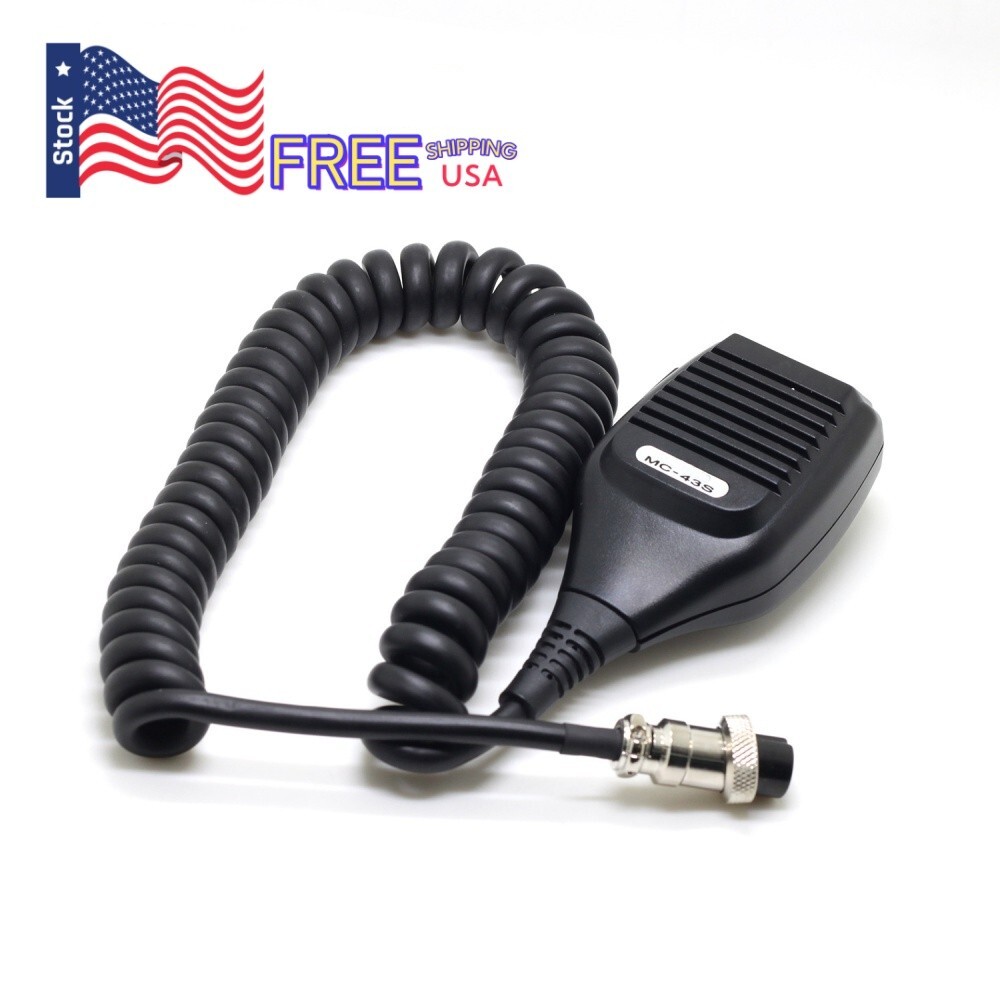
The stock filters can be supplemented with optional crystal filters installed in the IF chain: the YG-455C-1 (500 Hz CW at 455 kHz), YG-455CN-1 (250 Hz CW at 455 kHz), YK-88A-1 (6 kHz AM at 8.83 MHz), and YK-88C-1 (500 Hz CW at 8.83 MHz). Kenwood also offered a deep accessory list: the SM-220 station monitor (a 10 MHz oscilloscope with two-tone generator and, with the optional BS-8, pan-display spectrum analysis), the SO-1 TCXO for improved frequency stability, the SP-940 external speaker with selectable audio filters, the VS-1 voice synthesizer, and a full range of microphones from the MC-42S hand mic up to the MC-80 and MC-85 desk mics. The IF-10B digital interface board was also available for computer control.
Modes, Tuning, and Stability
The five modes - AM, FM, SSB, CW, and FSK - cover essentially everything an HF operator needs. Tuning resolution goes down to 10 Hz, and the ±10 ppm stability spec (±10 ppm over -10 to +50°C) is respectable for a stock radio. Operators wanting better could add the SO-1 TCXO. The 8-pin metal-locking-ring microphone connector accepts mics from 500 ohms to 50 kilohms impedance, which leaves plenty of room for aftermarket and vintage microphones.
Collectibility & Value
The TS-940S has a devoted following. One long-term owner quoted in a repair-focused PDF called it "one of the greatest transceivers ever produced," and a YouTube reviewer from The Hague described it as "one of the best HF transceiver made by Kenwood." An eBay buyer with 32 years in the hobby called it "one of the best radio made" and noted he was on his second example. That kind of loyalty keeps prices from collapsing, but it doesn't make the 940 a low-maintenance purchase.
The most commonly reported problem is the power supply. One owner of both a TS-930 and a TS-940 put it bluntly: "The 930 runs great, the 940 is sick with power supply problems." Aftermarket upgrade kits exist specifically to address this, and at least one customer described the installation as "almost plug and play." A separate, well-documented issue is reciprocal mixing noise, discussed as far back as a conversation with International Radio about the TS-940S. There's also a known factory assembly error in the RF preamp and second mixer FETs - two 2SK125 devices installed in the wrong orientation - that a detailed field analysis suggested could cost more than 10 dB of gain and degrade AGC performance. Correcting it is a matter of desoldering and rotating the FETs, and the improvement has been measured.
Other repair topics that circulate among owners include low power output and low sensitivity, PA driver replacement, remote relay elimination, and expanded transmit modification. Display failures are common enough that spare displays trade hands between operators. Battery replacement for the memory and clock backup is routine maintenance. The practical advice from the owner community is to inspect carefully before buying, because clean examples and problem examples both exist in quantity. Current market prices fluctuate and no reliable dated pricing was available for this page - buyers should check recent sold listings before committing.
eBay Listings



As an eBay Partner, we earn from qualifying purchases. This helps support our independent vintage technology research.