Kenwood TS-450S (1991–199x)
Twenty point five amps of transmit current, a triple-conversion front end, and a chassis shared with the TS-690S. It's an HF rig that did the basics, and did them for decades.
Overview
The TS-450S is a 100-watt HF transceiver built in Japan starting in 1991. RigPix Database lists it as "1991-199x (Discontinued)," and the exact end year is undocumented. It transmits on 10 through 160 meters plus the WARC bands, and receives from 0.5 to 30 MHz. It weighs 6.3 kg (13.9 lb) without the ATU option and measures 270 × 96 × 305 mm. That's substantial on a desk, but not a boat anchor.
The receiver is a triple-conversion superheterodyne with a 73.05 MHz first IF, 8.83 MHz second, and 455 kHz third. The high first IF pushes image response out to a 70 dB rejection figure, and the 455 kHz third IF is where the optional CW and SSB filters drop in. Sensitivity in SSB/CW/FSK is quoted at 0.2 µV from 1.62 to 21.5 MHz and 0.13 µV above 21.5 MHz. Those numbers put it in the competent-for-DX class rather than the bench-queen class.
Power output is 100 W in CW, FSK, SSB, and FM, and 40 W in AM. Current draw at full transmit is a claimed 20.5 A from a 12-16 VDC supply through a 6-pin Molex. That number decides whether your shack power supply is adequate. Receive draw is a friendlier 2 A maximum. The antenna port is a single SO-239 at 50 ohms, widening to 20-150 ohms only if the AT-450 internal tuner is fitted.
Owners describe it as "a great radio and not a huge budget required to enjoy one of the forever classics," and that reputation has held as the radio has aged. It is not a contest-grade rig and never pretended to be. It is an all-mode HF transceiver that tunes in 1 / 10 / 100 Hz steps (or 1 / 2 / 5 / 9 / 10 / 500 kHz depending on programming), and stores 90 regular and split memories plus 10 programmed scan channels on RAM backed by a lithium battery.
Key Features
Triple Conversion Superheterodyne Receiver
The receive path runs 73.05 MHz → 8.83 MHz → 455 kHz. The high first IF makes the 70 dB image rejection figure achievable, and the 455 kHz third IF is where the optional narrow filters (YG-455C-1 at 500 Hz, YG-455CN-1 at 230 Hz) install. Selectivity is quoted as 2.2 kHz at −6 dB and 4.4 kHz at −60 dB in SSB/CW/FSK, 5 kHz / 18 kHz in AM, and 12 kHz / 25 kHz in FM. The AM figure is wide by modern standards, but that's what the stock filter gives you.
AIP and Dual Noise Blanker
RigPix lists "AIP. Dual NB." as headline features. AIP - Advanced Intercept Point - is a switchable front-end configuration aimed at strong-signal environments. The dual noise blanker gives two different blanking behaviors for different noise types. Both help more on 40 and 80 meters at night than on a quiet 10-meter opening.
90 Memories Plus Split VFO
The TS-450S stores 90 regular and split memories plus 10 programmed scan channels, held up by a lithium battery on the RAM. There is no dedicated repeater shift. RigPix is explicit about this: "No dedicated. Use VFO A/B split instead." For HF operators that's fine, since split is the important function for working DX, and it's there.
Front Panel Controls and Metering
RigReference lists keypad entry, VOX, 100 memories, XIT, RIT, notch, IF shift, squelch, and a digital meter. The XIT range is documented in the manual as more than ±1.1 kHz in 10 Hz steps or more than ±2.2 kHz in 20 Hz steps. That's useful for nudging your transmit frequency when the DX station is listening slightly off. IF shift and notch are the two controls that matter most on a crowded band.
Output Power and Modes
AM / FM / SSB / CW / FSK are all supported. Transmit power is 100 W in CW, FSK, SSB (PEP), and FM; AM tops out at 40 W. The modulation schemes are conventional for the era: low-level modulation on AM, reactance modulation on FM, balanced modulation on SSB. Factory FM deviation is ±5 kHz normal or ±2.5 kHz narrow. The manual quotes unwanted sideband suppression at better than 40 dB and spurious emissions at better than −50 dB.
Frequency Stability and the SO-2 Option
The stock reference oscillator is rated at better than ±10 ppm from −10 to +50 °C. Kenwood offered the SO-2 TCXO as an option. The service documentation describes it as a 20 MHz unit good to ±0.5 ppm over the same temperature range, a twentyfold improvement for operators who care about long-term stability on digital modes or narrow CW. The SO-2 is a jumper-selectable swap on the PLL board, and the service manual documents it in detail.
Historical Context
The TS-450S was built in Japan from 1991 onward and sold alongside the TS-690S, which shares the same chassis. Universal-radio.com states the relationship: "The Kenwood TS-690S is similar to the the Kenwood TS-450S, but adds coverage of the 6 meter amateur band with 50 watts and a separate antenna jack on the rear panel." A YouTube description puts it more bluntly: "kenwood ts690s(ts450s same chassis minus 6m)."
Two factory variants existed. The base TS-450S shipped without an internal tuner. The TS-450SAT shipped with the AT-450 internal automatic antenna tuner factory installed, covering 10-80 m. That matters on the used market, because the AT-450 is not trivially retrofittable and the tuner changes the antenna impedance window from a fixed 50 ohms to 20-150 ohms.
Kenwood supported the model with a documented service bulletin program. Service Bulletin SB-1036 is on record, and a December 8, 1993 bulletin addresses a driver transistor parts change. Specifically, the 2SC2509 driver transistors were no longer available, which hints at how long the production run extended. The exact discontinuation year is not documented in available sources; RigPix simply says "199x."
Collectibility & Value
Collectibility data for the TS-450S is thin. The only concrete market price in available research is a single 2021 listing on OLX Ukraine for a TS-450SAT at UAH 13,000. That's one data point, one country, one year. It is not enough to establish a price trend, and no current US or European market pricing has been documented.
What is documented is the failure pattern. A widely-circulated YouTube video title refers to "a very common audio output problem seen many times" on the TS-690S/TS-450S platform. The driver transistor bulletin from 1993 is another known service item. Buyers should expect that a 30-year-old example will need attention in the audio output stage eventually. The service manual is available, at 127 pages, with adjustment procedures for microphone sensitivity and tone side level, which makes the repair tractable for anyone with a bench.
Parts availability is limited but not zero. At least one vendor advertises "Kenwood TS-450S Original Speaker Used," which suggests the used-parts ecosystem is still functioning. The 60-meter band mod is documented in video form, and the SO-2 TCXO and the optional 455 kHz and 8.83 MHz filters show up on the used market periodically. None of this substitutes for a real price guide.
Owners describe it as "a great radio and not a huge budget required to enjoy one of the forever classics." That sentiment has kept demand steady without pushing prices into collector territory. The TS-450S is a working radio, not a shelf piece.
eBay Listings
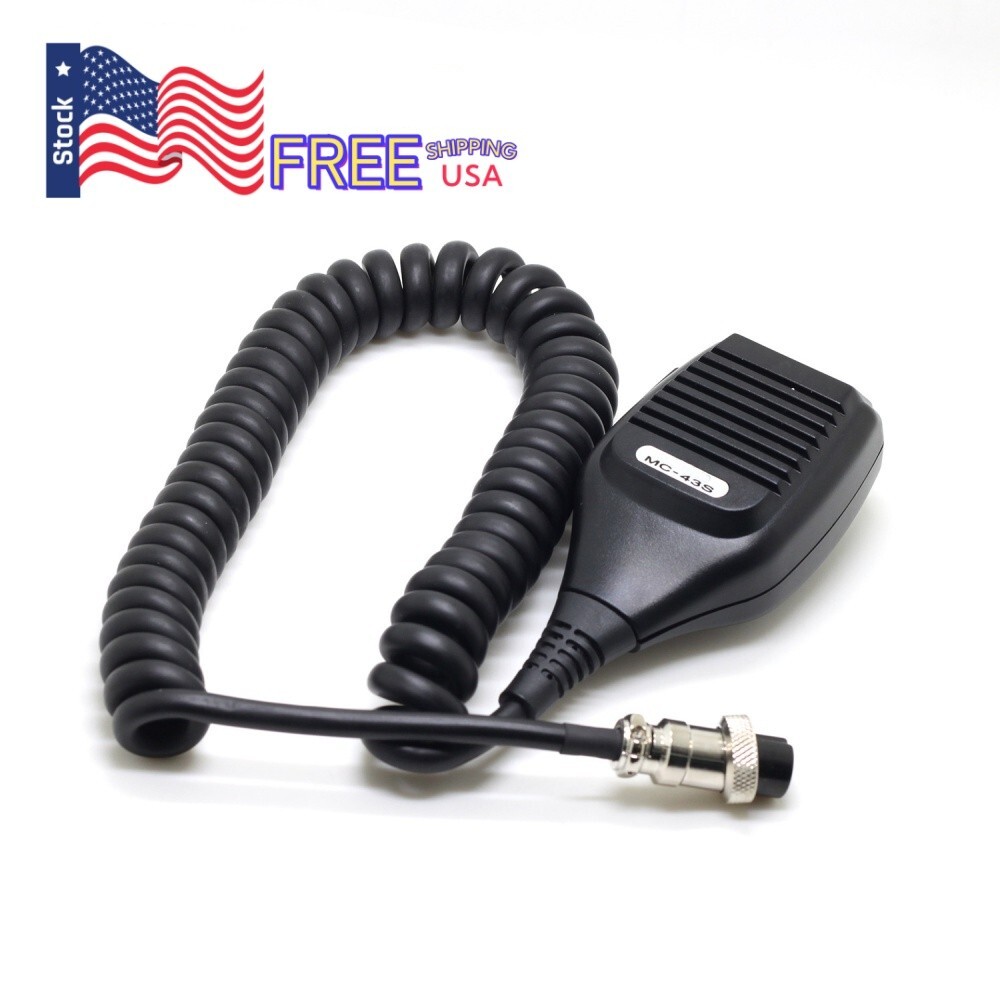


As an eBay Partner, we earn from qualifying purchases. This helps support our independent vintage technology research.