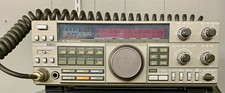
Kenwood TS-440S (1986–19xx)
A 100-watt HF transceiver that earned its reputation one repaired PLL board at a time.
Overview
Six-point-three kilograms of Japanese transceiver, drawing as much as 20 amps on transmit and only 1.9 on receive — the TS-440S was built as a serious station rig, not a novelty. Kenwood/Trio manufactured it in Japan starting in 1986, and the RigPix Database lists it as discontinued, though the precise end year remains unclear. It was sold in several configurations, including a variant with an internal automatic antenna tuner that shows up in period listings as the TS-440S/AT.
The receiver covers 0.15 to 30 MHz. Transmit runs 10 through 160 meters plus the WARC bands. That's a wide slice of spectrum for one box, and it's one reason the radio stayed in service long after its production run ended. Tuning steps run from 10 Hz to 1 MHz. Frequency stability is rated better than ±10 ppm across -10 to +50°C. It runs off 12-16 VDC, so it was equally at home on a desk supply or under a car dashboard, which is presumably why Kenwood offered a mobile mount.
Modes are AM, FM, SSB, CW, and FSK. The manual's own specifications list the same mode designations. RF output is 100 watts on SSB, CW, and FSK, and 50 watts on AM. FM deviation is factory-set at ±5 kHz. The receiver front end is a triple-conversion superheterodyne with intermediate frequencies at 45.05 MHz, 8.83 MHz, and 455 kHz. The manual's circuit description uses the same triple-conversion layout throughout.
The marketing literature repeats one number: a 102 dB dynamic range. Whether that figure holds up under independent bench conditions is a separate question. It does show what Kenwood was aiming at, a receiver that could sit next to a strong local signal without folding.
Key Features
Triple Conversion Superheterodyne Receiver
The 45.05 MHz first IF is the interesting choice here. On SSB, CW, and FSK between 1.6 and 30 MHz, rated sensitivity is 0.25 µV for 10 dB S/N. On AM across the same range, it's 2.5 µV. FM (12 dB SINAD) comes in at 0.7 µV. Image rejection is rated at 50 dB from 0.1 to 1.6 MHz and 70 dB from 1.6 to 30 MHz.
Selectivity and Filter Options
Stock selectivity for SSB, CW, and FSK is 2.2 kHz at -6 dB and 3.3 kHz at -60 dB. AM runs 6 kHz at -6 dB and 18 kHz at -50 dB. FM runs 12 kHz and 25 kHz at the same points. For tighter CW or narrower SSB, Kenwood offered optional crystal filters: the YK-88C at 500 Hz, the YK-88CN at 270 Hz, the YK-88S at 2.4 kHz, and the YK-88SN at 1.8 kHz. The service manual also references a manual selectivity control.
100 Memory Channels with Lithium Backup
The TS-440S stores 100 regular channels in RAM backed by a lithium battery. Decades later, that battery is the radio's most famous maintenance problem. When it dies, the memories go with it, and the replacement procedure has become its own genre of YouTube tutorial. There's no dedicated repeater shift. The manual suggests using VFO A/B split instead, which is a workaround rather than a feature.
Full and Semi CW Break-In
Both full and semi break-in are supported. Full break-in lets you hear between your own dits and dahs, which is what QSK operation needs.
Computer Interface via 13-Pin DIN
The rear panel has a 13-pin DIN connector for PC control, and a 13-pin plug was supplied with the transceiver. Kenwood also offered the IF-232C RS-232C interface adapter and the IC-10 computer interface kit as accessories. That put the radio among the 1980s HF rigs that could be driven by a computer without aftermarket surgery.
Antenna Tuning and Impedance Matching
Without an ATU, the antenna impedance is 50 ohms into an SO-239. With the AT-440 internal automatic tuner installed, the radio will match 20 to 150 ohms on transmit. External tuner options included the AT-130 (10-180 m), AT-230 (10-160 m), and the automatic AT-250 (10-160 m). The AT-440 itself is listed as covering 10-80 m. That's narrower than the external tuners, so 160 meters through the internal tuner is a problem.
Notch Filter, Noise Blanker, and Attenuator
The receiver includes a notch filter, a noise blanker, and an attenuator. None of these make a spec sheet headline, but they can decide whether a band is usable on a noisy night.
Accessory Ecosystem
Kenwood built out a full station around this radio. Microphones ranged from the MC-42S hand mike with up/down buttons to the MC-85 amplified electret desk microphone with three outputs. Power supplies included the PS-50 and PS-430, both rated 13.8 VDC at 20 amps. Speakers included the SP-41 (4 ohms), SP-50 (8 ohms), and SP-430. Headphones ran from the HS-4 through the HS-7, with impedances from 8 to 16 ohms. There was even a VS-1 voice synthesizer unit and a TU-8 CTCSS/PL unit for repeater work. The mobile mount was the MB-430, and the station monitor was the SM-220.
Historical Context
Universal Radio's product description states the TS-440S followed on the success of the TS-430S and was designed for superior performance in SSB, CW, AM, FM, and AFSK modes. An eHam.net review notes that the TS-440 was made at the same time as the much-venerated Kenwood R5000 receiver, and that the two share similar receive audio quality, selectivity, and sensitivity. The RigPix Database lists a new price in Sweden in 1988 of SEK 13,100. eHam.net lists an MSRP in the "1200 price class," though the currency and year aren't confirmed. The radio is consistently referenced as a 1980s HF rig. One video title calls it a "40 Year Old Ham Radio," which, if the 1986 introduction date is correct, would put that video around 2026.
Collectibility & Value
The TS-440S has a dedicated following, and the eHam.net review page shows 100 reviews. The most commonly cited issues are the dot problem (where the display shows dots instead of digits, often traced to a PLL unlock condition), PLL out of lock on portions of a band, audio output problems, and the inevitable memory battery replacement. A restoration kit covering recap, capacitor, and transistor replacement sells for around $165.
Spare parts are reportedly still sourceable. One long-term owner notes having no trouble finding replacement parts, including cannibalizing older boards for components. The catch is that some silicon parts are becoming unobtainable, and IF transformers would have to be rewound by hand if they fail. The same owner describes the TS-440S as holding up "pretty well as a repairable 1980s HF rig" and reports running 95 watts on digital modes like FT8 and JT65 for hours without overheating, with the suggestion that additional cooling could extend duty cycles further.
Service manuals and user manuals are both widely available from multiple sources. Owners who've worked on several units have also published repair and alignment notes.
eBay Listings


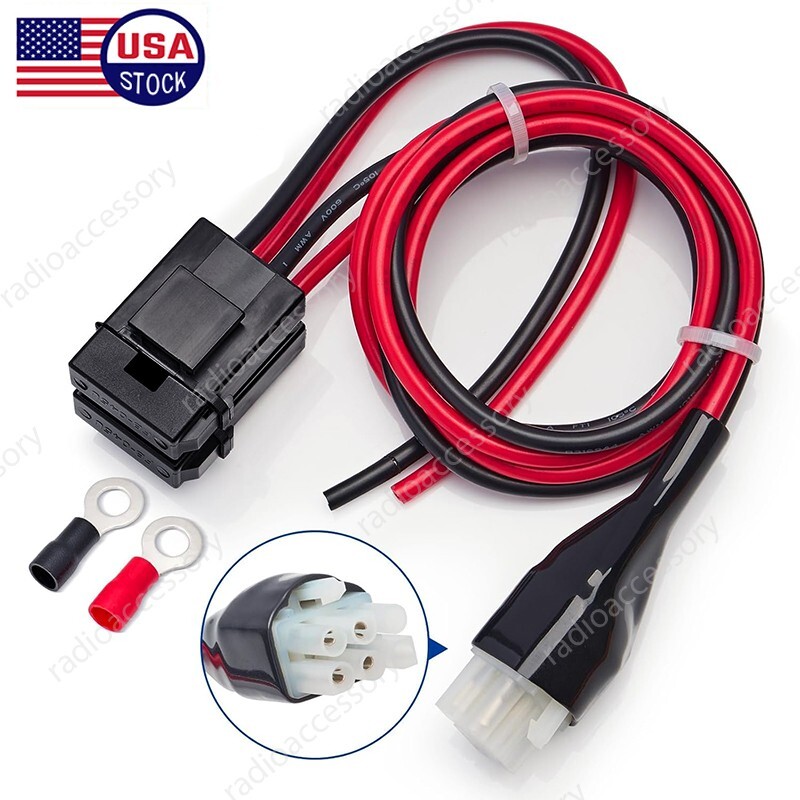
As an eBay Partner, we earn from qualifying purchases. This helps support our independent vintage technology research.