Kenwood TS-130
A 12-volt HF transceiver that carried the TS-120S lineage into the WARC bands. The paper trail it left is almost as thin as its QRP sibling's output.
Overview
The Kenwood TS-130 is an all-solid-state amateur radio HF transceiver. According to the retail literature that survives, it was built for SSB and CW work on the 80 through 10 meter ham bands, with the 30, 17, and 12 meter WARC bands added. That description comes from Universal Radio's listing for the TS-130S, the variant with the most thorough documentation. The same source marks the rig "Discontinued!" That tells you it is out of production. It doesn't give a single production year.
The TS-130 is a messy research subject. The sources are service-manual index pages, a commercial sales page for a manual, a document-hosting page with nothing but a title, and an eBay listing whose title contradicts its own model field. One listing called the thing a "Speaker." It is not a speaker. It is a transceiver, and the existence of a service manual, plus the eHam.net categorization as an HF amateur transceiver, settles that. But the record is thin, so anyone writing about this rig has to be careful about what they claim and what they merely repeat.
The TS-130 family covers at least four designations: the base TS-130, the TS-130S, the TS-130SE, and the TS-130V. No source explicitly states how they relate. They might be the same chassis with regional or market differences. They might not. What can be said is that the TS-130S has the fullest paper trail, the TS-130V is the QRP-leaning variant, and the TS-130SE is the one that replaced the S in the lineup.
Key Features
All-Solid-State, 12-Volt Operation
The TS-130S is described as all-solid-state. No tubes, no hybrid finals, no warm-up before you can get on the air. The 12-volt requirement is the detail that says the most about how the rig was used. It was built to be a mobile or field station as much as a desk-bound one. The eHam.net categorization of the TS-130SE as an "80-10M HF mobile radio" backs that up. This gear was designed to be bolted into a vehicle or run off a battery, not chained to a shack power supply.
80 Through 10 Meters, Plus WARC
The TS-130S covers the 80 through 10 meter ham bands and adds the 30, 17, and 12 meter WARC bands. The TS-130V is described with a coverage figure of 3.5-30 MHz, which spans the same territory in a single range statement. The WARC bands were relatively fresh when this rig was current, and a transceiver that covered them out of the box had an edge over older gear that needed modification. A YouTube title in the research, "Kenwood TS-130 WARC Bands Modification," suggests some units in the field were modified for WARC coverage. Whether that applies to all variants or only early production is not stated in the sources.
SSB and CW Modes
The TS-130S is explicitly designed for SSB and CW, the two modes that mattered most for HF work of the period. The TS-130V is listed as "HF SSB/CW" as well. No AM, no FM, no digital modes on the face of it. It does two things and skips the kitchen-sink approach of later transceivers.
Digital Frequency Display
The TS-130V and TS-130SE both carry a digital frequency display. For the TS-130V, it's listed among the headline features alongside IF shift and RIT. For the TS-130SE, an eHam.net review names "a digital display, IF shift and an excellent noise blanker" as the feature set. A digital readout removed the analog dial-and-logbook routine of older rigs, and it made band changes faster for anyone working a contest or chasing a DX spot.
IF Shift and RIT
IF shift appears on both the TS-130V and TS-130SE feature lists. RIT, receiver incremental tuning, is listed for the TS-130V at "±1.5 kH," quoted exactly as the source states it. RIT lets you nudge your receive frequency without moving your transmit frequency. That helps when you're pulling a weak signal out of a pileup or the station you're working is slightly off-frequency. IF shift moves the passband to reject an interfering signal without retuning.
Noise Blanker and Receiver Character
An eHam.net review of the TS-130SE calls the noise blanker "excellent" and says "the receiver is quiet and hears well with weak signals." The manufacturer's figures back that up: receiver sensitivity of 0.25 µV at 10 dB S + N/N, SSB/CW WIDE selectivity of 2.4 kHz (-6 dB) and 4.2 kHz (-60 dB), image ratio better than 50 dB, and IF rejection better than 70 dB. A quiet receiver that hears weak signals is what a mobile operator needs, because mobile installations are noise-prone by nature.
DFC-230 Compatibility
The TS-130 series is compatible with the optional DFC-230 Digital Frequency Controller, per Universal Radio. It is an external accessory that adds digital frequency control to the rig. It let operators add capability without replacing the transceiver.
Historical Context
The TS-130S "follows in the tradition of the successful TS-120S," according to Universal Radio, and it was later "replaced by the TS-130SE." That's the entire documented lineage: a predecessor in the TS-120S, a successor in the TS-130SE, and a discontinuation. No production years, no original price, no launch date. The TS-130S appears in Universal Radio's "Used List," which confirms it eventually reached the secondhand market. When it got there, and at what price, isn't recorded in the sources.
The accessories around the TS-130 are better documented than the rig itself. The VFO-120 external VFO, the PS-60 power supply, and the AT-130 antenna tuner all appear alongside the TS-130S in retail and manual listings. A manual header reads "TS-130S,V/VFO-120/AT-130," grouping the transceiver with its external VFO and antenna tuner in a single document. That's a service-manual coverage grouping, not a confirmed lineup relationship, but it does show which accessories were considered part of the TS-130 working setup. The DFC-230 Digital Frequency Controller is the fourth accessory in that group.
The sources don't say how the TS-130, TS-130S, TS-130SE, and TS-130V relate to one another. They might be the same chassis with different regional designations. They might be distinct production runs. The research flags this as unknown, and it stays unknown here.
Collectibility & Value
The most concrete market data point in the research is a listing dated as printed in the source: "Kenwood TS-130v, Kenwood TS-130 antenne tuner og Ci-110 pa trinn selges Finn NOK 4,000 Mar 10, 2026." It's a Norwegian listing pairing a TS-130V with an antenna tuner and a Ci-110 for NOK 4,000. It's a single data point, not a market trend, and it bundles multiple items. It's also the only price figure that survives.
Parts are also being sold. A "Kenwood TS-130, S/V electrolytic capacitor kit" is available, which marks the electrolytic capacitors in these rigs as a known service item. Capacitors dry out in solid-state gear of this vintage, and a rig that's sat unused for years will often need a recap before it performs to spec. Original S-meter units and a "Pignion For Board" (as the listing spells it) also turn up as used parts, which suggests units are being parted out rather than restored.
Service and instruction manuals exist for the TS-130. A rig with documentation is a rig you can maintain. The TS-130S also appears on Universal Radio's used list, confirming it circulates on the secondhand market. No current market price beyond the Norwegian listing is documented, and no common failure points beyond the implied capacitor replacement are recorded in the sources. Anyone buying one should assume a recap is likely and budget for it.
eBay Listings


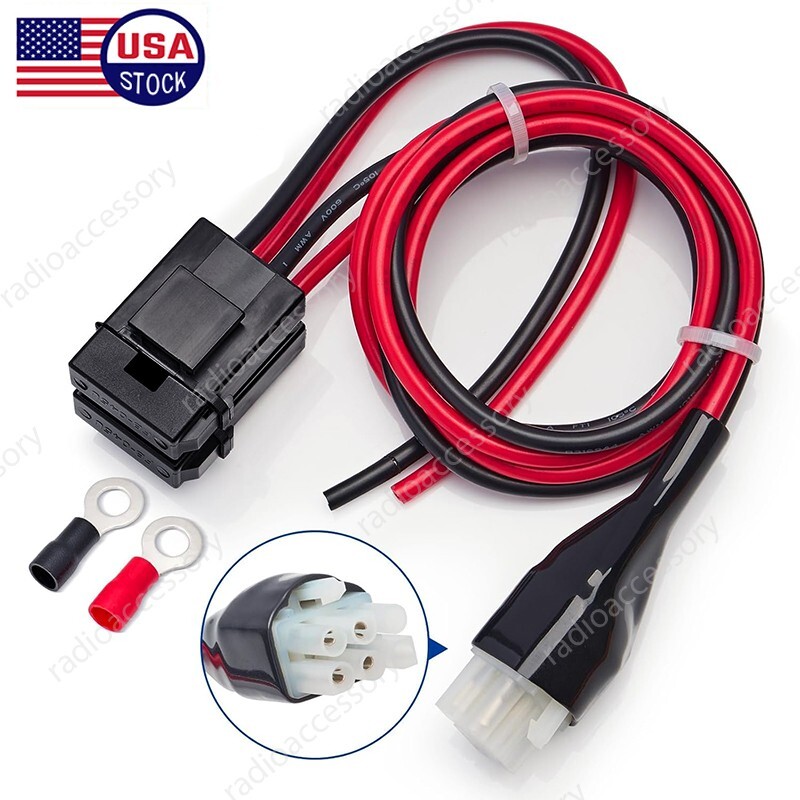
As an eBay Partner, we earn from qualifying purchases. This helps support our independent vintage technology research.