Kenwood TS-120S
A solid-state HF transceiver with a 100 Hz digital display and five-band coverage, listed at $700.
Overview
The TS-120S is an HF SSB transceiver from Kenwood, sold in some markets under the Trio name. It covers the 80 through 10 meter amateur bands, plus WWV at 15 MHz for receive. It runs SSB and CW and nothing else. The rig is all solid-state. By the time it hit the market that was no longer a novelty, but it was still the dividing line between a modern station and a boat-anchor lineup of tube gear. It is not in production, and hasn't been for decades.
Power figures for the TS-120S are a mess, depending on which document you read. The input ratings are quoted as 200 W PEP on SSB and 160 W DC on CW. On 10 meters they drop to 160 W PEP on SSB and 140 W on CW. The output side is variously listed as 120 W PEP and as a "100-120 watt HF SSB/CW rig (no WARC)." Most of the discrepancy is input vs. output. A class-AB final running at roughly 60% efficiency will turn 200 W of DC input into something in the 100-120 W range at the antenna. Treat "100-120 watts out" as the honest number and "200 W PEP input" as the marketing-friendly one.
The readout is what made the TS-120S interesting at the time. A 100 Hz digital display on an HF transceiver in this class was a real selling point. Analog dials with a slide-rule scale were still common, and reading your frequency to the nearest 100 Hz without interpolation changed how operators worked the low bands. The rig also carries a crystal calibrator, which lets you check the display against a known reference. With both, the TS-120S can be aligned and trusted without an external frequency counter. That helps anyone doing CW work near band edges.
The band coverage is quoted two ways, and the two aren't quite the same thing. One source describes it as "80 through 10 meter ham bands plus WWV 15 MHz receive." Another describes "five bands that range from 10 to 80." The WARC bands - 30, 17, and 12 meters - are not covered. So "five bands" means 80, 40, 20, 15, and 10, with the 10 meter band broken into switchable slices. If you want 17 meters, this is not the rig.
Key Features
100 Hz Digital Display
The headline feature is the digital frequency readout at 100 Hz resolution. On an HF transceiver of this vintage, that was the difference between chasing a signal by ear and knowing exactly where you were. Combined with the crystal calibrator, it makes the TS-120S a rig you can trust for repeatable frequency work. That matters for CW operators, net check-ins, and anyone who needs to return to the same frequency session after session.
Five-Band HF Coverage with Split 10 Meter
The TS-120S covers 80, 40, 20, 15, and 10 meters in SSB and CW. The 10 meter band is covered in SSB and CW. No WARC bands. No 160 meters. No 6 meters. It is HF-only in the most traditional sense.
Crystal Calibrator
The crystal calibrator is documented as present on the TS-120S. It provides a known reference signal so the operator can verify the accuracy of the digital display and correct for drift. For CW or any frequency-critical work, it's the difference between a display you trust and one you merely hope is close.
All-Solid-State, PLL Design
The TS-120S is entirely solid-state, and the manual's key features section begins with "PLL Single..." - indicating a single-conversion PLL architecture. Solid-state construction means no warm-up drift from tubes, no high-voltage supply to fail, and no output transformer to replace. The PLL design is what enables the stable, repeatable tuning that the digital display reports.
SSB and CW Only
No AM, no FM, no digital modes baked in. SSB (A3J) and CW (A1) are the only modes. That is a limitation for a modern operator. The rig does what it does and doesn't pretend to be a shack-in-a-box.
Historical Context
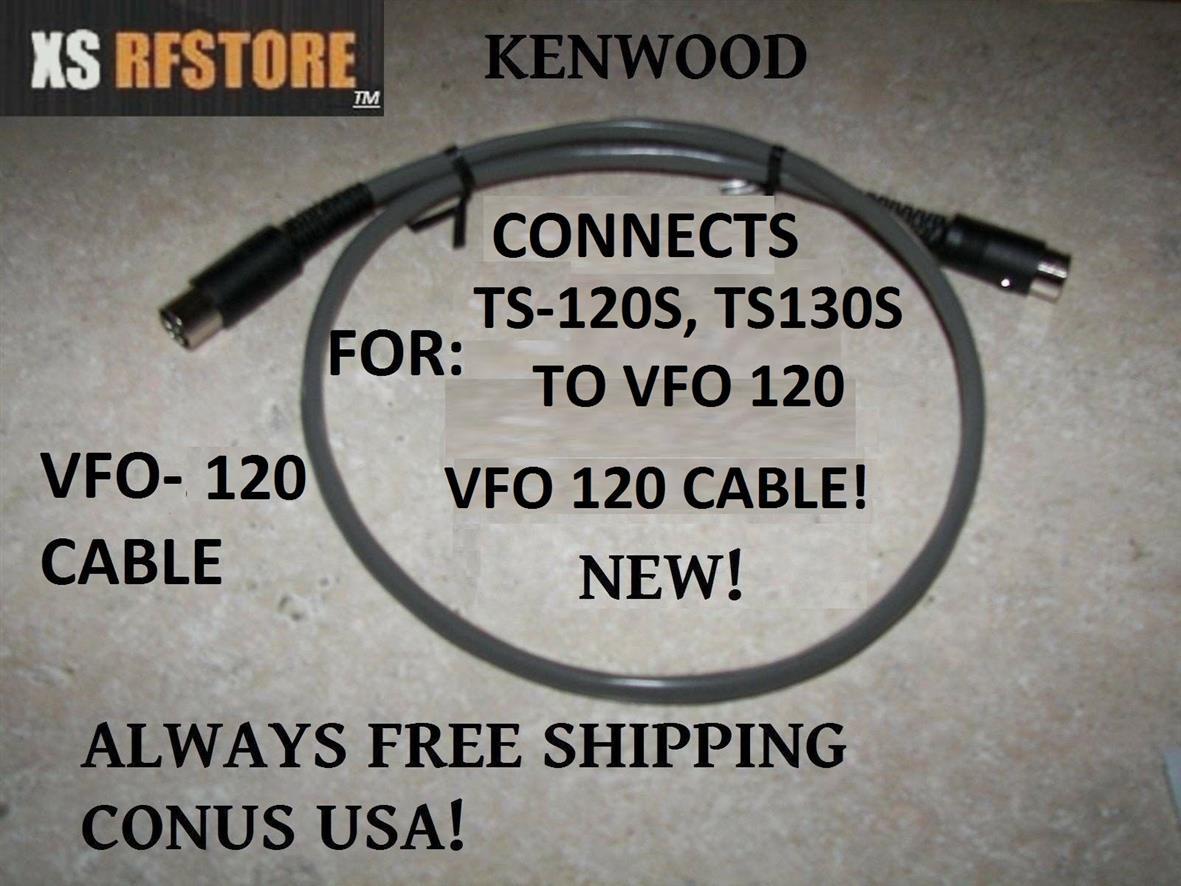
The TS-120S is generally dated to 1980, though at least one source labels it "#1985" and the year remains unresolved. The safest framing is "circa 1980," since Kenwood's model chronology in this period is not always cleanly documented. The rig is part of a family that includes the TS-120 (a separate model designation with its own owner's manual), the TS-120V (also a separate model with its own manual), and the TS-130S, which shares microphone compatibility with the TS-120S and is often mentioned in the same breath. A YouTube commenter describes a "5 min easy fix" for a "transmitter taking off" issue affecting "TS120/130 S and V versions." That suggests the TS-120 and TS-130 share both a lineage and at least one known failure mode.
The TS-120S came out of Kenwood's Nagano Prefecture operation, which had been building radio gear since 1946 under the name Kasuga Radio Co., Ltd. The Kenwood brand name was adopted for export starting in 1960. The company is now part of JVC Kenwood.
Collectibility & Value
Prices for the TS-120S are all over the map. The rig is old enough to be interesting but not rare enough to be scarce. The original MSRP was $700. Current asking prices range from roughly $185 to $350 on the low end, with some listings pushing toward $1,000. The latter almost certainly reflects exceptional condition, original packaging, or accessories. An eBay listing at $350 and a "fresh from an estate" example both suggest that $300-$400 is a realistic street price for a working unit in decent cosmetic shape. Treat the $1,000 figure with skepticism unless the rig is genuinely mint with box and foam inserts.
One eBay reviewer describes the TS-120S as "very nice rig, built like a tank" and claims it can be taken on mobile trips, with performance that "equals big rigs." The reviewer goes so far as to say a side-by-side comparison with an Icom Pro3 showed "equal capabilities." That's a single owner's opinion and should be read as such. Maintenance videos exist showing the steps involved in keeping an older TS-120S running, which suggests the community considers these worth servicing rather than discarding.
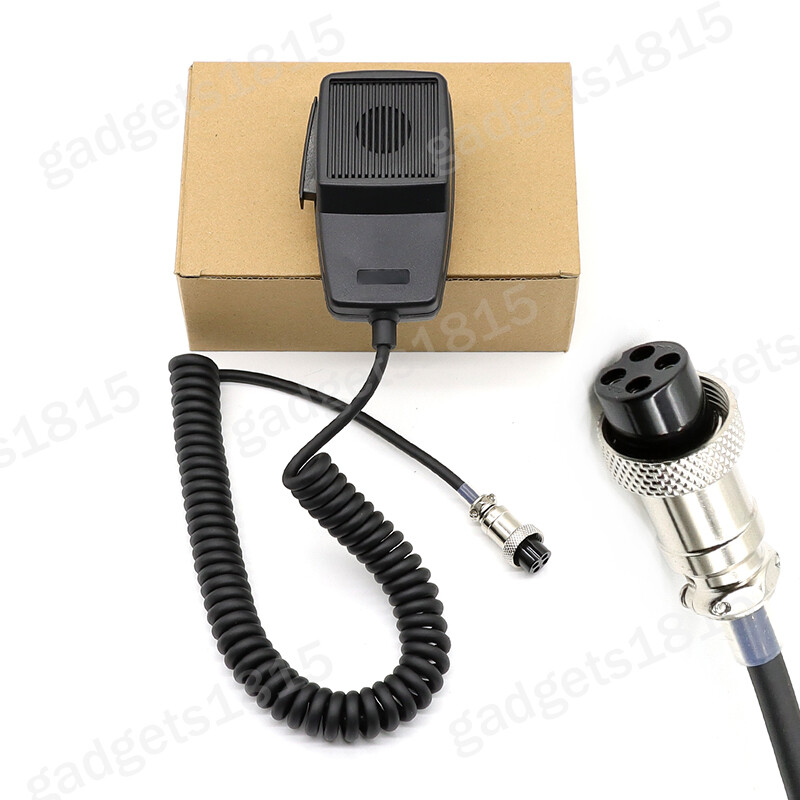
Parts availability is decent for a rig this age. Replacement microphones are sold new, with a 4-pin connector shared across the TS-120S, TS-130S, TS-530S, and TS-830S. Original push-button boards occasionally surface as used parts. The unit shipped in a box with fitted foam inserts, and those boxes do turn up. Service manuals are available (61 pages for the full service manual, plus a separate operating manual). A YK-88C filter is documented in the TS-120S materials, though the filter's own specifications are listed separately.
The known failure mode to watch for is a transmitter "taking off" issue affecting the TS-120 and TS-130 series in both S and V versions. A YouTube commenter describes it as a five-minute fix, which suggests it's a common and well-understood problem rather than a terminal fault. Buyers should ask whether the transmitter has been checked. Sellers should not be surprised if this comes up in negotiation.
eBay Listings


As an eBay Partner, we earn from qualifying purchases. This helps support our independent vintage technology research.