Kenwood TK 88U (1967–1970)
Heavy as a cinder block and warm as a tube amp, this early solid-state receiver delivers a deceptively powerful punch—if it hasn’t already fried itself trying.
Overview
Lift the Kenwood TK 88U out of its packing crate and you immediately understand what “substantial” meant in 1968. At over 20 pounds, this receiver doesn’t just sit on your rack—it stakes a claim. That heft comes from a massive power transformer and chunky steel chassis, engineered when “overbuilt” wasn’t a marketing slogan but a design mandate. For its time, the TK 88U wasn’t just a receiver; it was a statement. With 20 watts per channel RMS, it delivered what felt like serious power in an era when many competitors were still flirting with single digits. It wasn’t the loudest on the block, but it had presence—deep, full-bodied sound with a richness that belied its solid-state construction. Early adopters praised its “tube-like” warmth, a quality born more from conservative engineering than sonic magic: generous iron in the power supply, discrete silicon transistors, and a minimalist signal path that avoided the feedback-heavy designs that would plague later models.
Kenwood positioned the TK 88U as a premium offering in its early solid-state lineup, bridging the gap between basic AM/FM tuners and the high-powered behemoths that would follow. It wasn’t the flagship—that honor went to the more powerful TK-920 and TK-950—but it was the sweet spot for audiophiles who wanted serious performance without stepping into exotic territory. The TK 88U shared DNA with the TK-80 and TK-85, but with refined circuitry, better regulation, and a more stable power supply. It was also among the first Kenwoods to feature a FET (Field Effect Transistor) front end, a nod to the company’s push toward high-impedance, low-noise input stages that could handle delicate phono cartridges without the coloration of earlier bipolar designs. The result? A receiver that could drive inefficient vintage speakers—think AR-3s or Advents—with authority, delivering bass that felt weighty and midrange that stayed clear even at higher volumes.
But let’s be honest: this thing is a time bomb if neglected. Owners and technicians alike report that the TK 88U, like many early solid-state Kenwoods, is notoriously prone to thermal runaway. The output transistors, mounted close together on a shared heatsink without adequate bias stabilization, can drift into oscillation or short-circuit under sustained load. Many units that survived the 1970s did so only because they were turned off before they cooked themselves. Those still working today have likely been recapped, rebiased, and sometimes partially redone with modern protection circuits. It’s not uncommon to find one listed as “working” on eBay only to discover it shuts down after 20 minutes of use. That doesn’t mean it’s a lost cause—far from it. When properly restored, the TK 88U delivers a sound that modern receivers often lack: organic, slightly forgiving, with a harmonic bloom on vocals and strings that feels more musical than clinical.
Specifications
| Manufacturer | Kenwood Corporation |
| Production Years | 1967–1970 |
| Original Price | $290 (USA, 1968); 67,900 Yen (Japan, 1969) |
| Power Output | 20 watts RMS per channel (8 ohms, 20Hz–20kHz, 0.1% THD) |
| THD | 0.1% at rated power |
| Frequency Response | 20Hz–20kHz ±1dB (Main Amp); 30Hz–15kHz (Phono) |
| S/N Ratio | 70dB (IHF, A-weighted) |
| Input Sensitivity | 2.5mV (MM Phono); 150mV (Line) |
| Load Impedance | 4–16 ohms |
| Damping Factor | 20 (8 ohms, 1kHz) |
| Inputs | 2 Line, 1 Magnetic Phono, 1 Tuner |
| Outputs | Preamp Out (Mono), Speaker A/B |
| Tuner Bands | FM, AM |
| FM Sensitivity | 1.8µV for 26dB SNR |
| FM Stereo Separation | 30dB at 1kHz |
| Power Consumption | 220W |
| Weight | 10.5 kg (23.1 lbs) |
| Dimensions | 420 x 140 x 310 mm (W x H x D) |
| Construction | Steel chassis, aluminum front panel, woodgrain foil cabinet |
| Voltage Selector | Yes (multi-voltage compatible) |
Key Features
FET Front End and Discrete Amplification
The TK 88U’s use of a FET in the input stage was a forward-thinking move in the late 1960s. Most receivers still relied on bipolar junction transistors (BJTs) for their preamp stages, which could load down moving magnet cartridges and introduce subtle distortion. The FET, with its high input impedance and low noise, allowed the TK 88U to extract more detail from vinyl without sounding harsh. Combined with a fully discrete output stage—no ICs here, just honest-to-goodness silicon transistors—the result was a clean, dynamic sound that held up under scrutiny. The amp section used a quasi-complementary symmetry design, common for the era, with NPN drivers and PNP output transistors. While not as linear as a fully complementary layout, it was cost-effective and, when properly biased, delivered solid performance.
Heavy-Duty Power Supply
You can hear the weight of the TK 88U’s power supply in the way it handles bass transients. The oversized transformer and generous filter capacitors (for the time) provided stable voltage rails, reducing sag during dynamic peaks. This wasn’t just about loudness—it was about control. The damping factor of 20, while modest by today’s standards, was respectable in 1968 and allowed the receiver to exert some authority over speaker cones, especially with efficient bookshelf models. The multi-voltage selector on the rear panel also made it a favorite among international buyers, allowing safe operation on 100V, 117V, or 220–240V mains with a simple switch and fuse change.
Industrial Build and User Interface
The front panel is all business: large, knurled aluminum knobs for volume, balance, treble, and bass, flanking a wide VU meter that dances with the music. The tuning dial is smooth, with a calibrated FM scale that was considered precise for its day. The woodgrain foil finish—available in silver or black faceplates—gave it a sophisticated look without veering into gaudy territory. Inside, the layout is methodical, with point-to-point wiring and terminal strips rather than a printed circuit board for the main amplifier. This makes repairs more accessible for the skilled technician but also means that loose connections and oxidized solder joints are common failure points after 50+ years.
Historical Context
The Kenwood TK 88U arrived at a pivotal moment in audio history. The late 1960s saw the rapid transition from vacuum tubes to solid-state electronics, and Kenwood was one of the Japanese brands leading the charge—alongside Sansui, Pioneer, and Sony. While American companies like Scott and Fisher were still clinging to tubes, Japanese manufacturers embraced transistors with enthusiasm, pushing for higher power ratings, better reliability, and sleeker designs. The TK 88U wasn’t the first solid-state receiver, but it was one of the first to deliver a sound quality that could rival tube gear in warmth while offering the convenience and longevity of solid-state. It competed directly with the Sansui G-3300, the Pioneer SX-2, and the Sony STR-300, all of which were similarly rated around 20–25 watts but often measured less conservatively. Kenwood’s reputation for conservative power ratings—backed by IHF standards—gave the TK 88U credibility among discerning buyers who were tired of inflated specs.
FM stereo broadcasting was still in its infancy, and the TK 88U was among the early receivers to support it, though stereo separation was modest by later standards. Its tuner section, while not as sensitive as dedicated high-end units, was more than adequate for urban listeners and included a stereo indicator lamp—a novelty at the time. The magnetic phono input (no moving coil option) reflected the era’s dominance of MM cartridges, and the inclusion of a mono preamp output suggests some users may have patched it into larger systems or tape decks.
Collectibility & Value
The Kenwood TK 88U is not a common sight on the vintage market, and when it does appear, condition varies wildly. A fully functional, unmodified unit in excellent cosmetic shape might fetch $350–$500, especially if it includes the original manual or packaging. Units described as “working” but未经 restoration often sell for $150–$250, but buyers should be cautious—many of these will fail within hours of use due to degraded electrolytic capacitors or unstable bias. True mint examples, especially in silver faceplate with flawless meters and knobs, are rare and can command over $600 in audiophile circles.
Common failure points include the main filter capacitors, which dry out and cause hum or distortion; the output transistors, which can short and take out drivers and resistors with them; and the bias adjustment circuit, which drifts over time and leads to thermal runaway. The tuning dial cord is another weak spot—stretching or breaking after decades of use—and replacement parts are scarce. Cleaning the input and volume pots is almost always necessary, as oxidation leads to crackling and channel imbalance.
Before buying, insist on a detailed video of the unit powering up and playing through speakers. Check that the VU meter responds symmetrically, that there’s no excessive hum or buzz, and that the FM tuner locks onto stations without drifting. If the seller can’t provide this, walk away. Restoration costs can easily reach $200–$300 if a full recap and transistor check are needed, so factor that into any purchase. Despite its quirks, the TK 88U has a loyal following among early solid-state enthusiasts who appreciate its musicality and historical significance. It’s not the most powerful or reliable vintage receiver, but when it works, it sings.
eBay Listings
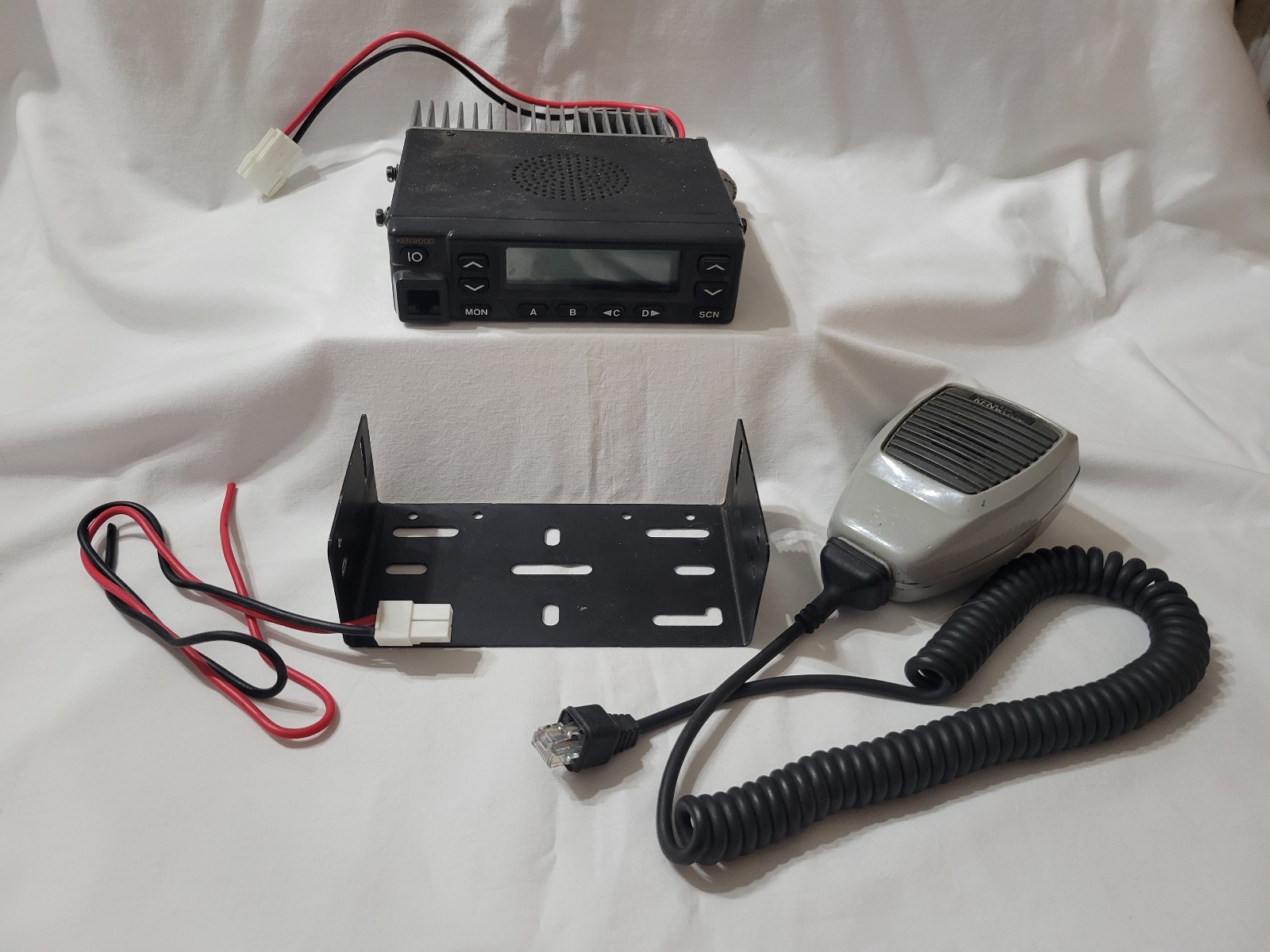


As an eBay Partner, we earn from qualifying purchases. This helps support our independent vintage technology research.
Related Models
- Kenwood KA 990EX (1980-1981)
- Kenwood KA 400 (1970-1972)
- Kenwood KR 7020 (1977-1979)
- Kenwood kx-1010 (1982-1984)
- Kenwood kx-630 (1980-1982)
- Akai AM-2850 (1975)
- Akai AP-206 (1975)
- Nakamichi BX-1 (1985)
- Acoustic Research research-ar-17 (1978)
- Acoustic Research AR-19 (1994)