Kenwood MC-60A
A die-cast desk microphone with a switchable 500-ohm/50k-ohm impedance and a built-in preamp. It tends to outlive the transceiver it was bought for.
Overview
The MC-60A is a desk microphone. It is not a hand mic you dangle off the front panel. It's a weighted base unit with a removable microphone head that sits on the operating table and stays there. Kenwood built it around a dynamic moving coil element, which is the plain choice for communications work: no phantom power, no fragile condenser capsule, just a coil in a magnetic field.
The impedance switching is what sets the MC-60A apart from a generic desk mic. The element runs at either 500 ohms or 50,000 ohms, selected by a slide switch on the microphone body itself. The low 500-ohm setting suits VHF and UHF mobile radios, while the high 50k setting is what most of the company's HF transceivers want to see. One microphone, two different input stages, and no adapter cable required. According to available documentation, the switch works whether or not the mic is seated in its base, which matters if you want to run the head standalone.
With the preamp off, the microphone covers 150 Hz to 10 kHz at the -6 dB points. Switch the preamp in and the top end tightens to 7 kHz while the bottom rises to 200 Hz. That's a communications-radio design decision. Speech intelligibility lives in a narrow band, and rolling off the extremes keeps the transmitted audio punchy and readable rather than full-range and muddy. The preamp is powered by two AA cells installed internally - alkaline only, not NiCd, per the manual's explicit warning.
Kenwood's own product copy describes the MC-60A as providing "a rich and crisp audio response that is a large part of the legendary sound that Kenwood transceiver owners have enjoyed for decades." That's marketing language, and it should be read as such. The underlying claim is that this microphone has been paired with Kenwood transceivers for a long time. The simple fact that the product is still listed as in production backs that up. Very few pieces of communications gear from the era this microphone belongs to can say that.
Key Features
Switchable 500-ohm / 50k-ohm Impedance
The slide switch on the microphone body selects between 500 ohms and 50,000 ohms. Kenwood's own documentation notes that most of the company's HF products sit at 50k, some will operate across the 500-ohm-to-50k range, and all VHF and UHF mobile radios are 500 ohms. That makes the MC-60A a universal Kenwood desk mic rather than one tied to a single rig. Owners who move between an HF base station and a mobile setup can carry the same microphone across both without rewiring anything.
Built-in Preamplifier with Internal Battery Power
The preamp runs on two AA cells installed inside the base. The manual specifies alkaline cells and explicitly warns against NiCd, and the preamp's behavior depends on stable voltage. Radios that supply power at the mic connector for autopatch microphones won't need the batteries at all. The preamp on/off switch is on the underside of the base, with the forward position being "on." The preamp is in the base unit, not the microphone head, so if you run the mic standalone you lose preamped operation entirely.
Die-cast Base with Removable Microphone
The base is die-cast, which gives it the heft and stability a desk microphone needs. The microphone head is removable: slide it out of the plastic bracket, disconnect the short base-mounted cable, and you can run the mic directly off the retractile cord. The PTT switch, lock key, and mic on/off switch are all wired in parallel, so any of them can key the transmitter. The lock key is handy for long transmissions. Press it once to lock the PTT, press it again to release.
PTT, Lock, and UP/DOWN Controls
Beyond the PTT and lock functions, the base carries a rocker UP/DOWN switch for stepping through the transceiver's operating frequency. That only makes sense on a desk mic, where you tune with your thumb while your other hand is free. The manual notes that UP/DOWN operation depends on the transceiver's own capabilities, so check compatibility before assuming it works with a given rig.
8-pin Connector and Optional Cables
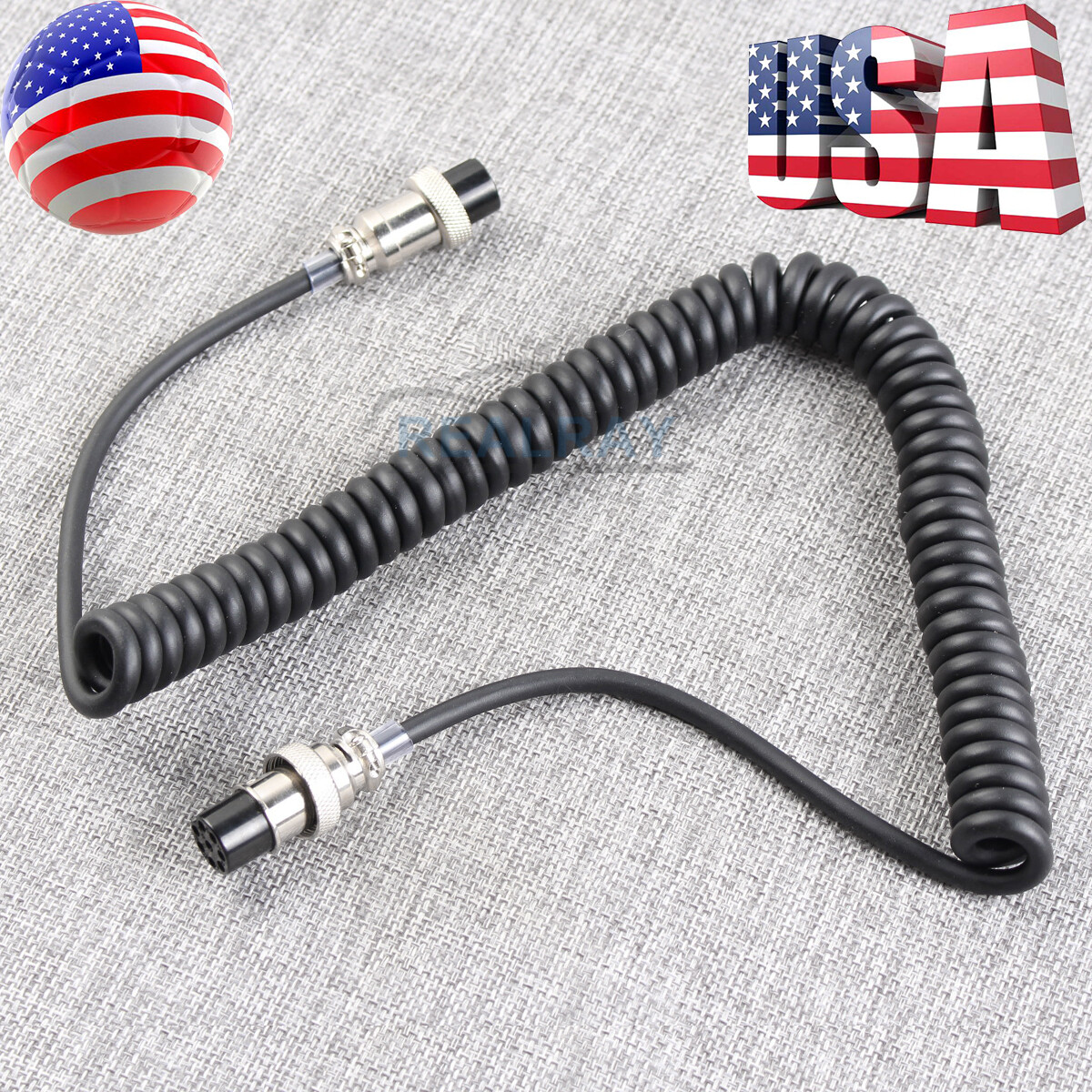
The MC-60A ships with a standard PG-4C 8-pin-to-8-pin retractile cord. For radios with a four-pin mic connector, Kenwood offered the PG-4A option cord. For six-pin connectors, there was the PG-4B. The 8-pin standard is what most Kenwood HF rigs of the era used, which is why the MC-60A turns up so often paired with them.
Historical Context
The MC-60A was designed expressly for amateur radio use, and Kenwood's documentation states it provides "excellent performance when used with any KENWOOD transceiver." The dual-impedance design is what makes that claim credible. The microphone can be matched to both the HF base station and the VHF/UHF mobile rig without modification.
One owner account describes using an MC-60A with a TS-940S for over thirty years, loaning it out during a twenty-five-year inactive period and getting it back still functional. That's a single anecdote, not a statistical sample, but it fits the product's continued production status. Kenwood still lists the MC-60A as in production, which is unusual for a communications microphone of this type. Most of its contemporaries have been discontinued for decades.
No production years, original release date, or country of manufacture could be confirmed from available documentation. What can be said is that demand has been steady enough that Kenwood has never fully retired the MC-60A, and that replacement parts, including rubber feet in both tall and standard heights, are still being manufactured and sold by third parties.
Collectibility & Value
The MC-60A sits in an odd spot in the collectible market. It's vintage enough to appeal to restorers, but still in production, which caps the premium that a "vintage" label usually commands. The original MSRP is listed at $145.00. A recent eBay UK listing for a tested, working example sold for £128, which suggests the used market is holding value close to the original retail price.
Availability is split. Some retailers list the MC-60A as currently unavailable with a notify-on-availability option, while Kenwood's own status is "in production." That's common with long-running communications gear, where distribution channels thin out even when the factory still makes the product. Buyers should expect to find units through amateur radio dealers and the used market rather than big-box retail.
Parts support is better than average. New rubber feet are available in two heights, the kind of small consumable that disappears first on most vintage gear. No common failures, repair procedures, or capacitor replacement notes were found in the available documentation, which likely reflects the microphone's simple design rather than any unusual reliability. The manual's caution is straightforward: the microphone is built of precision parts, should not be opened, and is sensitive to shock and vibration.
For anyone running a Kenwood HF transceiver, the MC-60A is less a collectible than a working tool that has been in continuous production for a long time.
eBay Listings


As an eBay Partner, we earn from qualifying purchases. This helps support our independent vintage technology research.