JBL SA-600 (1966–1968)
JBL's first solid-state integrated amplifier. The period press couldn't measure its distortion because their test gear wasn't good enough.
Overview
Forty watts per channel into 8 ohms doesn't sound like much today, but in 1966 it was the number JBL hung its first transistor integrated amplifier on. The SA-600 - also written SA600, and badged under the full "James B Lansing" name - was the company's first solid-state integrated. It arrived with a design philosophy that made tube holdouts pay attention.
The core of it was what JBL's own advertising called an "analog computer type" DC operational amplifier, billed as short-circuit proof, open-circuit proof, and overload proof (High Fidelity, March 1966, p.83). The overload claim was real. HiFI-Stereo (November 1966, p.42) reported that prolonged output above 40 watts per channel would trip the automatic protective circuits. That's the behavior you'd want from a first-generation solid-state design when output transistors were still expensive and fragile.
The SA-600 measured better than almost anything else in its class. HiFI-Stereo (November 1966, p.42) recorded the lowest noise level it had ever measured on an integrated amplifier. No numeric value was attached, which is frustrating. The same review noted three switchable phono inputs with very high gain, and that all equalization and tone-control action was handled by negative feedback in the preamp section. Two years later, Audio (February 1968, p.10) called the SA-600 "superlative in all respects," noting that it met NAB specifications even before negative feedback was applied, and that with both channels driven simultaneously at line voltages as low as 110 V, harmonic distortion stayed under 0.2% at any frequency.
At or below rated output, one bench test couldn't measure the harmonic distortion at all. Whatever was present sat below the test equipment's residual of about 0.1 per cent. That's a reviewer admitting his gear wasn't good enough to find the amplifier's flaws.
Key Features
Analog Computer Type DC Operational Amplifier
JBL's marketing language was grandiose - "analog computer type" sounds like it belongs in a missile silo, not a living room - but the underlying design was unusual for 1966. The DC operational amplifier was direct-coupled, which meant no coupling capacitors in the signal path and no reactive components to color the response. The power amplifier section used what JBL called the T-Circuit (patent pending), a topology the company claimed was completely stable into any loudspeaker load, including capacitive loads. The period reviews didn't dispute this.
The protection circuitry was part of the package. Short-circuit proof, open-circuit proof, overload proof - the advertising listed all three. HiFI-Stereo (November 1966, p.42) confirmed that sustained output above 40 watts per channel would trigger the automatic protective devices, which suggests the 40-watt rating was a genuine continuous limit rather than a marketing number.
Three Switchable Phono Inputs with Very High Gain
Three phono inputs was generous for 1966, and the gain was high enough that HiFI-Stereo (November 1966, p.42) singled it out for comment. The preamp section handled all equalization and tone-control action through negative feedback rather than passive networks. Audio (February 1968, p.10) noted that the SA-600 met NAB specifications even before negative feedback was applied. That's an unusual claim: the raw circuit was already close enough to flat that the feedback was refinement, not correction.
Aural Null Stereo Balancing System
JBL built a stereo balancing system directly into the SA-600 and gave it a name: Aural Null. The system let owners match channel levels by ear, nulling the difference between left and right until the image collapsed to center. JBL advertised it prominently (High Fidelity, March 1966, p.83).
Power Supply and Output Stage
The SA-600's power supply ran eight silicon diodes, a power transformer, a zener diode, and associated filter capacitors. A high-current supply delivered +37.5 and -37.5 volts to the output transistors. That's a relatively modest rail voltage, consistent with the 40-watt-per-channel rating. The T-Circuit topology and the protection circuitry were there to keep the amplifier alive under conditions that would kill lesser solid-state designs.
Historical Context
The SA-600 was JBL's first transistor-based integrated amplifier, the company's initial move into solid-state at a time when tubes still dominated high-fidelity audio. It was introduced via JBL's own advertising in early 1966, with High Fidelity (March 1966, p.83) running the announcement as a new integrated amplifier/preamplifier. Some sources date the introduction to 1965, though the advertising record places it firmly in early 1966.
Julian D. Hirsch, writing in HiFi/Stereo Review (November 1966), called the SA-600 "the most recent of these to come to our attention, and it truly sets a new standard of performance for integrated amplifiers." Hirsch measured everything, so that's not faint praise.
The SA-660 followed as what one archive describes as a significant evolution from the SA-600, sharing service literature and circuit topology but adding concentric tone controls for independent channel adjustment. The relationship between the two models is documented in shared service manuals, though JBL never positioned the SA-660 as a direct replacement. Decades later, JBL would return to the SA-600 as inspiration for the SA750 and SA550 Classic.
Documentation is thin. No factory spec sheet or manual for the SA-600 alone survives in the archive. What exists is shared SA600/SA660 service literature and the period reviews.
Collectibility & Value
The SA-600 sits in an odd spot in the collector market. It's historically significant as JBL's first solid-state integrated, but not as famous as the company's speakers or its later amplification. Prices reflect that. A 2018 Audiogon listing for a "very clean SA-600 in original condition" sold as-is with no performance guarantee. Another listing described a unit as "one channel out" and priced it at $350. eBay listings for parts - a power input assembly at $35, screws and bolts at $49.99, a headphone jack at $29.99 - suggest that some units are being parted out rather than restored.
The known failure mode is specific: broken solder joints on the transistor sockets in the power amp sections. One diyAudio thread recommends resoldering those joints first, before any other troubleshooting. It's a mechanical failure, not a component failure, so it's fixable. It also means any SA-600 that hasn't been serviced is likely to have intermittent channel dropouts or worse.
Knobs are hard to source, which is a common problem with 1960s JBL gear. Service manuals are available through archive.org and eserviceinfo.com. Original condition matters. One owner noted that his unit had been "visibly mistreated through the years" but that the front panel survived well enough that only the enclosure needed paint.
The SA-600 isn't a high-dollar piece, but it's historically important, sonically respected, and repairable. The 40-watt rating limits speaker choices, but the protection circuitry means it's less likely to destroy itself than some early solid-state designs.
eBay Listings
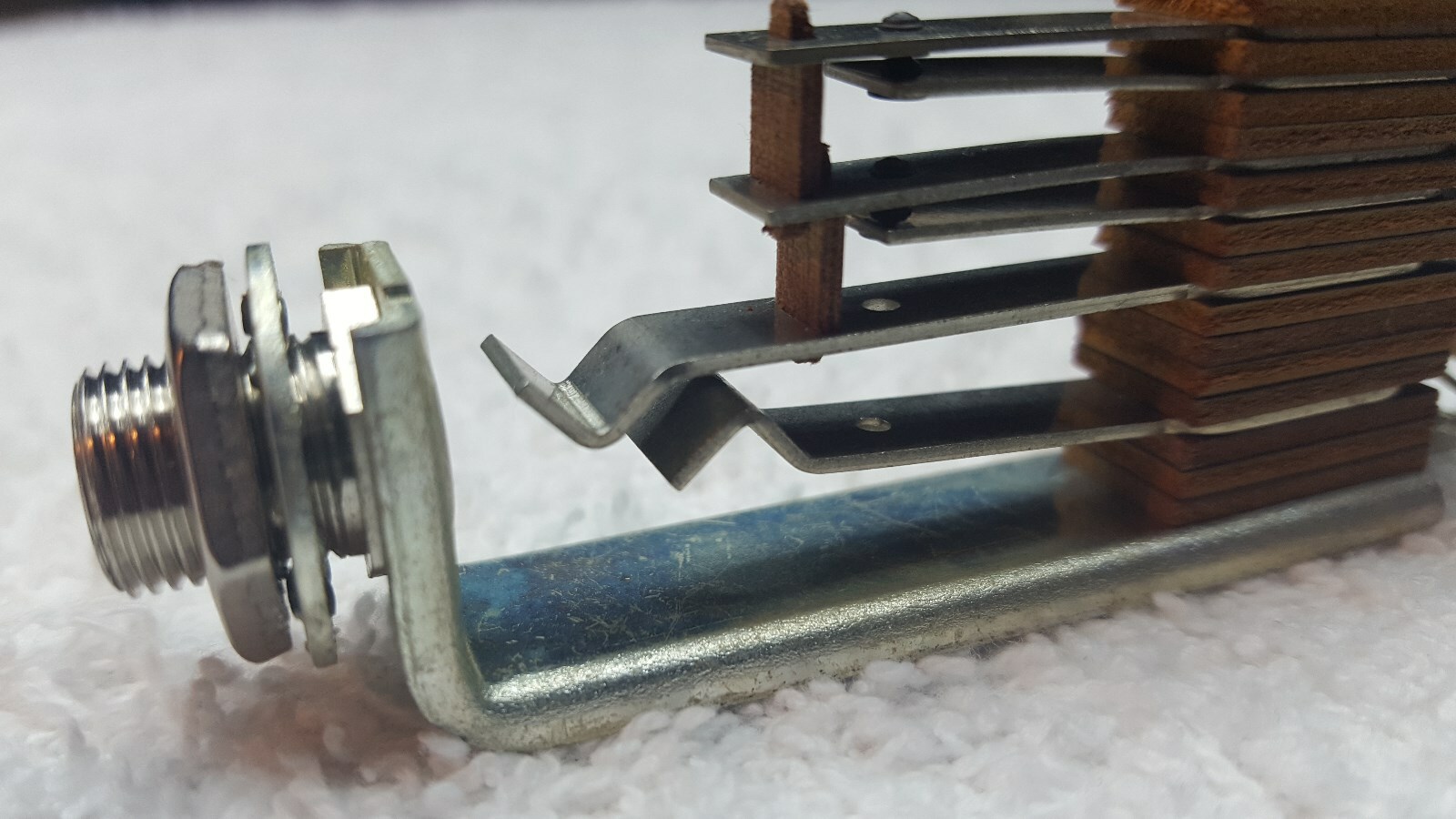

As an eBay Partner, we earn from qualifying purchases. This helps support our independent vintage technology research.
Related Models
- JBL 5231 (1974)
- JBL 5232 (1974)
- JBL 5233
- JBL 5234
- JBL 5235
- Eico 3150 (1967)
- Fisher CUSTOM-ELECTRA-I (K-14/K-15) (1957)
- Fisher CUSTOM-ELECTRA IV (E33/E44) (1960)
- Akai AM-2400 (1978)
- Akai AM-2600 (1977)