JBL L96: The Towering Titan of 1980s High-Fidelity
The JBL L96 stands as a monumental speaker from the golden era of floor-standing audio design—the mid-1980s—when American audio engineering met bold industrial aesthetics and uncompromising acoustic performance. Introduced in 1985 and discontinued around 1990, the L96 was positioned as a flagship model in JBL’s consumer speaker lineup, bridging the gap between professional studio monitor heritage and home audio refinement. For audiophiles and vintage gear enthusiasts today, the L96 represents a rare fusion of brute sonic power, elegant driver technology, and striking visual presence.
Historical Context: JBL’s Golden Age of Speaker Design
By the mid-1980s, JBL (founded in 1946 by James B. Lansing) had already cemented its reputation in both professional and consumer audio markets. Known for their rugged studio monitors like the 4310 and 4311, JBL brought that same engineering rigor into the home audio space. The L96 was developed during a period when high-end speakers were becoming larger, more efficient, and increasingly sophisticated in crossover design.
The L96 was part of JBL’s “L-series,” a line that included the L88, L89, and L97, each designed to deliver concert-hall dynamics in domestic environments. The L96, however, stood out as a three-way floorstander with a unique driver configuration and a powerful bass reflex cabinet—engineered to reproduce music with authority, clarity, and deep, articulate low-end response.
Technical Specifications
| Specification | Detail |
| Model | JBL L96 |
| Type | 3-way, bass reflex floorstanding speaker |
| Drivers | 12\" polyplas-coated woofer, 5\" polyplas midrange, 1\" titanium dome tweeter |
| Crossover Frequency | 1.8 kHz (woofer to midrange/tweeter) |
| Frequency Response | 38 Hz – 20 kHz (±3 dB) |
| Sensitivity | 92 dB (1W/1m) |
| Nominal Impedance | 8 ohms (compatible with most amplifiers) |
| Recommended Power | 20 – 250 watts per channel |
| Cabinet Design | Dual-vented bass reflex with internal bracing |
| Dimensions (H x W x D) | 26.5" x 13.5" x 16.5" (67.3 x 34.3 x 41.9 cm) |
| Weight | 62 lbs (28.1 kg) each |
| Finish Options | Black ash vinyl, rosewood vinyl |
| Grille | Removable cloth grille with JBL logo |
Sound Quality: Power, Presence, and Precision
The JBL L96 delivers a sound signature that is quintessentially “JBL”—dynamic, forward, and rhythmically engaging. With a sensitivity of 92 dB, the L96 is highly efficient, making it an excellent match for tube amplifiers and lower-powered solid-state receivers of the era. Its 12-inch woofer provides deep, controlled bass down to 38 Hz, while the dual-vented cabinet reduces port noise and enhances low-frequency extension.
The 5-inch midrange driver, housed in its own isolated chamber, ensures clean vocal and instrumental reproduction with minimal coloration. This isolation was a notable design feature, reducing intermodulation distortion and allowing the midrange to operate independently of bass vibrations.
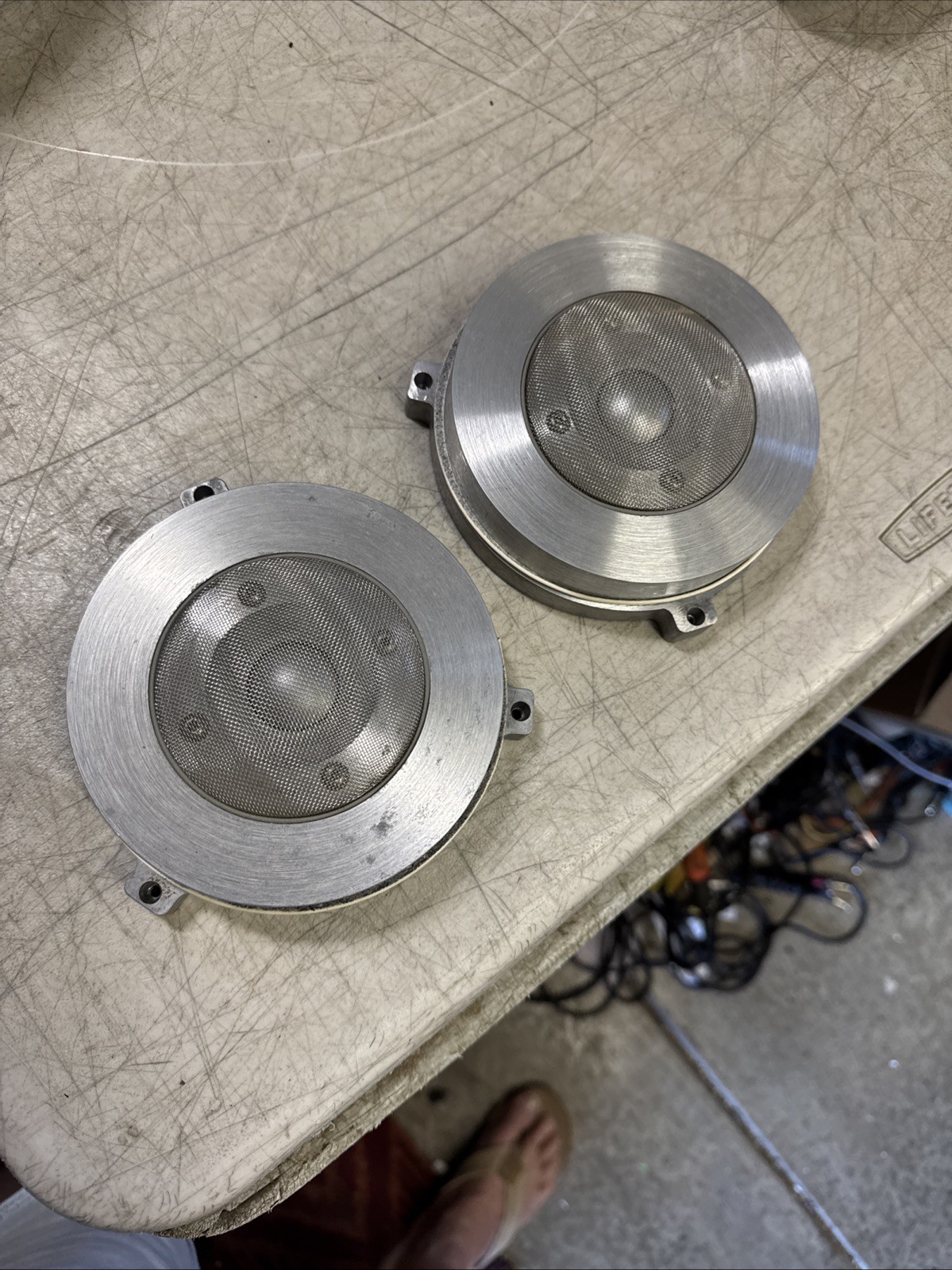
The 1-inch titanium dome tweeter, a hallmark of JBL’s high-end models at the time, offers crisp, detailed highs with excellent dispersion. While some listeners may find the treble slightly bright compared to softer dome tweeters (like silk or soft-dome variants), it contributes to the L96’s lively and engaging character—ideal for rock, jazz, and orchestral music.
Overall, the L96 excels in soundstage width and imaging precision. It projects a spacious, three-dimensional soundfield, with instruments placed distinctly across the stereo plane. Its dynamic headroom allows it to handle sudden transients—like drum hits or brass stabs—with authority and composure.
Notable Features and Innovations
- Three-Way, Three-Driver Design: Unlike many two-way floorstanders of the era, the L96’s three-driver configuration allows for better frequency separation and reduced distortion.
- Isolated Midrange Chamber: A key innovation, this design prevents bass energy from interfering with midrange clarity.
- Titanium Dome Tweeter: Durable and extended in response, this tweeter was derived from JBL’s professional monitor lineage.
- Dual Ported Cabinet: The bass reflex design uses two ports to enhance low-frequency output and reduce air turbulence.
- High Sensitivity: At 92 dB, the L96 can be driven effectively by vintage receivers and tube amps, making it versatile in vintage setups.
Market Value and Collectibility
Today, the JBL L96 is a sought-after model among vintage audio collectors, particularly those who appreciate American-made speakers with studio pedigree. Units in good cosmetic and working condition typically sell between $400 and $800 per pair, depending on finish, originality, and driver condition. Rosewood versions often command a slight premium due to their warmer aesthetic and relative scarcity.
While not as rare as some limited-run Japanese or British speakers, the L96’s combination of performance, build quality, and iconic 1980s design gives it enduring appeal. Fully restored pairs with reconed woofers and upgraded grilles can fetch over $1,000 in enthusiast circles.
The L96 is especially prized by fans of vintage rock, fusion, and live recordings, where its dynamic punch and clarity shine. It also appeals to retro audio interior designers, thanks to its commanding presence and classic wood-grain finish.
Common Issues and Maintenance
Like all vintage speakers, the JBL L96 requires attention to aging components:
- Surround Rot: The foam surrounds on the 12-inch woofer and 5-inch midrange can degrade over time, leading to flaking and loss of bass response. Re-coning or surround replacement is a common restoration step.
- Tweeter Fatigue: While durable, the titanium dome tweeter can suffer from diaphragm fatigue or damaged voice coils if overdriven. Testing with a multimeter or professional assessment is recommended.
- Crossover Components: The original capacitors and inductors may drift in value over decades. Upgrading with modern audiophile-grade components can improve clarity and reliability.
- Grille Fabric: The original cloth grilles often fade or tear. Replacement kits or custom sewing can restore both function and appearance.
- Cabinet Veneer: The vinyl wood finish is generally durable, but scratches and edge chipping can occur. Light polishing and touch-up pens can help maintain appearance.
Regular inspection and conservative volume levels will extend the life of these speakers. For long-term preservation, storing them in a dry, temperature-stable environment is essential.
Comparison to Similar Models
| Model | Key Differences |
| JBL L88 | Smaller cabinet, 10\" woofer; less bass extension but more compact. |
| JBL L97 | Larger, four-driver design with dual 12\" woofers; more bass and higher cost. |
| AR9 | Acoustic Research’s sealed-box design; smoother, more neutral sound; less efficient. |
| KLH Model Eleven | Compact floorstander; detailed midrange but limited bass compared to L96. |
| Infinity PS-16 | Horn-loaded design; higher efficiency and dispersion; more aggressive tonality. |
The L96 strikes a balance between the compact L88 and the massive L97, making it ideal for medium to large rooms. Compared to British contemporaries like the Bowers & Wilkins DM70, the L96 offers more dynamic punch and higher sensitivity, though with a slightly less “refined” tonal balance.
Final Thoughts
The JBL L96 is more than just a vintage speaker—it’s a statement piece from an era when audio equipment was built to last, perform, and impress. Its powerful sound, innovative engineering, and bold design make it a standout in any classic hi-fi system. Whether you're a collector, a restorer, or an audiophile seeking that vintage JBL “snap” and energy, the L96 delivers in spades.
With proper care and occasional restoration, the JBL L96 can continue to thrill listeners for decades to come—proving that true high-fidelity never goes out of style.
eBay Listings


As an eBay Partner, we earn from qualifying purchases. This helps support our independent vintage technology research.
Related Models
- JBL 4310 (1970)
- JBL 4315 Control Monitor (1977)
- JBL L110A (1975)
- JBL 4311B (1975)
- JBL 4408 (1975)
- Akai AM-2850 (1975)
- Akai AP-206 (1975)
- Nakamichi BX-1 (1985)
- Acoustic Research research-ar-17 (1978)
- Acoustic Research AR-19 (1994)