JBL L40
1978 - 1982
Introduction
The JBL L40 represents a pivotal moment in the evolution of compact high-fidelity speakers. Introduced in 1978 as part of JBL's refreshed L-series lineup, this compact bookshelf speaker brought professional-grade engineering to a more accessible price point. Positioned between the entry-level L26 Decade and the more sophisticated L50, the L40 demonstrated that serious audio performance could be achieved in a modest enclosure. With its innovative glass wool shell technology and JBL's first dome tweeter in this class, the L40 became a favorite among audiophiles seeking accurate musical reproduction without overwhelming their living spaces.
Overview & Specifications
| Specification | Details |
| Type | 2-way, 2-driver bass reflex bookshelf |
| Woofer | 10" (25cm) 127A with ribbed corn paper cone |
| Tweeter | 1" (2.5cm) 033 dome tweeter |
| Crossover Frequency | 1.8 kHz |
| Nominal Impedance | 8 Ω |
| Power Handling | 35W continuous program |
| Sensitivity | 88 dB/W/m |
| Frequency Response | 50 Hz - 20 kHz |
| Dimensions (W×H×D) | 381 × 584 × 302 mm (15" × 23" × 11.9") |
| Weight | 20 kg (44 lbs) per speaker |
| Finish | Walnut veneer with brown, red, or camel grille |
Driver Configuration
The L40's two-way design represented a significant engineering achievement for its time. The 127A woofer featured a unique 5cm copper ribbon edgewise-wound voice coil and a distinctive ribbed corn paper cone that provided both rigidity and controlled breakup characteristics. Most notably, this woofer incorporated JBL's innovative glass wool shell—a basket-shaped damping material placed behind the cone that flattened impedance characteristics without restricting cone movement.
The 033 dome tweeter marked JBL's first use of dome technology in this price class. This 1" phenolic-treated hard diaphragm tweeter featured a 14,000 Gauss magnetic circuit and aluminum ribbon wire edgewise winding, allowing faithful reproduction beyond the audible range. The dome design provided significantly improved directional characteristics compared to traditional cone tweeters, enabling more flexible room placement while maintaining consistent high-frequency response.
Design & History
Introduced during the golden age of hi-fi, the L40 arrived at a time when consumers were increasingly demanding high-performance audio in compact living spaces. JBL's engineers faced the challenge of creating a speaker that could deliver the company's signature "live sound" experience without the physical footprint of their larger studio monitors.
The L40's development coincided with JBL's transition from Alnico to ferrite magnets, a change driven by both cost considerations and the superior long-term stability of ferrite materials. The 127A woofer's glass wool shell technology was particularly innovative—it acted as an acoustic damper that corrected impedance peaks without the phase issues associated with traditional electrical correction circuits.
Visually, the L40 maintained JBL's classic aesthetic with its walnut veneer cabinet and removable grille available in three colors (brown, red, and camel). The inline driver mounting and clean proportions gave it a timeless appearance that still looks sophisticated today. The continuously variable HF level control on the rear panel allowed users to tailor the sound to their room acoustics and personal preferences—a feature borrowed from professional studio monitors.
Sound Character
The L40's sonic signature is best described as "musically accurate with a touch of warmth." The 127A woofer delivers surprisingly deep and controlled bass for its size, thanks to the glass wool shell's impedance correction and the well-tuned bass reflex enclosure. Midrange reproduction is particularly noteworthy—voices and instruments maintain natural timbre and presence without the boxy coloration common in many bookshelf speakers of the era.
The 033 dome tweeter provides smooth, extended highs that avoid the harshness sometimes associated with early dome designs. There's a slight roll-off above 15kHz that contributes to the speaker's non-fatiguing character, making it ideal for long listening sessions. The crossover at 1.8kHz is well-executed, with minimal phase issues and a seamless transition between drivers.
When properly positioned and driven with quality amplification (35-50 watts is ideal), the L40 creates a surprisingly expansive soundstage with good depth and imaging. While it won't shake the room like larger JBLs, it delivers a balanced, engaging presentation that works exceptionally well with jazz, classical, and acoustic music.
Collector's Notes
Today, the L40 enjoys a dedicated following among vintage audio enthusiasts. Several factors contribute to its collectibility:
Original 033 tweeters are generally robust, but the phenolic diaphragms can become brittle with age. The 127A woofer's foam surrounds typically need replacement—a straightforward restoration that dramatically improves performance. Cabinets usually hold up well, though the walnut veneer may need refinishing.
The L40 occupies a sweet spot in the vintage market—more refined than the L26, more affordable than the L50 or L112, and with its own unique technological innovations. Complete, unrestored pairs typically sell for $400-600, while professionally restored examples can command $800-1,200.
When restoring L40s, pay special attention to the crossover capacitors, which often drift from their original values. The glass wool shells behind the woofers should be preserved if possible—they're integral to the speaker's design. Original grilles in good condition (especially the less common red and camel colors) add significant value.
The L40 pairs beautifully with tube amplifiers in the 15-30 watt range or solid-state receivers from the same era (Pioneer, Marantz, Sansui). Their moderate sensitivity makes them less ideal for low-powered flea-watt tube amps. For modern sources, they work well with DACs that offer some warmth or tube buffering.
The L40 represents an important chapter in JBL's history—a compact speaker that didn't compromise on engineering integrity. For collectors seeking a taste of classic JBL sound in a bookshelf format, the L40 remains an excellent and increasingly appreciated choice.
eBay Listings

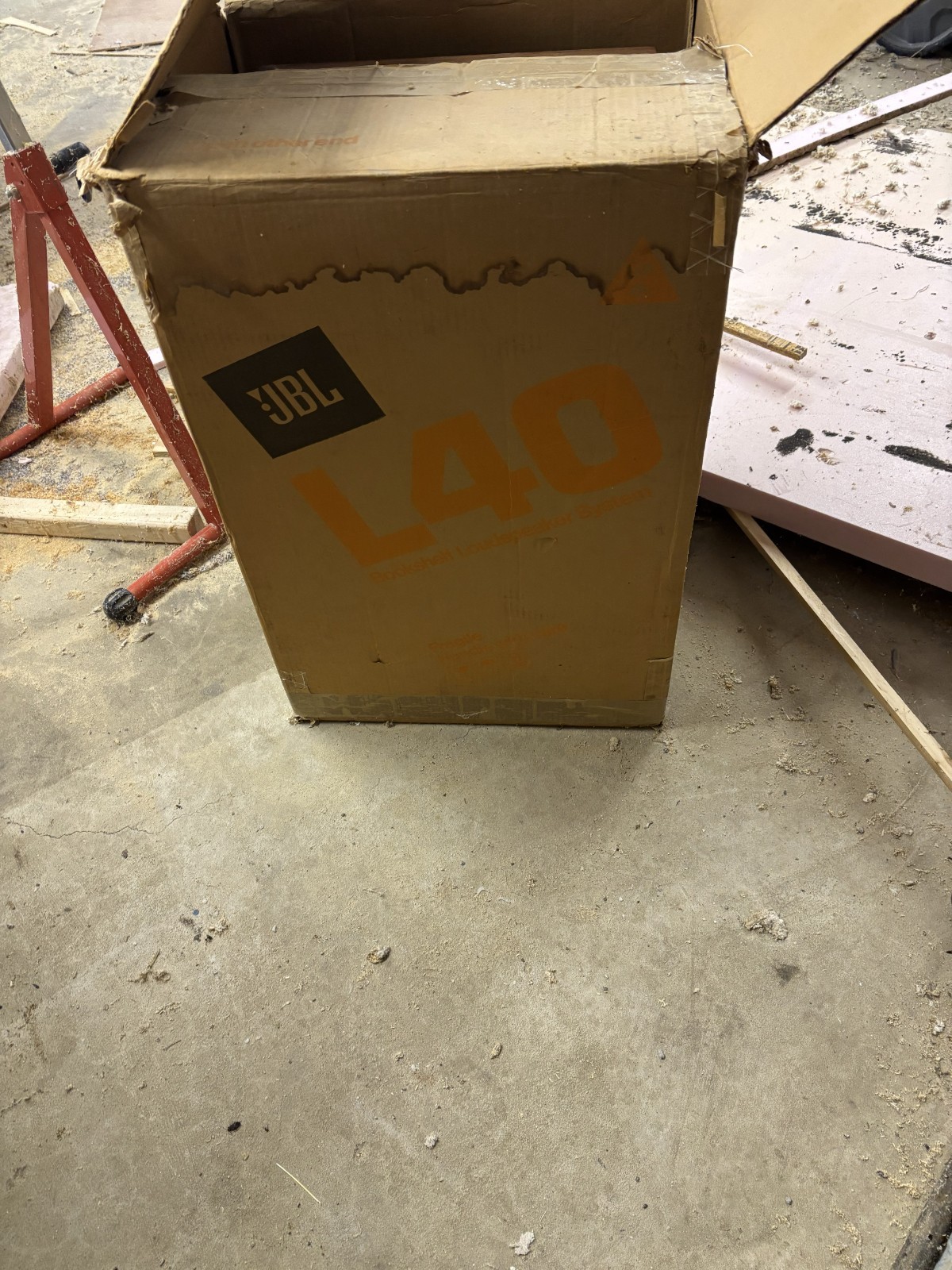
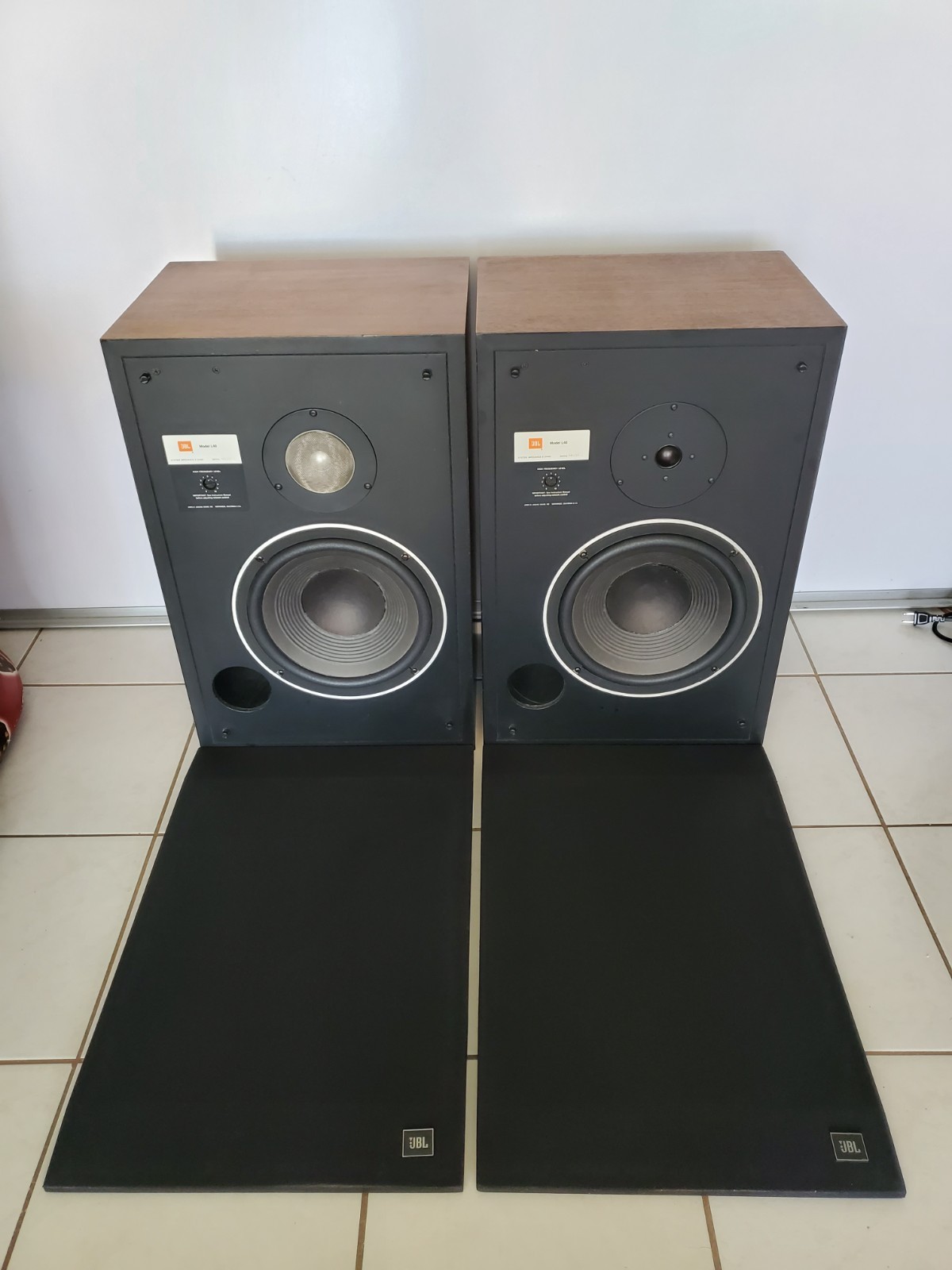

As an eBay Partner, we earn from qualifying purchases. This helps support our independent vintage technology research.
Related Models
- JBL 4310 (1970)
- JBL 4315 Control Monitor (1977)
- JBL L110A (1975)
- JBL 4311B (1975)
- JBL 4408 (1975)
- Akai AM-2850 (1975)
- Akai AP-206 (1975)
- Nakamichi BX-1 (1985)
- Acoustic Research research-ar-17 (1978)
- Acoustic Research AR-19 (1994)