JBL L26 Decade: The Pinnacle of 1970s High-Fidelity Floorstanding Design
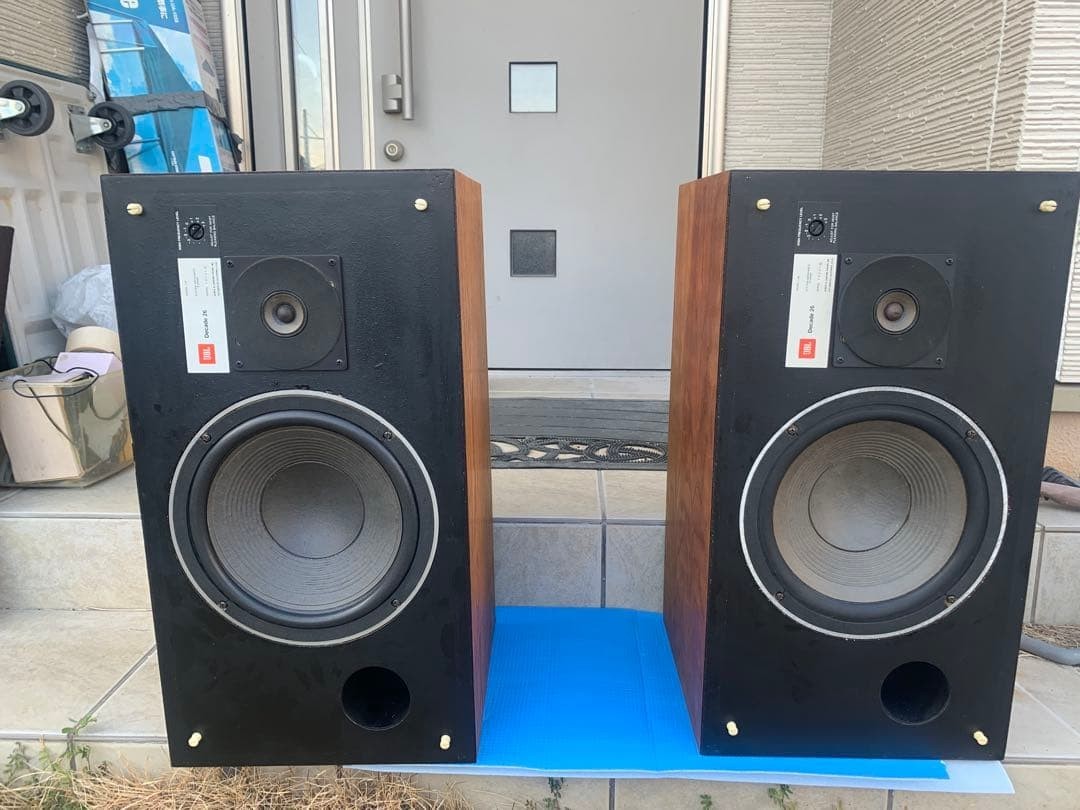
The JBL L26 Decade stands as a landmark achievement in American loudspeaker engineering, representing the culmination of JBL’s expertise in professional and consumer audio during the golden era of high-fidelity. Introduced in 1976 to commemorate JBL’s 40th anniversary—hence the “Decade” name—the L26 was positioned as the flagship of JBL’s consumer speaker line, bridging the gap between studio monitor performance and home audio refinement. With its striking industrial design, advanced driver technology, and powerful sonic delivery, the L26 Decade remains a highly sought-after vintage speaker among audiophiles and collectors.
Historical Context and Release Years
JBL (originally James B. Lansing Designs) had already established a formidable reputation in the professional audio world by the mid-1970s, supplying drivers and monitors to recording studios and concert venues worldwide. The L26 Decade was developed during a period of intense innovation in home audio, when manufacturers were striving to deliver accurate sound reproduction with greater efficiency and dynamic range. Released in 1976 and produced through 1980, the L26 was part of JBL’s “Decade Series,” which also included the smaller L16 and L19 models. The L26 was the largest and most ambitious of the trio, designed to deliver full-range performance without the need for a subwoofer.
The speaker’s design was heavily influenced by JBL’s professional monitors, particularly the 4310 and 4311 studio standards. However, the L26 was tailored for home use with aesthetic refinements such as real wood veneer finishes (walnut, black ash, and the rare rosewood variant) and a sleek, trapezoidal cabinet that reduced internal standing waves.
Technical Specifications
| Specification | Detail |
| Model | JBL L26 Decade |
| Type | 3-way, bass reflex floorstanding speaker |
| Drivers | 12" woofer (M22F), 5" midrange (M80F), 1" titanium dome compression driver (2406) with 15° x 45° elliptical horn |
| Crossover Frequency | 1.8 kHz (woofer/mid to tweeter) |
| Impedance | 8 ohms nominal |
| Sensitivity | 92 dB (1W/1m) |
| Frequency Response | 45 Hz – 20 kHz (±3 dB) |
| Recommended Amp Power | 20–200 watts per channel |
| Enclosure | Vented (bass reflex) with front-firing port |
| Dimensions (H×W×D) | 30.5" × 13.5" × 13.5" |
| Weight | 65 lbs (29.5 kg) per speaker |
| Finish Options | Walnut, black ash, rosewood (rare) |
| Production Years | 1976–1980 |
Sound Quality Characteristics
The JBL L26 Decade is renowned for its dynamic, punchy, and highly detailed sound signature—a hallmark of JBL’s “live” sonic character. The large 12-inch M22F woofer delivers deep, articulate bass with excellent transient response, capable of reaching down to 45 Hz with authority. The bass reflex design enhances low-end extension and efficiency, making the L26 responsive even to moderately powered amplifiers.
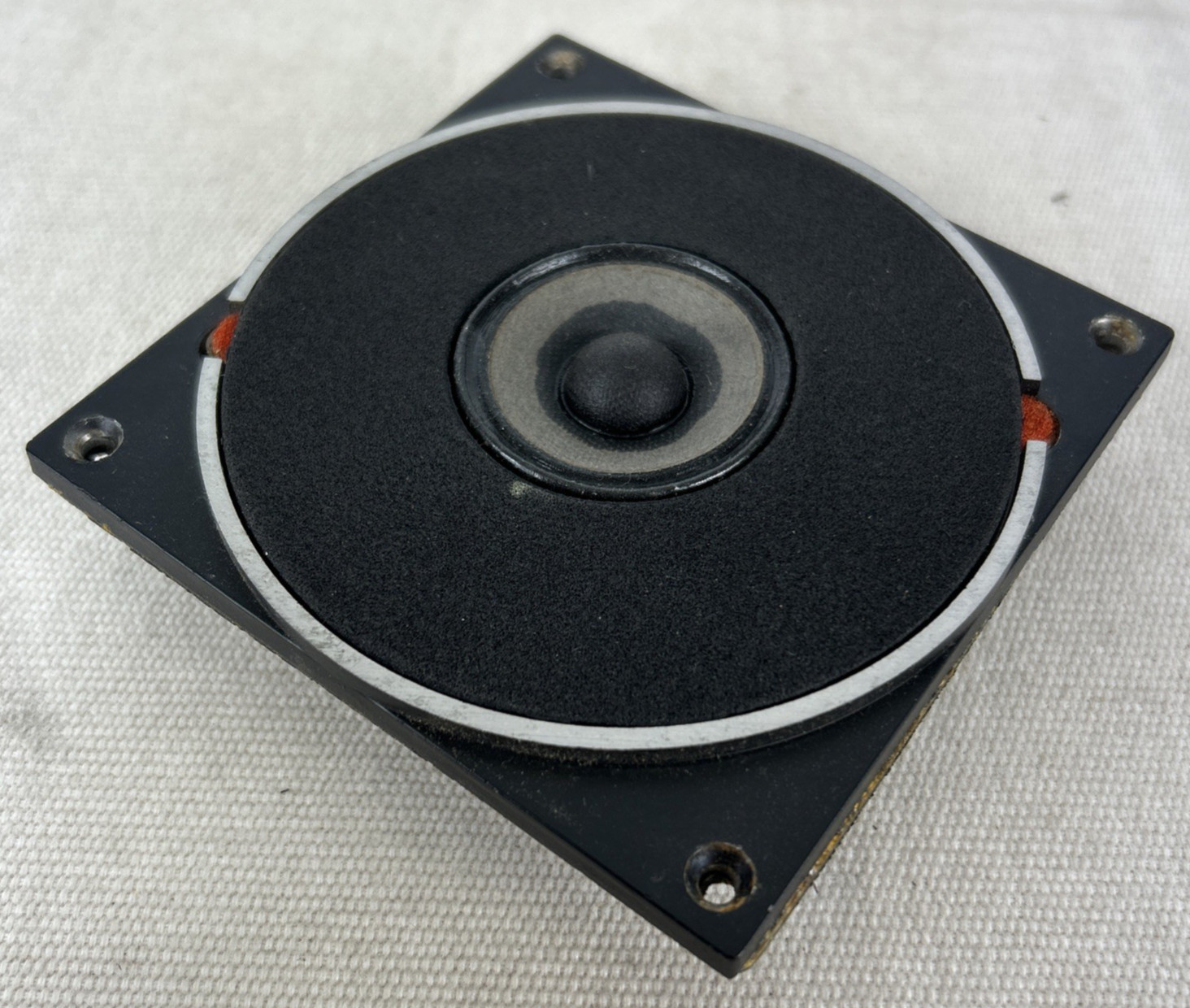
The 5-inch M80F midrange driver, derived from JBL’s studio monitor lineage, provides a clear and forward vocal presence. This contributes to the speaker’s excellent imaging and midrange clarity, ideal for vocal-centric genres like jazz, rock, and acoustic music.
The standout feature is the 1-inch 2406 high-frequency compression driver mounted on an elliptical horn. This professional-grade tweeter delivers exceptional high-frequency extension and dynamic headroom, with a crisp yet non-fatiguing top end when properly set up. The horn loading increases sensitivity and directivity, contributing to the L26’s ability to “fill a room” with sound while maintaining focus.
Overall, the L26 presents a lively, energetic soundstage with wide dispersion and high resolution. It excels with rock, funk, and live recordings, where its dynamic punch and clarity shine. However, its forward mid-treble can be revealing of poor recordings or bright amplification, so system synergy is key.
Notable Features and Innovations
The L26 Decade introduced several innovations for its time:
- Horn-Loaded High-Frequency Driver: The use of a compression driver with an elliptical horn was rare in consumer speakers and borrowed directly from JBL’s professional line, offering superior efficiency and control.
- Trapezoidal Cabinet Design: This shape minimized internal resonances and front baffle diffraction, improving imaging and reducing coloration.
- Modular Driver Design: The L26 used JBL’s standardized driver mounting system, allowing for easier servicing and upgrades.
- High Sensitivity: At 92 dB, the L26 is highly efficient and works well with tube amplifiers and lower-powered solid-state receivers.
Market Value and Collectibility
Today, the JBL L26 Decade is considered a classic of 1970s American hi-fi. Well-maintained pairs in walnut or black ash finish typically sell between $800 and $1,500 on the secondary market, with rare rosewood versions commanding premiums up to $2,000. Condition is critical—original grilles, undamaged veneer, and functional drivers significantly affect value.
Collectibility is high among vintage audio enthusiasts, particularly those who appreciate JBL’s “golden era” sound. The L26 is often praised for its blend of studio monitor DNA and home-friendly aesthetics. Its relative rarity (short production run) and status as a flagship model enhance its desirability.
Common Issues and Maintenance
While robustly built, aging L26s may exhibit several common issues:
- Surround Rot: The foam surrounds on the woofer and midrange drivers often degrade after 40+ years, leading to flapping or distortion. Replacement with modern butyl rubber surrounds is a common and effective fix.
- Capacitor Aging: The crossover capacitors can dry out, causing imbalance or tweeter damage. Replacing them with modern metal-film or polypropylene equivalents is recommended.
- Grille Fabric Deterioration: Original acoustically transparent grilles may be torn or missing. Reproduction grilles are available from specialty vendors.
- Horn Driver Diaphragm Fatigue: Though durable, the titanium diaphragm in the 2406 driver can develop micro-cracks. Testing for distortion at high volumes is advised.
Regular maintenance—such as checking driver alignment, cleaning terminals, and ensuring secure cabinet joints—can extend the life of these speakers indefinitely. Many owners report successful restoration projects that return the L26 to (or beyond) original performance.
Comparison to Similar Models
| Model | Key Differences |
| JBL L100 Classic | Smaller 12" 3-way; more common, less expensive; similar sound but less bass extension |
| JBL L88 Century | Successor model; improved crossover, smoother response; rarer and more costly |
| AR-9 | Competing acoustic suspension design; warmer, more relaxed sound; less dynamic |
| KLH Model Eleven | Similar size; planar midrange; smoother highs but less punch and efficiency |
| Infinity IRS Beta | More advanced, full-range electrostatic; far more complex and expensive |
While the L100 Classic is more iconic due to its popularity, the L26 Decade offers superior bass performance, higher sensitivity, and a more refined crossover design. It occupies a sweet spot between raw studio monitor power and high-end home audio refinement.
Conclusion
The JBL L26 Decade is more than just a vintage speaker—it’s a statement of engineering ambition and sonic integrity from one of America’s most influential audio companies. Its blend of professional-grade components, elegant design, and dynamic sound makes it a standout in any vintage audio collection. For the audiophile seeking a speaker that delivers both emotional impact and technical prowess, the L26 Decade remains a compelling choice, nearly five decades after its debut. With proper care and restoration, it continues to honor its name: a true decade of excellence, and beyond.
eBay Listings


As an eBay Partner, we earn from qualifying purchases. This helps support our independent vintage technology research.
Related Models
- JBL 4310 (1970)
- JBL 4315 Control Monitor (1977)
- JBL L110A (1975)
- JBL 4311B (1975)
- JBL 4408 (1975)
- Akai AM-2850 (1975)
- Akai AP-206 (1975)
- Nakamichi BX-1 (1985)
- Acoustic Research research-ar-17 (1978)
- Acoustic Research AR-19 (1994)