JBL L166: The Tower of Power in the Golden Age of Hi-Fi
The JBL L166, introduced in 1976, stands as a monumental speaker from the golden era of high-fidelity audio. Representing the pinnacle of JBL’s consumer speaker engineering during the late 1970s, the L166 was designed for audiophiles and music lovers who demanded both dynamic power and refined tonal accuracy. With its striking three-way, three-driver tower design, the L166 combined JBL’s legendary professional audio heritage with high-end home audio aspirations, creating a speaker that remains revered among vintage audio enthusiasts today.
Historical Context and Release Years
The mid-to-late 1970s marked a transformative period for home audio. Stereo systems were moving from modest bookshelf setups to larger, more powerful floor-standing designs as living rooms became listening rooms. JBL, already renowned for its studio monitors used in recording studios worldwide, leveraged its expertise in driver technology and acoustic engineering to produce a line of premium home speakers under its "L-series." The L166 was introduced in 1976 as a flagship model in this lineup, succeeding the L160 and preceding the L180.
Manufactured in the USA at JBL’s plant in North Hollywood, California, the L166 was part of a broader trend where American speaker manufacturers—like AR, KLH, and Acoustic Research—competed to offer high-efficiency, full-range speakers that could handle the growing power output of solid-state amplifiers. The L166 was marketed as a "reference-quality" speaker, capable of delivering concert-hall dynamics in a domestic environment.
Production of the L166 continued until 1981, when it was replaced by the L180, which featured updated cosmetics and minor driver refinements. However, the L166 remains the more sought-after model due to its original engineering and classic aesthetic.
Technical Specifications
| Specification | Detail |
| Type | 3-way, bass reflex floor-standing |
| Drivers | 12" (305 mm) low-frequency, 5" (127 mm) midrange, 1" (25 mm) titanium dome tweeter |
| Crossover Frequency | 1.8 kHz (midrange to tweeter), 800 Hz (woofer to midrange) |
| Impedance | 8 ohms (nominal) |
| Sensitivity | 91 dB (1W/1m) |
| Frequency Response | 45 Hz – 20 kHz (±3 dB) |
| Recommended Amplifier Power | 20 – 150 watts |
| Enclosure Type | Vented (bass reflex with rear port) |
| Dimensions (H x W x D) | 26" x 13.5" x 13" (660 x 343 x 330 mm) |
| Weight | 62 lbs (28.1 kg) per speaker |
| Finish Options | Walnut veneer (standard), black ash, rosewood (rare) |
| Terminals | Single binding posts (5-way) |
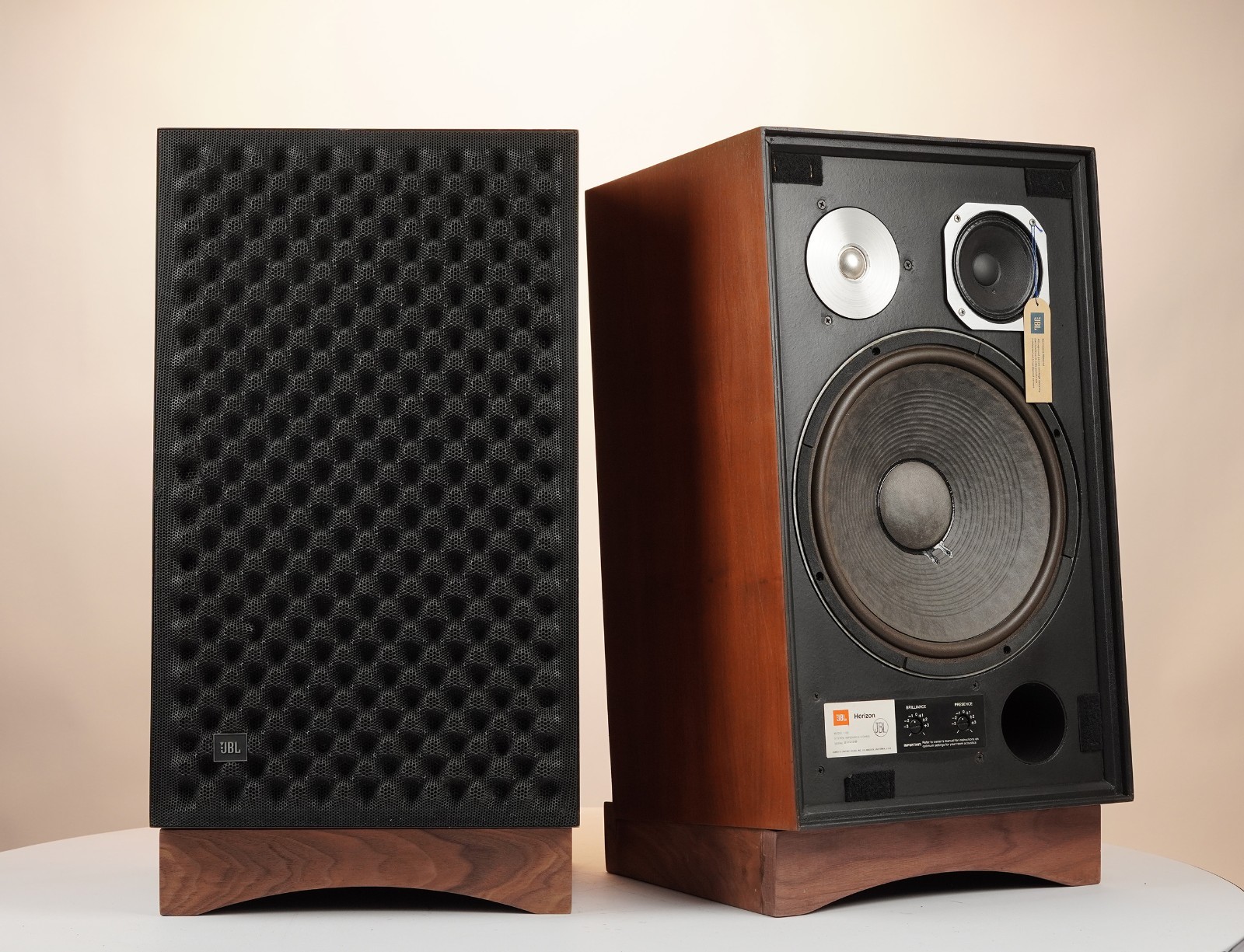
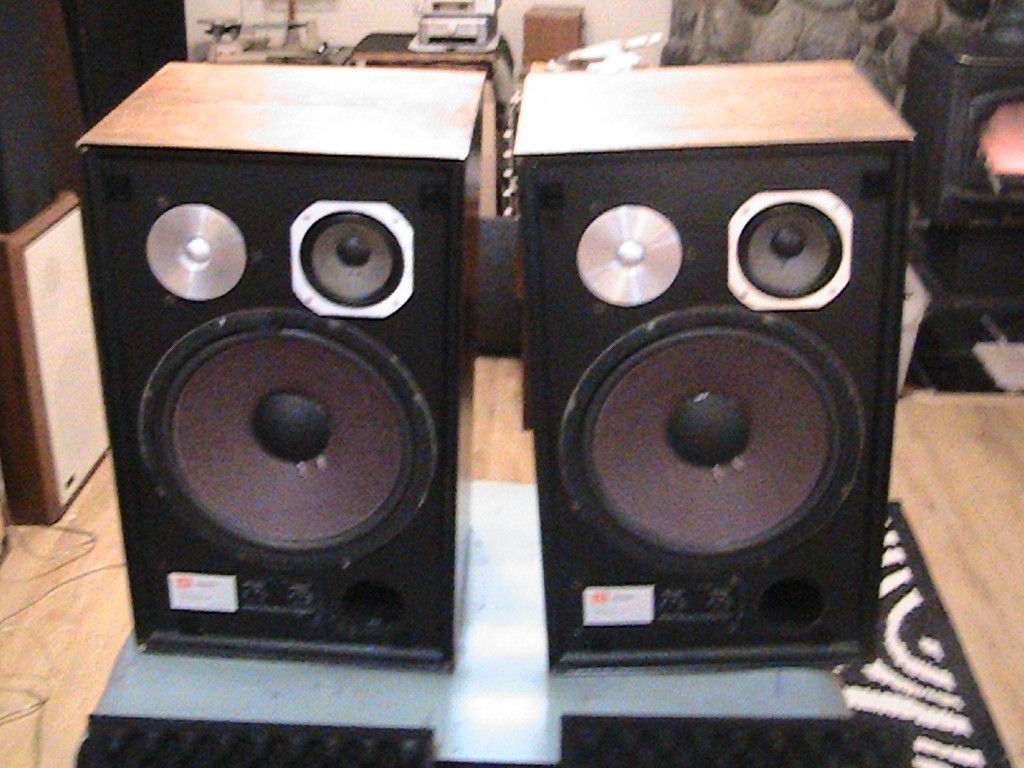
The L166’s 12-inch woofer, based on JBL’s iconic M22F cone design, was engineered for deep, controlled bass response. The 5-inch midrange driver (M17F) used a butyl rubber surround and a doped paper cone for smooth vocal reproduction. The 1-inch titanium dome tweeter (T25F) was a hallmark of JBL’s high-frequency design at the time, offering extended highs with excellent dispersion.
Sound Quality Characteristics
The JBL L166 delivers a sound signature that is dynamic, detailed, and unapologetically bold. With a sensitivity of 91 dB, these speakers are highly efficient and respond beautifully to both tube and solid-state amplifiers. They are particularly well-suited to classic rock, jazz, and orchestral music, where their ability to handle transients and wide dynamic swings truly shines.
The bass is deep and punchy, extending down to 45 Hz with authority—remarkable for a speaker of its era. The midrange is clear and forward, making vocals and instruments sound lifelike and present. The titanium tweeter adds sparkle and air to the top end, though some listeners find it slightly bright, especially with poorly recorded material. A break-in period of 50–100 hours is recommended to soften the treble and allow the drivers to settle.
Overall, the L166 presents a spacious soundstage with excellent imaging, especially when properly positioned in a room with some toe-in and adequate space from rear walls.
Notable Features and Innovations
- Three-way design with dedicated midrange: At a time when many competitors used two-way designs, the L166’s dedicated midrange driver ensured cleaner vocal reproduction and reduced intermodulation distortion.
- Titanium dome tweeter: One of the first consumer speakers to use titanium in the tweeter dome, offering durability and extended high-frequency response.
- Hand-built in the USA: Each pair was assembled and tested in JBL’s California facility, ensuring high build quality.
- Classic JBL styling: The L166 features a trapezoidal cabinet with a flared front baffle, reducing internal standing waves and diffraction. The iconic JBL logo medallion and woven grille add to its vintage appeal.
Market Value and Collectibility
Today, the JBL L166 is considered a collectible classic. Well-maintained pairs in walnut veneer typically sell for $600–$1,000 per pair, depending on condition and originality. Rosewood and black ash finishes are rarer and can command premiums, especially if paired with original grilles and documentation.
Collectibility is driven by JBL’s strong reputation, the speaker’s historical significance, and its enduring performance. Audiophiles appreciate the L166 for its ability to compete with modern speakers in dynamics and clarity, particularly when paired with vintage tube amps like those from Marantz or McIntosh.
Common Issues and Maintenance
While robustly built, the L166 is not immune to age-related issues:
- Surround degradation: The foam surrounds on the woofer and midrange drivers can dry out and crumble after 40+ years. Re-foaming or reconing is often necessary and widely available through specialist services.
- Tweeter protection: The titanium dome is durable, but the crossover’s protection network (Zobel circuit) can fail. Checking and replacing resistors and capacitors in the crossover improves reliability.
- Grille fabric: The original woven grille cloth can fade or tear. Replacement kits are available from vintage audio suppliers.
- Cabinet finish: Scratches and wear on the veneer are common. Light polishing can restore luster, but refinishing should be done by a professional to preserve value.
Regular inspection of wiring, binding posts, and internal connections is recommended, especially if the speakers have been in storage.
Comparison to Similar Models
| Model | Key Differences |
| JBL L180 | Successor to L166; similar drivers but updated cabinet styling and slightly different crossover. Less bass extension. |
| AR-7 | Smaller, two-way design with folded horn; smoother, more laid-back sound. Lower sensitivity (86 dB). |
| KLH Model Eleven | Compact floor-stander with 10" woofer; less bass output but excellent imaging. Lower efficiency (87 dB). |
| Infinity SS-1 | More modern (1980s), with complex horn-loaded design. Higher sensitivity (96 dB), but heavier and more finicky to place. |
While the AR and KLH models emphasize neutrality and room integration, the JBL L166 is more about impact and presence—ideal for listeners who want their music to "fill the room" with energy.
Final Thoughts
The JBL L166 is more than just a vintage speaker—it’s a statement. It embodies the confidence and ambition of 1970s American audio engineering, combining high efficiency, powerful bass, and a commanding presence. For the vintage audio collector or the classic rock enthusiast, the L166 offers a thrilling listening experience that few modern speakers can replicate at any price.
If you find a well-preserved pair, especially with original drivers and grilles, consider it a treasure. With a little care and maintenance, the JBL L166 can continue to deliver authoritative, engaging sound for decades to come—proving that true classics never go out of style.
eBay Listings


As an eBay Partner, we earn from qualifying purchases. This helps support our independent vintage technology research.
Related Models
- JBL 4310 (1970)
- JBL 4315 Control Monitor (1977)
- JBL L110A (1975)
- JBL 4311B (1975)
- JBL 4408 (1975)
- Akai AM-2850 (1975)
- Akai AP-206 (1975)
- Nakamichi BX-1 (1985)
- Acoustic Research research-ar-17 (1978)
- Acoustic Research AR-19 (1994)