JBL L101 Lancer (Early 1970s)
Turn these on, and you’re not just hearing music—you’re feeling it through a 10-inch cone that delivers deep, articulate bass, paired with a smooth dome tweeter that never bites, all housed in a walnut cabinet crowned with solid marble that looks like it was carved for a designer living room.
Overview
The JBL L101 Lancer isn’t flashy, but it carries a quiet authority. Built in the early 1970s by JBL (James B. Lansing Sound, Inc.), this floor speaker system was designed to bring high-fidelity sound into the home without the bulk or price of JBL’s larger models. It’s a 2-way, 2-speaker system, part of the Lancer series—the company’s first line of acoustic suspension speakers—and it holds the distinction of being the smallest in that lineup. Positioned as a more affordable alternative to the Lancer 99 and Lancer 77, the L101 still delivers the engineering rigor JBL was known for, just in a more compact footprint.
Unlike bass reflex designs that use ports to enhance low-end output, the L101 relies on a sealed (acoustic suspension) enclosure. This means tighter, more controlled bass—less boom, more precision. The cabinet, Model C56 Dorian, is built with 3/4" walnut veneer over particle board, finished in a classic wood design that blends into mid-century interiors. But the real showstopper is the solid marble top plate, which JBL used specifically to reduce cabinet resonance and improve sonic clarity. It’s a smart solution: add mass, kill vibrations. But it also means the speaker weighs 58 lbs—this isn’t something you move around after setup. It’s built to stay put.
Specifications
| Manufacturer | JBL (James B. Lansing Sound, Inc.) |
| Product type | Bookshelf/Floor Speaker System (Loudspeaker) |
| System type | 2-Way, 2-Speaker, Sealed (Acoustic Suspension) System |
| Woofer | LE10A-1, 10" Cone Type |
| Tweeter | LE20-1, 1-3/4" Dome |
| Network | LX10 |
| Impedance | 8 ohms |
| Power handling | 50 watts (continuous program) |
| Frequency response | 35 Hz to 20,000 Hz |
| Crossover frequency | 1,200 Hz |
| Sensitivity | 90 dB |
| Enclosure type | Sealed (acoustic suspension) |
| External dimensions (1973 catalog) | Width 440 x Height 620 x Depth 310 mm |
| Dimensions (Imperial) | 24-1/4" H x 14-1/2" W x 12-1/4" D |
| Weight | 58 lbs |
| Speaker housing model | Model C56 Dorian |
Key Features
Marble Top Plate: Mass as a Design Element
The solid marble top plate isn’t just a luxury flourish—it’s an acoustic upgrade. JBL engineered it to reduce the cabinet’s lowest resonance frequency, minimizing coloration and improving clarity, especially in the midrange. It’s a clever use of mass: the heavier the top, the less the box vibrates. But that brilliance comes with real-world consequences. At 58 lbs, these speakers demand two people to move safely, and shipping them is a logistical and financial headache. One crack in the marble, and both performance and value take a hit. It’s a design that rewards careful ownership.
10-Inch LE10A-1 Woofer and 1-3/4" Dome Tweeter: Balanced and Refined
The L101 pairs a 10-inch LE10A-1 cone woofer with a 1-3/4" LE20-1 dome tweeter—unusual for JBL, which was better known for horn-loaded designs. This dome tweeter delivers a smoother, more relaxed high end compared to the aggressive presence of horns. It’s ideal for long listening sessions, where harshness can become fatiguing. The woofer, housed in a sealed enclosure, offers tight, well-damped bass that extends down to 35 Hz—impressive for a speaker of this size. It’s not about raw power; it’s about control and musicality. The 90 dB sensitivity ensures it plays efficiently with most amplifiers, and the 50-watt power handling means it can handle dynamic peaks without strain.
LX10 Crossover Network: Precision Signal Splitting
The LX10 network handles the crossover duties at 1,200 Hz, cleanly separating the signal between the woofer and tweeter. As part of JBL’s Classic Model lineage, the components are built to last, reflecting the company’s commitment to durability. While aging capacitors can degrade over decades, the original design prioritizes reliability. There’s no complex topology documented, but the LX10 is known to be a straightforward, effective passive network that contributes to the L101’s consistent performance over time.
Hand-Carved Lattice and Fabric Grille: Elegance with a Fragile Edge
The front grille features a hand-carved lattice covered in a non-removable, off-white, open-weave fabric. It’s a beautiful detail that enhances the speaker’s furniture-grade appearance. But it’s also a vulnerability. The lattice is fragile—prone to scratches and damage from impacts—and the fabric, while durable, can’t be removed for cleaning or replacement without risk. Unlike modern grilles, this one is integrated, so any repair work has to be done with extreme care. Owners often face a choice: preserve the original look at all costs, or accept that time will leave its mark.
Historical Context
The JBL L101 Lancer was part of the Lancer series, JBL’s first dedicated line of acoustic suspension speakers. This marked a shift from the company’s pro-audio roots toward the high-end home market, where sealed-box designs were gaining favor for their tighter bass and cleaner transient response. Positioned below the larger Lancer 99 and Lancer 77, the L101 brought JBL’s engineering to a broader audience. It was the smallest model in the series, offering a compact form factor without sacrificing the brand’s reputation for quality. While the exact market conditions or competitors aren’t documented, its release in the early 1970s placed it in a golden era of stereo adoption, when audiophiles were building serious systems at home.
Collectibility & Value
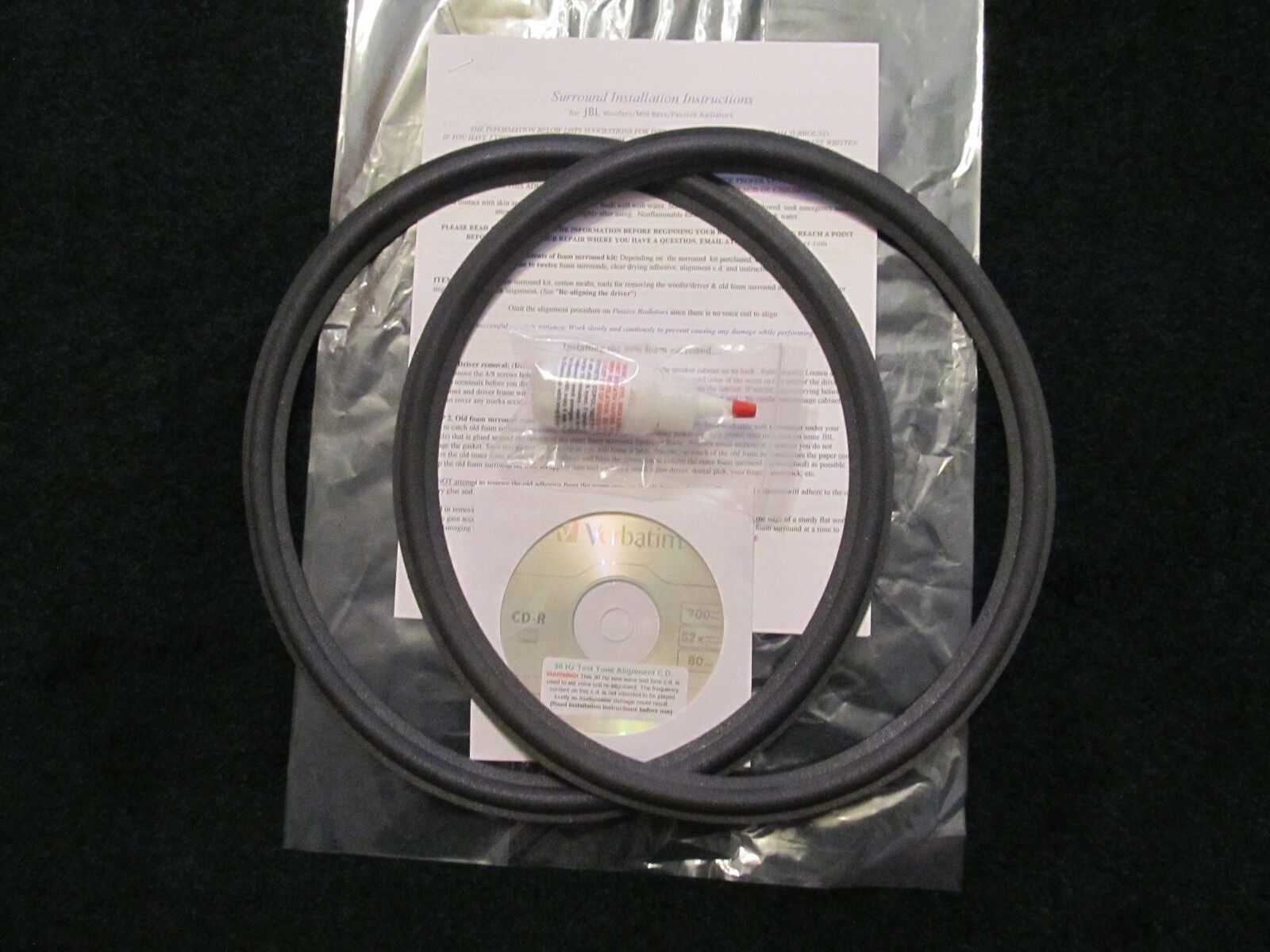
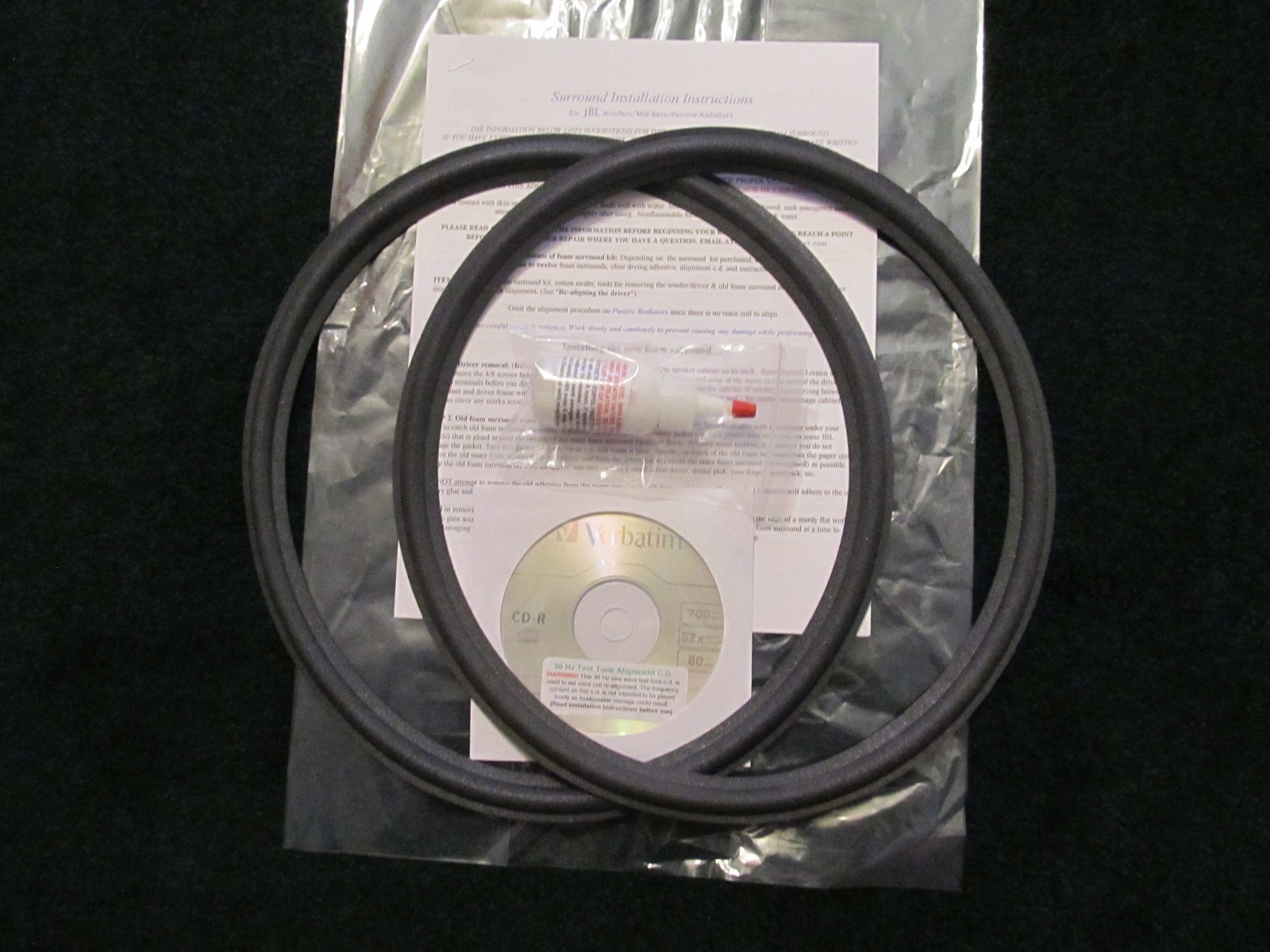
The JBL L101 Lancer remains a sought-after model among vintage audio collectors, particularly those who appreciate JBL’s transition into high-fidelity home speakers. Original pricing in Japan ranged from ¥219,300 to ¥230,800 per unit around 1972–1973. Today, market value varies significantly by condition and region: recent examples have sold for ~$1,000–$1,200 in the US and between ¥238,000 and ¥452,727 in Japan. The biggest threat to longevity is the deterioration of the woofer’s foam surrounds, which often require replacement to restore performance. Cosmetic issues—scratches on the lattice, stains on the drivers, or damage to the marble top—can drastically reduce value. And as owners note, “the marble top makes shipping pricey,” so local pickup is often preferred. A clean, original pair with functional drivers is a prize, but expect to budget for maintenance.
eBay Listings


As an eBay Partner, we earn from qualifying purchases. This helps support our independent vintage technology research.
Related Models
- JBL 4310 (1970)
- JBL 4315 Control Monitor (1977)
- JBL L110A (1975)
- JBL 4311B (1975)
- JBL 4408 (1975)
- Akai AM-2850 (1975)
- Akai AP-206 (1975)
- Nakamichi BX-1 (1985)
- Acoustic Research research-ar-17 (1978)
- Acoustic Research AR-19 (1994)