JBL L100A: The Iconic Disco-Era Floorstander That Defined a Generation
The JBL L100A, affectionately known as the "Century" series speaker, stands as one of the most iconic and visually distinctive loudspeakers of the late 1970s and early 1980s. Released in 1978 as an evolution of the original L100 (1972), the L100A combined bold industrial design with high-performance audio engineering, capturing the spirit of the disco and rock eras. Instantly recognizable by its radial "waffle cone" grille and striking color-matched finishes, the L100A wasn’t just a speaker—it was a statement piece for the home.
Historical Context and Release Years
JBL (James B. Lansing Designs) introduced the original L100 in 1972 as a consumer version of their professional studio monitors. It was a commercial success, but by the late 1970s, audio tastes and interior design trends were shifting. In response, JBL launched the L100A in 1978 with updated cosmetics and subtle acoustic refinements. The "A" revision featured a redesigned crossover network, improved driver materials, and a more refined bass reflex port. The L100A remained in production until 1984, when it was succeeded by the L100 II. During its six-year run, the L100A became one of the best-selling high-fidelity speakers of its time, found in living rooms, bachelor pads, and recording studios alike.
Technical Specifications
| Specification | Detail |
| Model | JBL L100A |
| Type | 3-way, bass reflex floorstanding speaker |
| Woofers | 1 × 12-inch (305 mm) JBL D130F |
| Midrange | 1 × 5.25-inch (133 mm) JBL M110 |
| Tweeter | 1 × 1-inch (25 mm) JBL 2406 dome |
| Crossover Frequency | 1.5 kHz (midrange to tweeter), 500 Hz (woofer to midrange) |
| Impedance | 8 ohms (nominal) |
| Sensitivity | 93 dB (1W/1m) |
| Frequency Response | 45 Hz – 20 kHz (±3 dB) |
| Enclosure | Bass reflex with front-firing port |
| Dimensions (H×W×D) | 24.5 × 14.5 × 12.5 inches (62.2 × 36.8 × 31.8 cm) |
| Weight | 52 lbs (23.6 kg) per speaker |
| Finish Options | Walnut, black ash, rosewood |
| Recommended Amp Power | 20–200 watts |
Sound Quality Characteristics
The JBL L100A is renowned for its dynamic, punchy, and energetic sound signature—perfect for rock, funk, disco, and jazz. With a sensitivity of 93 dB, these speakers are easy to drive and respond well to both tube and solid-state amplifiers. The 12-inch D130F woofer delivers deep, authoritative bass with excellent transient response, while the M110 midrange provides clear, articulate vocals. The 2406 high-frequency driver offers crisp, detailed highs without harshness when properly broken in.
One of the L100A’s defining traits is its "forward" midrange, which places vocals and lead instruments prominently in the soundstage. This makes them excellent for live recordings and classic rock, though some listeners may find them slightly aggressive with bright source material or poor recordings. Imaging is wide and spacious, though not as precise as modern point-source designs. Overall, the L100A delivers a thrilling, engaging listening experience that prioritizes rhythm and energy over clinical neutrality.
Notable Features and Innovations
The L100A’s most striking feature is its design. The radial "waffle cone" grille—available in color-coordinated finishes like avocado green, harvest gold, and terracotta—was both functional and fashionable. The grille’s perforated pattern helped reduce diffraction and standing waves, while its bold look made the speakers a centerpiece of 1970s home decor.
Internally, the L100A used JBL’s professional-grade drivers adapted for home use. The D130F woofer, derived from the legendary D130 used in studio monitors, offered exceptional power handling and durability. The M110 midrange provided smooth transition between bass and treble, and the 2406 tweeter was one of the first production dome tweeters used in consumer speakers, offering extended high-frequency response.
The bass reflex port, located at the front of the cabinet, allowed for flexible placement—unusual for the era—and enhanced low-frequency output without requiring excessive cabinet size.
Market Value and Collectibility
Today, the JBL L100A is a sought-after vintage collectible. In original, working condition with intact grilles and finish, prices typically range from $400 to $800 per pair, depending on condition and rarity of finish. Rosewood and walnut models in excellent condition can command higher prices, especially if paired with original documentation or packaging.
Collectibility is driven by both nostalgia and performance. Audiophiles appreciate their dynamic sound, while interior designers and retro enthusiasts value their mid-century modern aesthetic. The L100A has also enjoyed a resurgence thanks to pop culture appearances—featured in films like Boogie Nights and Guardians of the Galaxy, and seen in the studios of artists like Dr. Dre and Kanye West.
Common Issues and Maintenance
Like all vintage speakers, the L100A is prone to age-related wear. The most common issues include:
- Degraded foam surrounds: The original foam on the woofer and midrange drivers often disintegrates after 30–40 years. Re-foaming or reconing is highly recommended for optimal performance.
- Tweeter failure: The 2406 tweeter can fail due to overdriving or age. Some owners upgrade to modern equivalents or JBL’s current 2408 series.
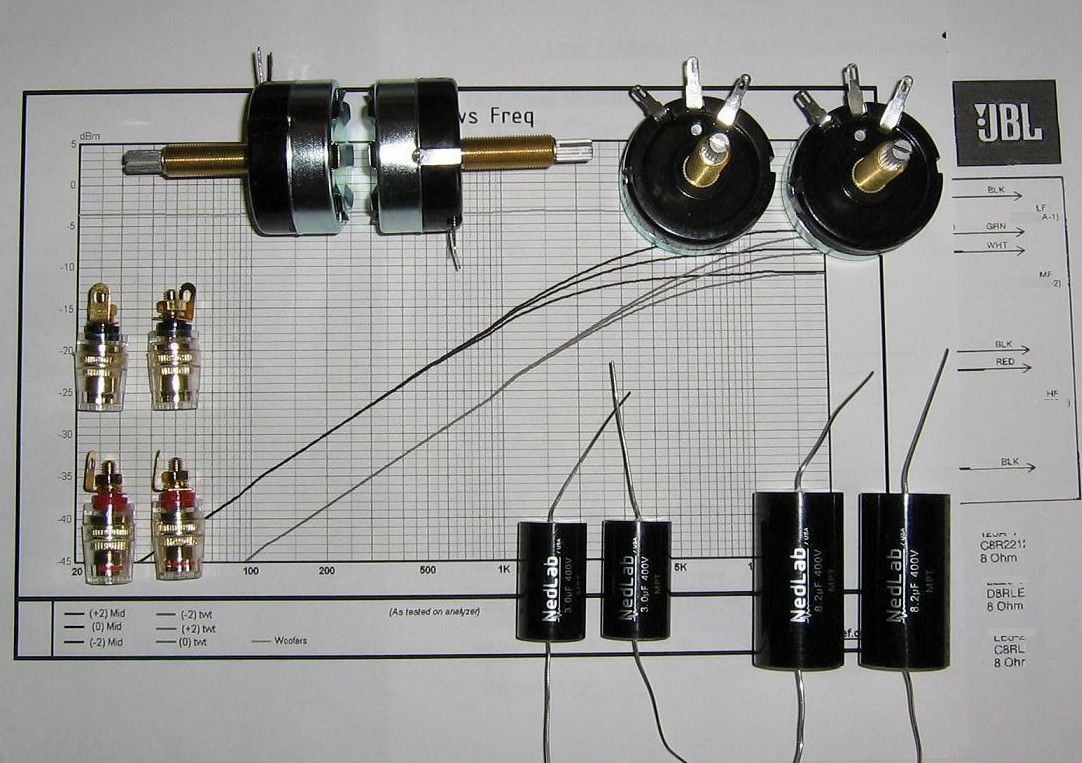
- Crossover component aging: Electrolytic capacitors in the crossover network may dry out, leading to dull sound or distortion. Replacing these with modern film capacitors can restore clarity and dynamics.
- Grille damage: The plastic grilles are brittle and prone to cracking. Replacement grilles are available from specialty vendors, though original color-matched ones are prized.
Regular maintenance includes cleaning the cabinet with a wood-safe polish, checking connections, and ensuring the speakers are placed on stable, vibration-damping stands.
Comparison to Similar Models
| Model | Key Differences |
| JBL L100 (1972) | Original version with less refined crossover and older driver versions. Slightly less efficient and less bass control. |
| JBL L100 II | Released in 1984 with updated cosmetics, improved foam surrounds, and revised crossover. Less collectible due to less iconic look. |
| KLH Model Eleven | Similar era, 3-way floorstander. More neutral, less dynamic. Lacks the visual flair of the L100A. |
| AR-3a | Acoustic Research’s sealed-box design. Warmer, more natural midrange but less bass impact and sensitivity. |
| Infinity PS-16 | Contemporary competitor with similar size and output. More modern sound but less vintage appeal. |
Conclusion
The JBL L100A is more than a speaker—it’s a cultural artifact. Its bold design, powerful sound, and enduring legacy make it a cornerstone of vintage audio collecting. Whether you’re drawn to its disco-era glamour or its punchy, dynamic audio performance, the L100A remains a compelling choice for audiophiles and design lovers alike. With proper restoration and care, these speakers can deliver decades more of thrilling listening, proving that great design and great sound never go out of style.
eBay Listings



As an eBay Partner, we earn from qualifying purchases. This helps support our independent vintage technology research.
Related Models
- JBL 4310 (1970)
- JBL 4315 Control Monitor (1977)
- JBL L110A (1975)
- JBL 4311B (1975)
- JBL 4408 (1975)
- Akai AM-2850 (1975)
- Akai AP-206 (1975)
- Nakamichi BX-1 (1985)
- Acoustic Research research-ar-17 (1978)
- Acoustic Research AR-19 (1994)