JBL L45B Flair
1973 - 1975
Overview
The JBL L45B Flair, introduced in 1973, represented the most comprehensive reimagining of the Flair concept, establishing itself as the only three-way system within the entire L45 series. This iteration brought true full-range capability to the convertible horizontal-vertical platform, addressing the desires of serious listeners who demanded the midrange clarity and treble extension that two-way designs struggled to provide. The L45B elevated the Flair from an innovative lifestyle speaker to a legitimate high-end contender.
Three-Way Architecture
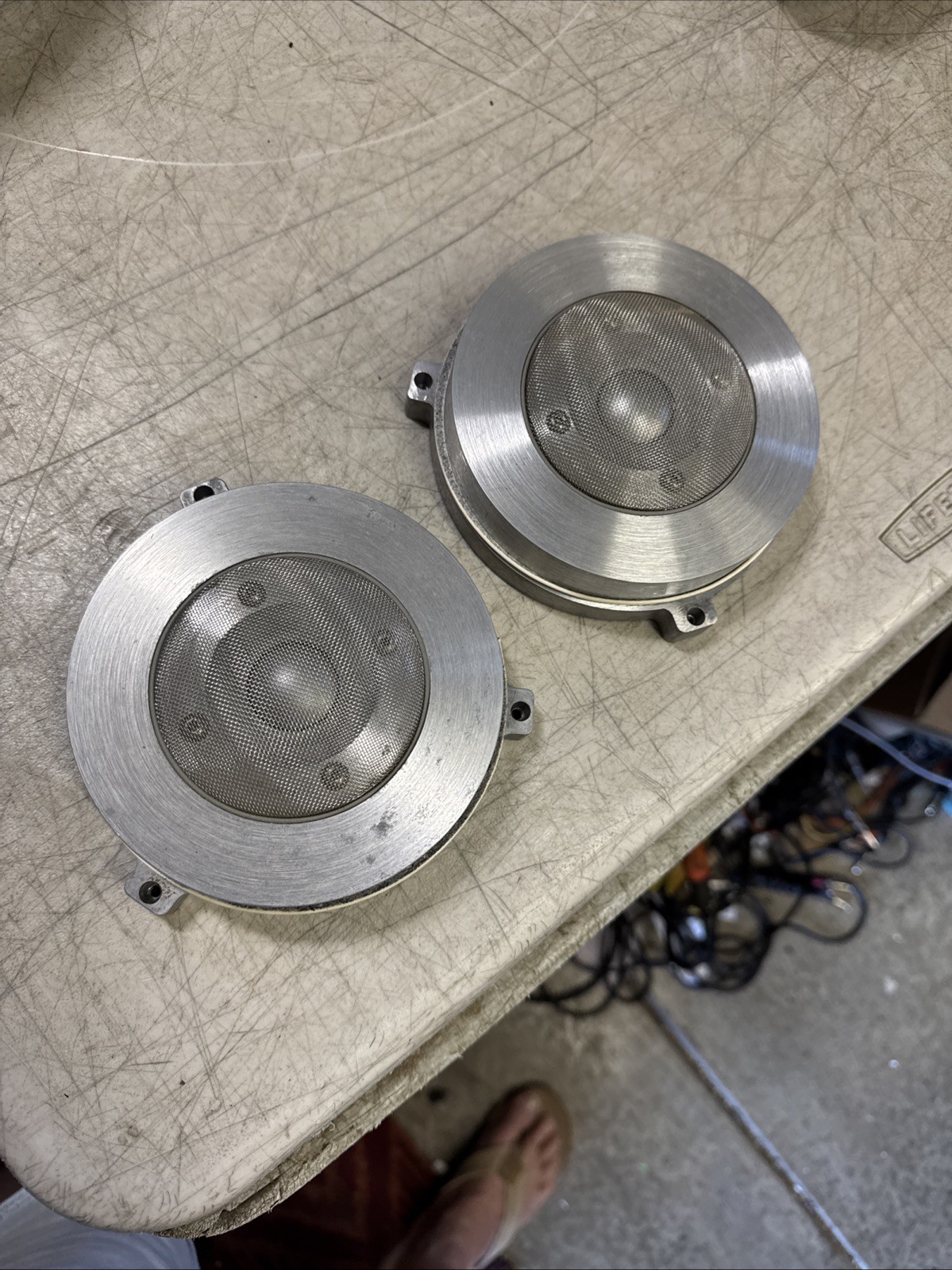
The defining characteristic of the L45B was its genuine three-way driver complement: a substantial 38cm cone woofer handling low frequencies, a dedicated 13cm cone midrange for vocal and instrumental clarity, and a 3.6cm tweeter for high-frequency air and detail. This configuration eliminated the midrange-treble compromise inherent in two-way designs, allowing each driver to operate within its optimal frequency range.
The L45B's driver lineup showcased JBL's professional heritage. The low-frequency section utilized the 135A or similar large-cone woofers capable of moving significant air volume while maintaining control. The dedicated midrange driver—a rarity in domestic speakers of the era—delivered the presence and intelligibility that made vocals sound convincingly human and instruments authentically timbral. The tweeter, whether implemented as a direct-radiating dome or horn-loaded compression driver depending on specific variant, extended frequency response to capture harmonic detail and spatial cues.
Multiple Personalities
True to the Flair philosophy, the L45B offered multiple configuration variants, each optimized for different sonic priorities. The L45B-001 combined the 130A woofer with LE175DLH compression driver for dynamic, theater-like impact. The L45B-030 paired the legendary D130 full-range woofer with the 075 ring radiator, creating a two-way system within the three-way platform that some listeners preferred for its coherence. The L45B-S1 utilized LE14A and LE175DLH for professional-grade monitoring capability, while the L45B-S4 combined the 130A with LE175 and HL91 horn for maximum efficiency and dynamics.
This configurability meant the L45B could serve as a domesticated studio monitor for recording enthusiasts, a home theater powerhouse for the emerging surround-sound curious, or a refined music system for classical and jazz aficionados. The modular approach acknowledged that "high fidelity" meant different things to different listeners.
Convertible Design Evolution
The L45B maintained the convertible base system that defined the Flair line, allowing vertical or horizontal orientation. However, the three-way design introduced additional considerations—vertical alignment provided optimal driver time alignment for critical listening, while horizontal placement suited casual entertainment and space-constrained rooms. The base height was slightly reduced to 60mm, lowering the center of gravity and enhancing stability for the heavier three-way cabinet.
Weighing 46.7-51.7kg depending on configuration, the L45B demanded thoughtful placement but rewarded the effort with performance that rivaled dedicated floorstanding systems. The substantial enclosure volume—maintained across the Flair line—provided the acoustic space necessary for genuine bass extension and midrange openness.
Interior Integration
In 1970s interiors, the L45B served as both audio transducer and sculptural statement. The smoked glass top, a Flair signature, complemented the era's fascination with reflective surfaces and modern materials. Whether positioned as twin towers flanking a listening chair or as horizontal plinths beneath a picture window, these speakers announced serious intent without sacrificing design coherence.
The L45B appealed to the audiophile who had outgrown entry-level equipment but wasn't ready to surrender living space to massive horn systems. It offered a middle path—genuine high-end performance within a form factor that respected domestic realities.
Home Listening Context
For the 1970s household, the L45B delivered the full spectrum of recorded music with authority. The three-way design's midrange clarity made it exceptional for vocal-heavy genres—singer-songwriter, opera, and jazz vocal—while the substantial woofer foundation handled orchestral climaxes and rock's bass demands without strain. The configurable treble options allowed tailoring to room acoustics and personal taste, from the forgiving dispersion of dome tweeters to the pinpoint imaging of horn systems.
Specifications
| Feature | Specification (Base L45B) |
| Type | 3-way bass reflex, convertible orientation |
| Woofer | 38cm cone type (135A) |
| Midrange | 13cm cone type (LE5-3) |
| Tweeter | 3.6cm cone/dome type |
| Crossover Frequencies | 1.2 kHz, 7.5 kHz |
| Impedance | 8 Ω |
| Sensitivity | 93 dB |
| Power Handling | 75W continuous |
| Dimensions (W×H×D) | 750 × 550 × 450 mm (plus 60mm base) |
| Weight | 49 kg |
The L45B Flair stands as perhaps the most accomplished expression of the convertible speaker concept—proof that innovation in form factor need not compromise acoustic excellence.
eBay Listings



As an eBay Partner, we earn from qualifying purchases. This helps support our independent vintage technology research.
Related Models
- JBL 4310 (1970)
- JBL 4315 Control Monitor (1977)
- JBL L110A (1975)
- JBL 4311B (1975)
- JBL 4408 (1975)
- Akai AM-2850 (1975)
- Akai AP-206 (1975)
- Nakamichi BX-1 (1985)
- Acoustic Research research-ar-17 (1978)
- Acoustic Research AR-19 (1994)