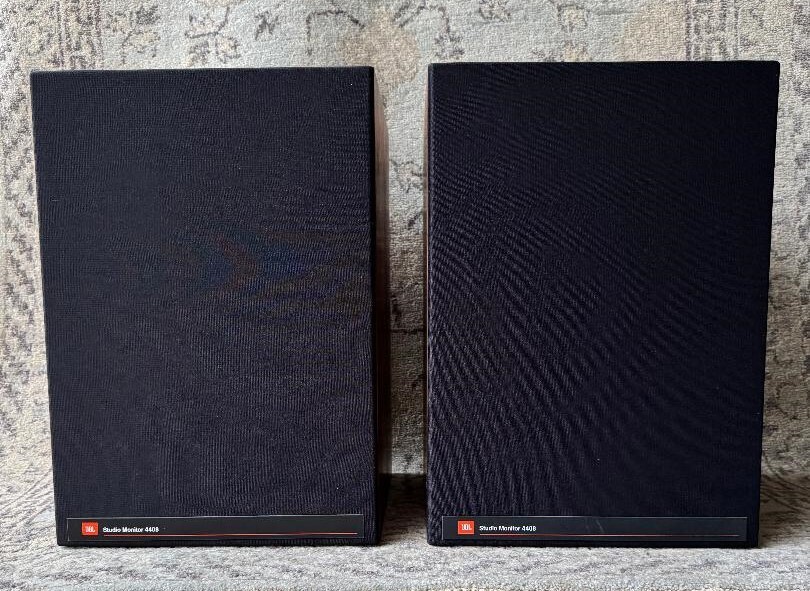
JBL 4408 (1986)
Not the flashiest name in JBL’s lineup, but this compact monitor delivers a startlingly full, articulate sound that still turns heads in small studios and vintage setups.
Overview
When JBL launched the 4408 in 1986, it wasn’t trying to reinvent the studio monitor—just refine it. Part of the 44 Series developed as a next-generation line of professional reference speakers, the 4408 was built for engineers who needed accuracy without taking up half the control room. It’s a compact studio monitor, smaller than the 4410 and 4412, but engineered with the same no-nonsense philosophy: tight bass, clean mids, and a tweeter that doesn’t flinch at high SPLs. Designed for space-restricted broadcast environments and critical nearfield monitoring, the 4408 found its footing in radio stations, editing suites, and project studios where clarity mattered more than showmanship.
This isn’t a speaker that shouts. It tells you exactly what’s on the tape—no added warmth, no aggressive highs, just a balanced, neutral response that makes mixing decisions easier. And while it’s often overshadowed by JBL’s larger three-ways or the later 4429, the 4408 carved out a quiet reputation for being one of the most honest two-ways the company ever made for professional use.
Specifications
| Manufacturer | JBL |
| Type | 2-Way, Bass Reflex System |
| Low frequency driver | 8" (200mm) cone type |
| High frequency driver | 1" (25mm) titanium dome |
| Woofer material | paper/fiber cone |
| Frequency response | 40Hz to 27kHz |
| Crossover frequency | 2.5kHz |
| Impedance | 8 Ω |
| Sensitivity | 89 dB (2.83V/1m) |
| Power handling | 100W continuous program |
| Enclosure type | Bass reflex system |
| External dimensions | 305 mm (W) x 439 mm (H) x 305 mm (D) |
| Weight | 12 kg (26.4 lbs) |
Key Features
The 4408’s strength lies in its focused engineering. It uses an 8" (200mm) cone-type woofer with a fiber cone diaphragm and an SFG magnetic circuit—technology aimed at reducing distortion and improving linearity under load. That translates to tight, controlled bass that doesn’t bloat, even when pushed hard. The bass reflex enclosure enhances low-end extension without sacrificing speed, making it surprisingly full-range for a compact design.
Up top, the 1" (25mm) pure titanium dome tweeter is where the 4408 really stands out. It features a Sonoglass diaphragm with a diamond edge pattern and reinforcing ribs—design cues inspired by Japanese origami—that extend response cleanly out to 27kHz. This isn’t just about reaching high frequencies; it’s about doing so without sacrificing efficiency or introducing harshness. The result is a tweeter that stays clear and detailed, even during long listening sessions.
The crossover is set at 2.5kHz, a deliberate choice to keep the woofer out of the upper midrange muddle while letting the tweeter handle the critical vocal and harmonic detail. And while the internal topology isn’t documented in detail, the overall system integration is tight—owners report smooth handoff and consistent off-axis response, which matters in real-world studio environments where perfect placement isn’t always possible.
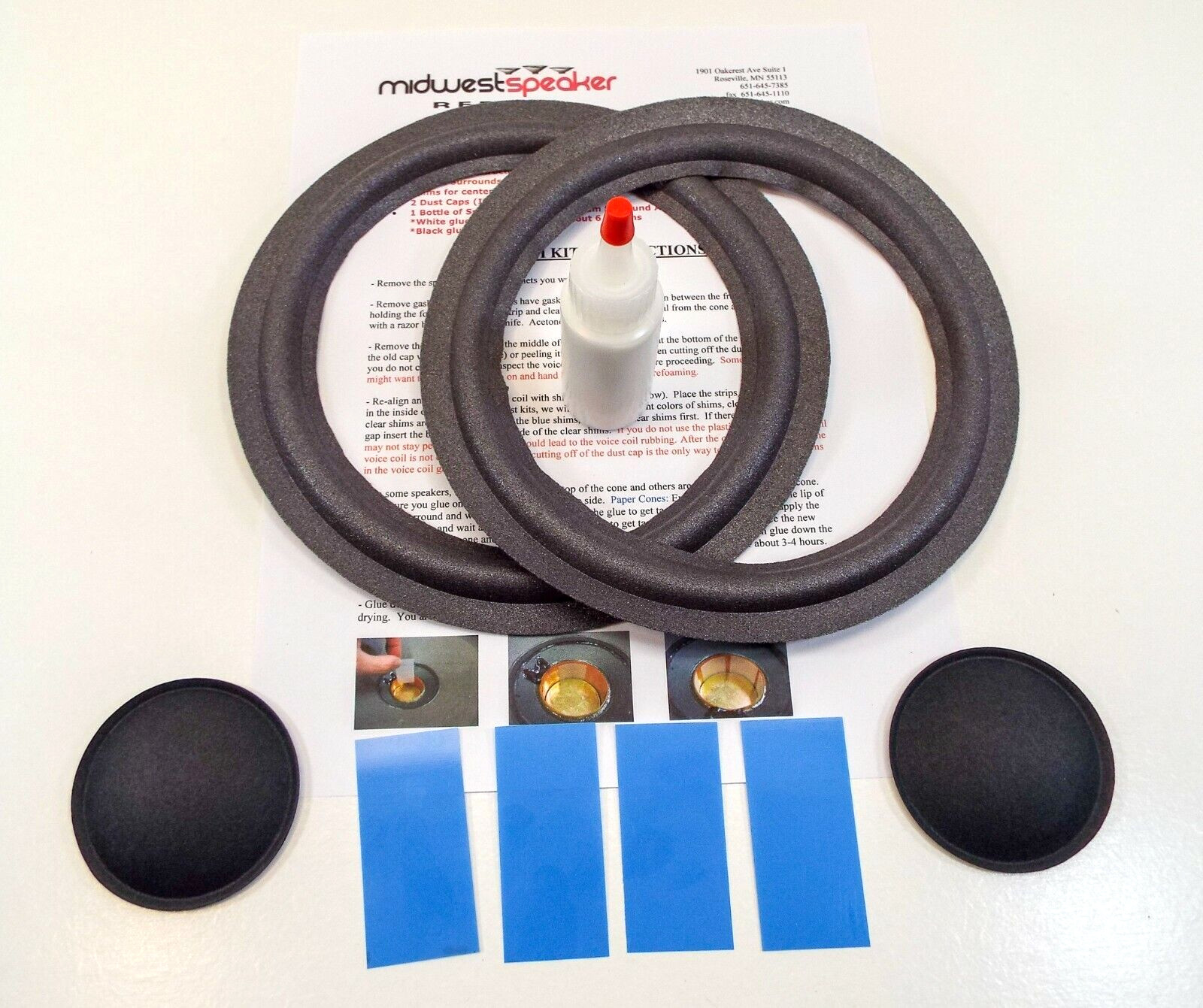
One thing to watch: the foam surrounds on the woofers are a known failure point over time. After decades, they dry out and crumble, leading to flapping or complete loss of bass. It’s not a flaw in design—just the reality of aging materials—but it’s something every buyer should check for.
Historical Context
The JBL 4408 was introduced in 1986 as part of the 44 Series, a line developed as a next-generation monitor series for professional use. Positioned below the larger 4410 and 4412 models, the 4408 brought JBL’s studio monitor DNA into a more compact, nearfield-friendly format. It was designed for critical listening in tight spaces—broadcast booths, small control rooms, editing suites—where engineers needed accuracy without the footprint of a full-range three-way.
While not as widely documented as some of its siblings, the 4408 was part of JBL Professional’s push to modernize their studio offerings in the late '80s. It reflects a shift toward more neutral, transparent monitoring tools at a time when digital recording was beginning to take hold and engineers demanded speakers that wouldn’t color the sound. Today, it’s listed as a legacy product by JBL Professional—a quiet nod to its role in the evolution of broadcast and studio monitoring.
Collectibility & Value
The JBL 4408 isn’t a blue-chip collectible like the L100, but it’s gained a loyal following among engineers and vintage audio enthusiasts who appreciate its honest, uncolored sound. Pairs in good condition are selling for approximately $399, according to recent listings—though prices can vary based on condition and whether the speakers have been serviced.
The most common issue is deterioration of the foam woofer surrounds, which almost always need replacement after 30+ years. Fortunately, refoam kits are widely available and typically cost between $20 and $30, making restoration affordable. Some users report that the original tweeters can fail—either from age or overdriving—and replacements can fetch around $150 on the secondary market, so it’s worth testing them before buying.
Owners describe the 4408 as full-range, articulate, and accurate, with a flat, neutral response ideal for mixing and mastering. The bass is tight and controlled, the highs extend effortlessly, and the overall balance makes it easy to spot problems in a mix. It’s not a speaker for bass-heavy modern genres—don’t expect sub-bass rumble—but for rock, jazz, and vocal-centric work, it holds up remarkably well.
If you’re after a no-frills, professional-grade monitor from the late '80s that still performs like new (once restored), the 4408 is a smart pick. Just be prepared to budget for refoaming and possibly a tweeter check. Once sorted, it’s a speaker that disappears into the music—exactly what a good monitor should do.
eBay Listings


As an eBay Partner, we earn from qualifying purchases. This helps support our independent vintage technology research.
Related Models
- JBL 4310 (1970)
- JBL 4315 Control Monitor (1977)
- JBL L110A (1975)
- JBL 4311B (1975)
- JBL S106 (1975)
- Akai AM-2850 (1975)
- Akai AP-206 (1975)
- Nakamichi BX-1 (1985)
- Acoustic Research research-ar-17 (1978)
- Acoustic Research AR-19 (1994)