JBL 4350B: The Legendary Studio Monitor That Shaped the Sound of an Era
The JBL 4350B is not merely a vintage loudspeaker—it’s a cornerstone of professional audio history. Introduced in 1975 as an evolution of the iconic JBL 4310 and 4320 series, the 4350B was designed for critical studio monitoring in broadcast, mastering, and film post-production environments. Standing over 30 inches tall and packing a formidable 15-inch bass driver, the 4350B represented the pinnacle of JBL’s engineering during the golden age of analog recording. Revered for its raw power, dynamic clarity, and unflinching accuracy, the 4350B became a fixture in studios from Abbey Road to Capitol Records, helping shape the sonic character of countless classic albums across rock, jazz, and pop.
Historical Context and Development
The 1970s marked a turning point in studio monitor design. Engineers demanded speakers that could handle high sound pressure levels (SPL), reproduce extended frequency ranges, and maintain reliability during long mixing sessions. JBL, already renowned for its professional drivers and horn-loaded designs, responded with the 4300 series—monitors built for precision and durability. The 4350B followed the success of the smaller 4310 and 4320 models, scaling up the concept with a larger cabinet and the legendary 15-inch D130F woofer. This driver, first introduced in the 1950s, had become a staple in JBL’s lineup due to its high efficiency, robust cone, and ability to deliver deep, articulate bass.
The 4350B was specifically tailored for near-field and midfield monitoring in large control rooms. Its design prioritized low distortion, wide dynamic range, and time-coherent response—critical for engineers making mix decisions. Unlike consumer speakers of the era, the 4350B was built without sonic embellishment; its goal was transparency, even if that meant a clinical or “harsh” presentation by modern hi-fi standards. The 4350B remained in production until 1981, succeeded by the 4400 series, but it never quite achieved the same legendary status as its predecessor.
Technical Specifications
| Feature | Specification |
| Type | 3-way, bass-reflex |
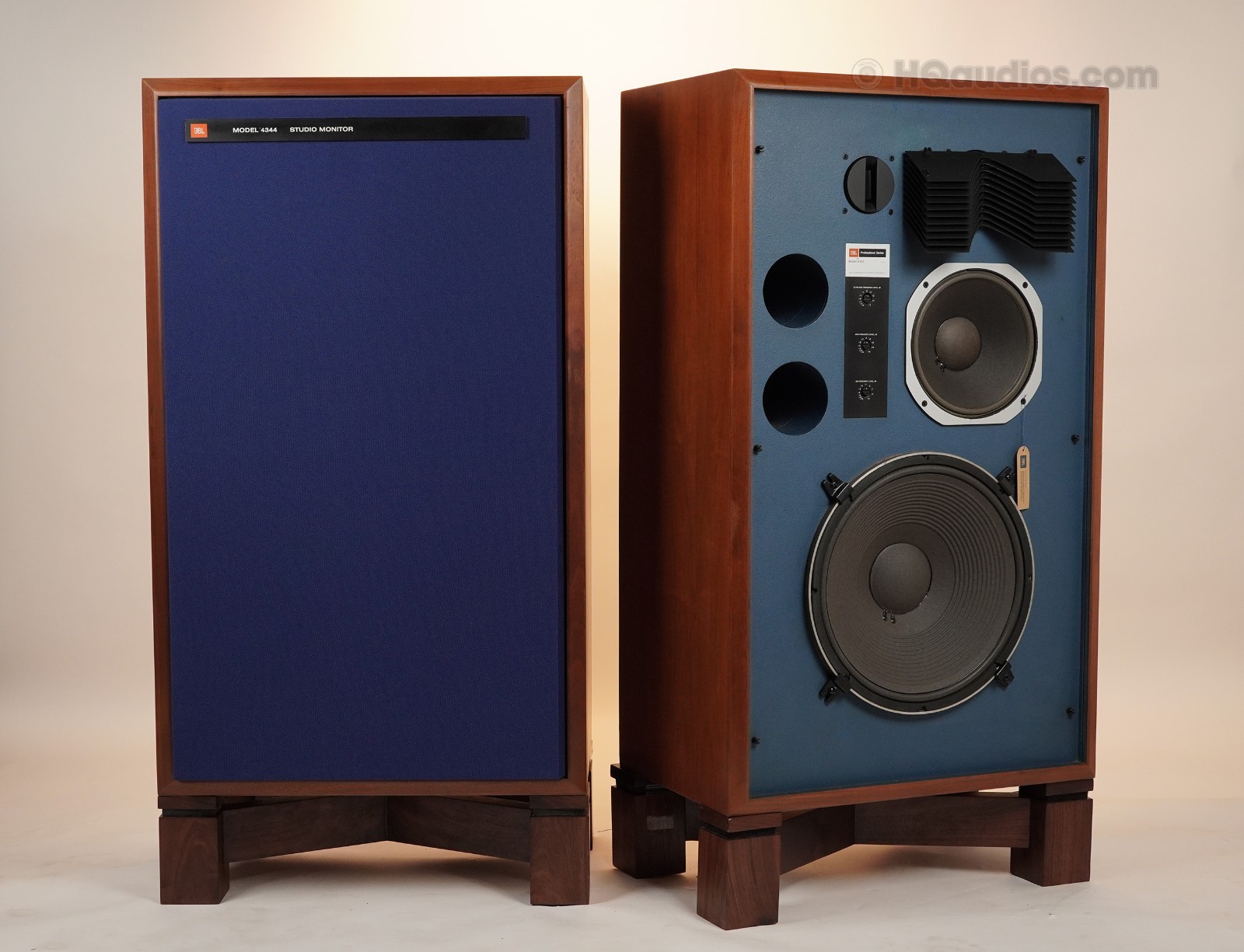
| Drivers | 15" woofer, 5" midrange, 1" tweeter (all horn-loaded) |
| Woofer | JBL D130F (380 mm) |
| Midrange | JBL 2405U “bullet” compression driver |
| Tweeter | JBL 2405U “bullet” compression driver |
| Crossover Frequencies | 700 Hz (woofer/mid), 3.5 kHz (mid/tweeter) |
| Impedance | 8 ohms nominal |
| Sensitivity | 98 dB (1W/1m) |
| Frequency Response | 50 Hz – 20 kHz (±3 dB) |
| Power Handling | 200 watts (program) |
| Enclosure | Vented, front-firing port |
| Dimensions (each) | 30.5" H × 18.5" W × 15.5" D |
| Weight | 75 lbs (34 kg) |
| Finish Options | Walnut, black ash, natural oak |
Sound Quality Characteristics
The JBL 4350B is known for its aggressive, punchy, and highly detailed sound. With a sensitivity of 98 dB, these speakers are extremely efficient and respond vividly to even modest amplification. The D130F woofer delivers deep, fast bass with a slight emphasis around 60–80 Hz—ideal for monitoring kick drums and basslines but sometimes perceived as “boomy” in untreated rooms.
The hallmark of the 4350B’s sound is the “bullet” tweeter and midrange—horn-loaded drivers with a distinctive forwardness in the upper mids and presence region (2–5 kHz). This gives vocals, cymbals, and electric guitars exceptional clarity and bite, but can be fatiguing over long listening sessions. The time-aligned vertical array of drivers ensures coherent phase response on-axis, making the 4350B excellent for precise stereo imaging when properly positioned.
While not “warm” or “smooth” by today’s standards, the 4350B’s unvarnished honesty made it a trusted tool for engineers who needed to hear every flaw in a recording. In vintage audio circles, they’re often described as “no-nonsense” monitors—revealing, powerful, and unapologetically direct.
Notable Features and Innovations
- Horn-Loaded Design: The 2405U “bullet” drivers use a constant-directivity horn for controlled dispersion and high output with low distortion.
- Time-Alignment: The drivers are vertically aligned and time-coherent, improving stereo focus.
- High Efficiency: At 98 dB, the 4350B can play extremely loud with minimal amplifier power—ideal for studio environments.
- Robust Construction: Thick MDF cabinets with extensive bracing and durable vinyl or real wood veneer finishes.
- Front-Firing Port: Unlike many bass-reflex designs of the era, the port is front-mounted, allowing flexible placement.
Market Value and Collectibility
Today, the JBL 4350B is a sought-after collector’s item, especially among vintage audio enthusiasts and former studio engineers nostalgic for the “JBL sound.” Pairs in good cosmetic and working condition typically sell for $800 to $1,500, with fully restored units or rare finishes (like natural oak) commanding higher prices. Original grilles, documentation, and matching serial numbers can add significant value.
While not as ubiquitous as the smaller 4310, the 4350B’s size and studio pedigree give it a cult following. It’s particularly prized by home studio owners seeking authentic vintage monitoring, and by hi-fi fans who appreciate its dynamic punch and retro aesthetic.
Common Issues and Maintenance
Due to their age, many 4350Bs require restoration:
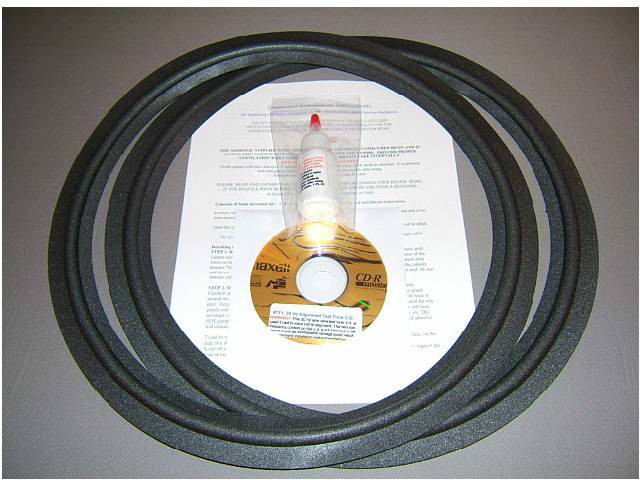
- Surround Rot: The original foam or butyl rubber surrounds on the D130F woofer often degrade, causing bass distortion or rattling. Re-foaming or reconing is commonly required.
- Capacitor Aging: The crossover capacitors, especially in the high-pass section, can dry out or fail, leading to tweeter damage or muffled highs. Replacing with modern metalized polypropylene caps is highly recommended.
- Tweeter Diaphragm Fatigue: The 2405U’s titanium diaphragm can develop micro-cracks, causing distortion or dropouts. Some owners upgrade to modern replacements or rebuild originals.
- Grille Fabric: The original acoustically transparent grille cloth often tears or yellows. Replacement fabric is available from specialty audio restoration suppliers.
Regular maintenance includes checking terminal connections, cleaning the horn throats, and ensuring the cabinet is airtight. Given their weight and size, proper mounting or sturdy stands are essential.
Comparison to Similar Models
| Model | Key Differences |
| JBL 4310 | Smaller (12" woofer), more compact, better for near-field. Less bass extension but more common and affordable. |
| JBL 4320 | Similar to 4310 but with upgraded crossover and cabinet. Still smaller than 4350B. |
| JBL 4400B | Successor to 4350B; features improved crossover and cabinet damping. Rarer and often more expensive. |
| Tannoy Monitor Gold | Dual concentric driver, smoother midrange, less aggressive highs. Favored for a more “musical” balance. |
| Altec 604E | Another studio classic with a distinctive “presence peak.” Less efficient, larger cabinet, different tonal character. |
Final Thoughts
The JBL 4350B stands as a monument to the no-compromise philosophy of 1970s professional audio. It was never intended to be “pleasant”—it was built to be truthful, powerful, and durable. Today, it offers vintage audio lovers a direct link to the studios of Led Zeppelin, Stevie Wonder, and Pink Floyd. While they demand care and often restoration, a well-maintained pair of 4350Bs delivers a thrilling, visceral listening experience unmatched by modern monitors.
For collectors, engineers, or audiophiles who appreciate raw sonic authority and historical significance, the JBL 4350B remains one of the most compelling vintage studio monitors ever made.
eBay Listings


As an eBay Partner, we earn from qualifying purchases. This helps support our independent vintage technology research.
Related Models
- JBL 4310 (1970)
- JBL 4315 Control Monitor (1977)
- JBL L110A (1975)
- JBL 4311B (1975)
- JBL 4408 (1975)
- Akai AM-2850 (1975)
- Akai AP-206 (1975)
- Nakamichi BX-1 (1985)
- Acoustic Research research-ar-17 (1978)
- Acoustic Research AR-19 (1994)