JBL 4333 Studio Monitor
1977 - 1980
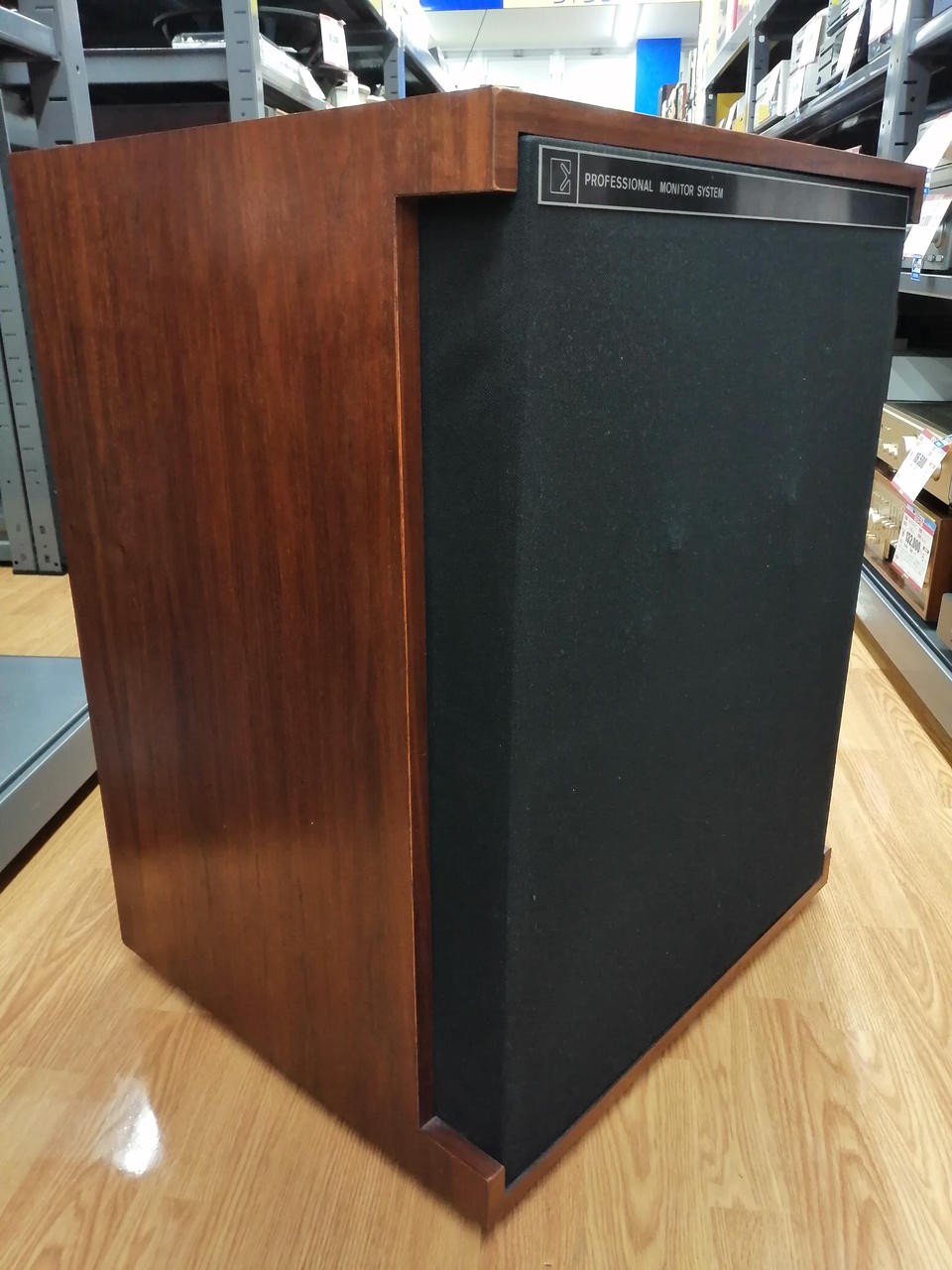
The JBL 4333 Studio Monitor represents a masterful evolution of the two-way 4331 concept, adding a dedicated midrange driver to create a three-way system of exceptional capability. Introduced in 1977 alongside its two-way sibling, the 4333 combined the authoritative bass of a 15-inch woofer with the refined midrange and treble performance that only a dedicated driver complement could provide. For engineers seeking the best of both worlds—massive scale and three-way precision—the 4333 delivered in abundance.
Overview
| Type | Three-way studio monitor |
|---|---|
| Enclosure | Bass reflex (ported) |
| Dimensions | 32" H × 22" W × 16" D (813 × 559 × 406 mm) |
| Weight | 105 lbs (48 kg) |
| Impedance | 8 ohms |
| Sensitivity | 93 dB (1W/1m) |
| Power Handling | 150 watts RMS |
| Frequency Response | 35 Hz - 20 kHz (±3dB) |
| Crossover Frequencies | 800 Hz and 5,000 Hz |
Driver Configuration
- Woofer: 15" JBL 2231H with Alnico V magnet and Symmetrical Field Geometry
- Midrange: JBL 2420 compression driver with 2307 horn and 2308 lens
- Tweeter: JBL 2405 slot tweeter for ultra-high frequencies
History & Design Philosophy
The 4333 emerged from JBL's recognition that while the two-way 4331 offered compelling performance, some applications benefited from the dedicated midrange reproduction that a three-way design could provide. The development focused on creating a seamless blend between substantial bass capability and refined midrange/high-frequency performance:
- Dedicated Midrange: The compression driver and horn combination focused on 800 Hz - 5 kHz range
- Extended Treble: The 2405 slot tweeter provided exceptional ultra-high frequency reproduction
- Optimized Crossover: Carefully chosen frequencies minimized driver stress and maximized coherence
- Professional Grade: Every component selected for reliability under demanding studio conditions
The 4333 shared its cabinet and woofer with the 4331, but the addition of a dedicated midrange driver fundamentally changed its character. By relieving the woofer of midrange duties at 800 Hz, the 4333 achieved lower distortion in the critical vocal range while the horn-loaded midrange provided a presence and clarity that dome-type midranges struggled to match.
The use of the 2405 slot tweeter was particularly significant. This legendary ultra-high frequency transducer, with its distinctive "bullet" dispersion pattern, had already proven itself in JBL's flagship monitors. Its inclusion in the 4333 brought top-tier treble performance to a more accessible price point.
Sound Character
The 4333 delivers a sophisticated sonic presentation that leverages its three-way design:
- Massive Bass Foundation - The 15-inch woofer provides genuine sub-35 Hz extension with authority
- Horn Midrange Presence - The compression driver delivers exceptional clarity and dynamic impact
- Extended Highs - The 2405 tweeter provides sparkling, detailed treble reproduction
- Low Distortion - Specialized drivers operating in optimal frequency ranges minimize coloration
- Dynamic Capability - High sensitivity ensures effortless reproduction of complex passages
The 4333's three-way design offers distinct advantages over two-way alternatives. The dedicated midrange driver handles the critical vocal frequencies with a character that many engineers prefer—immediate, detailed, and dynamically responsive. The 2405 tweeter extends response well beyond typical dome tweeter capabilities, revealing air and ambience that lesser monitors miss.
Compared to the 4331, the 4333 offers a more refined and detailed midrange presentation, along with extended high-frequency response. The trade-off is slightly reduced sensitivity and increased complexity, but for many applications, the sonic benefits outweigh these considerations.
Studio Applications
The 4333 excelled in demanding professional applications:
- Main Monitoring: Served as primary monitors in medium-sized control rooms
- Mastering Suites: Valued for full-range accuracy and detail retrieval
- Film Post-Production: Handled dialogue, effects, and music with equal capability
- Broadcast: Used in critical monitoring positions for quality control
Technical Features
The 4333 incorporated several notable technical elements:
- Alnico V Woofer: Premium magnetic material for the 2231H bass driver
- Horn-Loaded Midrange: Compression driver efficiency and directivity control
- 2405 Slot Tweeter: Legendary ultra-high frequency performance
- Professional Construction: Robust cabinets and heavy-duty terminals
Collector's Notes
The 4333 is highly sought after in the vintage JBL market:
- Full-Range Capability: True three-way design with extended frequency response
- Alnico Woofer: The 2231H is particularly prized by enthusiasts
- Legendary Tweeter: The 2405 adds significant value and performance
- Professional Pedigree: Genuine studio history increases desirability
Common Issues to Check:
- Woofer foam surrounds (likely need refoaming after decades)
- Compression driver diaphragm condition
- Ferrofluid in compression driver (may need replacement)
- 2405 slot tweeter integrity (check for physical damage)
- Crossover capacitor condition
- Horn and lens for cracks or damage
- Cabinet structural integrity
Bi-amplification: The 4333 supports bi-amplification, allowing separate amplifiers for the woofer and the midrange/tweeter combination. When properly implemented, this can significantly improve performance and flexibility.
Listening Tips: The 4333 requires adequate space and proper setup. Allow at least 18 inches from walls for optimal bass response. The horn-loaded midrange provides excellent on-axis response but requires careful positioning for optimal listening. Quality amplification with good current delivery is essential.
eBay Listings


As an eBay Partner, we earn from qualifying purchases. This helps support our independent vintage technology research.
The 4333 stands as one of JBL's most accomplished three-way designs, combining the scale and authority of a large woofer with the refinement of dedicated midrange and treble drivers. Its professional pedigree, exceptional build quality, and enduring sonic excellence make it a prized acquisition for collectors and a capable performer for those seeking vintage studio monitor authenticity. For anyone considering a classic JBL three-way monitor, the 4333 represents a compelling choice that delivers both historical significance and genuine high-end performance.
Related Models
- JBL 4310 (1970)
- JBL 4315 Control Monitor (1977)
- JBL L110A (1975)
- JBL 4311B (1975)
- JBL 4408 (1975)
- Akai AM-2850 (1975)
- Akai AP-206 (1975)
- Nakamichi BX-1 (1985)
- Acoustic Research research-ar-17 (1978)
- Acoustic Research AR-19 (1994)