JBL 4333: The Studio Legend That Shaped Professional Sound
In the pantheon of professional audio monitors, few names command as much respect as the JBL 4333. Introduced in the mid-1970s, this three-way passive studio monitor became a cornerstone of recording studios, broadcast facilities, and mastering houses around the world. While not as widely known to the consumer audiophile as the L100, the 4333 was the serious engineer’s tool—a no-nonsense, high-fidelity loudspeaker built for accuracy, durability, and long-term reliability in demanding environments.
Born during a golden era of analog recording, the JBL 4333 was developed as part of JBL’s renowned 4300 series, a family of studio monitors designed to meet the rigorous standards of professional audio. These speakers were engineered not for flashy aesthetics or bass-heavy consumer appeal, but for flat frequency response, low distortion, and consistent performance under high SPLs (sound pressure levels). The 4333, in particular, was positioned as a near-field and mid-field monitor, ideal for control rooms where precision mattered more than sheer volume.
Technical Specifications
The JBL 4333 was built around a classic three-way design, utilizing JBL’s proprietary compression drivers and high-quality woofers. It featured a passive crossover network and was designed to be driven by external power amplifiers—a hallmark of professional studio gear of the era.
| Specification | Detail |
| Type | Passive, three-way studio monitor |
| Drivers | 12" low-frequency, 5" midrange, 1.5" compression tweeter |
| Frequency Response | 45 Hz – 20 kHz (±2 dB) |
| Sensitivity | 94 dB (1W/1m) |
| Nominal Impedance | 8 ohms |
| Crossover Frequencies | 700 Hz (low/mid), 3.5 kHz (mid/high) |
| Enclosure Type | Bass reflex (vented) |
| Dimensions (HxWxD) | 27" × 14" × 15" (68.6 × 35.6 × 38.1 cm) |
| Weight | 65 lbs (29.5 kg) per cabinet |
| Recommended Amp Power | 100–200 watts per channel |
| Finish | Black vinyl wrap with black grille |
The 4333 used a 12-inch Kevlar-reinforced woofer for tight, controlled bass response, a 5-inch midrange driver with a doped paper cone for clear vocal reproduction, and a 1.5-inch titanium diaphragm compression driver mounted on a constant-directivity horn. This high-frequency section was derived from JBL’s professional cinema and PA heritage, delivering exceptional clarity and dispersion control.
The crossover network was carefully tuned to ensure seamless integration between drivers, with attention paid to phase coherence and time alignment—critical factors in a monitoring environment where even minor anomalies can mislead an engineer’s decisions.
Sound Characteristics and Performance
The sonic signature of the JBL 4333 is best described as honest and authoritative. Unlike many consumer speakers that enhance bass or brighten the treble for immediate appeal, the 4333 was designed to reveal everything—warts and all. This made it an invaluable tool in the studio, where engineers needed to hear the true balance of a mix.
The bass is deep and articulate, extending down to 45 Hz with minimal overhang. The midrange is clear and present, making vocals and instruments stand out with natural tonality. The high frequencies are crisp without being harsh, thanks to the well-behaved horn-loaded tweeter. The overall soundstage is wide and well-defined, with excellent imaging that allows precise placement of instruments in the stereo field.
One of the 4333’s most praised attributes is its ability to maintain clarity at high volumes. In an era before digital limiters and active protection, studio monitors had to withstand punishing SPLs during mixing and mastering sessions. The 4333 delivered, often being driven hard for hours without fatigue or failure.
Notable Features and Innovations
While the 4333 may look like a simple box by today’s standards, it incorporated several advanced design elements for its time:
- Horn-Loaded High-Frequency Driver: The use of a compression driver on a constant-directivity horn ensured controlled dispersion and high efficiency, reducing room interaction and improving off-axis response.
- Kevlar Woofer Cone: JBL was among the first to use Kevlar in cone materials, offering superior stiffness-to-weight ratio and reduced breakup modes.
- Professional Build Quality: The cabinets were constructed from thick MDF with extensive internal bracing, minimizing resonance. The black vinyl finish and industrial grille gave them a no-frills, utilitarian appearance suited for studio use.
- Bass Reflex Tuning: The rear-firing port was tuned to extend low-frequency response without sacrificing transient speed, a careful balance in monitor design.
The 4333 was often used in stereo pairs, but also found applications in multi-channel setups and as part of larger monitoring systems in broadcast environments.
Common Issues and Maintenance
Like all vintage gear, the JBL 4333 requires some attention to remain in top condition. The most common issues include:
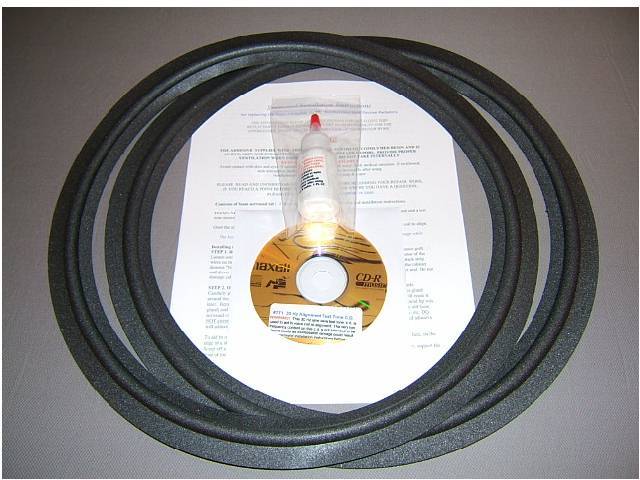
- Aging Foam Surrounds: The original foam used on the woofer and midrange drivers can deteriorate over time, leading to flaking and loss of compliance. Re-foaming or reconing is a common restoration step.
- Capacitor Drift in Crossovers: Electrolytic capacitors in the crossover network can dry out, altering the frequency balance. Upgrading with modern film capacitors can restore or even improve performance.
- Grille Rust and Wear: The metal grilles are prone to rust, especially in humid environments. Replacement or refinishing is often necessary for cosmetic restoration.
- Horn Diaphragm Oxidation: The titanium diaphragm in the tweeter is durable, but moisture can cause oxidation over decades. Careful cleaning and inspection are recommended.
Despite these potential issues, the 4333 is remarkably robust. Many units from the 1970s and 1980s are still in active use today, a testament to JBL’s engineering and build quality.
Current Market Value and Collectibility
The JBL 4333 is not as commonly collected as some of JBL’s consumer models, but it holds a special place among studio monitor enthusiasts and vintage pro audio aficionados. Pairs in good working condition typically sell for $800–$1,500, depending on restoration status, originality, and geographic location.
Fully restored units with reconed drivers and upgraded crossovers can command higher prices, especially when paired with matching stands or original documentation. While not as flashy as the L100, the 4333 appeals to those who value sonic accuracy and historical significance over retro styling.
They are also sought after by home studio owners looking for a vintage alternative to modern active monitors, offering a different flavor of neutrality—one that’s slightly more forward and dynamic than today’s clinical designs.
Conclusion and Legacy
The JBL 4333 stands as a monument to the golden age of analog recording. It wasn’t built to impress at a trade show or sell in high volumes—it was built to work. And work it did, in studios from Los Angeles to London, helping shape the sound of countless albums across rock, jazz, and classical genres.
Its legacy lives on in modern JBL Professional monitors like the 300 series and M2 Master Reference Monitor, which carry forward the brand’s commitment to accuracy and reliability. But for many engineers, the 4333 remains the purest expression of JBL’s studio monitor philosophy: no hype, no coloration, just truth in sound.
If you’re lucky enough to encounter a well-maintained pair of 4333s, take the time to listen. You’re not just hearing a speaker—you’re hearing history.
eBay Listings


As an eBay Partner, we earn from qualifying purchases. This helps support our independent vintage technology research.
Related Models
- JBL 4310 (1970)
- JBL 4315 Control Monitor (1977)
- JBL L110A (1975)
- JBL 4311B (1975)
- JBL 4408 (1975)
- Akai AM-2850 (1975)
- Akai AP-206 (1975)
- Nakamichi BX-1 (1985)
- Acoustic Research research-ar-17 (1978)
- Acoustic Research AR-19 (1994)