JBL 4315 Control Monitor
1977 - 1980s
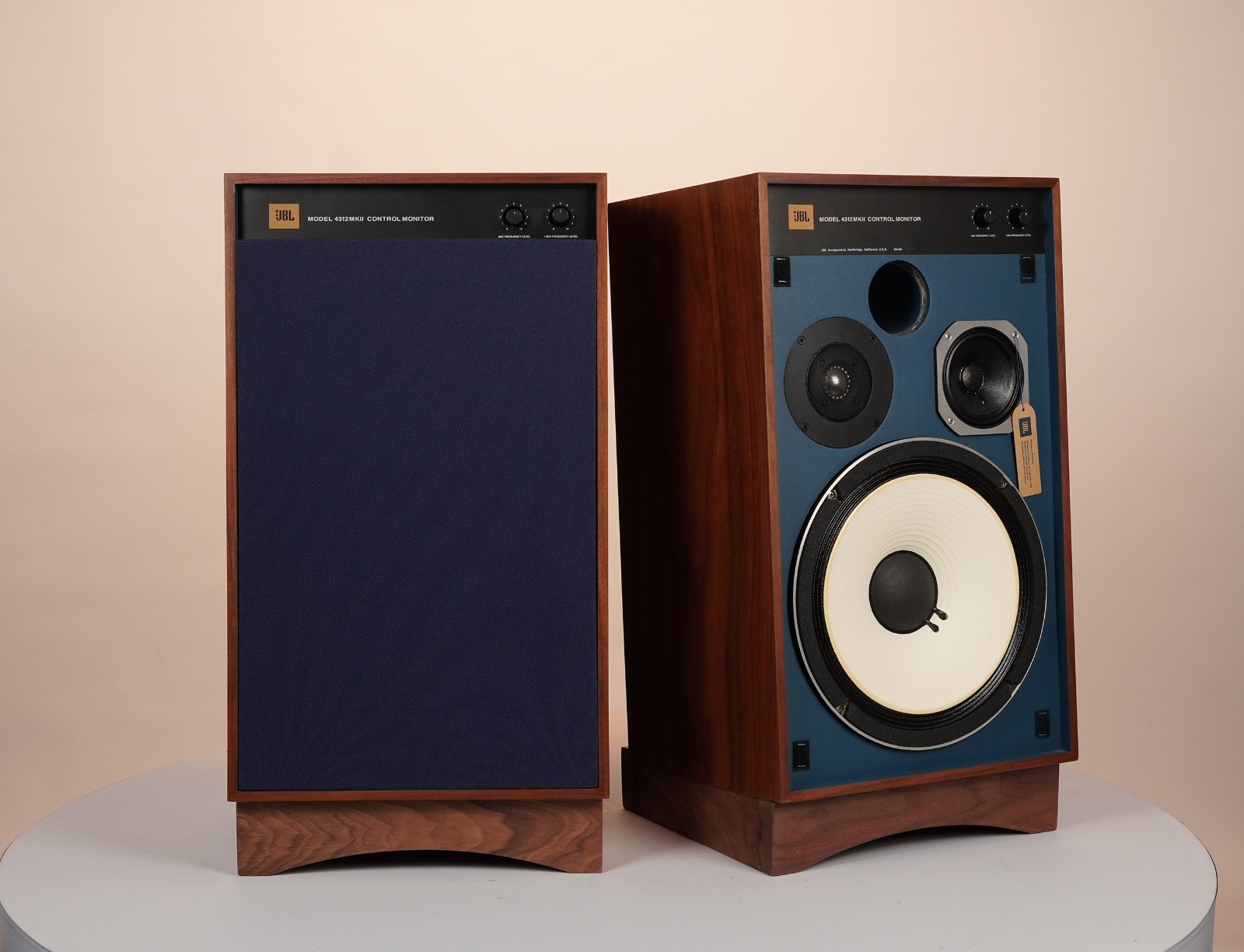
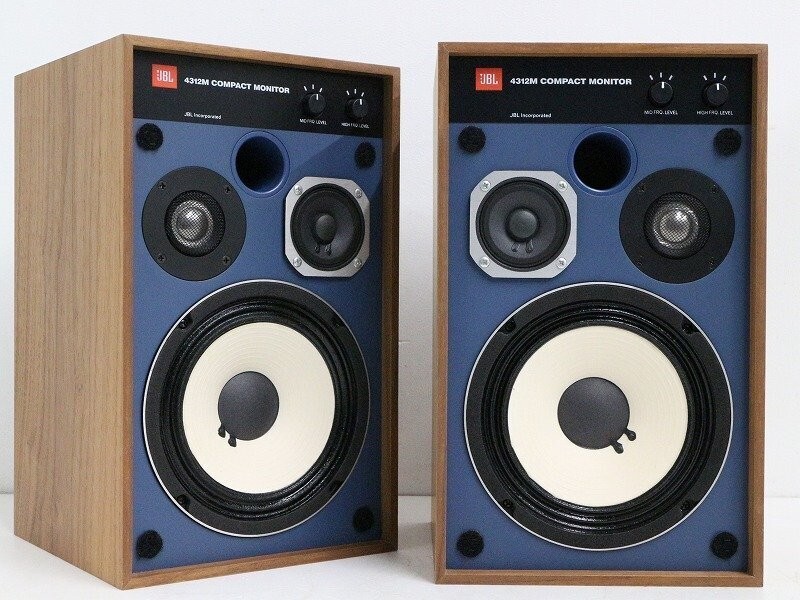
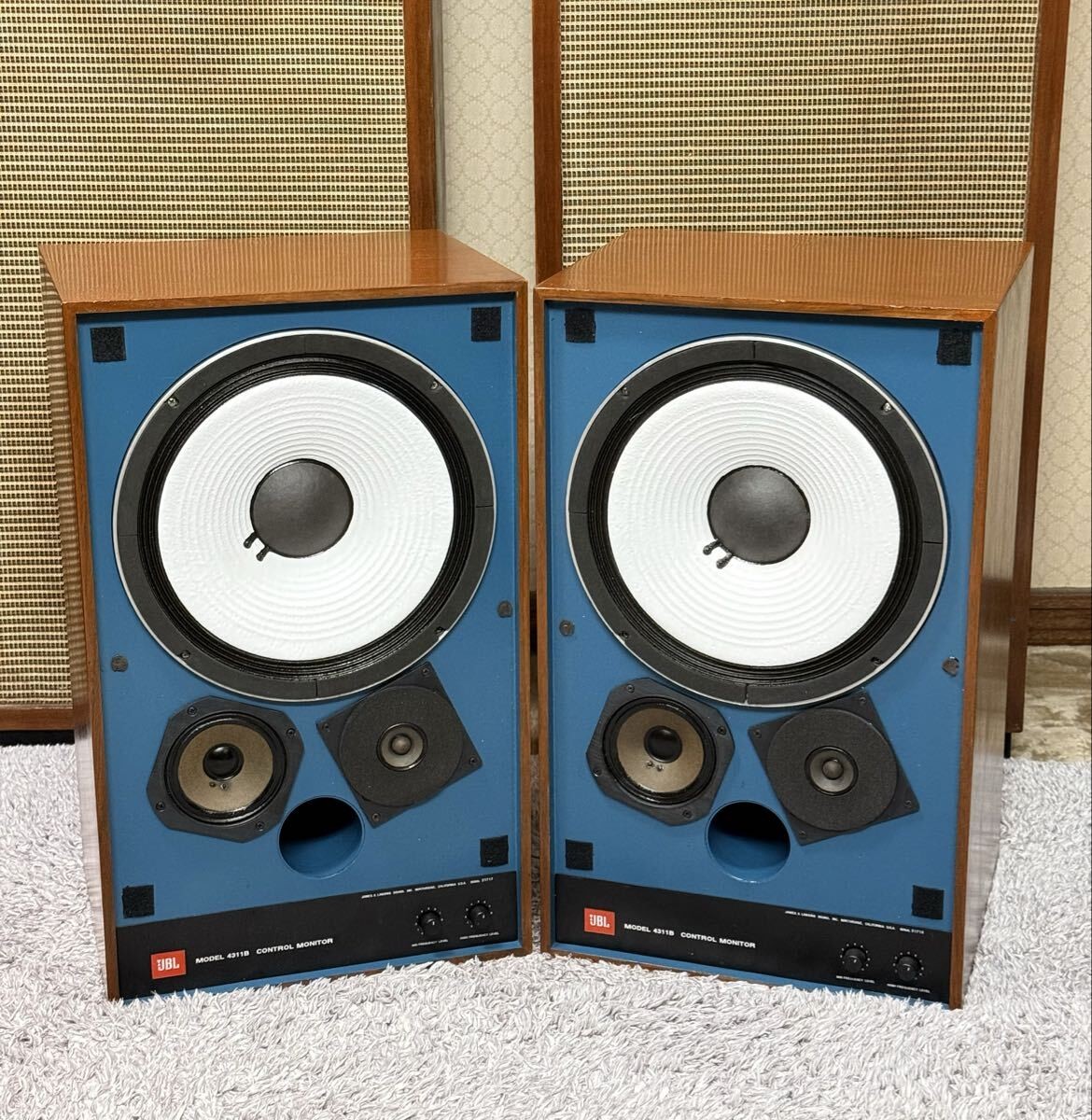
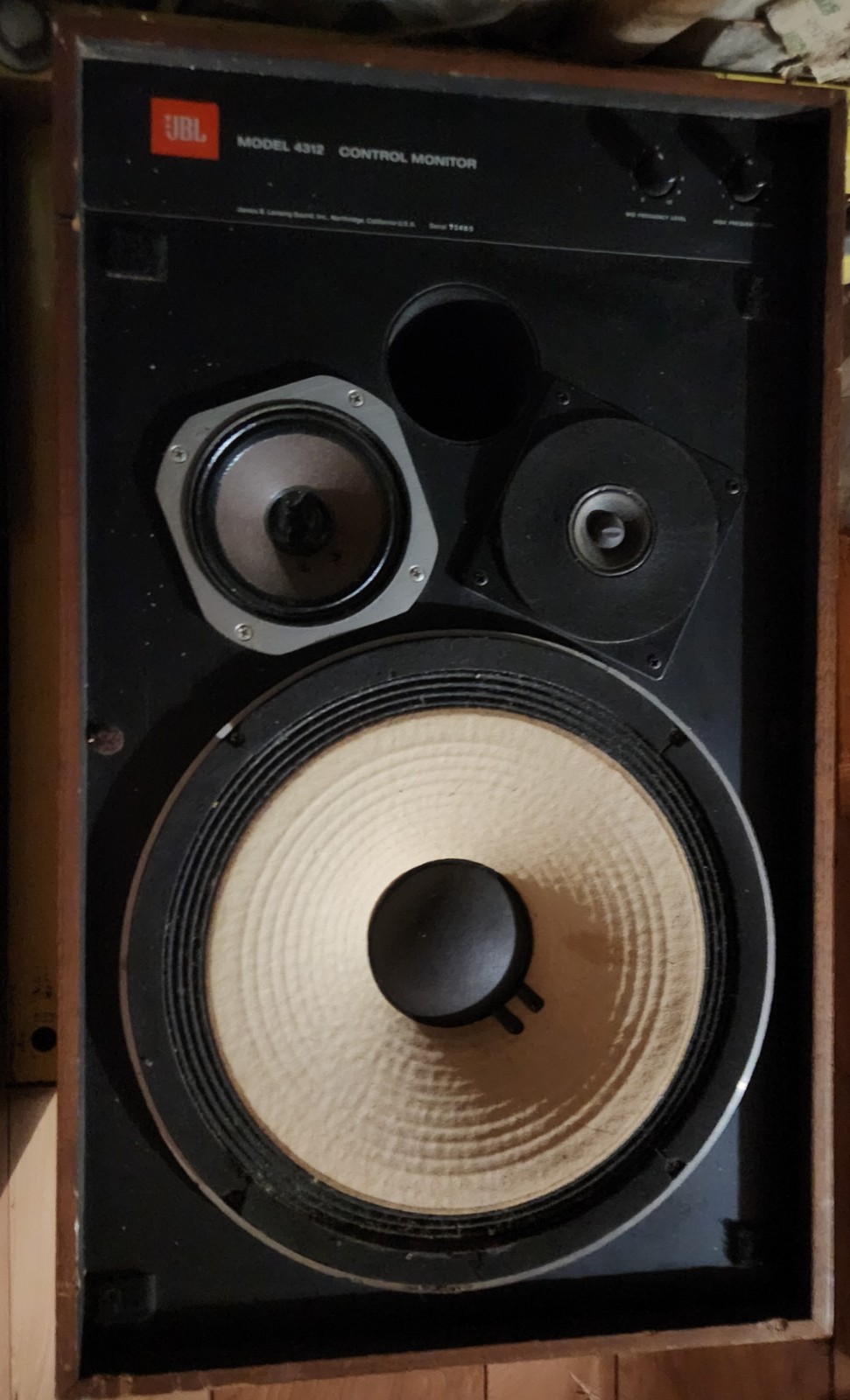
The JBL 4315 Control Monitor stands as one of the most sophisticated three-way studio monitors of its era. This professional reference monitor was designed for the most demanding studio applications, combining JBL's finest driver technology with advanced crossover design to create a monitor capable of revealing the subtlest details in a recording. With its distinctive blue baffle and professional-grade construction, the 4315 became a status symbol in elite recording studios worldwide.
Overview
| Type | Three-way studio monitor |
|---|---|
| Enclosure | Bass reflex (ported) |
| Dimensions | 33.46" H × 20.47" W × 11.02" D (850 × 520 × 280 mm) |
| Weight | 90.4 lbs (41 kg) |
| Impedance | 8 ohms |
| Sensitivity | 89 dB (1W/1m, New JIS) |
| Power Handling | 60 watts RMS |
| Frequency Response | 35 Hz - 20 kHz (±3dB) |
| Crossover Frequencies | 400 Hz, 2 kHz, and 8 kHz |
Driver Configuration
- Woofer: 12" JBL 2214H with massive ferrite magnet and edgewound voice coil
- Midrange: 5" JBL 2105H with paper cone and ferrite magnet
- Tweeter: JBL 044Ti ring radiator tweeter with pure titanium diaphragm
History & Design Excellence
The 4315 was developed during a period of intense innovation at JBL, when the company was pushing the boundaries of transducer technology. Unlike more conventional monitors of the time, the 4315 incorporated several cutting-edge features:
- Titanium Diaphragms: Both the midrange and tweeter used pure titanium diaphragms for exceptional stiffness-to-weight ratio
- Neodymium Magnet Technology: The 2105H midrange utilized neodymium magnets years before they became common in audio
- Advanced Crossover: A sophisticated three-way network with time alignment compensation
- Professional Aesthetics: The distinctive blue baffle became iconic in studio environments
JBL engineers faced the challenge of creating a monitor that could serve as both a nearfield and midfield reference. The solution was a carefully optimized design that balanced several competing requirements:
- Extended Frequency Response: Achieving true full-range performance from 35 Hz to 20 kHz
- Low Distortion: Minimizing harmonic and intermodulation distortion across the entire frequency range
- High Dynamic Range: Capable of reproducing both subtle details and explosive transients
- Consistent Dispersion: Maintaining uniform off-axis response for accurate stereo imaging
The result was a monitor that set new standards for technical performance. The 2214H woofer, with its massive motor structure, delivered bass that was both deep and articulate. The 2105H midrange, with its titanium diaphragm and neodymium magnet, offered unprecedented clarity and detail retrieval. The 044Ti tweeter provided extended, smooth high-frequency response with exceptional dispersion characteristics.
Sound Character
The 4315 delivers a sonic presentation that is both analytical and engaging:
- Exceptional Detail Retrieval - The titanium drivers reveal subtle nuances in recordings that lesser monitors might miss
- Neutral Tonality - Remarkably flat frequency response provides an uncolored window into the recording
- Dynamic Authority - Capable of reproducing the full dynamic range of modern recordings without compression
- Precise Imaging - Excellent driver integration creates a stable, three-dimensional soundstage
- Extended Bass - True sub-40 Hz response provides foundation without boominess
What sets the 4315 apart from other monitors of its era is its combination of technical excellence and musical engagement. While ruthlessly revealing of recording flaws, it never sounds clinical or sterile. The bass is deep and powerful but always controlled. The midrange is transparent and detailed without being forward or aggressive. The highs are extended and airy without becoming bright or fatiguing.
Compared to the 4313, the 4315 offers greater resolution, lower distortion, and more extended frequency response. The titanium drivers provide faster transient response and better high-frequency extension than the conventional drivers used in the 4313.
Studio Legacy
The 4315 found favor in the world's most prestigious recording studios:
- Mastering Facilities: Valued for its accuracy and detail retrieval
- Film Scoring Stages: Used for critical evaluation of orchestral recordings
- Broadcast Networks: Employed in master control rooms for quality assurance
- High-End Project Studios: Sought after by producers and engineers who demanded reference-grade monitoring
Many legendary albums were mixed or mastered on 4315 monitors, benefiting from their revealing character and extended frequency response. Engineers appreciated their ability to reveal problems in a mix before they became issues in the final master.
Technical Innovations
The 4315 incorporated several innovations that would influence future JBL designs:
- Titanium Driver Technology: Pioneered the use of titanium diaphragms in professional monitors
- Neodymium Magnets: Early adoption of neodymium for reduced size and increased magnetic flux
- Time-Aligned Crossover: Sophisticated network design to optimize driver integration
- Professional-Grade Components: High-quality capacitors and inductors in the crossover network
Collector's Notes
Today, the 4315 is among the most coveted vintage JBL monitors:
- Rarity: Produced in smaller numbers than more mainstream models
- Build Quality: Exceptional construction with professional-grade materials throughout
- Restoration Challenges: Titanium drivers are generally robust but may need diaphragm replacement if damaged
- Investment Value: Well-preserved examples command premium prices in the vintage market
- Modern Performance: Properly restored 4315s remain competitive with contemporary high-end monitors
Common Issues to Check:
- Titanium diaphragm condition (check for dents or deformation)
- Crossover capacitors (high-quality but still age over decades)
- Woofer surround condition (rubber generally holds up well)
- L-pad controls (may need cleaning or replacement)
- Cabinet finish (blue baffle may show wear or fading)
Listening Tips: The 4315 demands quality amplification with good current delivery and low noise. Due to its revealing nature, source quality is critical. Allow at least 24 inches from walls for optimal bass response, and consider professional acoustic treatment to maximize their performance potential.
eBay Listings
As an eBay Partner, we earn from qualifying purchases. This helps support our independent vintage technology research.
The 4315 represents the pinnacle of JBL's three-way monitor technology in the late 1970s. Its combination of technical innovation, build quality, and sonic excellence has secured its legendary status among audio professionals and enthusiasts. For those seeking a vintage monitor that can compete with the best modern designs, the 4315 remains a compelling choice that continues to reveal new details in familiar recordings decades after its introduction.
Related Models
- JBL 4310 (1970)
- JBL L110A (1975)
- JBL 4311B (1975)
- JBL 4408 (1975)
- JBL S106 (1975)
- Akai AM-2850 (1975)
- Akai AP-206 (1975)
- Nakamichi BX-1 (1985)
- Acoustic Research research-ar-17 (1978)
- Acoustic Research AR-19 (1994)