JBL 4313 Control Monitor
1976 - 1980s
The JBL 4313 Control Monitor represents the larger-format evolution of JBL's successful studio monitor line. Introduced in 1976, this substantial three-way monitor was designed for control rooms that needed greater output capability and extended low-frequency response than the compact 4312 could provide, while maintaining the accuracy and reliability that made JBL monitors legendary.
Overview
| Type | Three-way studio monitor |
|---|---|
| Enclosure | Bass reflex (ported) |
| Dimensions | 28.5" H × 18.5" W × 14.5" D (724 × 470 × 368 mm) |
| Weight | 68 lbs (31 kg) |
| Impedance | 8 ohms |
| Sensitivity | 93 dB (1W/1m) |
| Power Handling | 100 watts RMS |
| Frequency Response | 40 Hz - 20 kHz (±3dB) |
| Crossover Frequencies | 800 Hz and 5,000 Hz |
Driver Configuration
- Woofer: 12" JBL 2213H with ferrite magnet and edgewound voice coil
- Midrange: 5" JBL LE5-9 with improved motor structure
- Tweeter: JBL LE25-2 1" dome tweeter with ferrofluid cooling
History & Design Philosophy
The 4313 was developed in response to growing demand from professional studios for a monitor that could bridge the gap between compact nearfield monitors and large main monitors. JBL engineers faced several design challenges:
- Extended Bass: Achieving deeper bass response than the 4312 while maintaining accuracy
- Higher Output: Providing greater maximum SPL for larger control rooms
- Improved Dispersion: Maintaining consistent off-axis response across a wider listening area
- Professional Reliability: Ensuring the 4313 could withstand the rigors of daily studio use
The solution was a carefully balanced design that leveraged JBL's extensive driver technology. The 2213H woofer, with its massive ferrite magnet and edgewound voice coil, provided exceptional bass extension and power handling. The LE5-9 midrange represented a significant improvement over earlier LE5 versions, with reduced distortion and improved thermal handling. The LE25-2 tweeter incorporated ferrofluid cooling for increased power handling and reliability.
The bass reflex enclosure design allowed for greater efficiency and deeper bass extension than the sealed designs used in smaller JBL monitors. The port was carefully tuned to provide reinforcement in the 40-60 Hz range while maintaining transient accuracy.
Sound Character
The 4313 delivers a commanding yet refined sonic presentation that has made it a favorite in professional studios:
- Authoritative Bass - The 12" woofer provides deep, articulate bass that remains controlled even at high volumes
- Natural Midrange - The LE5-9 offers exceptional clarity and neutrality in the critical vocal range
- Detailed Highs - The ferrofluid-cooled tweeter delivers extended, smooth high-frequency response
- Dynamic Headroom - High sensitivity and robust power handling allow the 4313 to reproduce transients with explosive impact
- Wide Soundstage - Excellent dispersion characteristics create a spacious, three-dimensional image
Compared to the 4312, the 4313 offers significantly greater bass extension and output capability. The lower crossover point (800 Hz vs 1,500 Hz) places less demand on the woofer in the midrange, resulting in improved clarity and reduced intermodulation distortion. The overall presentation is more authoritative and "big monitor" in character while maintaining the analytical precision expected from a professional reference monitor.
Studio Applications
The 4313 found its niche in several professional applications:
- Mid-field Monitoring: Positioned 6-10 feet from the listening position in medium-sized control rooms
- Mastering Studios: Valued for its extended bass response and accurate midrange
- Broadcast Master Control: Used in television and radio stations for critical audio monitoring
- Film Post-Production: Employed in dialogue editing and sound design suites
Many engineers appreciated the 4313's ability to reveal mix details that might be missed on smaller monitors, particularly in the low-frequency range. The extended bass response made it excellent for evaluating kick drum, bass guitar, and synth bass elements.
Technical Innovations
The 4313 incorporated several technical advancements that would influence future JBL designs:
- Ferrofluid Tweeter Cooling: Allowed higher power handling without compromising high-frequency extension
- Edgewound Voice Coils: Improved power handling and reduced distortion in the woofer
- Optimized Crossover: Used higher-quality components and more sophisticated network design
- Professional-Grade Terminals: Heavy-duty binding posts capable of accepting spade lugs or banana plugs
Collector's Notes
Today, the 4313 is highly sought after by vintage audio enthusiasts and professional users alike:
- Build Quality: The 4313 features exceptionally robust construction with thick cabinet walls and professional-grade finishes
- Restoration Considerations: Common issues include ferrofluid drying in tweeters and crossover capacitor aging
- Driver Availability: Many 4313 drivers are still available on the vintage market or can be reconed by specialists
- Modern Relevance: Properly restored 4313s remain excellent monitors for both professional and high-end home use
Common Issues to Check:
- Ferrofluid condition in LE25-2 tweeters (dries out over decades)
- Crossover capacitors (particularly the electrolytics in the woofer section)
- Woofer surround condition (rubber surrounds generally hold up well)
- L-pad controls for midrange and tweeter levels
- Cabinet integrity (check for water damage or delamination)
Listening Tips: The 4313 benefits from quality amplification with good current delivery. Due to its size and bass capabilities, careful room placement is essential. Allow at least 18 inches from walls for optimal bass response, and consider using professional monitor stands to achieve proper ear-level alignment.
eBay Listings
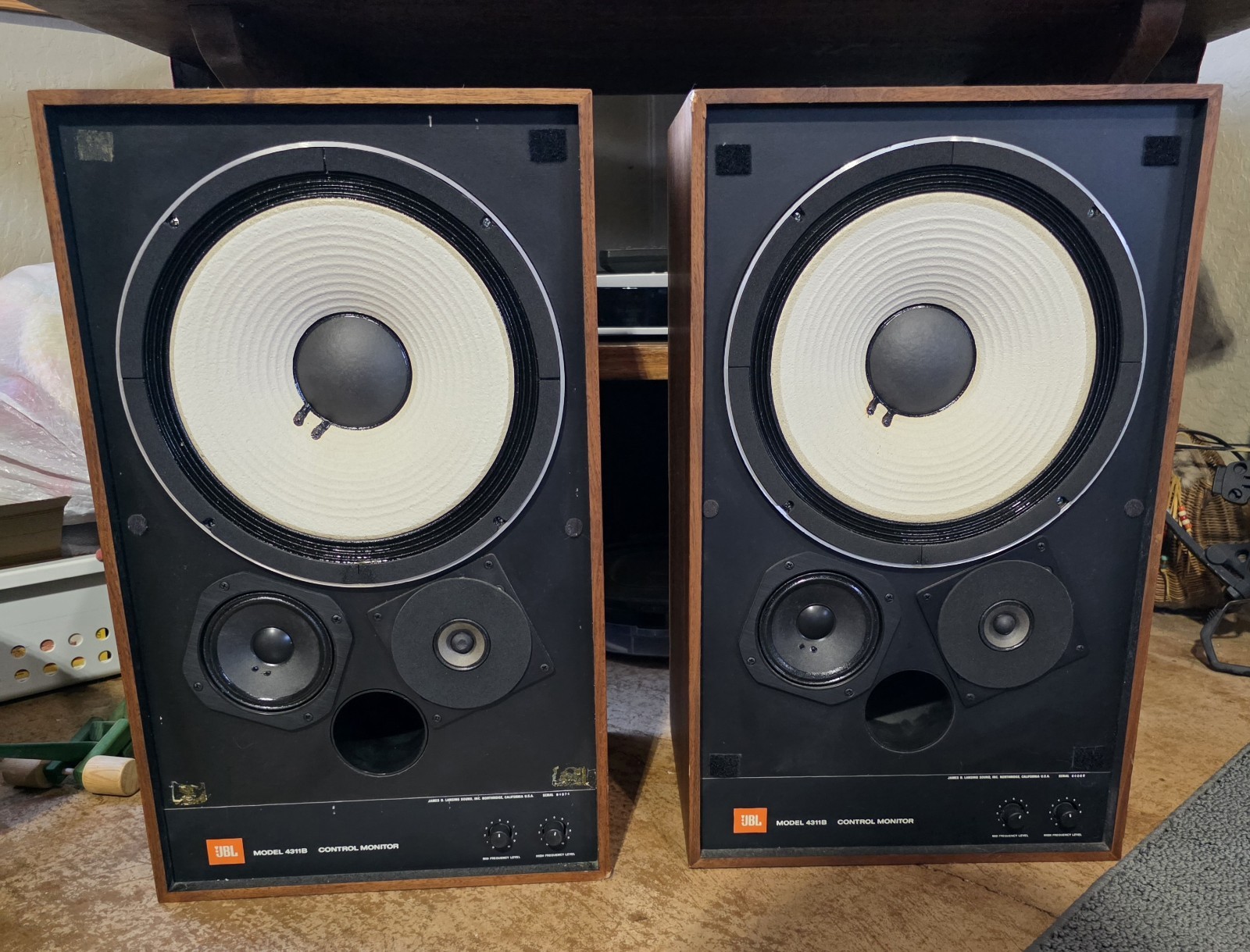
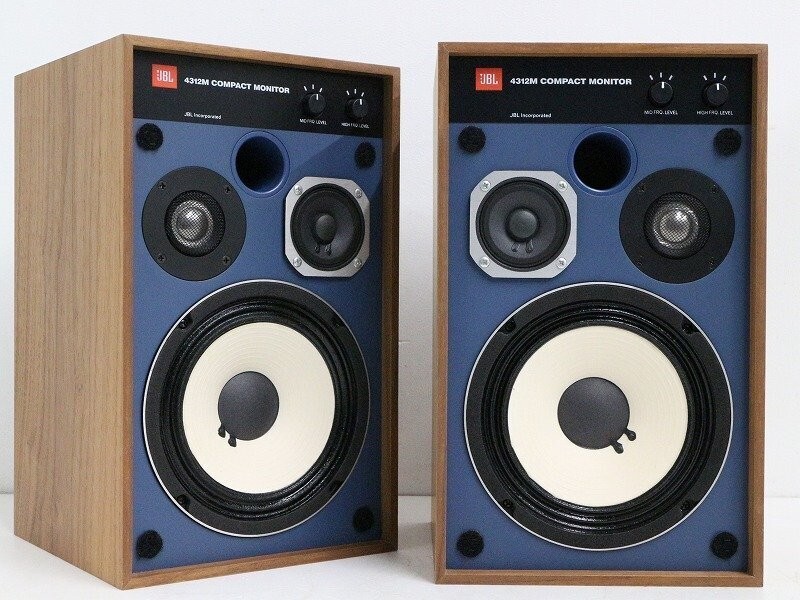

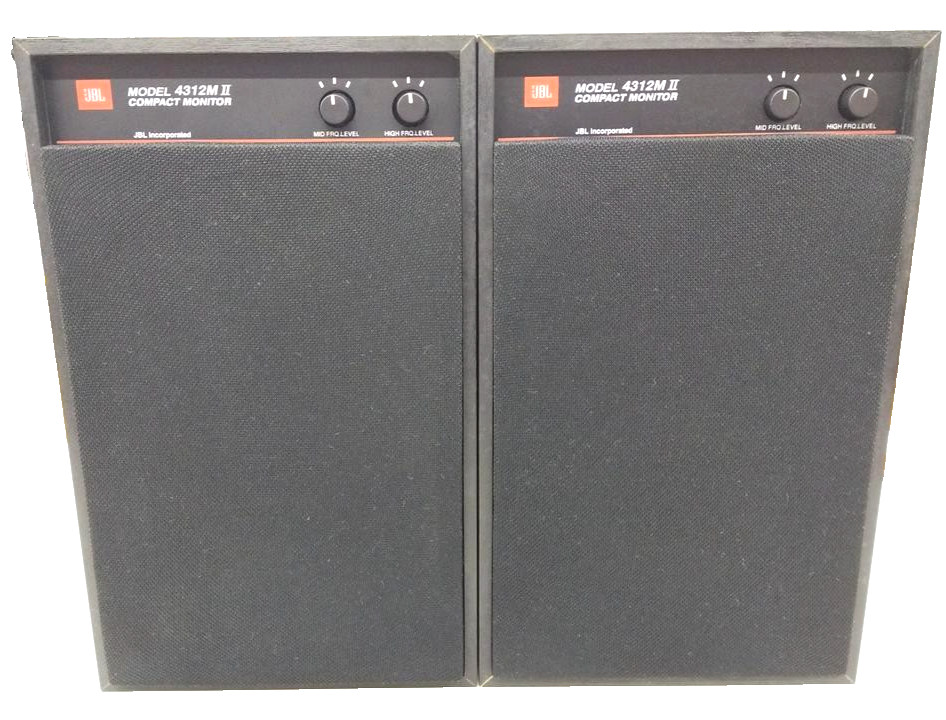
As an eBay Partner, we earn from qualifying purchases. This helps support our independent vintage technology research.
The 4313 represents JBL's commitment to providing professional studios with monitors that combine technical excellence with practical utility. Its balanced performance, robust construction, and enduring sonic quality have secured its place as a classic in the pantheon of great studio monitors. For those with the space to accommodate them, a pair of properly restored 4313s offers a listening experience that remains competitive with modern monitors many times their price.
Related Models
- JBL 4310 (1970)
- JBL 4315 Control Monitor (1977)
- JBL L110A (1975)
- JBL 4311B (1975)
- JBL 4408 (1975)
- Akai AM-2850 (1975)
- Akai AP-206 (1975)
- Nakamichi BX-1 (1985)
- Acoustic Research research-ar-17 (1978)
- Acoustic Research AR-19 (1994)