JBL 4312 Control Monitor
1975 - 1980s
The JBL 4312 Control Monitor stands as one of the most successful and influential studio monitors ever created. Introduced in 1975 as the evolutionary successor to the legendary 4310, this three-way professional monitor combined refined driver technology with practical design to become a staple in recording studios, broadcast facilities, and home listening rooms worldwide. With its distinctive white woofer cone and professional-grade construction, the 4312 defined the sound of an era.
Overview
| Type | Three-way studio monitor |
|---|---|
| Enclosure | Bass reflex (ported) |
| Dimensions | 23.5" H × 14.25" W × 13" D (597 × 362 × 330 mm) |
| Weight | 48.5 lbs (22 kg) |
| Impedance | 8 ohms |
| Sensitivity | 91 dB (1W/1m) |
| Power Handling | 75 watts RMS |
| Frequency Response | 45 Hz - 15 kHz (±3dB) |
| Crossover Frequencies | 1,500 Hz and 6,000 Hz |
Driver Configuration
- Woofer: 12" JBL 2213H with ferrite magnet and white paper cone
- Midrange: 5" JBL LE5-2 phenolic ring radiator
- Tweeter: JBL LE25 1" dome tweeter
History & Design Evolution
The 4312 represents the maturation of JBL's compact studio monitor concept that began with the 4310. By the mid-1970s, several factors drove the design evolution:
- Magnet Technology: The shift from Alnico to ferrite magnets addressed supply chain issues while maintaining performance
- Driver Refinement: The 2213H woofer offered improved linearity and power handling over earlier designs
- Professional Feedback: Years of studio use informed refinements to the crossover and cabinet design
- Manufacturing Consistency: Ferrite magnets allowed for more consistent production quality
What made the 4312 particularly significant was its timing. Introduced during the golden age of analog recording, it became the monitor of choice for countless hit records. Its compact bookshelf design made it ideal for the growing number of project studios and home recording setups, while its professional-grade performance ensured it remained credible in major commercial facilities.
The front-panel L-pad controls for midrange and tweeter level were a practical innovation that allowed engineers to tune the monitor to their specific room acoustics—a feature that would become standard on professional monitors for decades to come.
Sound Character
The 4312 delivers what many engineers describe as the "perfect balance" of analytical precision and musical engagement:
- Balanced Midrange - The LE5-2 midrange provides exceptional clarity and natural tonality in the critical vocal range
- Extended Bass - The 12-inch 2213H woofer delivers surprisingly deep and articulate bass for a compact monitor
- Smooth Highs - The LE25 tweeter offers detailed but non-fatiguing high-frequency reproduction
- Dynamic Capability - High sensitivity allows the 4312 to reproduce transients with explosive impact
- Wide Dispersion - Excellent off-axis response makes the 4312 forgiving of less-than-ideal listening positions
Compared to the 4310, the 4312 offers slightly better bass extension and control, thanks to the larger woofer and refined enclosure tuning. Compared to later models like the 4313, it has a more forward midrange presentation that many engineers find ideal for critical mixing decisions.
The 4312's sound character is particularly well-suited to popular music production. Its slightly forward midrange helps vocals cut through dense mixes, while its dynamic capability ensures that drums and percussion have impact and punch. The overall presentation is revealing without being clinical, making it excellent for long mixing sessions.
Studio Legacy
The 4312's impact on recorded music cannot be overstated:
- Hit Records: Countless classic albums from the 1970s and 1980s were mixed on 4312 monitors
- Broadcast Standard: Became the reference monitor for radio and television stations worldwide
- Home Studio Revolution: Helped democratize professional-quality monitoring for home recordists
- Enduring Influence: The 4312's design philosophy influenced monitor design for decades
What made the 4312 particularly beloved was its "translational" quality—mixes that sounded good on 4312s tended to sound good on other systems. This made it an invaluable tool for engineers who needed their mixes to work across everything from car stereos to high-end home systems.
Collector's Notes
Today, the 4312 remains one of the most sought-after vintage studio monitors:
- Availability: Produced in large numbers, making well-preserved examples relatively available
- Build Quality: Professional-grade construction with robust cabinets and durable drivers
- Restoration Considerations: Common issues include L-pad deterioration and crossover capacitor aging
- Investment Value: Consistently strong demand ensures good value retention
- Modern Relevance: Properly restored 4312s remain excellent monitors for both professional and home use
Common Issues to Check:
- L-pad controls for midrange and tweeter levels (often need cleaning or replacement)
- Crossover capacitors (electrolytics dry out over time)
- Woofer surround condition (foam surrounds deteriorate; later models used rubber)
- Cabinet corners and veneer condition
- White woofer cone staining or discoloration
Variant Identification: The 4312 went through several revisions:
- 4312: Original version with 2213H woofer
- 4312A: Updated crossover and minor refinements
- 4312B: Further crossover improvements
- 4312C: Final iteration with updated components
Listening Tips: The 4312 responds well to quality amplification with good current delivery. The L-pad controls allow tuning to room acoustics—start with both at 12 o'clock and adjust to taste. Allow at least 12 inches from walls for optimal bass response, and consider isolation pads or stands to decouple from surfaces.
eBay Listings

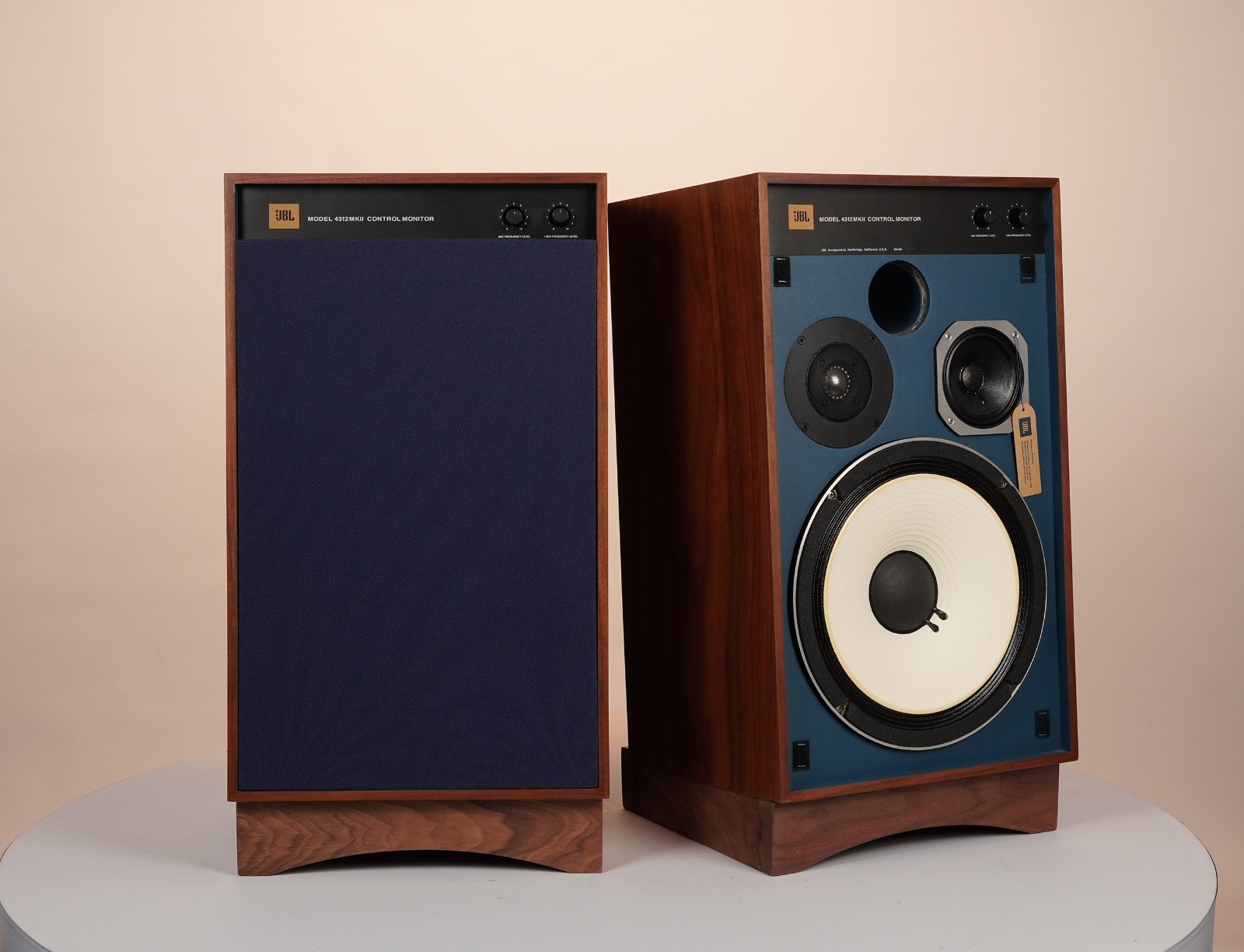
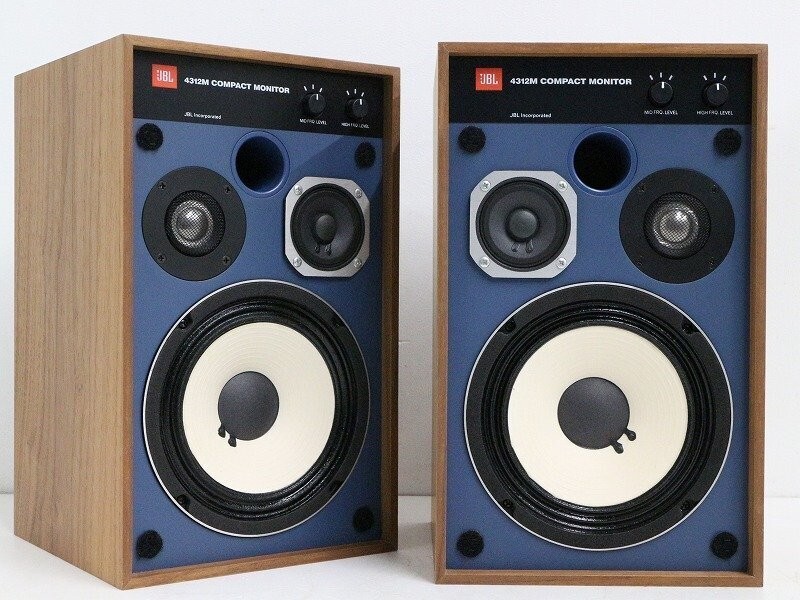
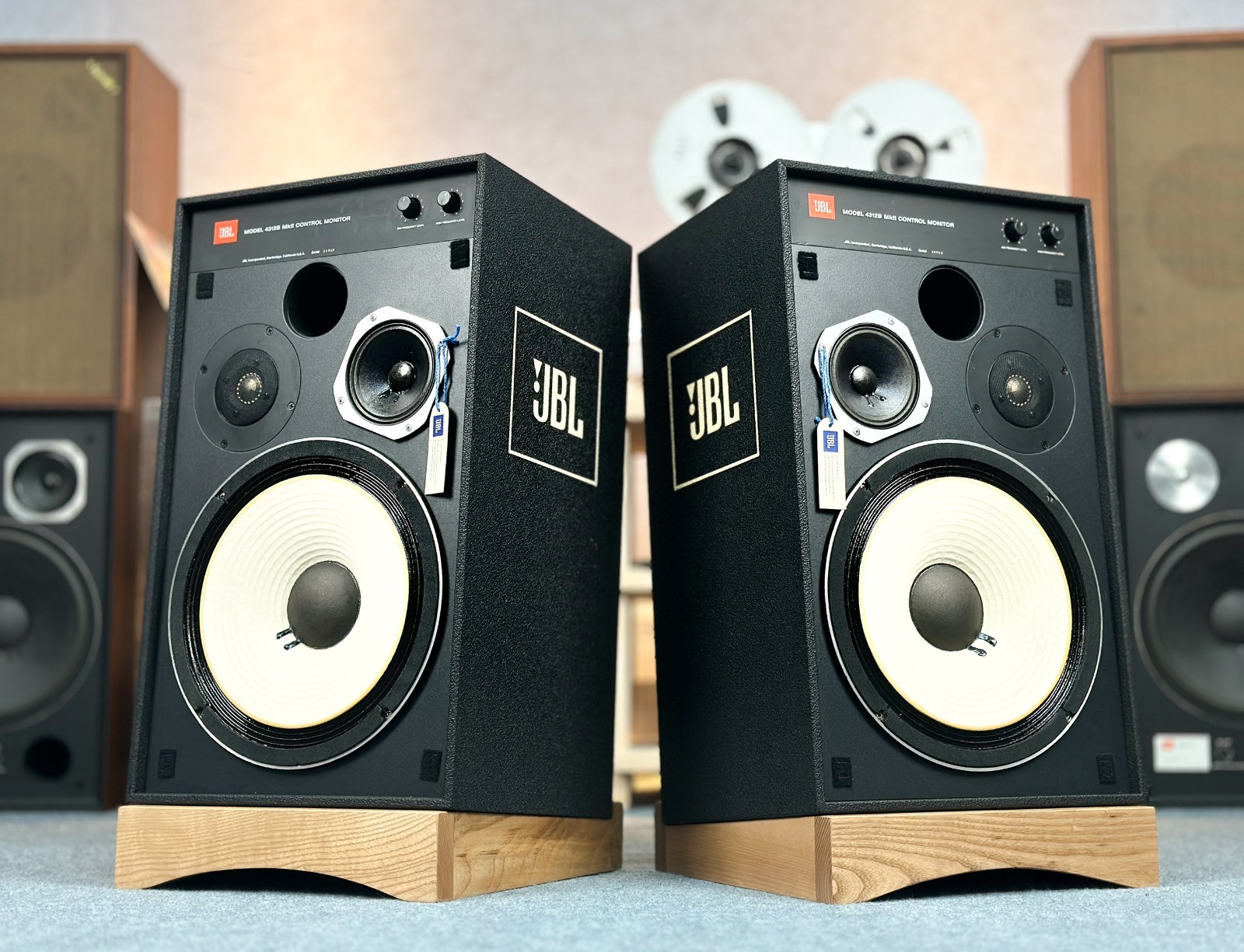
As an eBay Partner, we earn from qualifying purchases. This helps support our independent vintage technology research.
The 4312 represents the pinnacle of JBL's compact studio monitor technology. Its perfect balance of technical performance, practical design, and musical engagement has secured its place as one of the most iconic monitors in audio history. For those seeking a vintage monitor that combines historical significance with enduring sonic excellence, the 4312 remains an unsurpassed choice that continues to inspire engineers and delight listeners decades after its introduction.
See Also
Related Models
- JBL 4310 (1970)
- JBL 4315 Control Monitor (1977)
- JBL L110A (1975)
- JBL 4311B (1975)
- JBL 4408 (1975)
- Akai AM-2850 (1975)
- Akai AP-206 (1975)
- Nakamichi BX-1 (1985)
- Acoustic Research research-ar-17 (1978)
- Acoustic Research AR-19 (1994)