JBL 4311B Control Monitor
1976 - 1980
The JBL 4311B Control Monitor represents the definitive evolution of the 4311 platform, incorporating refinements that elevated an already excellent design to new heights of performance. Introduced in 1976, this "B" version refined the crossover network and driver integration that had made the original 4311 a studio favorite, creating a monitor that many engineers consider the ultimate expression of JBL's compact three-way philosophy.
Overview
| Type | Three-way studio monitor |
|---|---|
| Enclosure | Bass reflex (ported) |
| Dimensions | 24.5" H × 14" W × 12" D (622 × 356 × 305 mm) |
| Weight | 48 lbs (22 kg) |
| Impedance | 8 ohms |
| Sensitivity | 91 dB (1W/1m) |
| Power Handling | 75 watts RMS |
| Frequency Response | 45 Hz - 15 kHz (±3dB) |
| Crossover Frequencies | 1,500 Hz and 6,000 Hz |
Driver Configuration
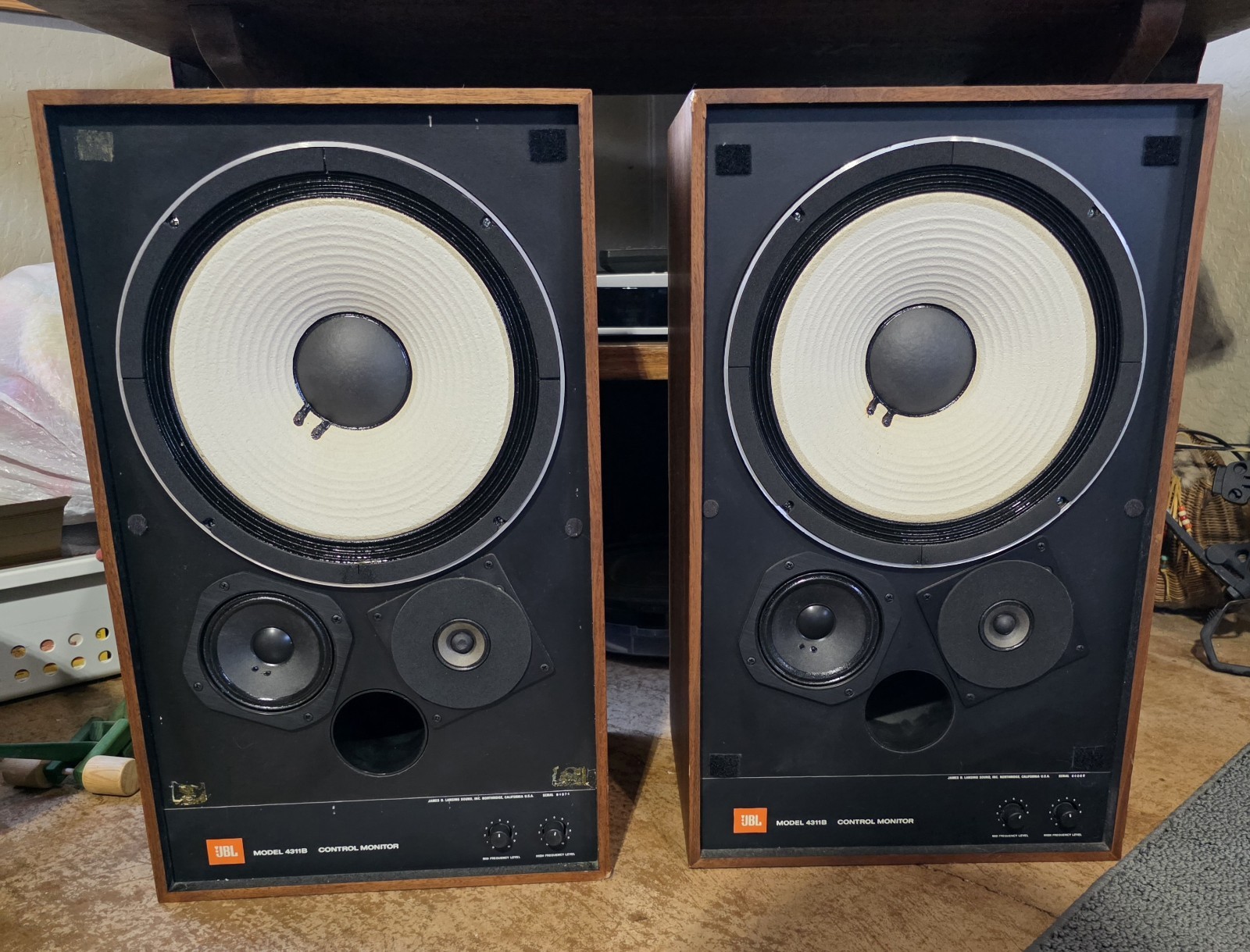
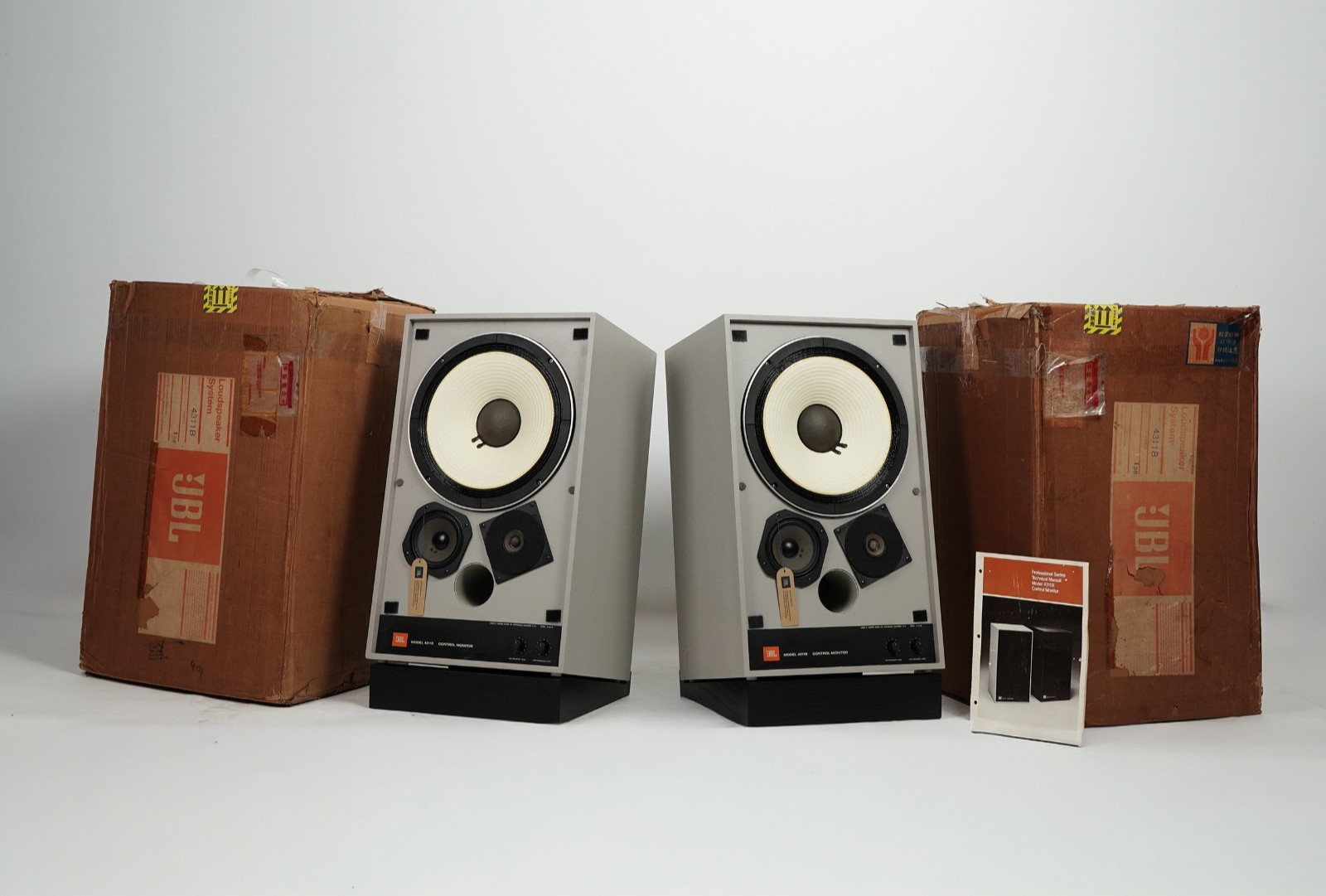
- Woofer: 12" JBL 2213H with ferrite magnet and white paper cone
- Midrange: 5" JBL LE5-2 phenolic ring radiator
- Tweeter: JBL LE25 1" dome tweeter
History & Design Evolution
The transition from the 4311 to the 4311B represented more than a simple model revision—it embodied JBL's philosophy of continuous improvement based on real-world professional feedback. The "B" designation signaled meaningful upgrades that addressed specific observations from engineers who had been using 4311 monitors daily:
- Crossover Refinement: The most significant change came in the crossover network, with revised component values that improved phase coherence between drivers
- Driver Matching: Tighter manufacturing tolerances ensured more consistent driver-to-driver performance
- Enclosure Tuning: Subtle modifications to the bass reflex port improved transient response and reduced port noise
- Component Upgrades: Higher-grade capacitors and resistors in the crossover network enhanced long-term reliability
The 4311B arrived at a pivotal moment in recording history, as the industry transitioned from 16-track to 24-track recording. This technological leap demanded monitors with greater resolution to reveal the complexities of denser mixes. The 4311B's refined crossover and improved driver integration provided exactly the precision that engineers needed.
What distinguished the 4311B from contemporary competitors was its ability to maintain the musical warmth that made JBL monitors beloved while delivering the analytical precision required for critical mixing decisions. It was a delicate balance that few manufacturers achieved.
Sound Character
The 4311B refines the classic JBL sound with subtle but meaningful improvements:
- Improved Driver Integration - The revised crossover creates a more seamless transition between drivers, with less audible discontinuity at crossover frequencies
- Tighter Bass - Enhanced port tuning and refined woofer control deliver more articulate low-frequency performance
- Smoother Midrange - The LE5-2's already excellent performance is further optimized through improved network design
- Extended Dynamics - Better power distribution across drivers allows higher SPLs with reduced distortion
- Refined Imaging - Improved phase coherence creates a more stable, three-dimensional soundstage
Compared to the original 4311, the "B" version offers a slightly more refined presentation with better resolution of fine detail. The bass remains powerful and extended but exhibits improved control and definition. The midrange maintains its characteristic presence while revealing subtle details more clearly.
Many engineers describe the 4311B as "the 4311 perfected"—it retains all the qualities that made the original beloved while addressing minor shortcomings that became apparent after years of professional use.
Studio Legacy
The 4311B continued and expanded upon the original 4311's studio success:
- Professional Adoption: Became the standard monitor in countless recording and broadcast facilities
- Mixing Excellence: Engineers appreciated the improved detail retrieval for critical EQ and balance decisions
- Broadcast Applications: The refined sound character proved ideal for radio and television broadcast monitoring
- Educational Institutions: Audio programs valued the 4311B's combination of accuracy and durability
Technical Improvements
The 4311B incorporated several technical advancements over its predecessor:
- Enhanced Crossover Topology: Revised network design with improved phase characteristics
- Better Quality Components: Higher-grade capacitors with tighter tolerances
- Improved Terminal Block: More robust binding posts for professional use
- Refined Cabinet Bracing: Internal structural improvements reduced resonances
Collector's Notes
The 4311B represents excellent value for vintage monitor enthusiasts:
- Availability: Produced in significant quantities, making well-preserved examples findable
- Build Quality: Professional-grade construction ensures longevity with proper care
- Restoration Considerations: Crossover recap recommended; L-pads may need cleaning
- Investment Value: Strong demand from both collectors and working engineers
Common Issues to Check:
- Crossover capacitors (electrolytics likely need replacement after decades)
- L-pad controls for midrange and tweeter levels
- Woofer surround condition (foam may need refoaming)
- White cone appearance (some yellowing is normal with age)
- Cabinet integrity (check for water damage or delamination)
Variant Identification: The 4311B can be distinguished from earlier 4311 models by its serial number and internal crossover component values. Later production runs may have slight component variations based on parts availability.
Listening Tips: The 4311B responds well to quality amplification with good current delivery. The front-panel L-pad controls allow room tuning—start flat and adjust to your acoustic environment. Position at least 12 inches from walls for optimal bass response.
eBay Listings


As an eBay Partner, we earn from qualifying purchases. This helps support our independent vintage technology research.
The 4311B stands as a testament to JBL's commitment to continuous improvement and professional audio excellence. Its refined performance, robust construction, and enduring sonic quality make it a highly sought-after classic that continues to serve demanding engineers decades after its introduction. For those seeking a vintage monitor that combines historical significance with genuinely improved performance over its predecessor, the 4311B represents a compelling choice.
Related Models
- JBL 4310 (1970)
- JBL 4315 Control Monitor (1977)
- JBL L110A (1975)
- JBL 4311B (1975)
- JBL 4408 (1975)
- Akai AM-2850 (1975)
- Akai AP-206 (1975)
- Nakamichi BX-1 (1985)
- Acoustic Research research-ar-17 (1978)
- Acoustic Research AR-19 (1994)