JBL 4310: The Studio Monitor That Conquered the World
When it comes to iconic loudspeakers in the history of audio, few models carry the legacy and cultural weight of the JBL 4310. Introduced in 1970 by the James B. Lansing Design company—better known as JBL—the 4310 was not conceived as a luxury home hi-fi product. Instead, it was engineered as a compact, accurate, and rugged studio monitor for professional recording environments. Yet, its combination of sonic precision, striking aesthetics, and bulletproof build quality propelled it far beyond the control rooms of recording studios, making it a cornerstone of vintage audio culture and a beloved classic among audiophiles and collectors alike.
The 4310 emerged during a golden era for studio monitor design, a time when the music industry was rapidly expanding and the demand for reliable, high-performance monitoring tools was growing. JBL, already respected for its high-efficiency drivers and horn-loaded designs, responded with a compact two-way speaker that delivered exceptional clarity and dynamic range. The 4310 quickly became a fixture in professional studios across the globe—from Motown to Abbey Road—and its sound influenced generations of engineers, producers, and musicians.
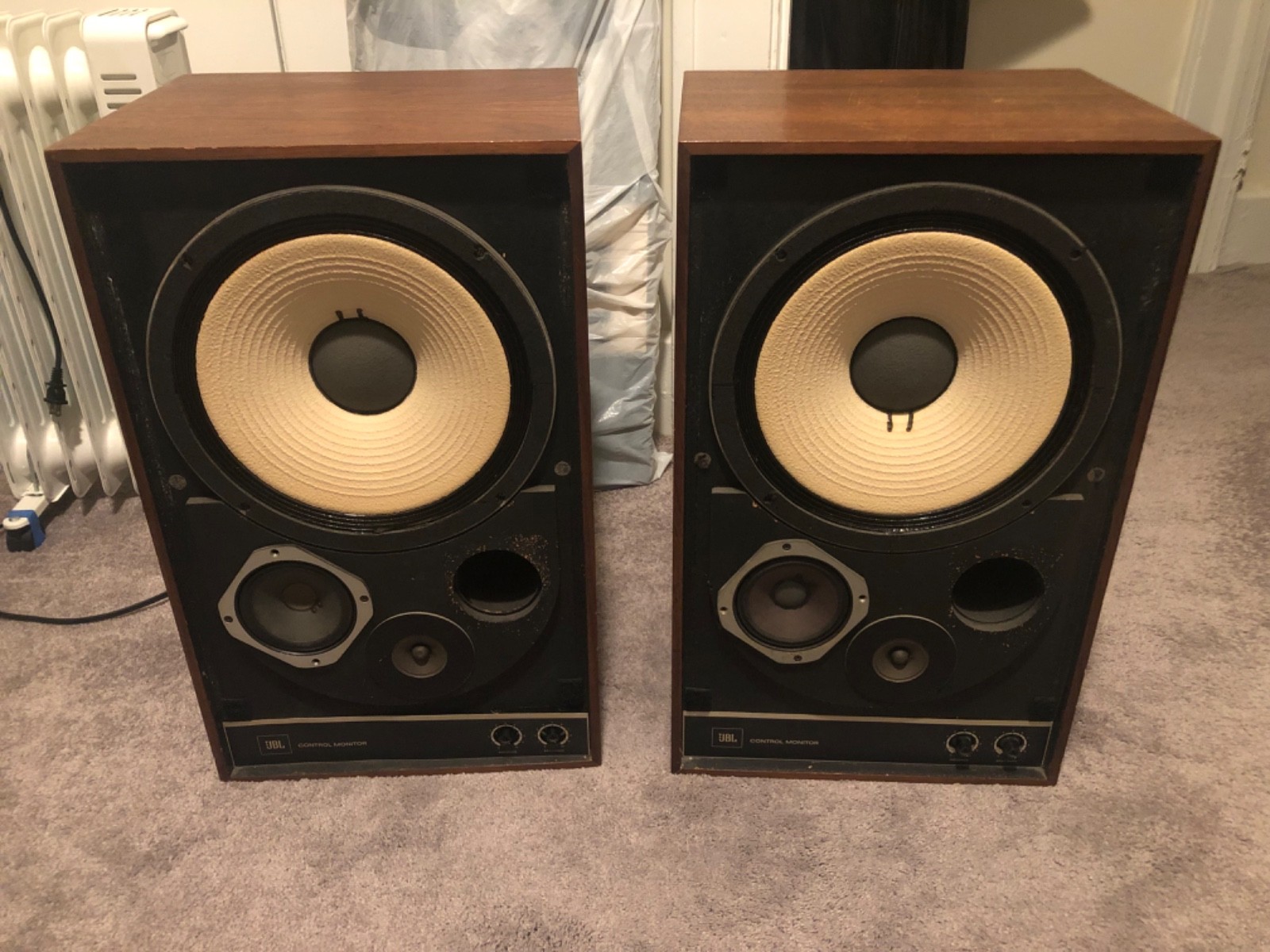
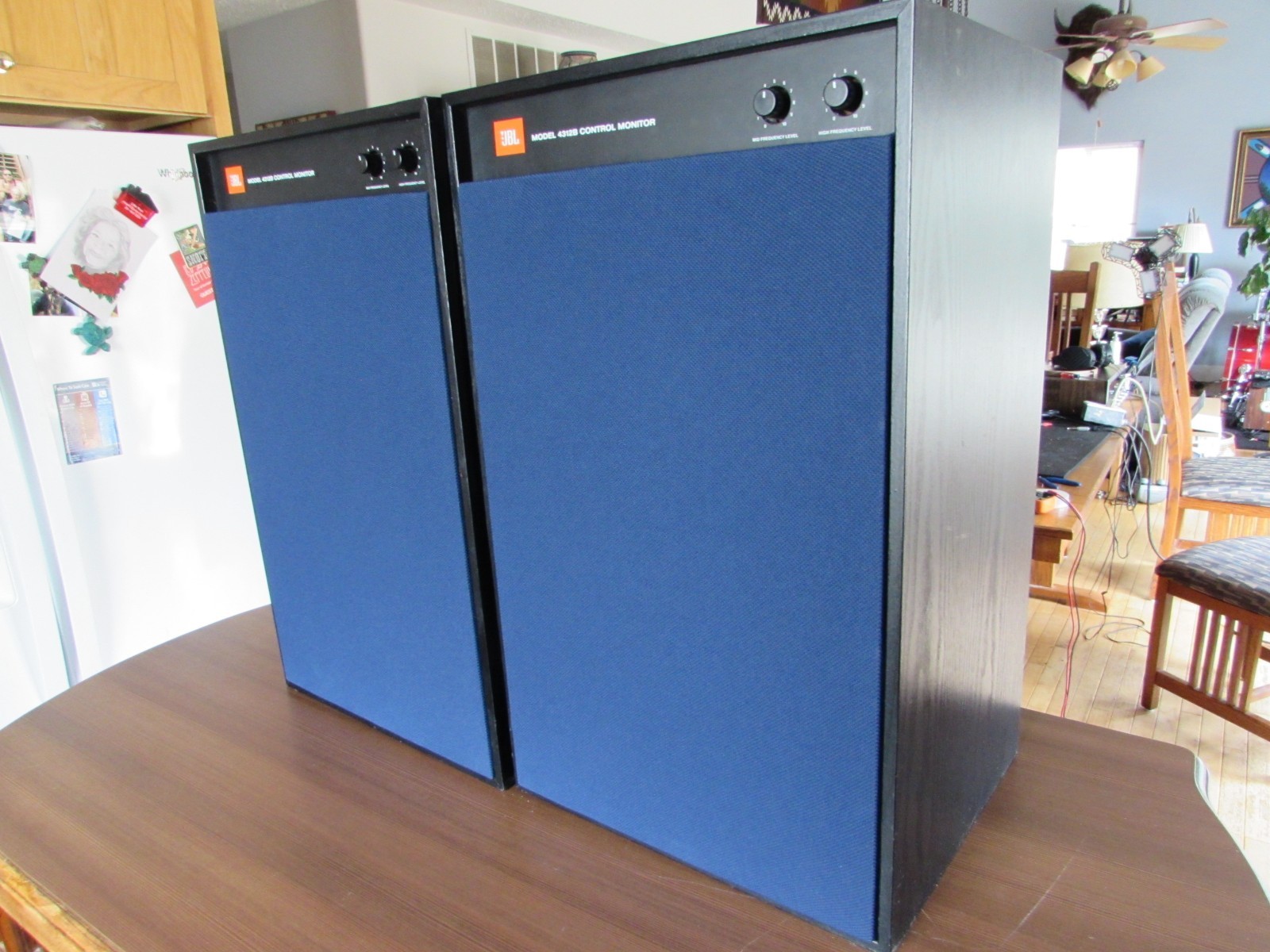
But the 4310’s influence didn’t stop at the studio door. Its bold, angular cabinet with the signature "beaver tail" front baffle and distinctive JBL logo soon became a symbol of audiophile sophistication. It was one of the first studio monitors to achieve widespread popularity in home listening environments, bridging the gap between professional accuracy and domestic enjoyment. For many, owning a pair of 4310s wasn’t just about sound—it was a statement.
Technical Specifications
| Specification | Detail |
| Model | JBL 4310 |
| Type | Three-way, bass reflex, studio monitor |
| Drivers | 12" (305 mm) low-frequency, 1.4" (3.6 cm) cone high-frequency (LE20-1) |
| Frequency Response | 45 Hz – 15,000 Hz (±3 dB) |
| Crossover Frequency | 1.5 kHz |
| Sensitivity | 92 dB (1W @ 1m) |
| Nominal Impedance | 8 ohms |
| Enclosure Type | Bass reflex (vented) |
| Dimensions (H×W×D) | 23.6" × 14.3" × 11.8" (60.0 × 36.4 × 30.0 cm) |
| Weight | 51 lbs (23 kg) per speaker |
| Finish Options | Walnut, rosewood, black ash veneers |
| Grille | Removable black cloth with JBL logo |
Sound Characteristics and Performance
The JBL 4310 is renowned for its punchy, dynamic, and highly detailed sound signature. Its 12-inch low-frequency driver, paired with a high-temperature voice coil, delivers tight, articulate bass with surprising extension for a speaker of its size. The bass reflex port on the front baffle enhances low-end output and helps maintain clarity at high volumes—critical for studio use where long listening sessions and high SPLs are common.
The standout feature, however, is the titanium-dome tweeter, which gives the 4310 its famously bright and crisp high-frequency response. This tweeter, part of JBL’s revolutionary Bi-Radial design, provides wide dispersion and exceptional transient response, making cymbals, vocals, and acoustic instruments sound vivid and present. While some listeners find the highs slightly aggressive—especially by modern standards—this characteristic contributed to the speaker’s success in studios, where clarity and detail are paramount.
The crossover, designed with JBL’s expertise in time alignment and phase coherence, ensures a smooth transition between drivers. The result is a speaker that excels at revealing the nuances of a recording, making it ideal for critical listening and mix evaluation. In home environments, the 4310s shine with rock, jazz, and funk—genres where rhythm, dynamics, and presence are key.
Notable Features and Innovations
The JBL 4310 introduced several design elements that became hallmarks of professional monitoring:
- Front-firing bass reflex port: Unlike many speakers of the era that used rear ports, the 4310’s front port allowed for flexible placement near walls or in corners without compromising bass response. This made it ideal for small control rooms.
- Bi-Radial horn tweeter: This proprietary JBL design provided wide horizontal dispersion and controlled vertical dispersion, reducing ceiling and floor reflections for more accurate imaging.
- Durable construction: The thick MDF cabinet, heavy internal bracing, and high-quality veneer finishes ensured longevity and minimized cabinet resonance.
- High sensitivity: At 92 dB, the 4310 is easy to drive and works well with a wide range of amplifiers, from vintage tube amps to modern solid-state receivers.
Common Issues and Maintenance
While the 4310 is built to last, decades of use mean that many surviving units require some attention:
- Foam surround degradation: The original foam surrounds on the woofers tend to dry out and crumble over time. Re-foaming or reconing is a common and worthwhile restoration step.
- Tweeter fatigue: The titanium dome tweeters are robust, but some early models may exhibit harshness or distortion if the diaphragm is damaged. Modern reconing services can restore them to like-new condition.
- Crossover component aging: Capacitors and inductors in the crossover network can degrade, leading to imbalanced frequency response. Upgrading or refurbishing the crossover improves performance and reliability.
- Grille and finish wear: Original grilles may be torn or discolored, and veneers can show scratches or water damage. Replacement grilles and refinishing are available from specialty vendors.
Regular cleaning and careful placement (away from direct sunlight and moisture) will help preserve these vintage gems.
Current Market Value and Collectibility
Today, the JBL 4310 is a highly collectible piece of audio history. Their value has steadily increased due to growing interest in vintage studio monitors and the resurgence of analog audio culture.
Collectors prize the 4310 not only for its sound but also for its iconic design—it’s a speaker that looks as good in a retro living room as it did in a 1970s recording studio. Its appearance in countless photos of legendary sessions and its use on classic albums (from Stevie Wonder to Pink Floyd) only enhance its mystique.
Conclusion and Legacy
The JBL 4310 is more than just a speaker—it’s a cultural artifact. It represents a pivotal moment when professional audio tools began to influence home listening, blurring the lines between engineer and enthusiast. Its unapologetic clarity, dynamic punch, and rugged reliability made it a favorite in studios, while its bold design and engaging sound won over generations of music lovers.
Even as newer monitors and hi-fi speakers have emerged, the 4310 remains a benchmark for what a compact studio monitor can achieve. It paved the way for successors like the 4311, 4410, and the legendary L100, but the original 4310 holds a special place in audio history.
If you’re lucky enough to own a pair—or considering adding them to your collection—you’re not just buying vintage speakers. You’re bringing home a piece of sonic history that helped shape the sound of modern music.
eBay Listings

As an eBay Partner, we earn from qualifying purchases. This helps support our independent vintage technology research.
Service Manuals & Schematics
- Manual — archive.org
Related Models
- JBL 4315 Control Monitor (1977)
- JBL L110A (1975)
- JBL 4311B (1975)
- JBL 4408 (1975)
- JBL S106 (1975)
- Akai AM-2850 (1975)
- Akai AP-206 (1975)
- Nakamichi BX-1 (1985)
- Acoustic Research research-ar-17 (1978)
- Acoustic Research AR-19 (1994)