JBL 4301B: The Legendary Broadcast Monitor That Shaped Studio Sound
The JBL 4301B stands as one of the most iconic near-field studio monitors of the 1970s and early 1980s, revered for its clarity, durability, and honest sonic presentation. Designed primarily for broadcast and professional audio environments, the 4301B became a staple in radio stations, mastering studios, and home setups alike. Though overshadowed in fame by its larger sibling, the JBL 4310, the 4301B carved its own niche as a compact yet powerful monitor trusted for critical listening and accurate sound reproduction.
Historical Context and Release
Introduced in 1975 as an evolution of the original 4301, the 4301B was part of JBL’s renowned 43xx series of studio monitors developed under the leadership of audio pioneer Dr. Richard C. Small and influenced by the acoustic research of Edmond W. Bailey. The “B” revision addressed early production issues and improved component consistency, particularly in the crossover network and driver tolerances. Unlike consumer speakers of the era, the 4301B was engineered for durability and flat frequency response, making it ideal for environments where reliability and accuracy were paramount.
Manufactured at JBL’s Santa Fe Springs, California facility, the 4301B was built during a golden era of analog audio. It found widespread adoption in broadcast facilities, including NPR affiliates and major radio networks, where its ability to reveal flaws in recordings made it an essential tool. Despite being discontinued in the early 1980s, the 4301B has enjoyed a resurgence among vintage audio enthusiasts, collectors, and analog purists who appreciate its no-nonsense engineering and vintage JBL sonic signature.
Technical Specifications
| Specification | Detail |
| Type | 2-way, bass reflex |
| Drivers | 12" (305 mm) JBL M26F woofer, 1" (25 mm) JBL 2406 titanium dome tweeter |
| Crossover Frequency | 1.5 kHz |
| Impedance | 8 ohms nominal |
| Sensitivity | 88 dB (1W/1m) |
| Frequency Response | 55 Hz – 20 kHz (±3 dB) |
| Power Handling | 100 watts (program) |
| Enclosure | Vented (bass reflex), front-firing port |
| Dimensions (H x W x D) | 24" x 14" x 12" (610 x 356 x 305 mm) |
| Weight | 42 lbs (19 kg) per speaker |
| Finish Options | Walnut, black ash, rosewood (early models) |
| Original Price (1976) | $495 per pair |
Sound Quality Characteristics
The JBL 4301B delivers a balanced, forward, and highly detailed sound that prioritizes clarity over warmth. Its 12-inch woofer provides deeper bass extension than the 4310’s 10-inch driver, offering a more authoritative low end that remains tight and controlled—ideal for monitoring kick drums, bass guitar, and broadcast voice tracks. The 2406 titanium compression driver is known for its crisp, airy highs with excellent transient response, though some listeners find it slightly aggressive with poor-quality recordings or bright amplifiers.
The crossover at 1.5 kHz is well-executed for its time, minimizing phase issues and ensuring a coherent blend between drivers. The result is a monitor that reveals the truth of a mix—flaws and all—making it a favorite among engineers who valued honesty over flattery. While not as “hi-fi” smooth as modern monitors, the 4301B’s sound is often described as “punchy,” “transparent,” and “authoritative,” with a midrange that remains remarkably clear even at high volumes.
Notable Features and Innovations
The 4301B incorporated several advanced features for its era:
- Titanium Dome Tweeter: The JBL 2406 driver was one of the first high-frequency units to use a pure titanium diaphragm, offering superior rigidity and extended high-frequency response compared to mylar or aluminum domes.
- Bailey-Designed Crossover: Utilizing the “Bailey alignment” principles, the crossover ensured a smooth impedance curve and predictable driver behavior.
- Industrial Build Quality: Constructed with thick MDF panels and heavy internal bracing, the cabinet resists resonance and ensures long-term durability.
- Front-Firing Port: Unlike many monitors of the time that used rear ports, the 4301B’s front-firing bass reflex port allows for flexible placement near walls or in corners without compromising bass response.
Market Value and Collectibility
Today, the JBL 4301B is a sought-after collector’s item, particularly in good working condition with original grilles and finish. Prices vary widely depending on condition and provenance:
- Excellent Condition (original drivers, no repairs): $600–$900 per pair
- Good Condition (refurbished crossovers, reconed woofers): $350–$550 per pair
- Poor Condition (non-functional, cosmetic damage): $150–$250 per pair
Units with rare rosewood veneer or documented broadcast studio history can command premiums. While not as ubiquitous as the 4310 or 4311, the 4301B’s larger cabinet and deeper bass give it a unique appeal among vintage JBL collectors.
Common Issues and Maintenance
Like all vintage speakers, the 4301B requires attention to aging components:
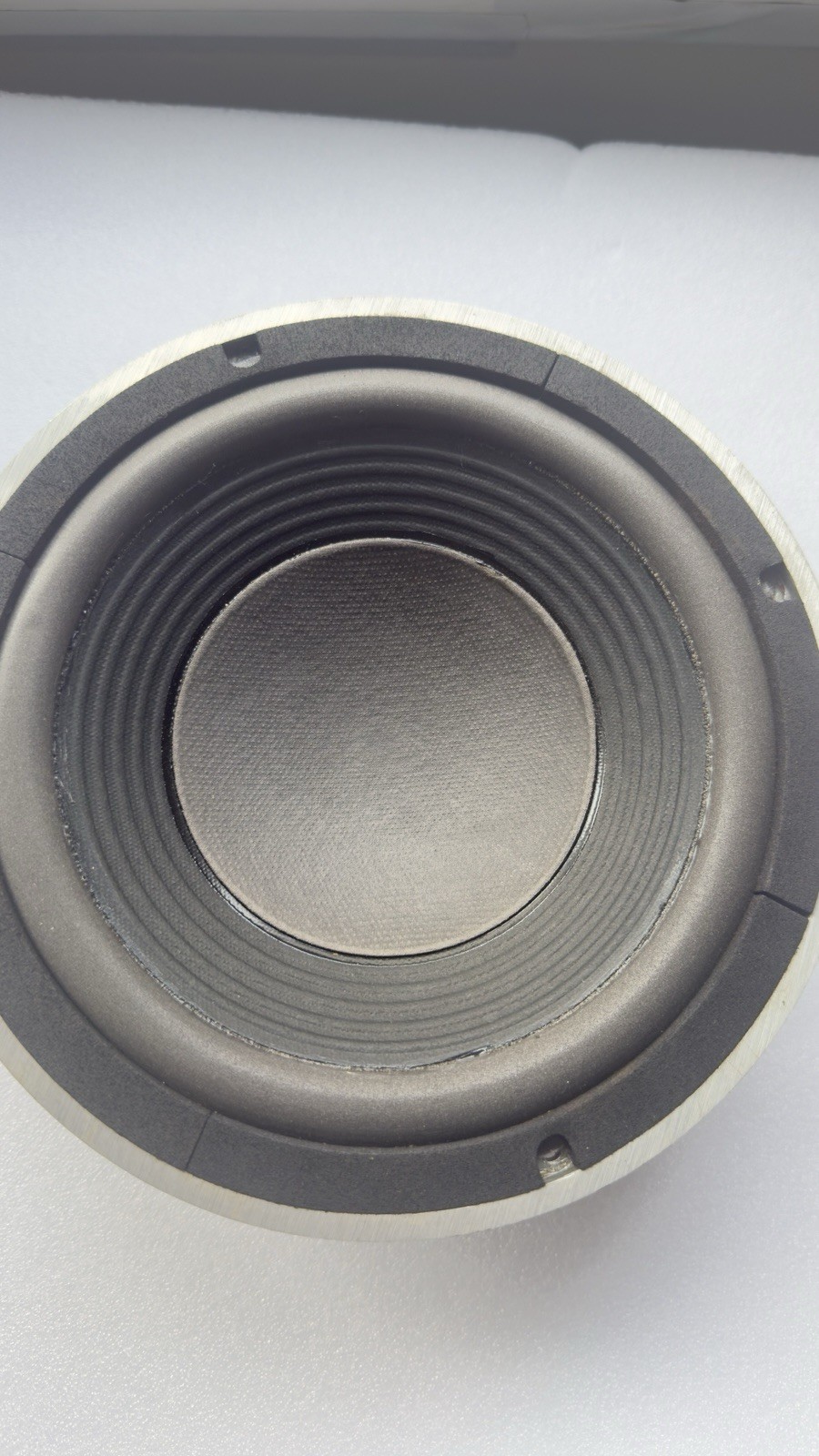
- Woofer Surrounds: The original foam surrounds degrade over time, leading to flaking and loss of bass response. Replacement with modern butyl rubber surrounds is common and recommended.
- Crossover Components: Electrolytic capacitors in the crossover network often dry out, causing distortion or tweeter damage. Replacing these with modern film capacitors improves reliability and sound quality.
- Tweeter Diaphragm Oxidation: In humid environments, the titanium dome can oxidize, leading to a harsh or sibilant sound. Light cleaning or professional re-coating may be necessary.
- Grille Fabric: Original grilles often suffer from discoloration or tears. Reproduction grilles are available from specialty vendors.
Regular inspection and preventive maintenance—especially recapping the crossover and reconing the woofer—can extend the life of a 4301B indefinitely.
Comparison to Similar Models
| Model | Driver Size | Crossover | Sensitivity | Key Differences |
| JBL 4310 | 10" woofer | 1.5 kHz | 86 dB | Smaller cabinet, less bass extension, more common |
| JBL 4311 | 12" woofer | 1.5 kHz | 88 dB | Similar size, but with different crossover tuning and tweeter |
| Tannoy Little Gold | 12" dual concentric | 2.2 kHz | 90 dB | Coaxial design, smoother midrange, British voicing |
| Altec 604E | 15" coaxial | 1.2 kHz | 98 dB | Horn-loaded, much higher sensitivity, vintage broadcast standard |
While the 4310 is often seen as the quintessential JBL studio monitor, the 4301B offers a compelling alternative with deeper bass and a more robust low end. Its 12-inch woofer gives it an edge in full-range monitoring, making it better suited for music with strong bass content. Compared to the Altec 604, the 4301B is more compact and easier to integrate into modern setups, though it lacks the sheer output and horn efficiency of the Altec.
Final Thoughts
The JBL 4301B is more than just a vintage speaker—it’s a piece of audio history. Engineered for professionals but embraced by audiophiles, it represents a time when durability, accuracy, and sonic integrity were paramount. While modern digital monitors offer greater precision, few can match the 4301B’s character, presence, and analog charm. For collectors, restorers, or anyone seeking the authentic sound of 1970s broadcast audio, the 4301B remains a compelling and rewarding choice. With proper care, it can continue to deliver honest, powerful sound for decades to come.
eBay Listings


As an eBay Partner, we earn from qualifying purchases. This helps support our independent vintage technology research.
Related Models
- JBL 4310 (1970)
- JBL 4315 Control Monitor (1977)
- JBL L110A (1975)
- JBL 4311B (1975)
- JBL 4408 (1975)
- Akai AM-2850 (1975)
- Akai AP-206 (1975)
- Nakamichi BX-1 (1985)
- Acoustic Research research-ar-17 (1978)
- Acoustic Research AR-19 (1994)