Infinity SM-155: Compact Innovation from a Golden Era of Speaker Design
In the mid-1970s, Infinity Systems was rapidly establishing itself as a forward-thinking force in the world of high-fidelity audio. Known for its pioneering use of advanced driver technologies and boundary-pushing engineering, the company introduced a range of speakers that combined scientific rigor with audiophile sensibility. Among these was the Infinity SM-155, a compact bookshelf speaker that stood out not for sheer size or power, but for its clever design and surprisingly full sound—especially in the bass department.
Though not as widely documented as some of Infinity’s flagship models like the IRS series or the legendary Beta, the SM-155 represents an important chapter in the company’s evolution. It was part of a wave of compact speaker designs that sought to deliver high performance in smaller enclosures—ideal for apartments, dorm rooms, or secondary listening spaces—without sacrificing the deep, articulate bass typically reserved for larger floor-standing units.
Technical Specifications
| Specification | Detail |
| Model | SM-155 |
| Manufacturer | Infinity Systems (US) |
| Production Era | Mid-1970s (circa 1975–1978) |
| Type | 2-way passive radiator bookshelf speaker |
| Enclosure | Sealed with passive radiator |
| Driver Configuration | 1 x 5.25" woofer, 1 x 1" dome tweeter |
| Passive Radiator | 1 x 5.25" (bass reflex alternative) |
| Frequency Response | Approx. 55 Hz – 20 kHz (±3 dB) |
| Crossover Frequency | ~3.5 kHz |
| Nominal Impedance | 8 ohms |
| Sensitivity | ~86 dB (1W/1m) |
| Recommended Amp Power | 15–75 watts |
| Dimensions (H×W×D) | 14" × 8" × 8.5" (35.6 × 20.3 × 21.6 cm) |
| Weight | ~14 lbs (6.4 kg) per speaker |
| Finish Options | Walnut vinyl veneer |
Sound Characteristics and Performance
The SM-155 was engineered to punch above its weight class. Its most distinctive feature was the use of a passive radiator—a sealed-box design alternative to the traditional bass reflex port. Instead of a ported tube, the SM-155 used a secondary, unpowered 5.25" diaphragm mounted on the front baffle (below the active driver) to enhance low-frequency output. This design helped extend bass response without the port noise or chuffing that can plague small ported enclosures.
The result was a speaker that delivered a tight, controlled low end with surprising authority for its size. Bass rolled off gently around 55 Hz, making it capable of handling kick drums, bass guitar, and lower piano notes with more conviction than similarly sized contemporaries. While not a substitute for a subwoofer or large floorstander, the SM-155 offered a balanced, full-range sound that was rare in compact speakers of the era.
The 1" soft-dome tweeter provided smooth, non-fatiguing highs. Unlike some early metal dome tweeters that could sound harsh or sibilant, the SM-155’s tweeter delivered a refined top end, ideal for extended listening sessions. The crossover, while not as sophisticated as those in Infinity’s high-end models, did its job cleanly, blending the drivers with minimal overlap or phase issues.
Midrange clarity was another strength. Vocals and acoustic instruments were rendered with warmth and presence, making the SM-155 well-suited for jazz, folk, and classic rock—genres that were dominant during its production era.
Notable Features and Innovations
While modest in appearance, the SM-155 incorporated several design philosophies that reflected Infinity’s engineering ethos:
- Passive Radiator Technology: At a time when most compact speakers used simple sealed or ported boxes, Infinity’s use of a passive radiator showed a commitment to maximizing bass efficiency without compromising transient response.
- Time-Aligned Crossover (Conceptual): Though not as rigorously implemented as in later models like the IRS V or the Beta series, the SM-155’s driver placement and crossover design hinted at Infinity’s growing interest in time-coherent sound reproduction.
- High-Quality Internal Wiring and Components: For a mid-tier model, the SM-155 used better-than-average internal cabling and crossover parts, contributing to its reliable performance over time.
- Stylish, Compact Cabinet: The walnut-veneer finish and clean front baffle gave the SM-155 a refined, professional look that fit well in both modern and traditional living spaces.
Common Issues and Maintenance
Like many vintage speakers from the 1970s, the SM-155 can suffer from age-related degradation, but it’s generally robust if well-maintained.
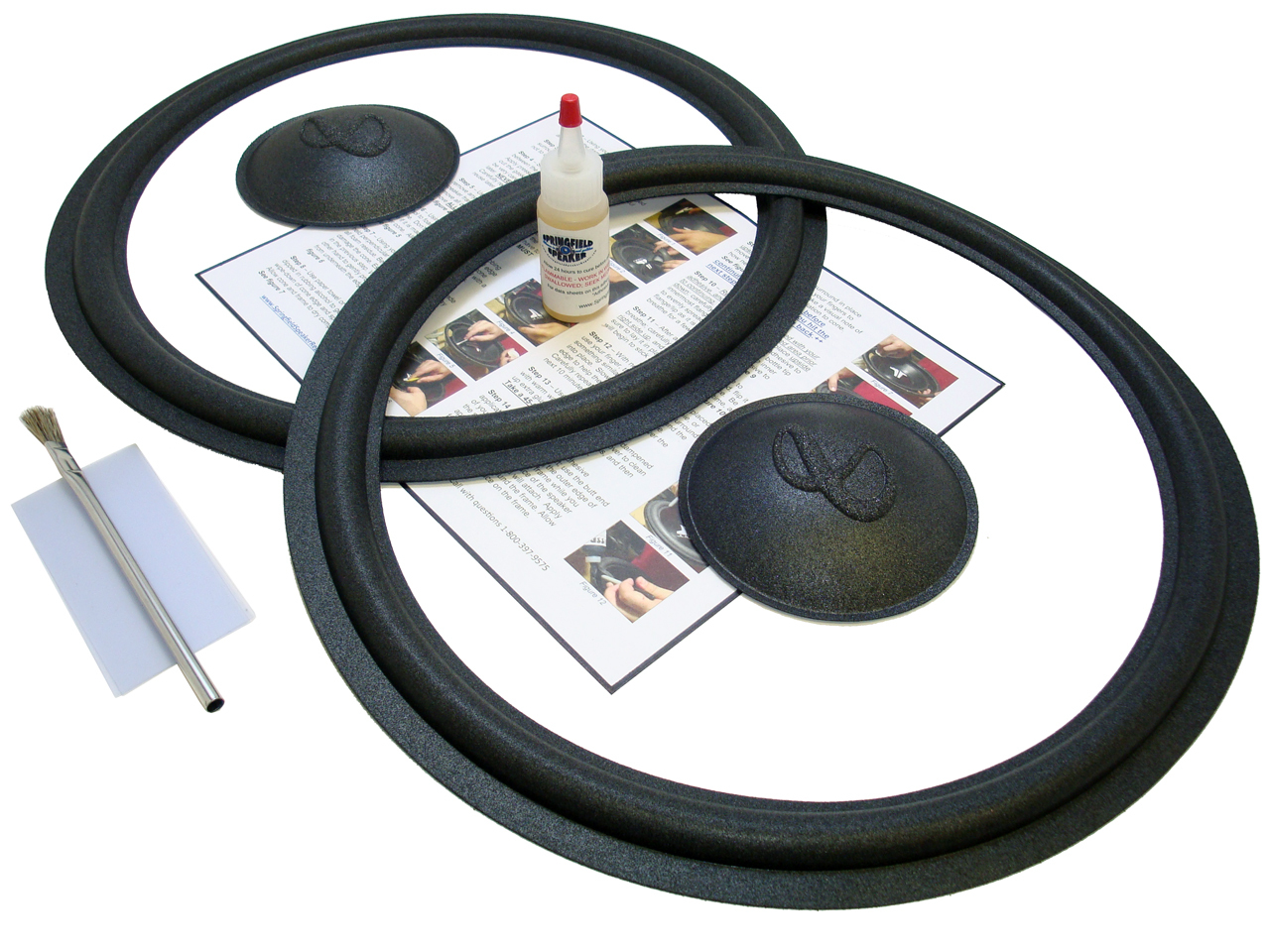
- Surround Rot: The foam surrounds on the 5.25" woofer and passive radiator are prone to drying out and crumbling after 40+ years. This is the most common failure point. Re-foaming or full reconing is often necessary for optimal performance.
- Tweeter Aging: While the soft dome is durable, some units may exhibit reduced high-frequency output due to oxidation or minor diaphragm fatigue. Cleaning the dome gently with isopropyl alcohol can help, but replacement may be needed in extreme cases.
- Crossover Capacitors: Electrolytic capacitors in the crossover network may degrade over time, leading to muffled sound or imbalance. Replacing these with modern film capacitors can significantly improve clarity and dynamics.
- Grille Attachment: The original cloth grilles were held by plastic clips that can become brittle. Replacement grilles or modern magnetic alternatives are available from specialty audio restoration vendors.
Owners are advised to inspect the speakers carefully before purchase and consider a professional refurbishment if they’re not in original working condition.
Current Market Value and Collectibility
The Infinity SM-155 is not a high-profile collector’s item like the Beta or IRS models, but it has developed a quiet following among vintage audio enthusiasts who appreciate compact, well-engineered speakers from the 1970s.
In working condition, a pair of SM-155s typically sells for $150–$300, depending on cosmetic condition and whether they’ve been restored. Refurbished pairs with new surrounds and updated crossovers often command the higher end of that range. Unrestored units may go for as little as $75–$100, making them an affordable entry point into vintage Infinity sound.
They are particularly sought after by:
- Audiophiles with small listening rooms
- Vintage gear collectors focusing on 1970s American audio
- DIYers interested in speaker restoration projects
While not rare, original unmodified pairs in good condition are becoming harder to find, especially with intact grilles and hardware.
Conclusion and Legacy
The Infinity SM-155 may not have made headlines like its larger siblings, but it embodies the same spirit of innovation that defined Infinity during its golden era. It was a smart, well-thought-out solution to a common problem: how to get rich, balanced sound from a compact enclosure.
In an age when "bigger is better" often ruled speaker design, the SM-155 proved that intelligent engineering could deliver impressive performance in a modest footprint. Its use of passive radiator technology, clean crossover design, and high-quality materials made it a standout among mid-tier bookshelf speakers of the 1970s.
Today, the SM-155 serves as both a functional audio component and a historical artifact—a reminder of a time when American companies like Infinity were pushing the boundaries of what affordable high-fidelity could be. For the vintage audio enthusiast, it’s a rewarding find: a speaker that combines charm, engineering smarts, and a surprisingly modern sound signature. With a little care and restoration, the SM-155 can still hold its own in today’s listening environments—quietly proving that good things really do come in small packages.
eBay Listings



As an eBay Partner, we earn from qualifying purchases. This helps support our independent vintage technology research.
Related Models
- Infinity RS-1B (1975)
- Infinity SM-102 (1979)
- Infinity SM-125 (1975)
- Infinity RS-6 (1976)
- Infinity SM-112 (1975)
- Akai AM-2850 (1975)
- Akai AP-206 (1975)
- Nakamichi BX-1 (1985)
- Acoustic Research research-ar-17 (1978)
- Acoustic Research AR-19 (1994)