Infinity RSB: The Forgotten Pioneer of Servo-Controlled Bass
In the late 1970s, as high-fidelity audio entered a period of bold experimentation, Infinity Systems (later known as Infinity Loudspeakers) introduced a radical departure from conventional speaker design: the RSB, or Regulated Servo-Bass system. Unlike traditional passive loudspeakers, the RSB was a groundbreaking attempt to apply active servo control to bass reproduction—an ambitious fusion of analog electronics and acoustics that predated modern digital room correction and active subwoofers by decades. Though not a commercial blockbuster, the RSB remains a fascinating footnote in audio history, embodying the spirit of innovation that defined Infinity’s early years under the leadership of Arnie Nudell and Cary Christie.
A Radical Concept: Servo-Controlled Bass
The Infinity RSB was not a complete speaker in the traditional sense. Rather, it was a bass driver and active control unit system designed to be paired with existing full-range speakers—typically Infinity’s own models like the IRS or ES series. The core idea was simple but revolutionary: use real-time feedback from a sensor mounted on the woofer cone to correct distortion and improve transient response in the low end.
This was achieved through a closed-loop servo mechanism. A velocity sensor (essentially a small coil moving with the woofer cone) monitored the actual motion of the driver. This signal was compared to the original input, and any discrepancies—caused by cone overshoot, resonance, or lag—were corrected by the servo amplifier in real time. The result was tighter, deeper, and more accurate bass than conventional passive designs could achieve at the time.
The RSB system consisted of two main components:
- A large, high-excursion 12-inch or 15-inch servo-controlled woofer (depending on configuration)
- A dedicated external Servo Control Unit (SCU), a hefty analog circuitry box housing the servo amplifier, equalization filters, and feedback circuitry
The SCU allowed users to adjust bass level, crossover frequency, and servo gain, offering a level of tuning flexibility rare in the 1970s.
Technical Specifications
| Specification | Detail |
| Model | RSB (Regulated Servo-Bass) |
| Manufacturer | Infinity Systems |
| Year Introduced | 1977 |
| Type | Active servo-controlled bass system |
| Driver Configuration | Single 12" or 15" servo woofer (user-replaceable) |
| Feedback Mechanism | Voice coil velocity sensing (analog servo loop) |
| Control Unit | External Servo Control Unit (SCU) with analog circuitry |
| Inputs | Line-level input (RCA), speaker-level input |
| Outputs | High-pass output to main speakers, direct drive to RSB woofer |
| Crossover Frequency | Adjustable, typically 60–120 Hz |
| Amplification | Built-in servo amplifier (approx. 50–75W, class AB) |
| Dimensions (Woofer) | ~18" H x 16" W x 20" D (varies by cabinet) |
| Weight | ~60–80 lbs (woofer + cabinet) |
| Impedance (nominal) | Not applicable (active system) |
| Power Requirements | 120V AC, 60 Hz (USA models) |
Note: Exact specs vary slightly depending on production batch and regional version. Some later units were adapted for use with the Infinity IRS V.
Sound Characteristics and Performance
The RSB’s sonic signature was defined by its exceptional bass control. Unlike typical ported or sealed-box woofers of the era, which often suffered from "one-note" booms or sluggish decay, the RSB delivered bass that was fast, articulate, and dynamically precise. It could reproduce low-frequency transients—like the pluck of an upright bass or the impact of a kick drum—with startling realism.
Critics and early adopters noted that the RSB didn’t just add bass; it integrated bass. Because the servo system minimized time-domain errors, the low end remained coherent with the midrange and highs, preserving the rhythm and timing of the music. This made the RSB particularly effective in large rooms or with demanding program material like orchestral recordings and rock.
However, the system wasn’t without quirks. Some users reported a slightly "dry" or "sterile" character in the bass when the servo gain was set too high, as the extreme correction could dampen natural resonance. Proper setup—especially tuning the servo loop and crossover—was essential for optimal performance.
Notable Features and Innovations
The Infinity RSB was ahead of its time in several key ways:
- First Commercial Servo Speaker System: While servo-controlled speakers had been prototyped in labs (notably by engineers at Acoustic Research and even NASA), the RSB was one of the first commercially available systems to bring this technology to audiophiles.
- Analog Real-Time Feedback: Long before DSP and digital signal processing, the RSB used purely analog circuitry to monitor and correct driver behavior—impressive given the limitations of 1970s electronics.
- Modular Design: The RSB was designed as an add-on, allowing owners of high-end Infinity speakers to upgrade their bass performance without replacing their entire system.
- Adjustable Servo Damping: The SCU allowed users to dial in the amount of servo correction, offering a rare degree of customization for the era.
Common Issues and Maintenance
Today, the RSB is a rare find, and surviving units often require restoration. Common issues include:
- Aging Capacitors in the SCU: The analog power supply and signal path rely on electrolytic capacitors that degrade over time. Symptoms include hum, low output, or complete failure.
- Worn Velocity Sensor Coils: The feedback coil attached to the woofer can become misaligned or damaged, breaking the servo loop and rendering the system inoperative.
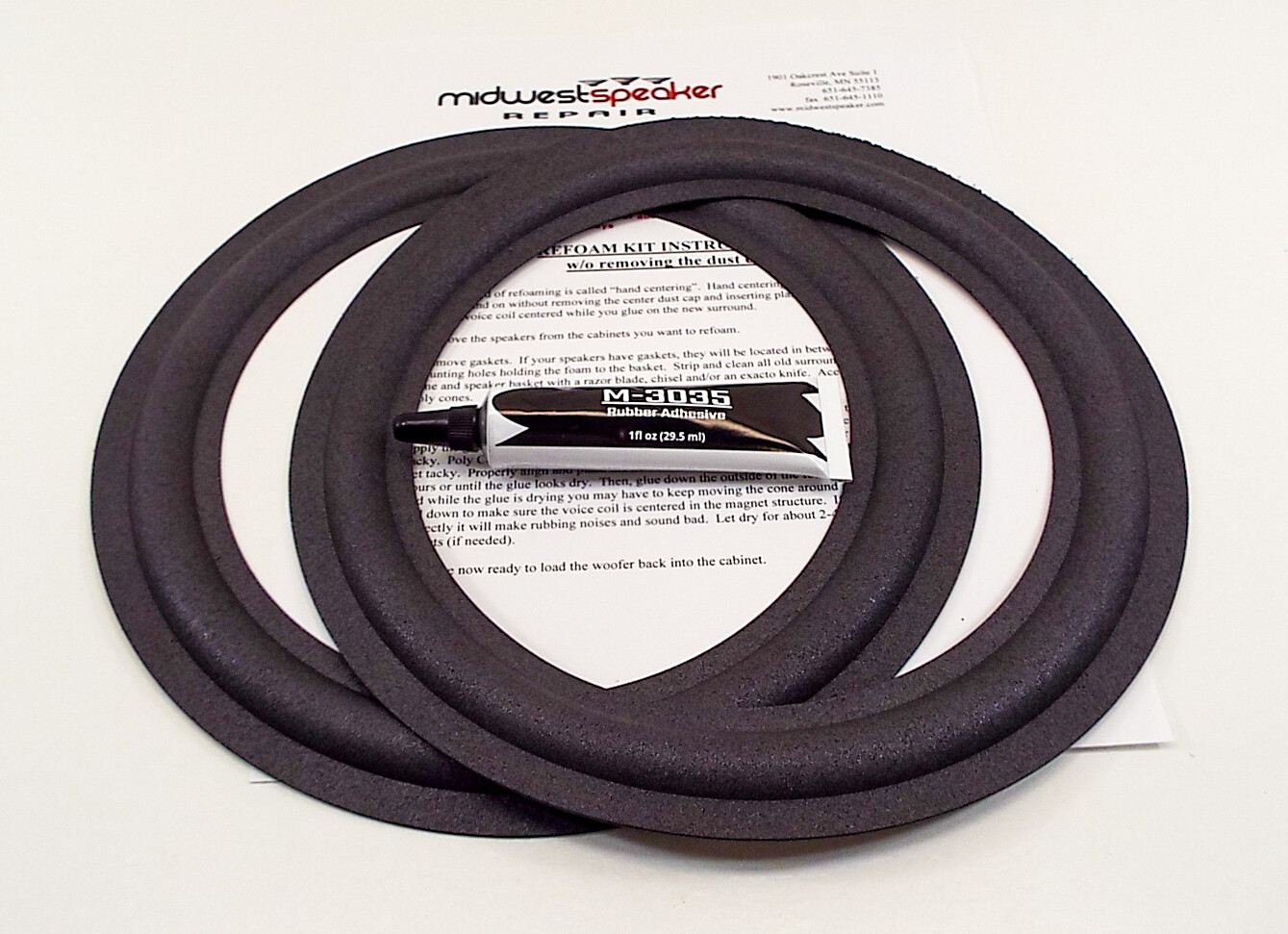
- Blown Woofers: The high excursion demands and vintage materials mean many original cones and surrounds have deteriorated. Foam surrounds, in particular, are prone to disintegration.
- Obsolete Parts: Replacement components for the SCU are scarce. Some enthusiasts have reverse-engineered modern equivalents or adapted third-party servo amps.
Restoration is possible but requires technical skill. Many vintage audio specialists recommend recapping the SCU, rebuilding the woofer with modern materials, and carefully recalibrating the servo loop.
Current Market Value and Collectibility
The Infinity RSB is highly collectible but not widely known. It rarely appears on the secondary market, and when it does, prices range from $400 to $1,200 depending on condition, completeness, and whether the SCU is functional. Fully restored units with matching Infinity IRS speakers can command even higher prices among boutique collectors.
Its value lies more in historical significance than practical use. Audiophiles interested in the evolution of active speaker technology, servo systems, or Infinity’s engineering legacy are the primary audience. It’s a “museum piece” with a cult following—similar in stature to the KLH Model Eight or the Advent Large.
Conclusion: A Visionary Footnote
The Infinity RSB may not have revolutionized the mainstream audio market, but it stands as a bold experiment in the pursuit of sonic accuracy. At a time when most speaker designers were focused on materials and cabinet geometry, Infinity dared to apply control theory to loudspeaker performance—a concept that would later influence active monitors, subwoofers, and even modern DSP-based systems.
While complex, temperamental, and ultimately eclipsed by simpler designs, the RSB embodies the spirit of innovation that made Infinity a leader in high-end audio. For the vintage audio enthusiast, the RSB is more than a speaker—it’s a piece of engineering history, a testament to the belief that even the deepest bass can be tamed, measured, and perfected.
eBay Listings


As an eBay Partner, we earn from qualifying purchases. This helps support our independent vintage technology research.
Related Models
- Infinity RS-1B (1975)
- Infinity SM-102 (1979)
- Infinity SM-125 (1975)
- Infinity RS-6 (1976)
- Infinity SM-112 (1975)
- Akai AM-2850 (1975)
- Akai AP-206 (1975)
- Nakamichi BX-1 (1985)
- Acoustic Research research-ar-17 (1978)
- Acoustic Research AR-19 (1994)