Infinity RS-IIA: The Forgotten Pioneer of Passive Radiator Design
In the late 1970s, as high-fidelity audio was undergoing a renaissance, Infinity Systems stood out as a bold innovator unafraid to challenge conventional speaker design. Among their more intriguing and lesser-known offerings was the Infinity RS-IIA, a compact, high-efficiency speaker system that leveraged passive radiator technology to deliver deep bass response from a relatively small enclosure. While not as famous as the company’s flagship IRS series or the mass-market success of the EM series, the RS-IIA represents a fascinating chapter in Infinity’s early exploration of extended low-frequency reproduction without the drawbacks of ported cabinets.
Released in 1977, the RS-IIA was positioned as a premium bookshelf or desktop monitor for audiophiles seeking accurate, dynamic sound in smaller rooms. At a time when most compact speakers suffered from thin bass and limited output, Infinity’s use of a passive radiator — a sealed box with a non-powered diaphragm that resonates in response to internal air pressure — allowed the RS-IIA to achieve bass extension down to around 45 Hz, impressive for its size and era.
Designed during the tenure of co-founders Arnold Nudell and Cary Christie, the RS-IIA reflects the same engineering-first philosophy that would later define the legendary IRS V. Though modest in stature, the RS-IIA showcased Infinity’s commitment to time-aligned drivers, low-distortion motor systems, and advanced cabinet construction — hallmarks of the brand’s identity.
Technical Specifications
| Specification | Detail |
| Model | RS-IIA |
| Manufacturer | Infinity Systems, Inc. |
| Production Years | 1977–1981 (approximate) |
| Type | 2-way, passive radiator, bookshelf |
| Driver Configuration | 1 x 8" active woofer, 1 x 1" dome tweeter, 1 x 8" passive radiator |
| Frequency Response | 45 Hz – 20 kHz (±3 dB) |
| Sensitivity | 91 dB (1W/1m) |
| Nominal Impedance | 8 ohms (compatible with most tube and solid-state amps) |
| Crossover Frequency | ~2.5 kHz |
| Enclosure Type | Sealed with passive radiator |
| Dimensions (H×W×D) | 18" × 10" × 10.5" (45.7 × 25.4 × 26.7 cm) |
| Weight | 28 lbs (12.7 kg) per cabinet |
| Finish Options | Walnut or black ash veneer |
Sound Characteristics and Performance
The Infinity RS-IIA was engineered for clarity, efficiency, and surprising bass depth. With a sensitivity of 91 dB, it could be driven effectively by lower-powered amplifiers, including vintage tube gear — a major selling point in an era when many audiophiles favored Marantz, McIntosh, and Fisher amplifiers.
The 8-inch woofer featured a high-compliance surround and a robust magnet structure, allowing for good excursion and low distortion. Paired with the passive radiator of identical size, the system achieved bass response that rivaled much larger ported designs, but without the time-smearing and chuffing noise often associated with ported enclosures. The sealed cabinet design contributed to tight, controlled bass with excellent transient response — ideal for jazz, classical, and acoustic recordings.
The dome tweeter, while not as refined as later metal-dome designs, delivered smooth, non-fatiguing highs. Some early units used soft-dome tweeters with ferrofluid cooling — a relatively advanced feature for the late 1970s. The crossover network was carefully tuned to ensure a seamless blend between drivers, and Infinity’s attention to phase coherence meant the RS-IIA offered a stable, well-focused soundstage.
Listeners often describe the RS-IIA’s sonic signature as warm yet detailed, with a natural midrange and an engaging presentation. While not as analytical as some contemporary electrostatics or planars, the RS-IIA excelled at musicality and rhythm, making it a favorite among those who valued emotional engagement over clinical precision.
Notable Features and Innovations
The RS-IIA’s most significant innovation was its dual 8-inch configuration: one active driver and one passive radiator. This design allowed Infinity to tune the bass resonance precisely without the compromises of a port. The passive radiator acted like a “tuned mass,” enhancing low-frequency output while maintaining the transient speed of a sealed box.
Other notable features included:
- High-efficiency design for compatibility with low-wattage amplifiers
- Minimalist crossover using high-quality components to reduce signal degradation
- Rigid MDF construction (unusual for bookshelf speakers of the era) to reduce cabinet resonance
- Flush-mounted drivers to minimize diffraction and improve imaging
While not marketed as a studio monitor, the RS-IIA found favor in some broadcast and production environments due to its flat response and reliability.
Common Issues and Maintenance
As with any vintage speaker, the Infinity RS-IIA requires careful inspection before purchase. Common issues include:
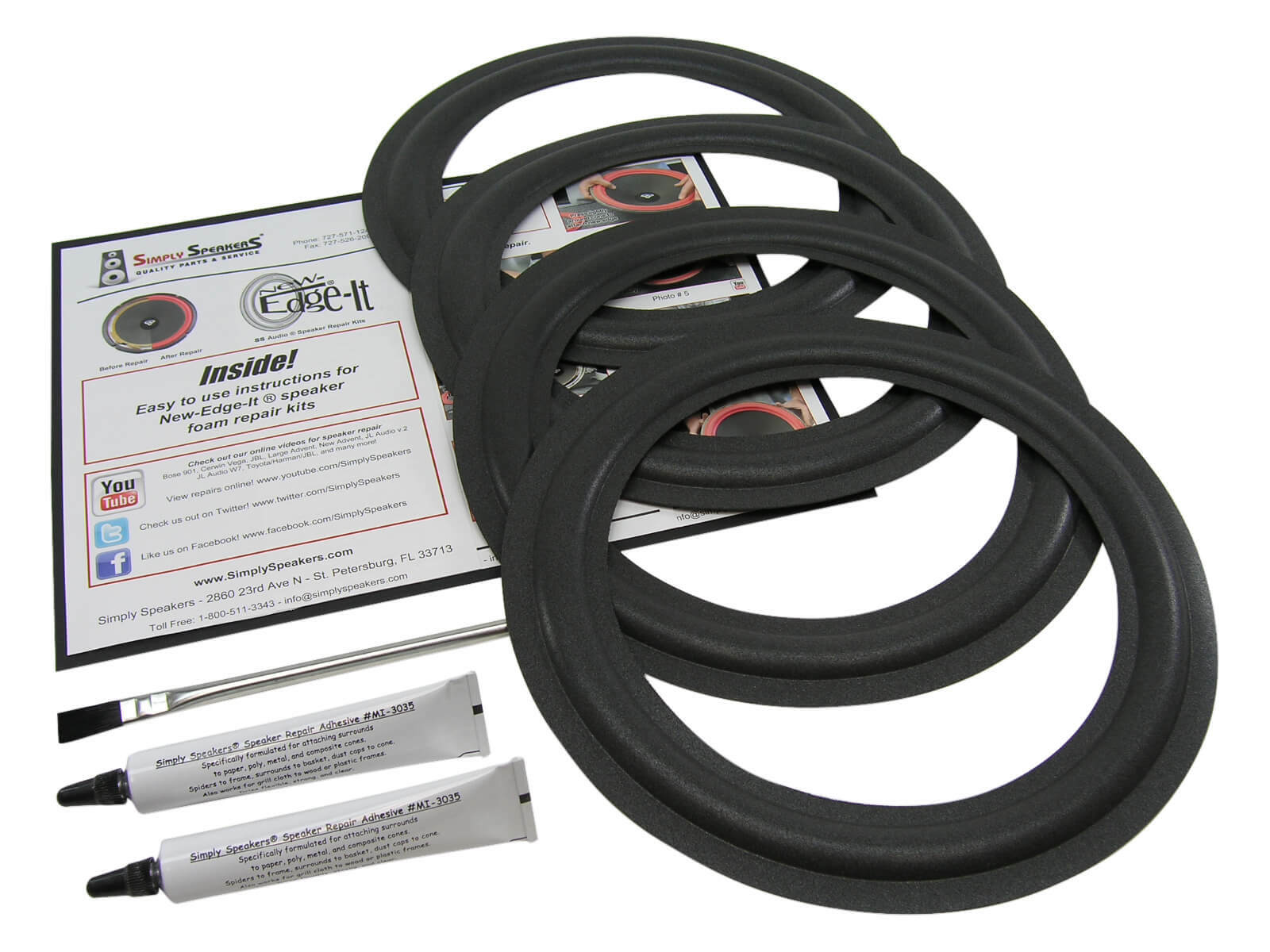
- Aging foam surrounds: The original foam on the woofer and passive radiator often deteriorates after 40+ years, leading to flaking, loss of compliance, or complete failure. Re-foaming by a qualified technician is highly recommended.
- Tweeter degradation: Some early dome tweeters exhibit reduced output or distortion due to aging adhesives or diaphragm fatigue. Replacement or reconing may be necessary.
- Crossover component drift: Capacitors and inductors can degrade over time, altering frequency response. Upgrading with modern film capacitors can restore clarity.
- Cabinet wear: The wood veneer, while durable, may show scratches or finish lift. Gentle cleaning and waxing can restore luster.
Despite these age-related concerns, the RS-IIA is generally robust. Its simple crossover and high-quality original components mean that with proper restoration, it can perform as well today as it did in the 1970s.
Current Market Value and Collectibility
The Infinity RS-IIA is not a mainstream collector’s item like the IRS series, but it has a dedicated following among vintage audio enthusiasts. Well-maintained or professionally restored pairs typically sell for $300–$600 on the secondary market, depending on condition and location.
Factors that increase value:
- Original finish with no veneer damage
- Fully restored drivers and surrounds
- Matching serial numbers
- Original packaging or documentation (rare)
While not a high-value investment piece, the RS-IIA offers excellent value for the performance-minded listener. Its combination of vintage charm, engineering ingenuity, and musical sound makes it a rewarding addition to any classic audio setup.
Conclusion and Legacy
The Infinity RS-IIA may not have achieved the fame of its larger siblings, but it stands as a testament to Infinity’s early commitment to solving real-world audio problems with smart engineering. In an era dominated by ported bookshelf speakers with boomy, one-note bass, the RS-IIA offered a more refined, articulate alternative.
Its use of passive radiator technology foreshadowed trends that would become widespread decades later — from high-end studio monitors to modern Bluetooth speakers. Today, the RS-IIA serves as both a functional audio component and a historical artifact, illustrating how innovation often begins in modest packages.
For the vintage audio enthusiast, the RS-IIA is more than just a pair of old speakers — it’s a piece of audio history that still has something meaningful to say. With a little care and restoration, it can continue to deliver engaging, lifelike sound for years to come.
eBay Listings



As an eBay Partner, we earn from qualifying purchases. This helps support our independent vintage technology research.
Related Models
- Infinity RS-2 (1975)
- Infinity RS-4.5 (1978)
- Infinity RS-IIB (1979)
- Sony TC-2050SD (1978)
- Aiwa AD-F990 (1993)
- Kenwood KX-3060 (1982)
- Sony TC-2130A (1974)
- Sony TC-2220 (1972)
- Sony TC-FX6 (1982)
- Sony TC-K96R (1986)