Infinity RS-8: Compact Innovation in Vintage Speaker Design
In the late 1970s, as high-fidelity audio systems became more accessible to home listeners, speaker manufacturers raced to deliver performance that rivaled larger floor-standing models—without sacrificing space or aesthetics. Among the innovators of this era was Infinity Systems, a company already gaining acclaim for its pioneering use of acoustic suspension, dual-driver configurations, and passive radiator technology. One of their more intriguing offerings from this period was the Infinity RS-8, a compact speaker system that punched well above its weight in bass response and sonic clarity.
Though not as widely documented as some of Infinity’s flagship models like the IRS V or the Beta series, the RS-8 holds a quiet but important place in the brand’s history as an example of thoughtful engineering applied to a smaller, more affordable format. Designed for bookshelf or stand mounting, the RS-8 was aimed at audiophiles seeking quality sound in constrained spaces—apartments, offices, or secondary listening rooms—without compromising on the deep, articulate bass that Infinity had become known for.
Historical Context
Released in 1978, the RS-8 arrived during a golden era for American speaker design. At the time, Infinity was pushing the boundaries of what small enclosures could achieve, leveraging technologies developed for their larger systems. The RS-8 was part of a broader family of "RS" (Reference Series) speakers, which included models like the RS-1B and RS-5B—though the RS-8 was unique in its compact footprint and passive radiator design.
Unlike traditional ported (bass-reflex) speakers, the RS-8 employed a passive radiator—a secondary, unpowered cone that moves in response to air pressure inside the cabinet. This allowed for deeper bass extension without the tuning limitations and chuffing noises sometimes associated with ported designs. The use of passive radiators was still relatively novel in consumer speakers at the time, making the RS-8 a forward-thinking choice for its era.
Technical Specifications
| Specification | Detail |
| Model | Infinity RS-8 |
| Type | 2-way passive radiator bookshelf speaker |
| Driver Configuration | 1 x 5.25" woofer, 1 x 1" dome tweeter |
| Passive Radiator | 1 x 5.25" (rear-firing) |
| Frequency Response | 55 Hz – 20 kHz |
| Crossover Frequency | 3.5 kHz |
| Sensitivity | 87 dB (2.83V/1m) |
| Nominal Impedance | 8 ohms |
| Recommended Amp Power | 20–100 watts |
| Enclosure Type | Sealed with passive radiator |
| Dimensions (H×W×D) | 14" × 7.5" × 8.5" (35.6 × 19 × 21.6 cm) |
| Weight | 14 lbs (6.35 kg) per speaker |
| Finish Options | Black walnut veneer, simulated woodgrain |
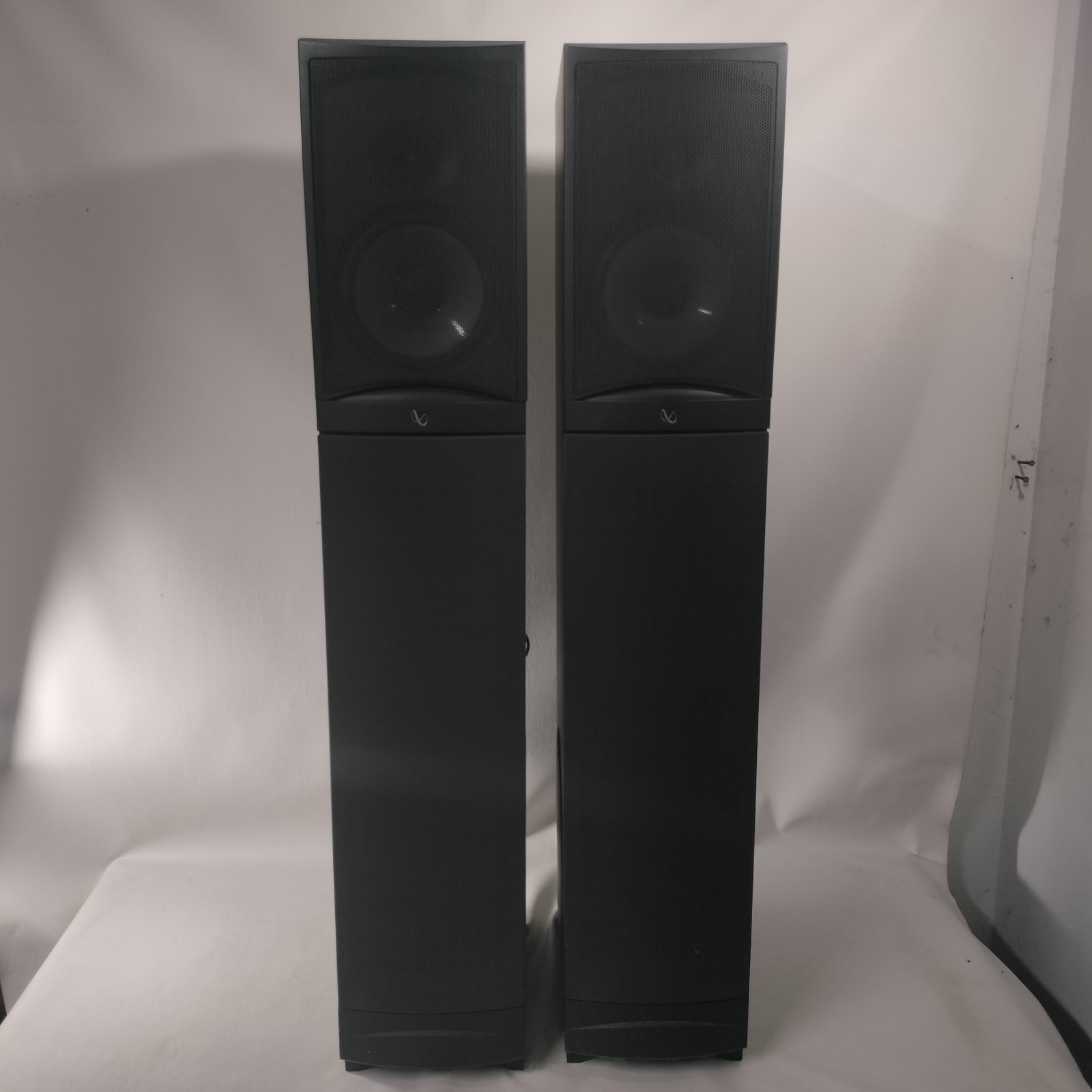
The RS-8’s cabinet is compact but solidly built for its time, with a gently curved baffle and a modest footprint that makes it ideal for bookshelf use. The passive radiator is mounted on the rear panel, requiring adequate clearance from the wall for optimal bass performance—typically 6 to 12 inches. The front baffle houses the 5.25" polypropylene woofer and a 1" soft-dome tweeter, both protected by a removable cloth grille.
Sound Characteristics and Performance
Despite its modest size, the Infinity RS-8 delivers a surprisingly full and balanced sound. The passive radiator enables bass extension down to 55 Hz, which was exceptional for a speaker of this size in the late 1970s. Bass is tight and well-controlled, avoiding the flabbiness that can plague small speakers trying to overextend their low-end response.
The midrange is clear and natural, with vocals and acoustic instruments rendered with a pleasing neutrality. The soft-dome tweeter provides smooth high-frequency response, free from the harshness that plagued some metal-dome designs of the era. While not as detailed or airy as modern tweeters, it remains listenable and fatigue-free even during extended sessions.
The crossover at 3.5 kHz is well-executed, with seamless integration between drivers. The RS-8 benefits from being paired with a quality amplifier in the 40–80 watt range, where it can be driven efficiently without strain. While not overly sensitive at 87 dB, it responds well to clean power and reveals more nuance with higher-quality sources.
Stereo imaging is respectable for a compact speaker, with a focused soundstage and decent depth. However, due to the rear-mounted passive radiator, placement is critical—too close to a wall and the bass becomes boomy; too far, and it loses impact. Experimentation with positioning is key to unlocking the RS-8’s full potential.
Notable Features and Innovations
The passive radiator is the star of the RS-8’s design. By eliminating the need for a port, Infinity avoided port turbulence and allowed for more flexible tuning of the low-frequency response. This design also reduced the risk of port noise during high-volume playback—a common issue in bass-reflex systems.
Another notable feature is the modular crossover design, which was serviceable and relatively straightforward to repair or upgrade—a boon for vintage audio enthusiasts today. The use of a soft-dome tweeter was also progressive for the time, offering smoother highs compared to the more common horn or metal dome tweeters in budget and mid-tier speakers.
The RS-8 also reflects Infinity’s commitment to aesthetic integration. With its woodgrain finish and gently curved front panel, it blends well with 1970s home decor while maintaining a professional, high-end appearance.
Common Issues and Maintenance
As with any vintage speaker, the Infinity RS-8 may require some maintenance after 40+ years of use. The most common issues include:
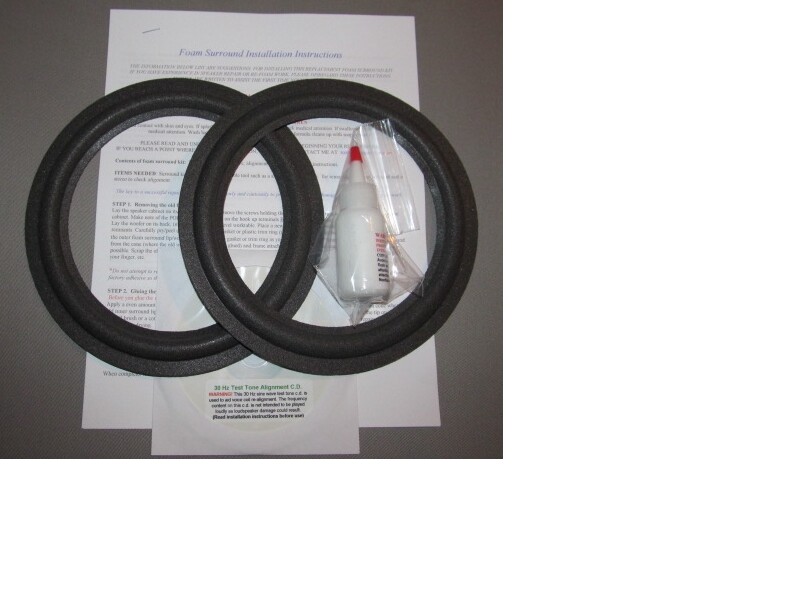
- Aged foam surrounds on the woofer and passive radiator, which can dry out and crumble over time. Re-foaming is a common and cost-effective restoration.
- Degraded crossover components, particularly electrolytic capacitors, which may need replacement to restore clarity and balance.
- Tweeter fatigue, though less common due to the soft-dome design, can still occur if the speakers were overdriven.
Replacement parts and re-foaming kits are available through specialty audio restoration suppliers. Given the RS-8’s relative obscurity, original drivers may be harder to source, but many modern equivalents can be adapted with proper modification.
Cleaning the cabinet is straightforward—use a soft cloth and wood-safe cleaner. Avoid harsh chemicals that can damage the veneer or finish.
Current Market Value and Collectibility
The Infinity RS-8 is not a highly sought-after collector’s item like the Beta or IRS series, but it holds steady appeal among vintage audio enthusiasts who appreciate compact, well-engineered speakers. Pairs in good working condition typically sell for $150–$300, depending on cosmetic condition and whether they’ve been restored.
Restored pairs with re-foamed drivers and updated crossovers can command higher prices, especially when paired with matching stands or original packaging. While not a “blue chip” vintage speaker, the RS-8 offers excellent value for listeners seeking a taste of Infinity’s engineering heritage without the premium price tag.
Conclusion and Legacy
The Infinity RS-8 may not have the fame of its larger siblings, but it represents an important chapter in Infinity’s design philosophy: delivering high performance in compact, accessible formats. Its use of passive radiator technology, smooth sonic character, and thoughtful build quality make it a standout among late-1970s bookshelf speakers.
For vintage audio lovers, the RS-8 is a rewarding project—easy to restore, enjoyable to listen to, and a testament to a time when American speaker design was at its most innovative. Whether used as a secondary system, a retro setup, or a compact main rig, the Infinity RS-8 remains a quiet achiever in the world of vintage hi-fi.
eBay Listings


As an eBay Partner, we earn from qualifying purchases. This helps support our independent vintage technology research.
Related Models
- Infinity RS-1B (1975)
- Infinity SM-102 (1979)
- Infinity SM-125 (1975)
- Infinity RS-6 (1976)
- Infinity SM-112 (1975)
- Akai AM-2850 (1975)
- Akai AP-206 (1975)
- Nakamichi BX-1 (1985)
- Acoustic Research research-ar-17 (1978)
- Acoustic Research AR-19 (1994)