Infinity RS-5B: The Compact Innovator with Big Bass
In the late 1970s, as high-fidelity audio was transitioning from console stereos to component systems, Infinity Systems stood out as a brand unafraid to challenge conventional speaker design. Among their early offerings, the Infinity RS-5B emerged as a compact yet sonically ambitious bookshelf speaker that defied expectations—particularly for its size. Though not as widely documented as some of its larger siblings like the RS-1B or the legendary IRS series, the RS-5B holds a quiet but significant place in the history of American speaker engineering. It represented Infinity’s commitment to extended bass response and high efficiency, even in smaller enclosures, thanks to its innovative use of passive radiators.
A Brief Historical Context
Introduced in 1977, the RS-5B was part of Infinity’s RS (Reference Standard) series, a line that aimed to bring high-performance speaker technology to more affordable and space-conscious environments. At a time when most compact speakers struggled with bass reproduction, Infinity applied principles from their larger, more expensive designs to create a bookshelf model with surprising low-end authority. The RS-5B followed the success of the RS-1B and shared design philosophies with it—most notably the use of passive radiator technology instead of a traditional ported or sealed enclosure.
Infinity, founded in 1968 by Arnie Nudell and Cary Christie, had already built a reputation for pushing the limits of speaker performance. Their early work with servo-controlled subwoofers and large multi-driver arrays set them apart. The RS-5B, while modest in scale, carried forward that spirit of innovation by offering deep bass extension without the need for a powered subwoofer—a rarity in compact speakers of the era.
Technical Specifications
| Specification | Detail |
| Model | RS-5B |
| Manufacturer | Infinity Systems, Inc. |
| Year Introduced | 1977 |
| Type | 2-way, passive radiator bookshelf speaker |
| Driver Complement | 1 x 5.25" woofer, 1 x 1" dome tweeter |
| Passive Radiator | 1 x 5.25" (bass radiator, tuned for low end) |
| Frequency Response | 55 Hz – 20 kHz (±3 dB) |
| Sensitivity | 89 dB (1W/1m) |
| Nominal Impedance | 8 ohms (compatible with most vintage amps) |
| Recommended Power | 15 – 100 watts |
| Crossover Frequency | ~3.5 kHz |
| Enclosure Type | Reflex (passive radiator) |
| Dimensions (HxWxD) | 13.5" x 8" x 9.5" (34.3 x 20.3 x 24.1 cm) |
| Weight | ~18 lbs (8.2 kg) per speaker |
| Finish Options | Walnut vinyl veneer, black ash (common) |
Sound Characteristics and Performance
The Infinity RS-5B delivers a remarkably balanced and dynamic sound for a speaker of its size. Its most notable trait is the extended bass response, which reaches down to 55 Hz—an impressive figure for a bookshelf model without a port or powered sub. This is achieved through the large 5.25" passive radiator mounted on the front baffle, which acts like a port but without the risk of "chuffing" noise or port turbulence.
The 5.25" polypropylene cone woofer provides tight midbass and clean lower midrange performance, while the 1" soft dome tweeter offers smooth, non-fatiguing highs. The crossover, designed with typical Infinity precision for the era, ensures a seamless handoff between drivers, resulting in a coherent and natural soundstage.
In practice, the RS-5B excels with acoustic jazz, vocal recordings, and classic rock. Its efficiency (89 dB) makes it a great match for lower-powered tube amplifiers and vintage solid-state receivers from the 1970s and 80s. While not a room-filler in large spaces, it performs admirably in bedrooms, offices, or secondary listening rooms. Paired with a quality preamp and amp, the RS-5B reveals a surprising amount of detail and spatial imaging.
Notable Features and Innovations
The RS-5B’s use of a passive radiator was one of its most forward-thinking aspects. Unlike a ported speaker, which can suffer from air noise at high volumes, the passive radiator moves in response to the internal air pressure created by the active woofer. This allows for deeper bass tuning in a smaller cabinet—a technique now common in modern Bluetooth speakers and subwoofers, but rare in 1970s bookshelf designs.
Another strength lies in its 8-ohm impedance, which makes it highly compatible with a wide range of vintage and modern amplifiers. Many compact speakers of the era dropped to 4 ohms, limiting amplifier choices. The RS-5B’s stable load ensures reliable performance even with older gear.
The cabinet construction, while not as massive as Infinity’s flagship models, is solid for its class, with medium-density fiberboard (MDF) construction and internal bracing to reduce resonance. The front-firing passive radiator also allows for more flexible placement compared to rear-ported designs, as it doesn’t require space from the wall.
Common Issues and Maintenance
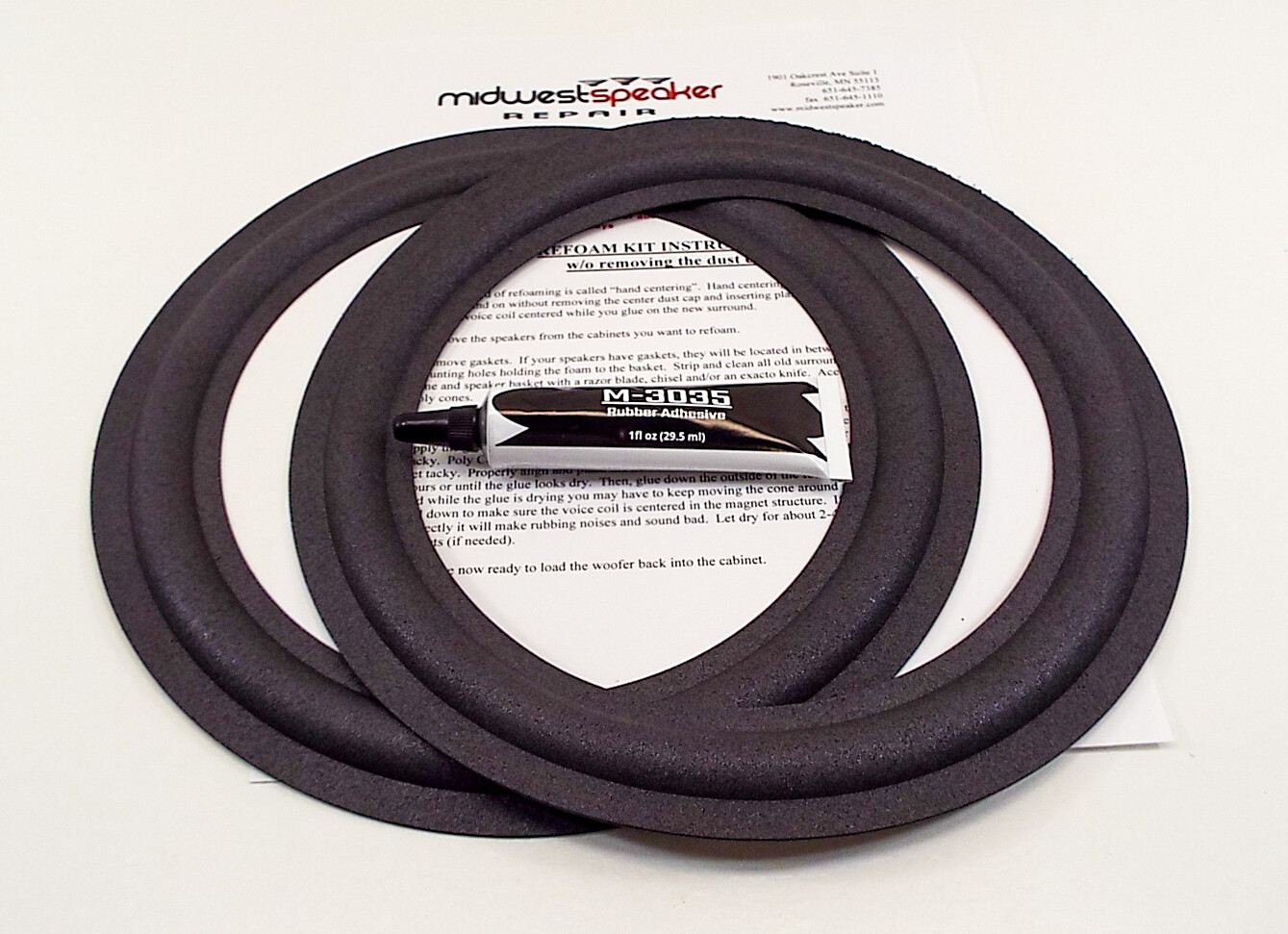
Like all vintage speakers, the RS-5B benefits from proper care and occasional maintenance. The most common issue is aging of the woofer surround, typically made of foam. Over time, foam can dry out, crack, and disintegrate, leading to distorted bass or complete failure. Fortunately, foam replacement kits are widely available and relatively easy to install with basic tools and glue.
The tweeter dome is generally durable, but if the speaker has been overdriven or exposed to moisture, it may suffer from tears or distortion. While original tweeters can be hard to source, some modern equivalents offer compatible performance.
Crossover components, particularly electrolytic capacitors, may degrade over decades. If the sound becomes thin or harsh, a crossover inspection or recapping by a qualified technician can restore clarity and balance.
Dust and grime on the cabinet can be cleaned with a soft, slightly damp cloth. Avoid harsh chemicals, especially on the vinyl veneer, which can crack or peel if improperly treated.
Current Market Value and Collectibility
The Infinity RS-5B is not a high-profile collector’s item like the IRS V or the EMPIRE series, but it has a loyal following among vintage audio enthusiasts who appreciate its blend of innovation and musicality. In good working condition, a pair typically sells for $150–$300, depending on finish, originality, and whether foam surrounds have been replaced.
Fully restored pairs with new foam and recapped crossovers may command slightly higher prices, especially when paired with original grilles and documentation. While not a "blue chip" vintage speaker, the RS-5B offers excellent value for money and serves as an accessible entry point into the Infinity ecosystem.
Its compact size and attractive walnut finish also make it a popular choice for vintage-themed setups or secondary systems where space is limited.
Conclusion and Legacy
The Infinity RS-5B may not have the fame of its larger siblings, but it embodies the same engineering philosophy: maximize performance within physical constraints. By applying passive radiator technology to a compact bookshelf format, Infinity created a speaker that delivered deep, articulate bass and clear, detailed highs—long before such features became standard.
Today, the RS-5B stands as a testament to late-1970s American speaker innovation. It’s a speaker that rewards careful restoration and thoughtful pairing with vintage electronics. For the audiophile who values both sound quality and historical significance in a modest footprint, the Infinity RS-5B remains a quietly impressive choice.
If you stumble upon a well-preserved pair, don’t overlook them. Behind their unassuming walnut veneer lies a slice of audio history—and a surprisingly big sound.
eBay Listings


As an eBay Partner, we earn from qualifying purchases. This helps support our independent vintage technology research.
Related Models
- Infinity RS-1B (1975)
- Infinity SM-102 (1979)
- Infinity SM-125 (1975)
- Infinity RS-6 (1976)
- Infinity SM-112 (1975)
- Akai AM-2850 (1975)
- Akai AP-206 (1975)
- Nakamichi BX-1 (1985)
- Acoustic Research research-ar-17 (1978)
- Acoustic Research AR-19 (1994)