Infinity RS-5: A Compact Classic from the Golden Age of Hi-Fi
In the late 1970s, as the high-fidelity audio movement reached new heights, Infinity Systems stood out as a brand unafraid to innovate. Known for their pioneering work in speaker design—particularly with ribbon and quasi-ribbon tweeters—the company also offered a range of more accessible models for the average audiophile. Among these was the Infinity RS-5, a compact bookshelf speaker introduced around 1979 that brought a taste of Infinity’s sonic sophistication to smaller listening environments.
Though not as celebrated as the legendary IRS or EM series, the RS-5 carved out a niche for itself as a reliable, detailed-sounding speaker that punched above its weight in both performance and build quality. Designed during a period when bookshelf speakers were increasingly expected to deliver full-range sound without the need for a separate subwoofer, the RS-5 balanced practicality with the sonic hallmarks of its maker: clarity, speed, and precision.
Technical Specifications
| Specification | Detail |
| Model | RS-5 |
| Manufacturer | Infinity Systems (US) |
| Year Introduced | 1979 |
| Type | 2-way, passive bookshelf speaker |
| Driver Configuration | 1 x 6.5" woofer, 1 x 1" dome tweeter |
| Frequency Response | 55 Hz – 20 kHz (±3 dB) |
| Nominal Impedance | 8 ohms |
| Sensitivity | 88 dB (1W/1m) |
| Crossover Frequency | ~3.5 kHz |
| Enclosure Type | Bass-reflex (rear-firing port) |
| Dimensions (H×W×D) | 13" × 8" × 9.5" (33 × 20.3 × 24.1 cm) |
| Weight | 17 lbs (7.7 kg) each |
| Recommended Amp Power | 20–80 watts |
| Finish Options | Walnut vinyl veneer, black ash |
The RS-5 featured a conventional but well-executed 2-way design. Its 6.5-inch woofer used a treated paper cone with a rubber surround, providing a balance of responsiveness and durability. The 1-inch soft dome tweeter—while not a true ribbon like those found in Infinity’s flagship models—delivered smooth, extended highs that avoided the harshness sometimes associated with early dome designs. The bass-reflex enclosure, with a rear-mounted port, helped extend low-frequency response, allowing the RS-5 to produce surprisingly full sound for a speaker of its size.
Sound Characteristics and Performance
The Infinity RS-5 was engineered to deliver a balanced, detailed sound signature suitable for both music and broadcast audio. Its strength lay in its midrange clarity and transparent high frequencies, making it particularly well-suited for vocal-centric genres, acoustic recordings, and FM radio listening—popular applications in the late '70s and early '80s.
The soft dome tweeter provided a refined top end, free of the sibilance or "tizz" that plagued some contemporary designs. While not as lightning-fast or airy as Infinity’s signature ribbon tweeters, it offered a natural, non-fatiguing presentation that aged well over long listening sessions. The crossover, set at approximately 3.5 kHz, was well-integrated, with minimal overlap or phase issues between drivers.
The 6.5-inch woofer handled bass duties capably, reaching down to 55 Hz, though it naturally rolled off below that point. In smaller rooms or with careful placement near walls or corners, the RS-5 could deliver a satisfying sense of weight and rhythm. However, listeners seeking deep bass or high SPLs would have needed to pair the RS-5 with a subwoofer or use them in a bi-amped setup with external filtering.
Overall, the RS-5 presented a clean, articulate sound—somewhat neutral but with a slight warmth in the lower mids that prevented it from sounding clinical. It was a speaker that rewarded good source material and quality amplification, performing best when driven by solid-state receivers or integrated amps with clean power delivery.
Notable Features and Design
While the RS-5 didn’t introduce any groundbreaking technologies, it reflected Infinity’s commitment to driver quality and cabinet construction. The MDF (medium-density fiberboard) enclosure—uncommon in budget speakers of the era—provided a rigid, resonance-free platform that enhanced clarity. The internal bracing and dense damping materials helped minimize coloration, a hallmark of Infinity’s engineering philosophy.
The rear-firing port allowed for flexible placement, though optimal performance required some distance from the wall to prevent bass overhang. The front baffle was modestly styled, with a simple black grille (held by pins) that could be removed to reveal the drivers. The binding posts, while basic, accepted bare wire and spade connectors, offering decent connectivity for the time.
One of the RS-5’s quiet strengths was its compatibility. With an 8-ohm impedance and 88 dB sensitivity, it worked well with most mid-tier receivers of the era, such as those from Pioneer, Sony, and Yamaha. It was also a popular choice for early "compact system" setups, where performance and aesthetics both mattered.
Common Issues and Maintenance
Today, vintage RS-5 units are relatively rare but can still be found through online marketplaces and audio forums. As with any 40+ year-old speaker, aging components are the primary concern.
- Tweeter degradation: While the soft dome tweeters were robust, some units may exhibit dried-out surrounds or oxidized voice coils. A hiss or distortion at high frequencies can indicate tweeter fatigue.
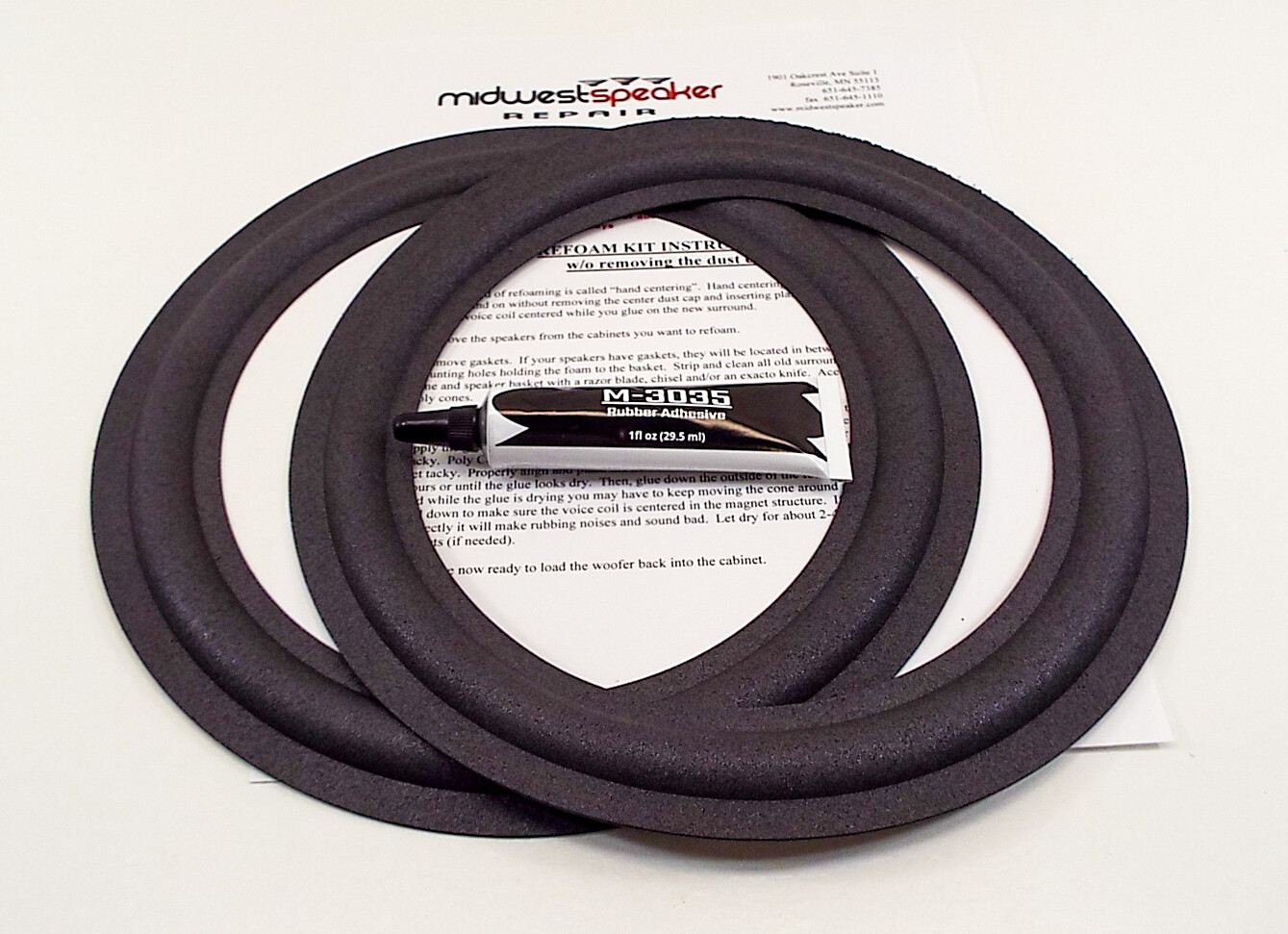
- Woofer foam rot: The rubber surrounds on the woofer are prone to drying and crumbling over time. This is a common issue in vintage speakers and typically requires re-foaming or reconing.
- Crossover capacitors: Electrolytic capacitors in the crossover network may have degraded, leading to muffled sound or imbalance between drivers. Replacing these with modern film capacitors can restore clarity.
- Grille and finish wear: The vinyl veneer can peel or discolor, and the grilles may be missing or torn. Replacement parts are scarce, so original condition is a plus for collectors.
Fortunately, due to Infinity’s reputation, many of the drivers and crossover components are either still available or can be cross-referenced with modern equivalents. DIY restoration is feasible for those with basic speaker repair skills.
Current Market Value and Collectibility
The Infinity RS-5 is not a high-profile collector’s item like the IRS V or the EM-3, but it holds a quiet appeal among vintage audio enthusiasts who appreciate understated performers from the late 1970s. Well-maintained pairs in original condition typically sell for $150–$300, depending on cosmetic state and whether they’ve been restored.
Its value lies more in usability than rarity. For someone building a period-correct bedroom system or a retro living room setup, the RS-5 offers authentic Infinity sound in a manageable footprint. It also appeals to those seeking a neutral-sounding bookshelf speaker that doesn’t dominate a room visually.
While not a flagship, the RS-5 represents an important segment of Infinity’s product line—one that brought high-quality engineering to a broader audience.
Conclusion and Legacy
The Infinity RS-5 may not have made headlines, but it exemplifies the strength of Infinity’s mid-tier offerings during a golden era of speaker design. It combined thoughtful engineering, solid build quality, and a refined sonic character that belied its modest size and price point.
As a compact speaker from the late 1970s, the RS-5 stands as a testament to a time when even bookshelf models were expected to deliver honest, engaging sound without compromise. For vintage audio lovers, it remains a rewarding find—a sleeper speaker that, with a little care, can still deliver a surprisingly modern listening experience.
If you stumble upon a pair in good condition, consider giving them a second life. With proper maintenance, the Infinity RS-5 can still sing with the clarity and charm that made the brand a legend.
eBay Listings



As an eBay Partner, we earn from qualifying purchases. This helps support our independent vintage technology research.
Related Models
- Infinity RS-1B (1975)
- Infinity SM-102 (1979)
- Infinity SM-125 (1975)
- Infinity RS-6 (1976)
- Infinity SM-112 (1975)
- Akai AM-2850 (1975)
- Akai AP-206 (1975)
- Nakamichi BX-1 (1985)
- Acoustic Research research-ar-17 (1978)
- Acoustic Research AR-19 (1994)