Infinity RS-425: Compact Innovation from a Golden Era of Speaker Design
In the late 1970s and early 1980s, Infinity Systems—already renowned for its groundbreaking speaker technologies—expanded its reach beyond high-end audiophile towers and studio monitors into more compact, lifestyle-oriented designs. Among these was the Infinity RS-425, a compact bookshelf-style speaker system that stood out for its innovative use of passive radiator technology at a time when most small speakers still relied on ported or sealed enclosures. While not as widely documented or celebrated as its larger siblings like the IRS V or the Beta series, the RS-425 represents an important chapter in Infinity’s evolution: a bridge between high-performance engineering and accessible home audio.
Though detailed technical documentation on the RS-425 is scarce today, surviving units and period catalogs suggest it was part of Infinity’s effort to bring advanced acoustic principles to smaller rooms and modest budgets. Released around 1980, the RS-425 was designed for listeners who wanted more bass response and dynamic range than typical bookshelf speakers of the era could offer—without the footprint of a floor-standing cabinet.
Technical Specifications
| Specification | Detail |
| Model | RS-425 |
| Manufacturer | Infinity Systems (US) |
| Release Year | 1980 |
| Type | 2-way passive radiator speaker system |
| Driver Complement | 1 x 6.5" woofer, 1 x 1" dome tweeter |
| Passive Radiator | 1 x 6.5" (rear-mounted) |
| Frequency Response | Approx. 50 Hz – 20 kHz (±3 dB) |
| Nominal Impedance | 8 ohms |
| Sensitivity | 87 dB (2.83V/1m) |
| Crossover Frequency | ~3.5 kHz |
| Enclosure Type | Bass-reflex equivalent via passive radiator |
| Dimensions (H×W×D) | 14" × 8" × 9" (35.6 × 20.3 × 22.9 cm) |
| Weight | 18 lbs (8.2 kg) per cabinet |
| Recommended Amp Power | 20–100 watts |
| Finish Options | Black ash vinyl wrap |
Sound Characteristics and Performance
The Infinity RS-425 was engineered to deliver a surprisingly full-bodied sound from a relatively compact cabinet. By employing a passive radiator—essentially a secondary, unpowered cone that resonates in response to the air movement of the active woofer—Infinity was able to extend bass response below what a similarly sized ported design might achieve, while avoiding the chuffing noise and tuning limitations of a port.
This design choice gave the RS-425 a tighter, more controlled low end compared to many of its contemporaries. Users often report a punchy mid-bass presence, with clean articulation on kick drums and electric bass lines. The absence of a port also meant the speaker could be placed closer to walls or corners without the risk of port turbulence or exaggerated bass humps, making it well-suited for smaller living rooms or bedrooms.
The dome tweeter, while not as refined as the metal domes found in later Infinity models, delivers a smooth and non-fatiguing high end. It lacks the extreme airiness of electrostatics or ribbon tweeters but remains detailed enough to render cymbals, strings, and vocal sibilance with clarity. The crossover, though simple by today’s standards, integrates the drivers effectively, avoiding the "cupped hands" coloration that plagued some budget two-ways of the era.
Overall, the RS-425 presents a balanced, slightly warm tonal character—typical of American speaker design in the early '80s—with an emphasis on musicality over clinical precision. It pairs well with tube amplifiers or vintage solid-state receivers from brands like Marantz, Pioneer, or Sansui, where its forgiving nature complements the harmonic richness of analog electronics.
Notable Features and Innovations
The most significant innovation of the RS-425 lies in its passive radiator system. At a time when most compact speakers used simple bass-reflex ports, Infinity leveraged this technology—more commonly seen in high-end or professional monitors—to improve low-frequency extension and transient response. The rear-mounted radiator allows for greater tuning flexibility and eliminates the need for a port tube, which can restrict internal volume and introduce resonance.
Another noteworthy aspect is the cabinet construction. While not as massive as Infinity’s flagship models, the RS-425 features a relatively dense MDF enclosure (for its time) with internal bracing to minimize panel resonance. The black ash vinyl wrap was standard for mid-tier speakers of the era, offering a clean, professional appearance that blends into period-appropriate audio racks.
The RS-425 also reflects Infinity’s commitment to time-aligned driver integration, a philosophy the company pioneered with its EMIT tweeter and time-corrected arrays. While the RS-425 doesn’t feature true time alignment like the IRS series, the tweeter is slightly recessed to approximate better phase coherence, contributing to a more cohesive soundstage.
Common Issues and Maintenance
Like many vintage speakers from the 1980s, the RS-425 is susceptible to aging components, particularly in the crossover and driver suspensions.
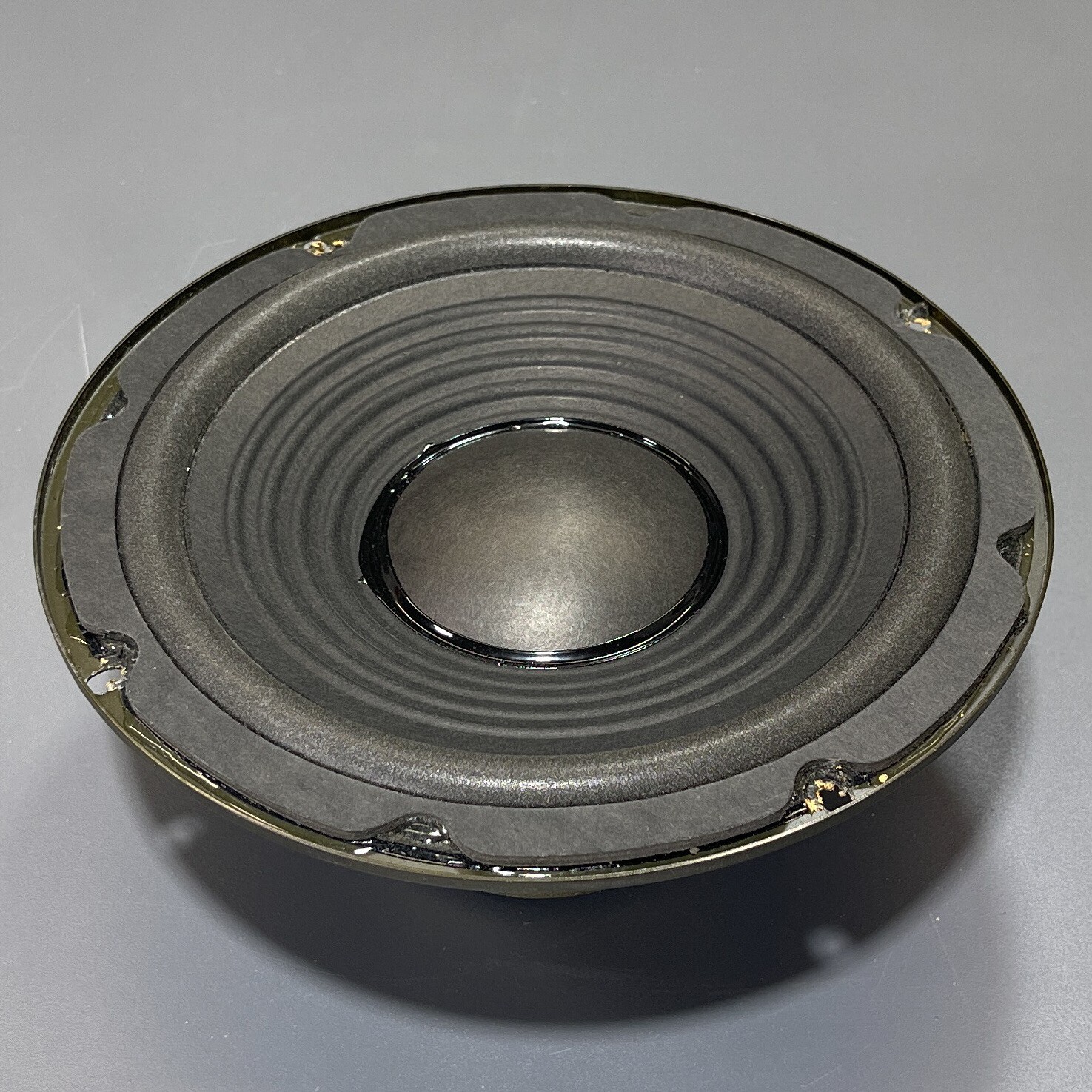
- Woofer Surrounds: The most common failure point is the foam surrounds on the 6.5" woofer. After 40+ years, these often degrade, crack, or disintegrate, leading to distorted bass or complete loss of output. Replacement with modern butyl rubber surrounds or reconing is highly recommended.
- Passive Radiator: The radiator’s surround may also deteriorate, causing flapping or buzzing at low frequencies. It should be inspected and replaced if necessary.
- Crossover Components: Electrolytic capacitors in the crossover network may dry out over time, altering tonal balance or causing tweeter damage. A professional recapping can restore original performance.
- Grilles and Finish: Original grilles are often missing or torn. While reproduction is difficult, some third-party fabric options can provide a close match. The vinyl wrap may peel at the edges; careful restoration with contact cement can preserve originality.
Regular cleaning with a soft, dry cloth and avoiding prolonged exposure to sunlight or humidity will help preserve both cosmetic and acoustic integrity.
Current Market Value and Collectibility
The Infinity RS-425 is not a highly sought-after collector’s item like the IRS V or the Beta Horn, but it holds niche appeal among vintage audio enthusiasts who appreciate compact, well-engineered speakers from the early digital era. Units in good working condition typically sell for $100–$200 per pair on the secondary market, with prices rising for fully restored models or those with original packaging and documentation.
Its value lies more in practical usability than rarity. For listeners building a vintage setup with a focus on space efficiency—such as a desktop system or small apartment rig—the RS-425 offers a compelling blend of vintage charm and solid engineering. It’s also a favorite among DIY audio tinkerers due to its serviceable design and upgrade potential.
Conclusion and Legacy
The Infinity RS-425 may not have made headlines like some of Infinity’s more flamboyant designs, but it embodies the company’s enduring commitment to innovation—even in its modest offerings. By applying passive radiator technology to a compact, affordable package, Infinity demonstrated that thoughtful engineering didn’t have to be reserved for flagship models.
Today, the RS-425 stands as a quiet testament to a transitional period in audio history: when speaker design was becoming more scientific, yet still accessible to the average music lover. For those who appreciate understated performance and vintage charm, the RS-425 remains a rewarding find—a compact speaker with a big heart, and a small but meaningful place in the legacy of one of America’s most influential audio brands.
eBay Listings



As an eBay Partner, we earn from qualifying purchases. This helps support our independent vintage technology research.
Related Models
- Infinity RS-1B (1975)
- Infinity SM-102 (1979)
- Infinity SM-125 (1975)
- Infinity RS-6 (1976)
- Infinity SM-112 (1975)
- Akai AM-2850 (1975)
- Akai AP-206 (1975)
- Nakamichi BX-1 (1985)
- Acoustic Research research-ar-17 (1978)
- Acoustic Research AR-19 (1994)