Infinity RS-2001: The Forgotten Innovator in Bass Extension
In the early 1980s, as home audio enthusiasts sought deeper, cleaner bass without the bulk of large floor-standing towers, Infinity Systems stood at the forefront of speaker innovation. Among their more unique offerings was the Infinity RS-2001, a compact yet powerful bookshelf-style speaker that leveraged passive radiator technology to deliver bass performance far beyond its size. Though not as widely celebrated as some of Infinity’s larger models like the IRS series, the RS-2001 represents a fascinating chapter in the evolution of compact speaker design—particularly for audiophiles who value tight, articulate low-end without the need for a separate subwoofer.
A Brief Historical Context
Released in 1982, the RS-2001 arrived during a golden era for American speaker design. Infinity, founded in 1968 by Arnie Nudell and Cary Christie, had already earned a reputation for boundary-pushing engineering—most notably with the IRS (Infinity Reference Standard) line, which used multiple drivers and complex crossovers to achieve full-range sound. The RS-2001, while more modest in scale, carried forward that same spirit of innovation.
Rather than relying on a ported or sealed enclosure, the RS-2001 employed a passive radiator—a secondary diaphragm without a voice coil or magnet—to enhance bass output. This design allowed for greater low-frequency extension while avoiding the port noise and tuning limitations of traditional bass reflex cabinets. At a time when compact speakers often sacrificed bass for size, the RS-2001 offered a compelling alternative.
Technical Specifications
| Specification | Detail |
| Model | RS-2001 |
| Manufacturer | Infinity Systems Corporation |
| Year Introduced | 1982 |
| Type | 2-way, passive radiator bookshelf speaker |
| Driver Complement | 1 x 6.5" woofer, 1 x 1" dome tweeter |
| Passive Radiator | 1 x 6.5" (tuned to augment bass) |
| Crossover Frequency | ~2,500 Hz (estimated) |
| Frequency Response | 45 Hz – 20 kHz (±3 dB) |
| Nominal Impedance | 8 ohms |
| Sensitivity | 88 dB (2.83V/1m) |
| Recommended Amp Power | 20–100 watts |
| Enclosure Type | Reflex-loaded with passive radiator |
| Dimensions (H×W×D) | 14" × 8" × 9.5" (35.6 × 20.3 × 24.1 cm) |
| Weight | 22 lbs (10 kg) per speaker |
| Finish Options | Black ash vinyl, walnut veneer |
Sound Characteristics and Performance
The Infinity RS-2001 was engineered to punch above its weight—literally. Despite its modest footprint, it delivers a surprisingly full-range sound, with bass that extends down to 45 Hz, a remarkable figure for a speaker of its size in the early '80s. The passive radiator is tuned to resonate in harmony with the active woofer, reinforcing low-frequency output without the chuffing or turbulence associated with ported designs.
Midrange clarity is clean and neutral, typical of Infinity’s design philosophy, which emphasized accuracy over coloration. The 1-inch soft dome tweeter provides smooth high-frequency response, avoiding the harshness that plagued some contemporary designs. While not as detailed as today’s high-end tweeters, it remains well-regarded for its natural tonal balance.
In practice, the RS-2001 excels in small to medium-sized rooms, offering a balanced soundstage with good imaging. It pairs well with tube amplifiers for a warmer presentation or solid-state receivers for tighter bass control. Audiophiles have noted that the speakers benefit from proper placement—ideally on sturdy stands and slightly toed-in—allowing them to project a wide, immersive soundfield.
Notable Features and Innovations
The defining feature of the RS-2001 is, without question, its passive radiator system. Unlike a port, which can introduce wind noise and limit tuning precision, the passive radiator acts like a "drum head" that moves in response to internal air pressure. This allows for deeper bass extension and faster transient response. Infinity had experimented with this technology in earlier models, but the RS-2001 brought it to a more accessible price point.
Another standout is the rigid MDF (medium-density fiberboard) cabinet, which was relatively advanced for its time. The enclosure is heavily braced to minimize resonance, and the front baffle is cleanly finished with a minimalist aesthetic—no visible screws or grilles in the original design (grilles were optional). The crossover network uses high-quality components for the era, including polypropylene capacitors and air-core inductors, contributing to a transparent sound.
The RS-2001 also reflects Infinity’s commitment to time-aligned driver integration—a concept pioneered in their flagship models. While not as rigorously executed as in the IRS series, the tweeter is slightly recessed to align the acoustic centers of the drivers, improving phase coherence and off-axis response.
Common Issues and Maintenance
As with any vintage speaker, the Infinity RS-2001 can suffer from age-related wear. The most common issues include:
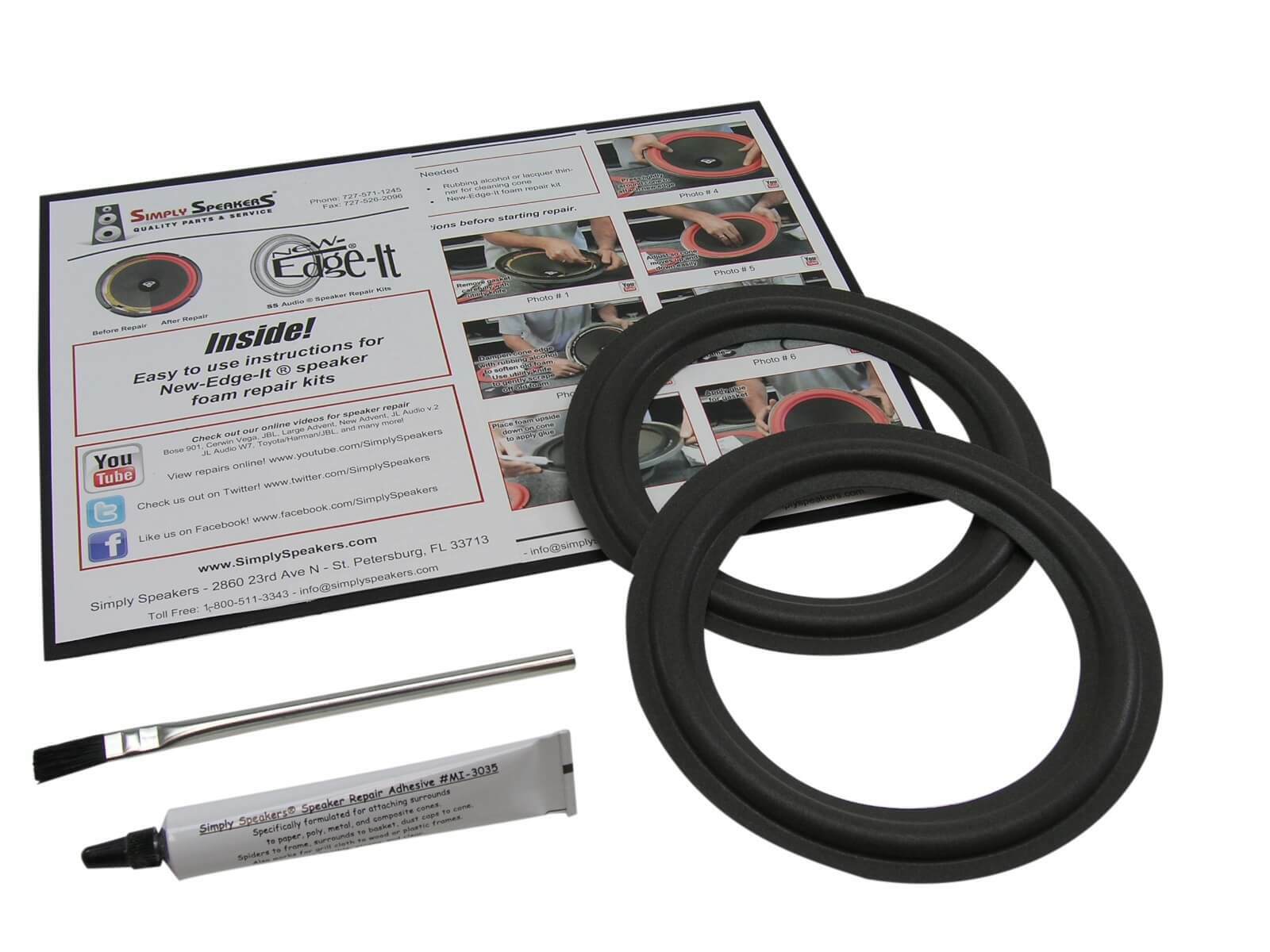
- Aging foam surrounds: The original foam on the woofer and passive radiator can dry out and disintegrate after 30+ years. This leads to distorted bass and reduced output. Fortunately, foam replacement kits are widely available and relatively easy to install with basic tools.
- Tweeter degradation: While the soft dome tweeters are generally robust, exposure to high volumes or poor amplification can cause damage. Some users report a slight dulling of highs over time, which may be mitigated by cleaning the dome with isopropyl alcohol.
- Crossover component drift: Capacitors in the crossover can lose capacitance over decades, altering frequency response. Replacing electrolytic capacitors and resistors can restore original performance.
- Cabinet wear: The vinyl wrap on some models may peel, especially on edges. Walnut veneer versions tend to hold up better but can show scratches or water damage.
Regular maintenance—such as dusting, checking connections, and ensuring secure mounting—can extend the life of these speakers significantly. Given their solid build quality, many RS-2001s from the 1980s remain fully functional today with minor restoration.
Current Market Value and Collectibility
The Infinity RS-2001 is not a mainstream collector’s item like the JBL L100 or Klipsch Heresy, but it has a dedicated following among vintage audio enthusiasts. In good working condition, a pair typically sells for $150–$300 on the secondary market, depending on finish, condition, and whether they’ve been restored.
Fully restored units with new foam and upgraded crossovers can command higher prices, especially when paired with matching stands or original packaging. The walnut veneer models are slightly more desirable and may fetch a premium.
While not rare, the RS-2001 is appreciated for its engineering ingenuity and balanced sonic signature. It appeals to listeners who value compact size without sacrificing bass performance—making it a great choice for vintage desktop setups, small listening rooms, or as part of a retro hi-fi system.
Conclusion and Legacy
The Infinity RS-2001 may not have the star power of Infinity’s flagship models, but it embodies the brand’s commitment to innovative, performance-driven design. By integrating passive radiator technology into a compact enclosure, it offered a rare combination of deep bass and clarity in a format that fit comfortably in most living spaces.
Today, the RS-2001 stands as a testament to early experimentation with bass augmentation in small speakers—a concept that would later influence modern designs from brands like KEF, PSB, and even high-end computer audio systems. For the vintage audio enthusiast, it’s a rewarding project: a speaker that, with a little care, can deliver decades more of rich, full-range sound.
If you stumble upon a pair in good condition—or are willing to invest in a foam rebuild—the Infinity RS-2001 remains a smart, sonically satisfying choice from a pivotal moment in speaker history.
eBay Listings


As an eBay Partner, we earn from qualifying purchases. This helps support our independent vintage technology research.
Related Models
- Infinity RS-1B (1975)
- Infinity SM-102 (1979)
- Infinity SM-125 (1975)
- Infinity RS-6 (1976)
- Infinity SM-112 (1975)
- Akai AM-2850 (1975)
- Akai AP-206 (1975)
- Nakamichi BX-1 (1985)
- Acoustic Research research-ar-17 (1978)
- Acoustic Research AR-19 (1994)