Infinity RS-10: The Compact Speaker That Redefined Bass Response
In the late 1970s, when most bookshelf speakers struggled to deliver anything beyond modest midrange and treble performance, Infinity introduced a model that defied expectations: the RS-10. Though not as widely celebrated as some of Infinity’s larger floor-standing counterparts, the RS-10 carved out a unique niche in the world of vintage audio as one of the earliest compact speakers to offer genuinely deep bass extension—without the need for a powered subwoofer. Designed during a period of intense innovation in loudspeaker engineering, the RS-10 stands as a testament to Infinity’s commitment to pushing the boundaries of what small enclosures could achieve.
Founded in 1968 by audio pioneers Cary Christie and Arnold Nudell, Infinity quickly gained a reputation for technical ingenuity—most famously with the IRS (Infinity Reference Standard) series. But while those flagship models targeted the high-end elite, the RS-10 represented a more accessible expression of the company’s engineering philosophy. Released in 1978, the RS-10 brought advanced acoustic concepts into a compact, bookshelf-friendly form factor, making it a favorite among audiophiles with space constraints and a hunger for full-range sound.
Technical Specifications
| Specification | Detail |
| Model | Infinity RS-10 |
| Year Introduced | 1978 |
| Type | 2-way, passive radiator bookshelf speaker |
| Driver Complement | 1" textile dome tweeter, 6.5" polypropylene woofer |
| Passive Radiator | 6.5" tuned passive radiator (front-firing) |
| Frequency Response | 45 Hz – 20 kHz (±3 dB) |
| Crossover Frequency | 2.8 kHz |
| Impedance | 8 ohms nominal |
| Sensitivity | 88 dB (2.83V/1m) |
| Enclosure Type | Sealed with passive radiator |
| Dimensions (H×W×D) | 14" × 8" × 9" (35.6 × 20.3 × 22.9 cm) |
| Weight | 22 lbs (10 kg) per speaker |
| Finish Options | Walnut vinyl veneer, black ash |
Sound Characteristics and Performance
The Infinity RS-10 was engineered to deliver a remarkably full-range sound from a relatively small cabinet. Its standout feature was the use of a front-firing 6.5" passive radiator in place of a traditional port. This design allowed the speaker to achieve bass extension down to 45 Hz, which was extraordinary for a bookshelf model of its era—many contemporaries rolled off below 70 Hz.
The passive radiator system, tuned to resonate in response to the movement of the active woofer, provided tight, articulate bass with minimal port noise or chuffing. This made the RS-10 particularly effective in smaller rooms or near-field listening environments where deep bass was still desired without the bulk of a subwoofer.
The 1" textile dome tweeter offered smooth, detailed highs without the harshness that plagued some metal-dome designs of the time. Paired with a polypropylene woofer cone, known for its low resonance and good damping, the RS-10 delivered a balanced tonal character—neither overly warm nor clinical. The crossover, set at 2.8 kHz, was carefully designed to ensure a seamless transition between drivers, avoiding the "cupped hands" midrange coloration that sometimes occurs in 2-way designs.
Listeners often describe the RS-10’s sound as surprisingly spacious and dynamic, with a soundstage that belies its size. While not as expansive as Infinity’s larger IRS models, the RS-10 offered a focused, coherent image that made it ideal for jazz, rock, and vocal recordings.
Notable Features and Innovations
The RS-10’s use of a passive radiator was one of its most significant innovations—especially at a time when most compact speakers relied on bass reflex ports or sealed enclosures with limited low-end response. Passive radiators offered several advantages: they could be tuned more precisely, avoided port turbulence, and allowed for greater bass output from smaller cabinets. Infinity’s implementation in the RS-10 was ahead of its time and foreshadowed the widespread adoption of passive radiators in modern speakers, including high-end models from brands like KEF and PSB.
Another notable aspect of the RS-10 was its modular crossover design. While serviceable by today’s standards, the crossover components were mounted on a removable board, making repairs and upgrades more feasible than in many contemporary designs. This modular approach reflected Infinity’s engineering-first mindset and consideration for long-term serviceability.
The cabinet itself was heavily braced and well-damped, minimizing unwanted resonances. Though finished in vinyl wrap (walnut or black ash), the internal construction was more robust than typical bookshelf speakers of the era. The front baffle was slightly curved, which Infinity claimed helped reduce diffraction effects and improve imaging.
Common Issues and Maintenance
As with any vintage speaker, the Infinity RS-10 can suffer from age-related wear. The most common issues include:
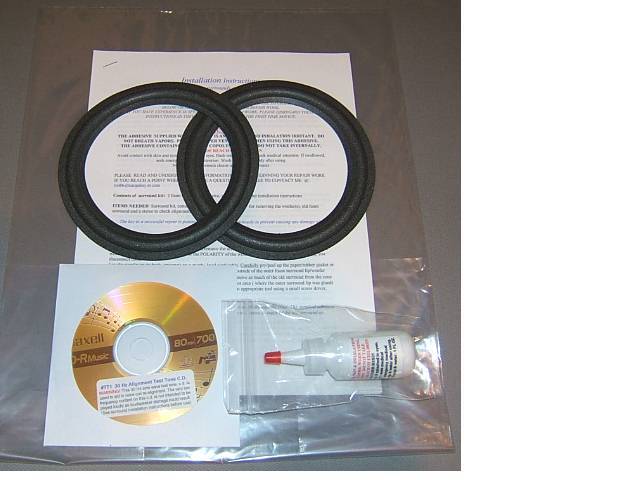
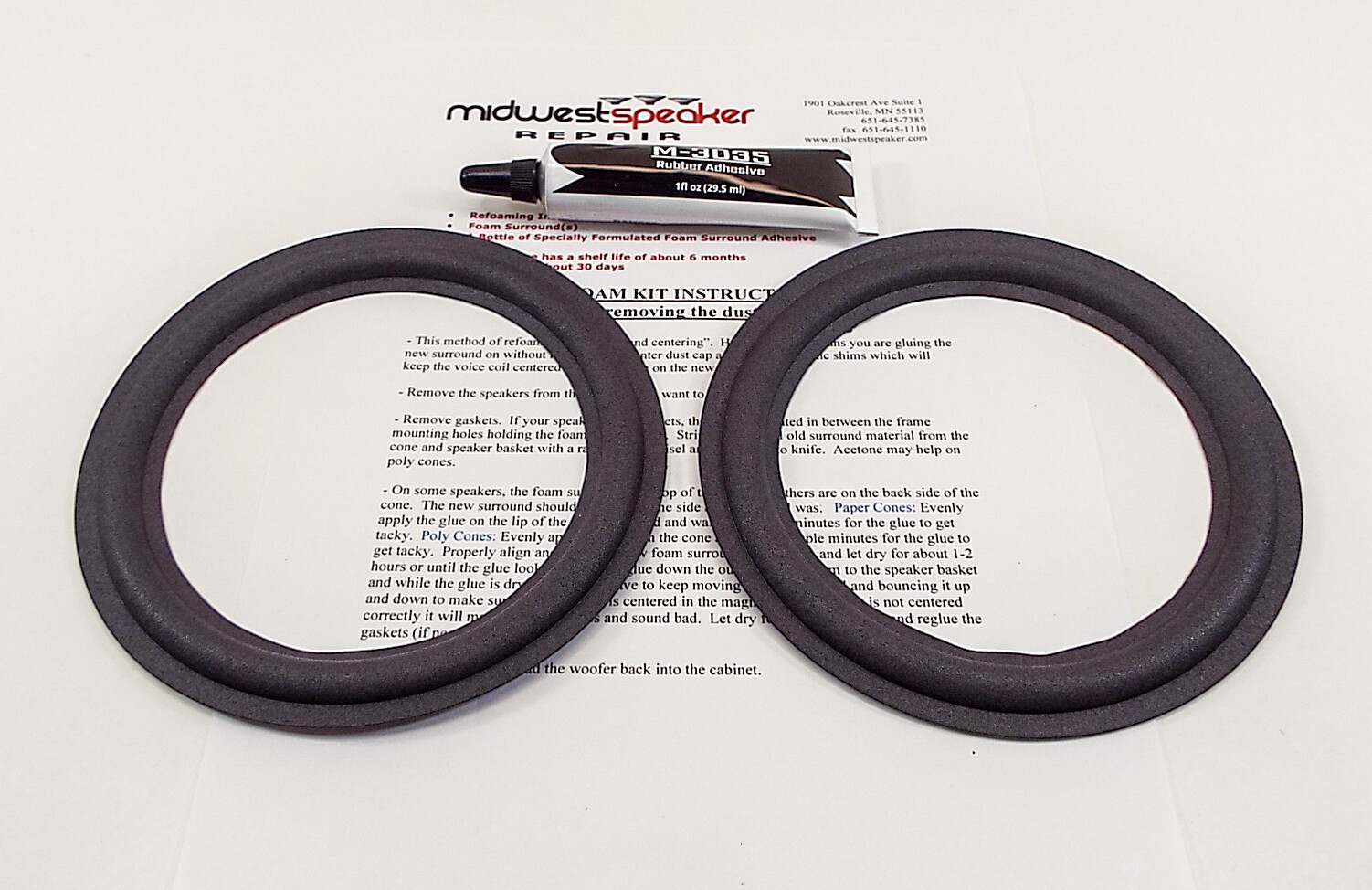
- Aging foam surrounds on the woofer and passive radiator: Over time, the foam can dry out, crack, and disintegrate, leading to flapping or loss of bass. Replacement with modern butyl rubber surrounds is a common and effective fix.
- Tweeter degradation: While the textile dome is generally durable, the ferrofluid in older tweeters may dry up, causing distortion or failure. Re-ferrofluiding or tweeter replacement may be necessary.
- Crossover component drift: Electrolytic capacitors in the crossover can degrade, altering frequency response. A full recap with modern film capacitors can restore original performance and improve reliability.
Fortunately, parts and repair services for the RS-10 are still available through specialty vintage audio shops and online communities. Due to its popularity in the 1980s, many units were produced, and replacement drivers are occasionally found on the used market.
Current Market Value and Collectibility
The Infinity RS-10 is not as widely collected as some of Infinity’s more exotic models, but it has a loyal following among vintage audio enthusiasts who appreciate its engineering and performance-per-dollar ratio. In good working condition, a pair typically sells for $250–$400 on the secondary market, with fully restored units commanding higher prices.
Collectibility is moderate—while not a "blue chip" vintage speaker like the AR-3a or JBL L100, the RS-10 is recognized for its historical significance as an early adopter of passive radiator technology. Its appeal is strongest among audiophiles who value compact, full-range speakers for desktop or small-room setups.
Conclusion and Legacy
The Infinity RS-10 may not have the name recognition of Infinity’s flagship models, but it represents a quiet revolution in compact speaker design. By combining a passive radiator with a well-engineered 2-way system, Infinity delivered a bookshelf speaker that punched far above its weight in bass performance and overall musicality.
Its legacy lives on in today’s compact speakers, many of which use passive radiators to achieve deep bass from small enclosures. The RS-10 was a pioneer in this regard—proof that innovation doesn’t always come in large packages.
For the vintage audio enthusiast, the RS-10 offers a compelling blend of historical significance, solid build quality, and engaging sound. It’s a speaker that rewards restoration and remains a joy to listen to—especially with classic rock, acoustic jazz, or vocal recordings where clarity and balance matter most.
If you stumble upon a pair in good condition, consider giving them a second life. With a little care, the Infinity RS-10 can still deliver a listening experience that rivals many modern bookshelf speakers—over 40 years after its debut.
eBay Listings


As an eBay Partner, we earn from qualifying purchases. This helps support our independent vintage technology research.
Related Models
- Infinity RS-1B (1975)
- Infinity SM-102 (1979)
- Infinity SM-125 (1975)
- Infinity RS-6 (1976)
- Infinity SM-112 (1975)
- Akai AM-2850 (1975)
- Akai AP-206 (1975)
- Nakamichi BX-1 (1985)
- Acoustic Research research-ar-17 (1978)
- Acoustic Research AR-19 (1994)