Infinity QB-12: The Forgotten Pioneer of Extended Bass Response
In the pantheon of vintage audio innovations, few companies pushed the boundaries of loudspeaker design quite like Infinity Systems during the 1970s. Best known for their groundbreaking EM (Electrostatic Monitor) series and the legendary IRS (Infinity Reference Standard), Infinity also quietly introduced a more modest—but equally clever—product that embodied their engineering philosophy: the Infinity QB-12. Though not a complete speaker system, the QB-12 was a passive bass radiator module designed to enhance the low-frequency performance of existing speaker setups, particularly in an era when compact bookshelf speakers often struggled with deep bass reproduction.
Released in 1975, the QB-12 arrived at a time when audiophiles were beginning to demand more from their systems—not just clarity and imaging, but also visceral, room-filling bass. Powered subwoofers were still in their infancy and largely considered the domain of home theaters (a concept that didn’t yet exist) or low-fi applications. The QB-12 offered a high-fidelity alternative: a passive, non-powered bass extension system that leveraged acoustic principles to deepen bass response without introducing distortion or coloration.
Technical Specifications
The Infinity QB-12 was not an amplifier or an active speaker. Instead, it was a passive radiator system—essentially a sealed wooden enclosure housing a 12-inch non-powered cone driver (a "drone cone") that resonated in response to the acoustic energy from a primary speaker system. This allowed it to reinforce low frequencies through sympathetic resonance, particularly in the 30–60 Hz range, where many speakers of the era rolled off sharply.
| Specification | Detail |
| Model | QB-12 |
| Manufacturer | Infinity Systems |
| Year Introduced | 1975 |
| Type | Passive bass radiator module |
| Driver | 12" passive radiator (no voice coil) |
| Enclosure Type | Sealed, portless |
| Dimensions (H×W×D) | 16" × 14" × 14" (approx.) |
| Weight | 28 lbs (12.7 kg) |
| Finish Options | Walnut veneer, black textured vinyl |
| Impedance | Not applicable (passive radiator) |
| Power Handling | Not applicable (non-powered) |
| Frequency Contribution | Reinforces 30–60 Hz range |
| Recommended Pairing | Full-range speakers with bass roll-off |
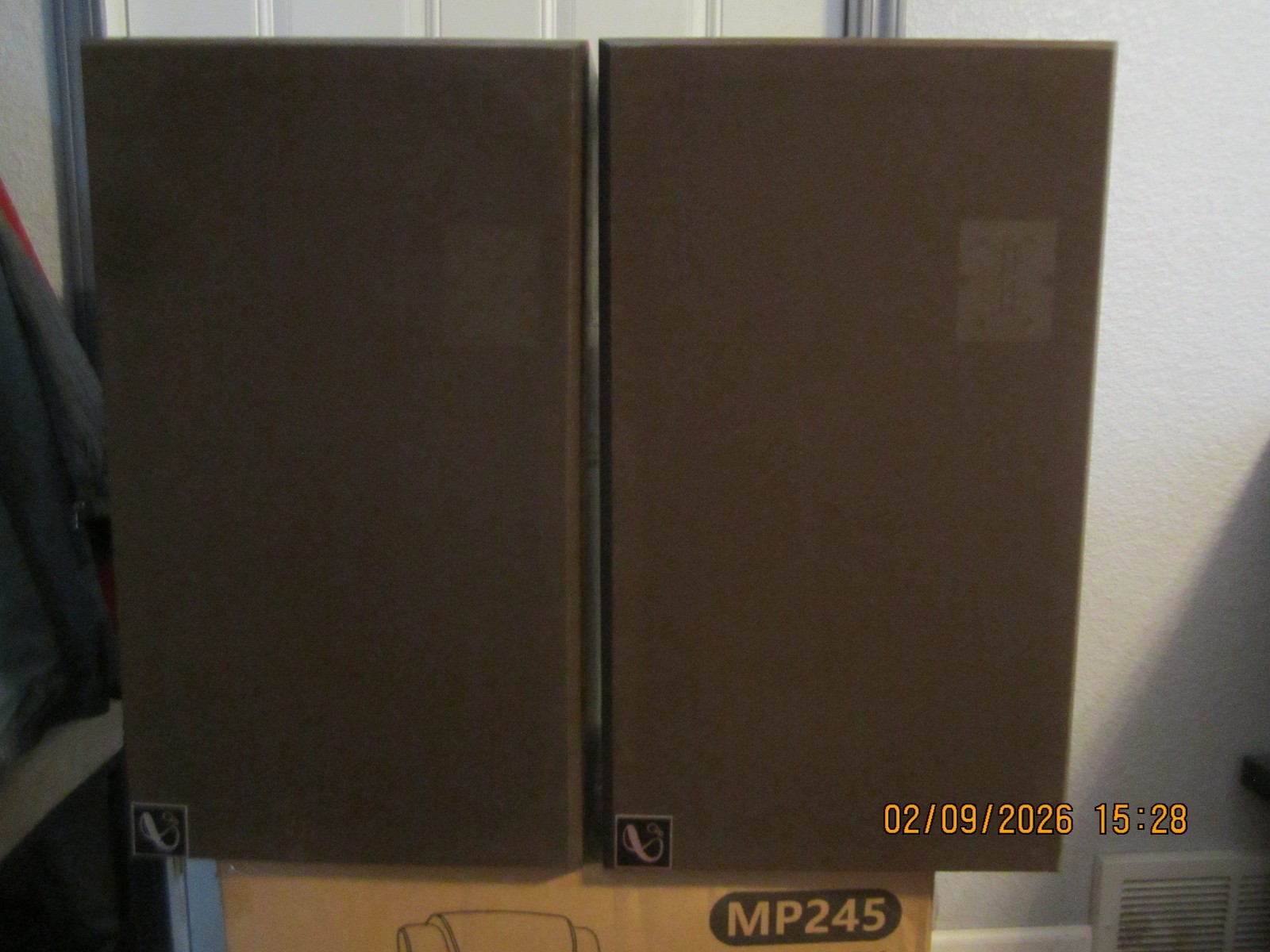
The cabinet was constructed from medium-density fiberboard (MDF) with internal bracing to minimize panel resonance—a forward-thinking design choice for its time. The front baffle featured a large circular cutout for the 12-inch passive cone, which resembled a conventional woofer but lacked a magnet or voice coil. The cone was mechanically tuned to resonate at a specific frequency, effectively acting as a "sympathetic woofer" driven by air pressure from the main speakers.
Sound Characteristics and Performance
The QB-12 didn’t produce sound on its own—it responded to the acoustic output of nearby speakers. When placed in the same room and ideally coupled to the same acoustic space (such as on the same speaker stand or adjacent to the main cabinet), the QB-12 would begin to resonate as low-frequency energy built up in the room. This resonance effectively extended the bass response of the primary speakers, adding weight and authority to kick drums, pipe organs, and orchestral bass lines.
Users reported a noticeable improvement in bass depth and fullness, especially when paired with compact bookshelf models like the AR-3a, Advent Large, or even early Infinity bookshelf designs. The effect was subtle but musically satisfying—more akin to tuning the room than adding a subwoofer. Because the QB-12 had no amplifier or crossover, it introduced zero phase shift or distortion, preserving the integrity of the original signal.
Critically, the QB-12 did not "boom" or overpower the system. Its response was tightly controlled by the mechanical tuning of the passive radiator, resulting in a natural, articulate low end that blended seamlessly with the main speakers. Audiophiles appreciated its transparency—it enhanced the system without drawing attention to itself.
Notable Features and Innovations
The Infinity QB-12 was a product of acoustic ingenuity rather than electronic complexity. Its key innovation was the application of passive radiator technology—common today in compact Bluetooth speakers and subwoofers—to the high-end audio market. While passive radiators had been used in small consumer radios before, Infinity was among the first to market one as a standalone, high-fidelity accessory.
Other notable features included:
- Tunable placement: The QB-12’s effectiveness depended on room placement and proximity to main speakers, allowing users to fine-tune bass response through positioning.
- Aesthetic integration: Designed to match the styling of 1970s high-end speakers, the QB-12 featured a modest, functional look with a textured vinyl or walnut finish.
- No power or wiring required: A major selling point for audiophiles wary of adding electronics to their pure analog signal chain.
Infinity marketed the QB-12 as a "bass extender" for systems that were otherwise excellent but lacked ultimate low-end authority. It was particularly popular among owners of electrostatic speakers (like Quad ESLs), which were renowned for their midrange clarity but limited bass output.
Common Issues and Maintenance
Today, the Infinity QB-12 is a rare find, and surviving units require careful evaluation. The most common issues include:
- Surround deterioration: The foam or rubber surrounds on the 12-inch passive radiator often degrade over time, leading to reduced movement or rattling. Replacement surrounds are available from specialty speaker repair shops.
- Cabinet integrity: Older MDF cabinets can swell or delaminate if exposed to humidity. Check for warping or soft spots.
- Dust and debris: Accumulated dust on the radiator cone can dampen response. Gentle cleaning with a soft brush is recommended.
Because the QB-12 has no electrical components, it’s relatively low-maintenance. However, proper placement remains critical—placing it in a corner can over-emphasize bass, while placing it too far from the main speakers may render it ineffective.
Current Market Value and Collectibility
The Infinity QB-12 is not a mainstream collector’s item, but it holds a niche appeal among vintage audio enthusiasts and speaker tinkerers. Units in good condition typically sell for $100–$200 on the secondary market, with fully restored examples commanding slightly more.
Its value lies more in historical significance than practical utility. As an early example of passive bass augmentation in high-fidelity audio, the QB-12 foreshadowed modern room correction and subwoofer integration techniques. It also reflects Infinity’s commitment to solving real-world listening problems with elegant engineering.
For restorers and DIY audio fans, the QB-12 offers a fun project—some have even retrofitted them with active drivers to create hybrid subwoofers, though this strays from the original intent.
Conclusion and Legacy
The Infinity QB-12 may not have achieved the fame of the IRS or the EM series, but it remains a fascinating footnote in the evolution of high-fidelity sound. It represents a moment when speaker designers were exploring acoustic solutions to electronic limitations, using physics rather than amplifiers to improve performance.
In an era increasingly dominated by digital room correction and powered subwoofers, the QB-12 stands as a testament to analog ingenuity—a simple, elegant device that enhanced music without complicating the signal path. For the vintage audio enthusiast, it’s more than a curiosity; it’s a reminder that sometimes, the best solutions are the quietest ones.
If you stumble upon a pair of QB-12s in a basement or audio swap meet, consider giving them a second life. With a little care, they can still bring depth and warmth to a classic system—just as they did over 45 years ago.
eBay Listings


As an eBay Partner, we earn from qualifying purchases. This helps support our independent vintage technology research.
Related Models
- Infinity RS-1B (1975)
- Infinity SM-102 (1979)
- Infinity SM-125 (1975)
- Infinity RS-6 (1976)
- Infinity SM-112 (1975)
- Akai AM-2850 (1975)
- Akai AP-206 (1975)
- Nakamichi BX-1 (1985)
- Acoustic Research research-ar-17 (1978)
- Acoustic Research AR-19 (1994)