Infinity PRIMUS-C25: The Compact Centerpiece of Vintage Home Theater
In the mid-1980s, as home audio systems began transitioning from stereo to multi-channel surround sound, manufacturers scrambled to develop speaker lines that could deliver cinematic audio experiences in the living room. Among the pioneers of this shift was Infinity Systems, a company already renowned for its innovative driver technology and no-compromise engineering. The Infinity PRIMUS-C25, introduced in 1986 as part of the broader PRIMUS series, was one of the earliest dedicated center-channel speakers designed specifically for the emerging home theater market.
Though compact in size, the PRIMUS-C25 played a pivotal role in Infinity’s strategy to bring high-fidelity sound to multi-speaker setups. Positioned as a companion to the PRIMUS satellite speakers and subwoofers, the C25 was engineered to anchor dialogue and on-screen action with clarity and precision—hallmarks of Infinity’s design philosophy during this era.
Technical Specifications
The PRIMUS-C25 was built with a focus on seamless integration, tonal matching, and vocal intelligibility. While not a powerhouse like Infinity’s larger floor-standing models, its design prioritized coherence within a surround system.
| Specification | Detail |
| Model | PRIMUS-C25 |
| Manufacturer | Infinity Systems |
| Year Introduced | 1986 |
| Type | Passive center-channel speaker |
| Configuration | 2-way, bass-reflex |
| Drivers | Dual 3.5" woofers, 1" dome tweeter |
| Frequency Response | 80 Hz – 20 kHz (±3 dB) |
| Crossover Frequency | 3.5 kHz |
| Nominal Impedance | 8 ohms |
| Sensitivity | 87 dB (2.83V/1m) |
| Recommended Amp Power | 10–100 watts per channel |
| Enclosure Type | Bass-reflex with front-firing port |
| Dimensions (H×W×D) | 6.5" × 16" × 7.5" (16.5 × 40.6 × 19 cm) |
| Weight | 10 lbs (4.5 kg) |
| Finish Options | Black ash vinyl, simulated wood grain |
The dual 3.5" woofers were strategically arranged vertically around the central tweeter, forming a compact MTM (Midrange-Tweeter-Midrange) array. This layout helped widen the vertical dispersion and improve off-axis performance—critical for a center channel where listeners may be seated at various heights relative to the speaker.
Sound Characteristics and Performance
The PRIMUS-C25 was engineered to match the sonic signature of the rest of the PRIMUS series, ensuring a cohesive soundstage across front, center, and surround channels. Its sound profile leaned toward neutrality with a slight warmth in the midrange, making it particularly well-suited for dialogue reproduction.
Dialogue clarity was a standout feature. The 1" soft-dome tweeter delivered crisp, non-fatiguing highs, while the dual midrange drivers provided a solid vocal foundation without the boxiness that often plagues small center speakers. Though the bass response rolled off below 80 Hz, the C25 was designed to work in tandem with the PRIMUS subwoofer (such as the PS-12 or PS-15), allowing it to focus on midrange accuracy rather than deep bass.
When paired with its matching satellites and subwoofer, the PRIMUS-C25 contributed to a remarkably balanced and immersive soundfield. Its ability to anchor on-screen audio with precision made it a favorite among early adopters of surround sound, especially during the VHS and LaserDisc era when audio quality was often a limiting factor.
Notable Features and Innovations
While not as technically radical as Infinity’s earlier IRS or EMPIRE series, the PRIMUS-C25 incorporated several thoughtful design elements that reflected the company’s engineering pedigree:
- MTM Driver Array: The vertical alignment of the two 3.5" woofers flanking the tweeter improved phase coherence and off-axis response, reducing the “sweet spot” limitation common in small speakers.
- Time-Aligned Crossover: Though not as sophisticated as the true time-aligned designs in Infinity’s flagship models, the PRIMUS-C25 used a carefully tuned crossover to ensure that the acoustic centers of the drivers were closely aligned, improving imaging and vocal focus.
- Magnetic Shielding: Essential for placement near CRT televisions, the C25 featured magnetic shielding to prevent interference with video displays—a forward-thinking feature for its time.
- Grille Design: The removable cloth grille provided a clean aesthetic while protecting the drivers, and its minimalist frame allowed the speaker to blend into living room environments.
The PRIMUS-C25 also benefited from Infinity’s use of high-quality components, including robust cabinet construction with internal bracing to minimize resonance—unusual in a center channel of this size and price point.
Common Issues and Maintenance
As with any vintage speaker, the PRIMUS-C25 may exhibit age-related wear, particularly in its foam surround and crossover components. Owners should be aware of the following potential issues:
- Foam Surround Deterioration: The 3.5" woofers use foam surrounds that can dry out and crumble after 30+ years. Re-coning or surround replacement is a common restoration step.
- Crossover Capacitor Aging: Electrolytic capacitors in the crossover network may degrade over time, leading to dull highs or imbalance. Replacing these with modern equivalents can restore original performance.
- Grille Fabric Wear: The original cloth grilles may fade or tear. Replacement grilles or custom fabric can refresh the speaker’s appearance.
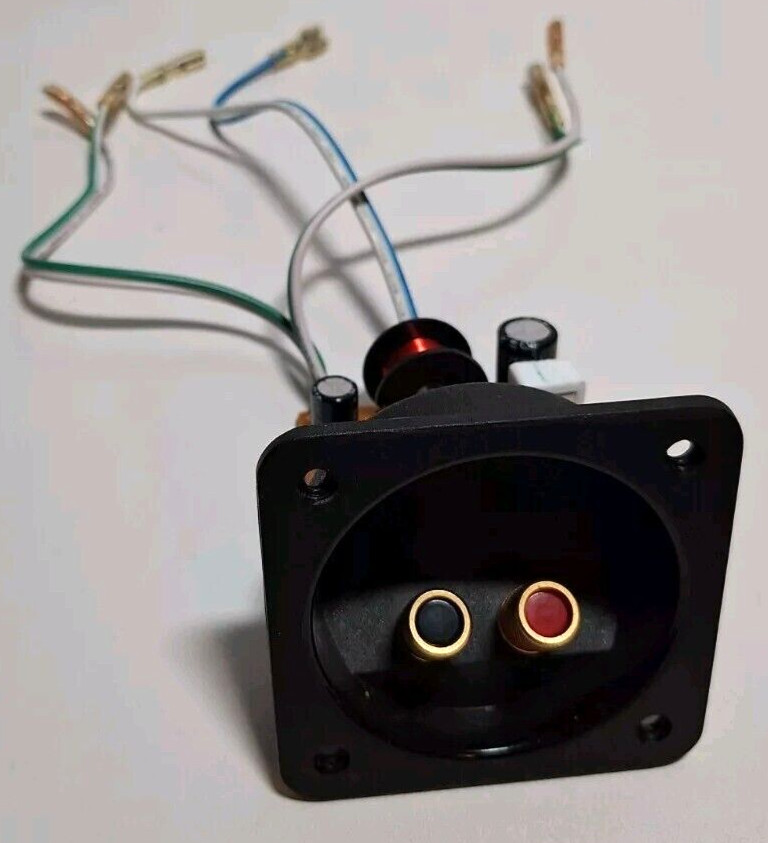
- Binding Post Corrosion: The original spring-clip terminals are functional but prone to oxidation. Upgrading to banana plugs or ensuring clean connections improves reliability.
Fortunately, due to the popularity of the PRIMUS line, replacement parts and community support are available through vintage audio forums and specialty repair shops.
Current Market Value and Collectibility
The Infinity PRIMUS-C25 is not a high-profile collector’s item like the IRS V or Beta series, but it holds a quiet respect among vintage audio enthusiasts, particularly those restoring period-correct home theater systems. In working condition, a single PRIMUS-C25 typically sells for $75–$150, depending on cosmetic condition and completeness (including original grilles and hardware).
Full PRIMUS system setups—featuring matching satellites, center channel, and subwoofer—command higher interest and can fetch $400–$600 as a complete package. Well-maintained or restored units with upgraded components are especially desirable.
While not a “blue chip” vintage speaker, the PRIMUS-C25 is appreciated for its historical significance as one of the first center channels designed from the ground up for home theater. Its integration into a retro AV setup offers both authenticity and surprisingly good sound quality for its size.
Conclusion and Legacy
The Infinity PRIMUS-C25 may not have made headlines like its larger siblings, but it played a crucial role in shaping the early home theater experience. As one of the first dedicated center-channel speakers from a major audio brand, it helped define the standard for dialogue clarity and system coherence in multi-channel setups.
Its design reflects a transitional moment in audio history—when stereo gave way to surround sound, and speakers evolved from standalone components to parts of a unified system. The PRIMUS-C25 stands as a testament to Infinity’s commitment to innovation and sonic integrity, even in compact, purpose-built designs.
Today, the PRIMUS-C25 is a charming piece of audio history. Whether used in a restored vintage system or repurposed as a compact bookshelf speaker, it continues to deliver the clear, balanced sound that made Infinity a household name. For collectors and enthusiasts, it’s a quiet reminder that sometimes, the most important speaker in the room is the one you never see—only hear.
eBay Listings


As an eBay Partner, we earn from qualifying purchases. This helps support our independent vintage technology research.
Related Models
- Infinity RS-1B (1975)
- Infinity SM-102 (1979)
- Infinity SM-125 (1975)
- Infinity RS-6 (1976)
- Infinity SM-112 (1975)
- Akai AM-2850 (1975)
- Akai AP-206 (1975)
- Nakamichi BX-1 (1985)
- Acoustic Research research-ar-17 (1978)
- Acoustic Research AR-19 (1994)