Infinity KAPPA-SURROUND: The Pioneer of Active Home Theater Satellite Systems
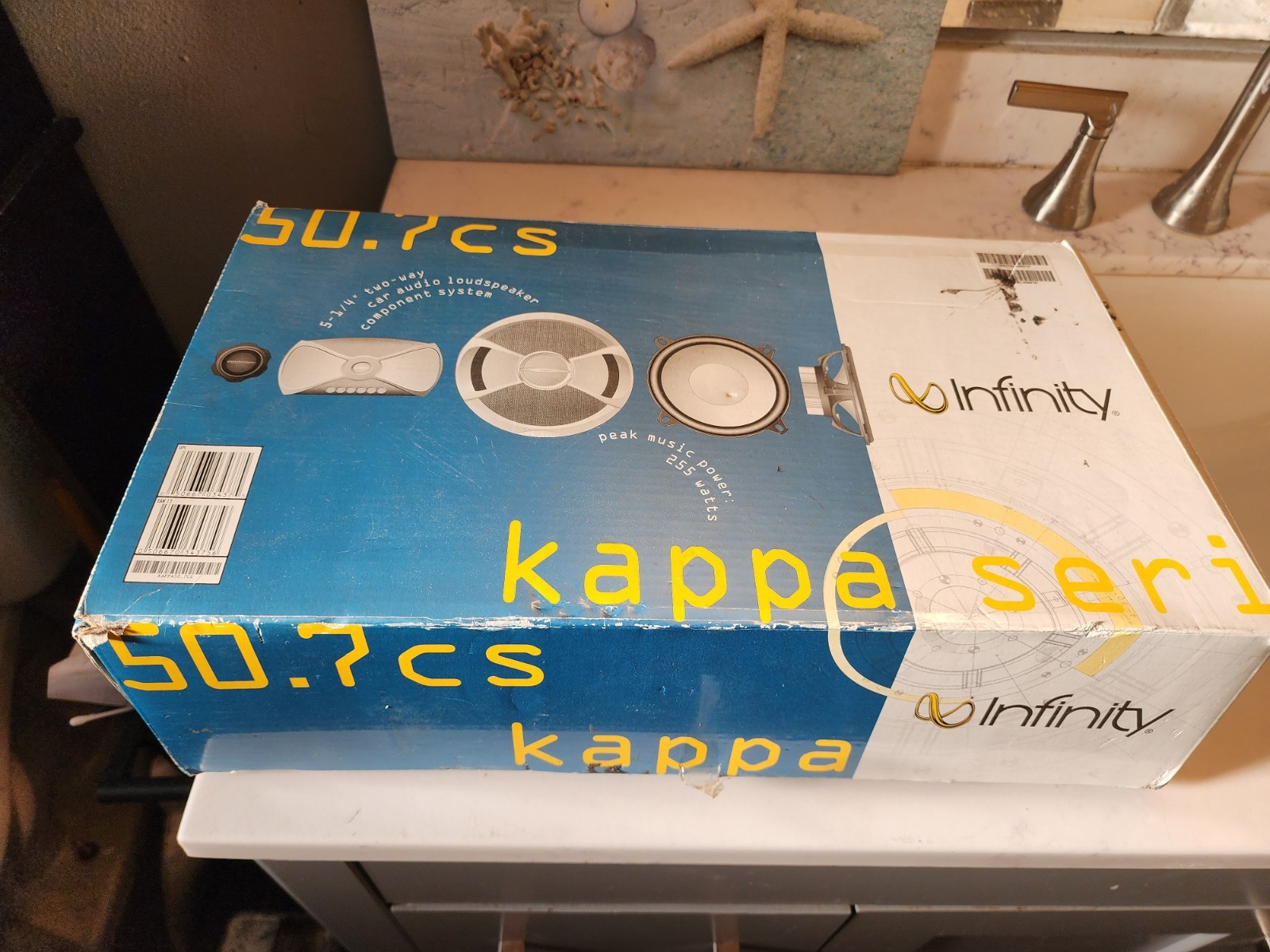
In the late 1980s and early 1990s, as home audio began its transition from stereo to multi-channel surround sound, Infinity—a brand already celebrated for its innovative speaker designs—stepped boldly into the emerging home theater market with the KAPPA-SURROUND. Part of the broader KAPPA series, which included floor-standing, bookshelf, and center-channel models, the KAPPA-SURROUND stood out as one of the first commercially available active satellite speaker systems designed specifically for surround sound applications. While not as widely documented as some of Infinity’s flagship floorstanders, the KAPPA-SURROUND holds a unique place in audio history as a forward-thinking system that anticipated the compact, powered speaker revolution of the 2000s.
Historical Context: Infinity in the Home Theater Era
By the late 1980s, Infinity (a division of Harman International) had already built a strong reputation for high-performance loudspeakers, particularly with the success of the IRS V and the more accessible KAPPA series. The KAPPA line, introduced in the mid-1980s, was designed to deliver high-fidelity sound in a more compact and affordable form factor. It featured advanced driver materials, sophisticated crossovers, and a sleek aesthetic that appealed to audiophiles and casual listeners alike.
The KAPPA-SURROUND, released around 1990, was developed during a pivotal time in audio history—the dawn of the home theater era. As Dolby Pro Logic and early digital surround formats like Dolby Digital began to emerge, consumers sought speaker systems that could deliver cinematic sound without dominating their living rooms. Infinity responded with a compact, powered satellite system that integrated amplification directly into the surround speakers, a rare and innovative approach at the time.
Technical Specifications
The KAPPA-SURROUND system was designed as a matched set of active satellite speakers intended for rear or side-channel use in a surround sound setup. Unlike passive speakers that rely on an external AV receiver for amplification, these units contained built-in amplifiers, making them one of the earliest examples of powered surround speakers.
| Specification | Detail |
| Model | KAPPA-SURROUND |
| Type | Active satellite surround speaker |
| Configuration | 2-channel (sold as a pair) |
| Drivers | 3" full-range cone driver |
| Amplification | Built-in Class AB amplifier (approx. 10W per channel) |
| Frequency Response | 80 Hz – 18 kHz |
| Crossover | Internal, fixed high-pass filter |
| Inputs | Stereo RCA line-level input |
| Enclosure Material | Molded ABS plastic with woodgrain finish |
| Dimensions (each) | 6" H × 4" W × 4" D |
| Weight (each) | 3.5 lbs |
| Power Requirement | 120V AC (external power adapter) |
| Impedance | Not applicable (active system) |
| Year of Release | 1990 |
The system typically included a pair of satellite speakers, each with its own amplifier module and power supply. They were designed to be connected to the surround outputs of a stereo or early surround receiver using standard RCA cables. This line-level input design allowed the KAPPA-SURROUND to integrate easily with existing audio gear, bypassing the need for dedicated speaker wire and reducing setup complexity.
Sound Characteristics and Performance
The KAPPA-SURROUND was engineered to deliver clear, detailed surround effects without overpowering the front soundstage. With a frequency response starting at 80 Hz, the system was intended to be used in conjunction with a subwoofer or full-range front speakers, focusing on ambient effects, music cues, and spatial imaging.
The 3-inch full-range drivers were made from lightweight polypropylene with rubber surrounds, providing good transient response and low distortion at moderate volumes. The built-in amplifiers, while modest at around 10 watts per channel, were sufficient for near-field or mid-sized room applications. The result was a surprisingly dynamic and articulate sound for such compact units.
One of the standout qualities of the KAPPA-SURROUND was its coherence with other KAPPA series speakers. When paired with a KAPPA center channel and floorstanders, the system created a seamless sonic signature across the soundfield—a rare achievement in early surround systems, where mismatched speakers often created an uneven audio experience.
Notable Features and Innovations
The KAPPA-SURROUND was notable for several forward-thinking design choices:
- Integrated Amplification: At a time when nearly all surround speakers were passive, the inclusion of built-in amps was revolutionary. It reduced the need for long speaker runs and simplified system integration.
- Compact, Discreet Design: The small footprint and woodgrain finish allowed the speakers to blend into living spaces, appealing to users who wanted high-tech performance without bulky equipment.
- RCA Line-Level Inputs: This eliminated the need for speaker wire and made setup accessible to non-technical users.
- Matched to the KAPPA Family: Infinity ensured tonal consistency across the KAPPA line, enhancing the realism of the surround experience.
These features made the KAPPA-SURROUND particularly appealing to early adopters of home theater who wanted a clean, high-performance solution without the complexity of a full multi-amp setup.
Common Issues and Maintenance
As with any vintage electronic equipment, the KAPPA-SURROUND systems that survive today may require some attention:
- Power Supplies: The external AC adapters are prone to failure after decades of use. Replacement units with the correct voltage (typically 12V DC) and polarity are essential.
- Capacitor Aging: Internal electrolytic capacitors in the amplifier circuits may have dried out, leading to hum, distortion, or complete failure. A recap by a qualified technician can restore performance.
- Driver Wear: Rubber surrounds on the 3" drivers can degrade over time, especially in humid environments. Re-foaming or reconing may be necessary for optimal sound.
- Connectors and Cables: RCA jacks can become loose or corroded. Cleaning with contact cleaner and checking solder joints can resolve intermittent issues.
Despite these potential issues, the KAPPA-SURROUND is generally well-built and, with proper care, can still deliver enjoyable performance today.
Current Market Value and Collectibility
The KAPPA-SURROUND is a rare and sought-after item among vintage audio collectors, particularly those focused on the evolution of home theater technology. Complete systems with original packaging and power supplies can fetch $150–$300 on the secondary market, depending on condition.
Its collectibility stems not from raw performance by modern standards, but from its historical significance as one of the first active surround speaker systems. It represents a bold experiment in system integration and user-friendly design—concepts that would later become standard in products like the Bose Lifestyle series and modern soundbars.
Enthusiasts of Infinity’s KAPPA series often seek out the KAPPA-SURROUND to complete a period-accurate setup, especially when restoring vintage home theater systems from the early 1990s.
Conclusion: A Visionary Step in Surround Sound
The Infinity KAPPA-SURROUND may not have achieved the fame of the brand’s flagship floorstanders, but it was a visionary product that anticipated the future of home audio. By integrating amplification into compact satellite speakers, Infinity demonstrated a deep understanding of consumer needs—simplicity, performance, and aesthetic integration.
Today, the KAPPA-SURROUND stands as a fascinating artifact of a transitional era in audio history. It bridges the gap between traditional hi-fi and modern home theater, embodying the ingenuity and ambition that defined Infinity’s approach to speaker design. For collectors and vintage audio enthusiasts, it’s more than just a pair of old speakers—it’s a piece of surround sound history.
eBay Listings


As an eBay Partner, we earn from qualifying purchases. This helps support our independent vintage technology research.
Related Models
- Infinity RS-1B (1975)
- Infinity SM-102 (1979)
- Infinity SM-125 (1975)
- Infinity RS-6 (1976)
- Infinity SM-112 (1975)
- Akai AM-2850 (1975)
- Akai AP-206 (1975)
- Nakamichi BX-1 (1985)
- Acoustic Research research-ar-17 (1978)
- Acoustic Research AR-19 (1994)