Infinity KAPPA-9: The Audiophile's In-Wall Pioneer
In the late 1980s, as home audio systems grew more sophisticated and consumers demanded both high fidelity and sleek integration into modern living spaces, Infinity stepped forward with a bold innovation: the KAPPA series of architectural speakers. Among these, the Infinity KAPPA-9 stood out as a groundbreaking in-wall loudspeaker that defied the then-common perception that built-in speakers couldn’t deliver true high-fidelity sound. Released in 1988, the KAPPA-9 was part of Infinity’s premium KAPPA lineup—a range designed to merge the acoustic precision of floor-standing speakers with the space-saving elegance of in-wall installation.
At a time when most in-wall speakers were considered sonically compromised solutions for background music or budget-conscious installations, the KAPPA-9 challenged the status quo. It brought serious audiophile engineering into the architectural domain, offering a level of detail, dynamics, and frequency extension that rivaled standalone bookshelf models. For integrators, custom installers, and discerning audiophiles looking to preserve room aesthetics without sacrificing sound quality, the KAPPA-9 became a benchmark.
Technical Specifications
The KAPPA-9 was engineered with a dual-driver configuration optimized for full-range performance within standard wall cavities. While not as widely documented as Infinity’s floor-standing counterparts, the KAPPA-9 shared design philosophies with the acclaimed KAPPA 8, 10, and 12 models—particularly in its use of advanced materials and crossover design.
| Specification | Detail |
| Model | KAPPA-9 |
| Type | In-wall loudspeaker |
| Driver Configuration | 2-way, dual-driver |
| Woofer | 8" polypropylene cone with rubber surround |
| Tweeter | 1" ferrofluid-cooled silk dome |
| Crossover Frequency | ~2,500 Hz |
| Frequency Response | 45 Hz – 22 kHz (±3 dB) |
| Sensitivity | 90 dB (1W/1m) |
| Nominal Impedance | 8 ohms |
| Power Handling | 100 watts (peak) |
| Enclosure Type | Requires wall cavity (no sealed box needed) |
| Grille | Paintable magnetic grille (included) |
| Installation Depth | 3.75" (9.5 cm) |
| Cutout Dimensions | 10.5" H × 4.75" W (26.7 × 12.1 cm) |
| Frame Finish | White polymer, paintable |
The KAPPA-9’s 8-inch woofer was derived from technologies used in Infinity’s high-end speakers, featuring a damped polypropylene cone for low coloration and good transient response. The silk dome tweeter offered smooth high-frequency reproduction, avoiding the harshness sometimes associated with metal domes—making it ideal for extended listening sessions. The crossover network, while not user-accessible, was carefully tuned to ensure seamless integration between drivers, a hallmark of Infinity’s engineering during this era.
Sound Characteristics and Performance
The Infinity KAPPA-9 delivered a remarkably balanced and natural sound for an in-wall speaker of its time. Its frequency response extended down to 45 Hz, allowing it to reproduce male vocals, bass guitar, and lower piano notes with surprising authority—especially when paired with a dedicated subwoofer. The 90 dB sensitivity ensured good output with modest amplifier power, making it compatible with most receivers of the late '80s and early '90s.
Midrange clarity was a standout feature. Vocals and acoustic instruments were rendered with warmth and presence, avoiding the "cupped hands" effect common in early architectural speakers. The silk dome tweeter contributed to a smooth, non-fatiguing top end, ideal for jazz, classical, and vocal-centric genres. While not as dynamically explosive as floor-standing KAPPA models, the KAPPA-9 retained enough punch and articulation to handle rock and electronic music with confidence.
When installed in pairs with proper wall sealing and isolation, the KAPPA-9 could create a convincing stereo image—unusual for in-wall speakers of the period. Its performance improved significantly when used with dedicated backboxes or in insulated walls, which helped control rear-wave resonance and enhance bass response.
Notable Features and Innovations
The KAPPA-9 introduced several features that set it apart from typical in-wall speakers:
- Magnetic Grilles: The paintable, magnetically attached grilles allowed for seamless integration into walls without visible screws or clips—elegant and installer-friendly.
- Dog-Ear Mounting System: A robust clamp mechanism ensured secure installation in various wall thicknesses, reducing vibration and improving sound integrity.
- Open-Back Design: Unlike sealed architectural speakers, the KAPPA-9 was designed to use the wall cavity as part of its acoustic environment, reducing boxiness and enhancing bass coupling.
- High-Quality Crossover: Internally mounted and shielded, the crossover used film capacitors and air-core inductors—components typically reserved for higher-end models.
Infinity also marketed the KAPPA-9 as part of a broader ecosystem. It could be paired with the KAPPA-8T (tweeter-only module) for tri-amping or used in multi-room setups with other KAPPA series speakers, offering a cohesive sonic signature throughout the home.
Common Issues and Maintenance
While the KAPPA-9 was well-built, age has introduced some common issues:
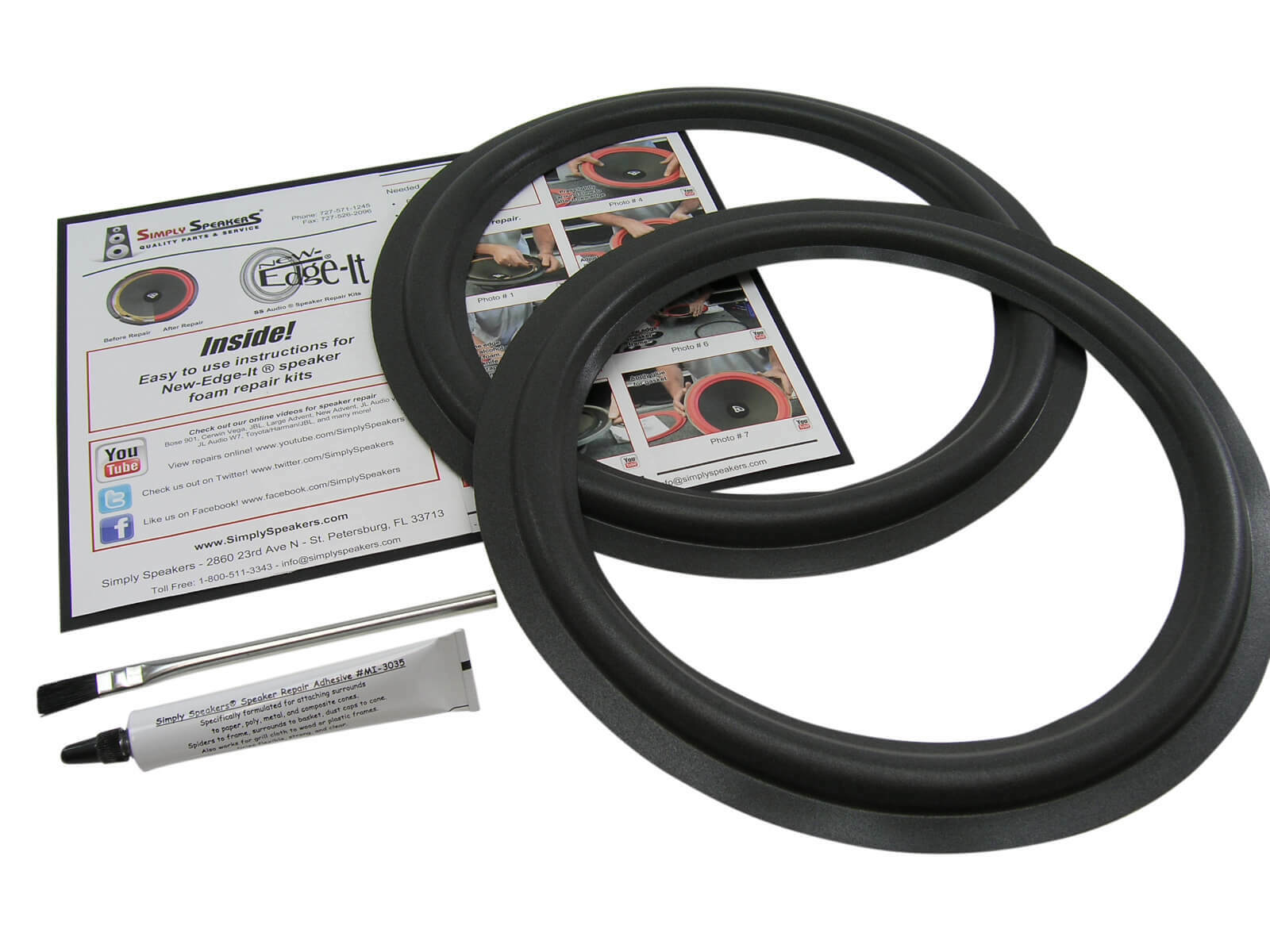
- Surround Deterioration: The rubber surrounds on the 8" woofers can dry out and crack after 30+ years, especially in dry or sun-exposed environments. Replacement reconing kits are available from specialty speaker repair services.
- Tweeter Fatigue: Though durable, the silk dome tweeters may lose clarity if overdriven frequently. Ferrofluid drying can also reduce high-frequency output.
- Wall Vibration: Without proper damping or backboxes, the speakers can transmit vibrations to drywall, causing resonance. Modern installers often recommend adding damping material like acoustic caulk or Green Glue.
- Grille Discoloration: The white polymer grilles may yellow over time, but they can usually be cleaned or repainted.
Maintenance is relatively straightforward: inspect drivers for movement, clean grilles with mild soap, and ensure wiring connections remain tight. For vintage units, professional reconing can restore performance close to original specifications.
Current Market Value and Collectibility
The Infinity KAPPA-9 is not a highly sought-after collector’s item like the IRSV or EMIT series, but it holds a loyal following among vintage audio enthusiasts and custom installers restoring period-accurate systems. Units in working condition typically sell for $75–$150 per pair on the secondary market, with higher prices for NOS (New Old Stock) or fully serviced examples.
Its value lies more in utility than rarity. For retro home theater builds or vintage whole-house audio systems, the KAPPA-9 offers authentic 1980s high-end sound with architectural convenience. While modern in-wall speakers often surpass it in efficiency and bass extension, the KAPPA-9 remains respected for its natural tonality and build quality.
Conclusion and Legacy
The Infinity KAPPA-9 was a trailblazer in architectural audio. At a time when in-wall speakers were afterthoughts, it proved that built-in solutions could deliver serious sound. It bridged the gap between audiophile standards and interior design needs, paving the way for today’s high-performance architectural speakers from brands like KEF, Sonus Faber, and even modern Infinity.
Though overshadowed by Infinity’s more flamboyant floor-standing models, the KAPPA-9 deserves recognition as a thoughtful, well-engineered product that brought high fidelity into the walls—literally. For vintage audio lovers, it’s a quiet classic: unassuming in appearance, but rich in sonic character and historical significance. Whether used in a restored 1980s media room or integrated into a retro-modern setup, the KAPPA-9 remains a testament to Infinity’s commitment to innovation across all speaker formats.
eBay Listings


As an eBay Partner, we earn from qualifying purchases. This helps support our independent vintage technology research.
Related Models
- Infinity RS-1B (1975)
- Infinity SM-102 (1979)
- Infinity SM-125 (1975)
- Infinity RS-6 (1976)
- Infinity SM-112 (1975)
- Akai AM-2850 (1975)
- Akai AP-206 (1975)
- Nakamichi BX-1 (1985)
- Acoustic Research research-ar-17 (1978)
- Acoustic Research AR-19 (1994)