Infinity IRS-DELTA: The Pinnacle of Hybrid Loudspeaker Engineering
The Infinity IRS-DELTA stands as one of the most ambitious and technically audacious loudspeaker systems ever conceived. Introduced in the late 1980s by Infinity Systems—a company renowned for pushing the boundaries of high-fidelity reproduction—the IRS-DELTA was not merely a speaker; it was a statement. A towering monument to sonic precision, engineering innovation, and uncompromising design, the IRS-DELTA represented the culmination of decades of research into hybrid transducer technology, combining electrostatic principles with dynamic drivers in a way few manufacturers have dared to replicate.
Born from the legacy of the original Infinity IRS (Isobaric Radiating System) launched in the 1970s, the IRS-DELTA refined and expanded upon its predecessor’s revolutionary concepts. Where the original IRS stunned the audiophile world with its wall-filling presence and isobaric bass loading, the DELTA version elevated the concept with improved materials, enhanced dispersion characteristics, and a more refined integration between its ribbon and dynamic driver sections. It was designed for the ultimate listening experience—targeted at serious collectors, recording studios, and wealthy enthusiasts who demanded nothing less than reference-level accuracy.
Technical Specifications
| Specification | Detail |
| Type | 3-way hybrid (electrostatic midrange/tweeter + dynamic bass) |
| Configuration | Floor-standing, modular column array |
| High Frequency Driver | Full-range ribbon (push-pull planar magnetic or electrostatic, depending on variant) |
| Midrange | Electrostatic panel or planar magnetic array |
| Bass Section | Dual isobaric 12" or 15" cone drivers per side (sealed in coupled chambers) |
| Crossover | External active/passive hybrid (model-dependent) |
| Frequency Response | 20 Hz – 25 kHz (±2 dB) |
| Sensitivity | ~92 dB (1W/1m) |
| Nominal Impedance | 4 ohms (varies with frequency) |
| Recommended Amplifier Power | 100–300 watts (high-current recommended) |
| Dimensions (H×W×D) | Approx. 78" × 24" × 28" (varies by configuration) |
| Weight | ~250 lbs (113 kg) per channel |
| Finish Options | Black ash, rosewood, or custom wood veneers |
Note: Exact specifications may vary slightly depending on production year and optional configurations.
Sound Characteristics and Performance
The sonic signature of the IRS-DELTA is nothing short of majestic. Its hybrid design allows it to leverage the best qualities of both electrostatic and dynamic technologies: the speed, transparency, and low distortion of planar drivers in the mid and high frequencies, combined with the deep, controlled, and articulate bass response of isobaric-loaded woofers.
Listeners often describe the IRS-DELTA’s midrange as "ethereal"—with an almost holographic presence that places vocalists and instruments precisely within a vast soundstage. The ribbon or electrostatic tweeter delivers exceptional high-frequency extension without harshness, preserving the delicate overtones of cymbals, violins, and acoustic guitars with startling realism.
The bass, though generated by cone drivers, is remarkably tight and articulate for such a large system. The isobaric (back-to-back) driver configuration allows for deep sub-bass extension in a relatively compact enclosure (relative to the output), minimizing cabinet resonance and phase anomalies. When properly powered and room-mated, the IRS-DELTA can produce bass down to 20 Hz with authority and control, rivaling dedicated subwoofers of its era.
One of the most praised aspects of the IRS-DELTA is its dynamic range. Capable of rendering the softest whisper in a classical passage and then exploding into the crescendo of a symphony or rock ensemble without strain, it offers a lifelike sense of scale and impact. Its wide dispersion characteristics also make it less sensitive to room placement than many electrostatics, though optimal performance still demands careful setup.
Notable Features and Innovations
The IRS-DELTA was packed with engineering breakthroughs:
- Hybrid Transducer Array: By combining electrostatic or planar magnetic panels for mids and highs with dynamic isobaric bass drivers, Infinity achieved a balance of speed, power, and efficiency rarely seen in a single system.
- Isobaric Bass Loading: This design uses two woofers in a coupled chamber—one facing forward, one rear-firing—to effectively double the air compliance, allowing for deeper bass in a smaller volume. It reduces distortion and increases control, especially at low frequencies.
- Modular Column Design: The IRS-DELTA was often built as a vertical array, allowing for time-aligned driver placement and improved vertical dispersion. This modular approach also facilitated shipping and room integration, despite the speaker’s massive footprint.
- External Crossover Option: Some versions featured an external electronic crossover, enabling bi- or tri-amping and fine-tuning of driver integration. This made the IRS-DELTA a favorite among studio engineers and high-end installers.
- Aesthetic Craftsmanship: Beyond performance, the IRS-DELTA was a visual centerpiece. With its tall, narrow profile and fine wood veneer finishes, it blended high-tech engineering with furniture-grade aesthetics—meant to be seen as much as heard.
Common Issues and Maintenance
Owning an IRS-DELTA is not for the faint of heart. These speakers are complex, heavy, and require diligent care:
- Electrostatic Panel Degradation: Over time, the stators or diaphragms in electrostatic panels can suffer from humidity damage, arcing, or material fatigue. Maintaining a dry, climate-controlled environment is essential.
- Ribbon Driver Fragility: The ribbon tweeters, while sonically superb, are delicate. Overpowering or amplifier clipping can easily destroy them. Use only high-quality, stable amplifiers with proper current delivery.
- Crossover Component Aging: Passive crossovers, especially in older units, may suffer from capacitor drying or resistor drift. Periodic servicing and component replacement are recommended.
- Weight and Placement Challenges: At over 250 pounds per speaker, moving and positioning the IRS-DELTA requires professional help. Their size also demands large rooms—small spaces can be overwhelmed by their bass output.
- Parts Availability: As a rare, discontinued flagship, replacement parts (especially panels or custom drivers) are scarce. Owners often rely on specialized audio restoration shops or vintage parts brokers.
Current Market Value and Collectibility
The Infinity IRS-DELTA is a rare find on the vintage market. Few were ever produced, and even fewer remain in working condition. Today, a fully functional pair in good cosmetic and electrical condition can command $15,000 to $30,000, depending on provenance, originality, and restoration quality.
They are highly sought after by:
- Vintage audio collectors
- High-end audiophiles chasing "the ultimate analog experience"
- Studio historians and museum curators
While not as widely known as some British or Japanese classics, the IRS-DELTA holds a cult status among connoisseurs of large-format speakers. Its combination of technological ambition and sonic grandeur makes it a true unicorn in the vintage audio world.
Conclusion and Legacy
The Infinity IRS-DELTA is more than a loudspeaker—it’s a landmark in audio engineering history. It embodies a moment when high-fidelity design reached for the stars, unburdened by cost or practicality. While modern speakers may surpass it in measured performance or convenience, few can match its sheer presence, emotional impact, and technical daring.
For those lucky enough to hear a well-set-up pair, the IRS-DELTA delivers an experience that borders on the transcendent: a window into the recording studio, a concert hall, or a live jazz club, rendered with breathtaking clarity and scale. It remains a testament to Infinity’s fearless pursuit of sonic perfection—and a reminder that sometimes, bigger really is better.
If you encounter an IRS-DELTA in the wild, take the time to listen. You’re not just hearing music—you’re witnessing audio history.
eBay Listings

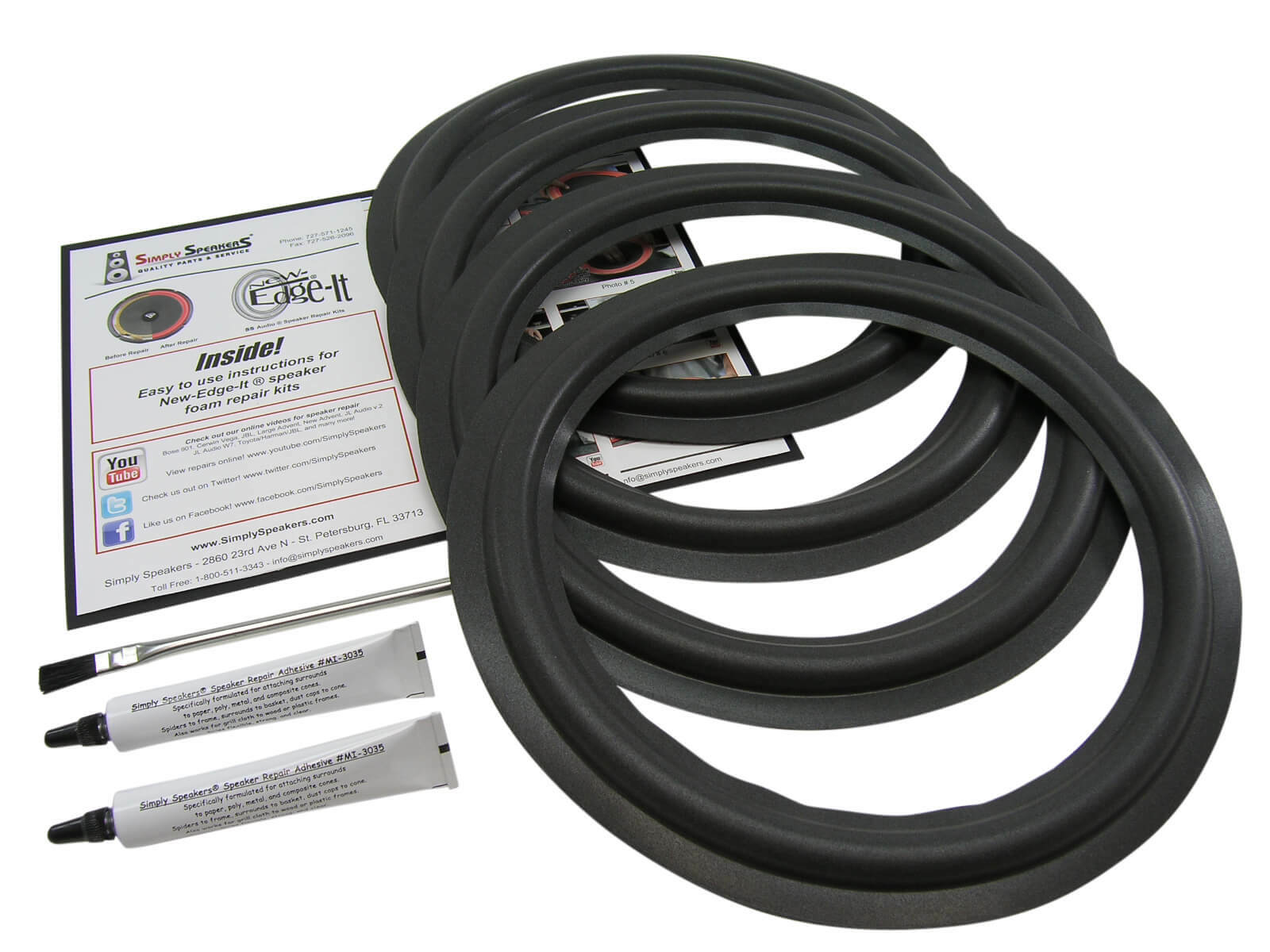


As an eBay Partner, we earn from qualifying purchases. This helps support our independent vintage technology research.
Related Models
- Infinity RS-1B (1975)
- Infinity SM-102 (1979)
- Infinity SM-125 (1975)
- Infinity RS-6 (1976)
- Infinity SM-112 (1975)
- Akai AM-2850 (1975)
- Akai AP-206 (1975)
- Nakamichi BX-1 (1985)
- Acoustic Research research-ar-17 (1978)
- Acoustic Research AR-19 (1994)