Infinity 1500: The Pioneer of Servo-Controlled Bass
In the early 1970s, when most loudspeaker systems struggled to deliver deep, accurate bass without distortion, Infinity Systems—founded by audio visionaries Cary Christie and Arnie Nudell—introduced a radical new concept: the Infinity 1500, a servo-controlled subwoofer system that redefined what was possible in low-frequency reproduction. Though not a conventional speaker or receiver, the Infinity 1500 occupies a legendary place in vintage audio history as one of the first commercially available subwoofers to employ closed-loop servo feedback to correct driver motion in real time. This innovation set the stage for modern high-fidelity bass systems and cemented Infinity’s reputation as a technical trailblazer.
A Revolution in Bass Control
Prior to the 1500, most speaker designs relied on passive crossover networks and mechanical damping to manage cone movement. At low frequencies, especially near and below the resonant frequency of the driver, this often resulted in "one-note" boomy bass or sluggish transient response. The Infinity 1500 tackled this problem head-on by integrating an electromechanical servo system—a technology borrowed from industrial automation and high-precision engineering.
The core idea was simple but revolutionary: use a sensor (in this case, a velocity-sensing coil attached to the woofer’s voice coil) to monitor the actual movement of the cone, compare it to the input signal, and then correct any deviation through feedback. This allowed the system to maintain tight control over the driver, dramatically reducing distortion and improving transient accuracy—especially critical in reproducing the deep, dynamic bass found in orchestral music, organ recordings, and later, film soundtracks.
Technical Specifications
| Specification | Detail |
| Model | Infinity 1500 |
| Manufacturer | Infinity Systems (US) |
| Year Introduced | 1972 |
| Type | Active servo-controlled subwoofer system |
| Driver | 12-inch (30.5 cm) long-throw woofer |
| Enclosure | Sealed, heavily braced cabinet |
| Control System | Analog servo feedback with velocity sensing coil |
| Amplifier | Built-in 50-watt RMS amplifier (tube or solid-state variants debated) |
| Frequency Response | 18 Hz – 120 Hz (±3 dB) |
| Input Sensitivity | 0.3 V RMS for full output |
| Input Impedance | 47 kΩ |
| Output Connection | High-level input/output to main speakers (daisy-chain design) |
| Dimensions (H×W×D) | Approx. 20" × 16" × 18" (51 × 41 × 46 cm) |
| Weight | ~75 lbs (34 kg) |
| Finish | Black textured vinyl wrap, wood-grain optional |
Note: Exact amplifier topology (tube vs. solid-state) remains a topic of debate among collectors, as early units may have used hybrid designs. Most surviving examples appear to be solid-state.
Sound Characteristics and Performance
The Infinity 1500 was not designed to be a "thump box" for rock or disco—it was engineered for accuracy, extension, and control. Its servo system allowed it to reproduce bass notes with startling precision, avoiding the overhang and resonance typical of passive designs. Listeners reported a newfound clarity in pipe organ music, timpani rolls, and cinematic sound effects, with bass that was both deep and articulate.
Because the system used a sealed enclosure and servo correction, it exhibited a very low Q (quality factor), resulting in a fast, tight bass response. This made it particularly effective in small to mid-sized rooms where ported designs often suffer from room modes and standing waves. The 1500 didn’t just add bass—it integrated bass, making it feel like a natural extension of the main speakers rather than an afterthought.
When paired with high-efficiency main speakers of the era (such as Quad ESLs or large horn systems), the 1500 filled a critical gap in the frequency spectrum, enabling full-range listening in domestic environments for the first time.
Notable Features and Innovations
- Servo Feedback Loop: The defining feature of the 1500, this system continuously monitored cone velocity and corrected errors in real time, reducing harmonic distortion to unprecedented levels for a subwoofer.
- Daisy-Chain Design: The 1500 included both input and output speaker terminals, allowing it to sit between the amplifier and main speakers. This eliminated the need for a separate line-level crossover and made integration simpler.
- Self-Powered: With a built-in amplifier, the 1500 reduced the load on the main amplifier and ensured optimal power delivery to the woofer.
- High-Sensitivity Input: Requiring only 0.3 volts, the 1500 could be driven directly from most preamps of the era, enhancing compatibility.
- Industrial Build Quality: The cabinet was massively constructed with internal bracing and damping, minimizing cabinet resonance—a common issue in early subwoofers.
Common Issues and Maintenance
Due to its age and complexity, surviving Infinity 1500 units require careful evaluation before use:
- Capacitor Aging: The analog servo circuitry relies on electrolytic capacitors that degrade over time. Replacing these is often necessary to restore proper function.
- Voice Coil Wear: The dual-coil design (one for driving, one for sensing) places mechanical stress on the assembly. Re-coning or full driver replacement may be needed.
- Amplifier Failure: The built-in amp, while robust, can suffer from transistor or resistor drift. Some owners retrofit modern amplifier modules while preserving the servo feedback.
- Cabinet Integrity: Check for warping or delamination of the vinyl wrap. While not critical to performance, it affects collectibility.
- Calibration: The servo system requires proper bias and gain adjustment. Misalignment can lead to motorboating, distortion, or no output.
Restoration is feasible but best left to technicians experienced with analog feedback systems. Replacement parts are rare, though a small community of Infinity enthusiasts shares schematics and repair tips online.
Current Market Value and Collectibility
The Infinity 1500 is a rare and sought-after piece among vintage audio collectors, particularly those interested in the evolution of subwoofer technology. Fully functional units in good cosmetic condition can command $800 to $1,500, depending on provenance and originality. Non-working units sell for $300–$500 as restoration projects.
Its collectibility stems not just from its performance, but from its historical significance—it was a precursor to later Infinity models like the Servo Statik series and influenced the development of active bass management in modern home theater systems. It also represents a bold moment when high-end audio embraced control theory and feedback systems, long before digital room correction became commonplace.
Conclusion and Legacy
The Infinity 1500 was more than a subwoofer—it was a statement of intent. At a time when most manufacturers were refining traditional speaker designs, Infinity dared to apply engineering principles from outside the audio world to solve a persistent problem: uncontrolled bass. The result was a system that delivered deep, accurate, and dynamic low frequencies with a level of precision that was unmatched in its era.
Though complex and somewhat temperamental by today’s standards, the 1500 paved the way for modern servo-subwoofers, active bass shakers, and even the sophisticated DSP-driven systems found in high-end home theaters. For vintage audio enthusiasts, owning an Infinity 1500 is like owning a piece of audio engineering history—a testament to the ingenuity and ambition that defined the golden age of American hi-fi.
If you ever get the chance to hear one in proper working order, don’t pass it up. That deep, clean rumble from a 1972 organ recording? That’s not just bass. That’s history in motion.
eBay Listings
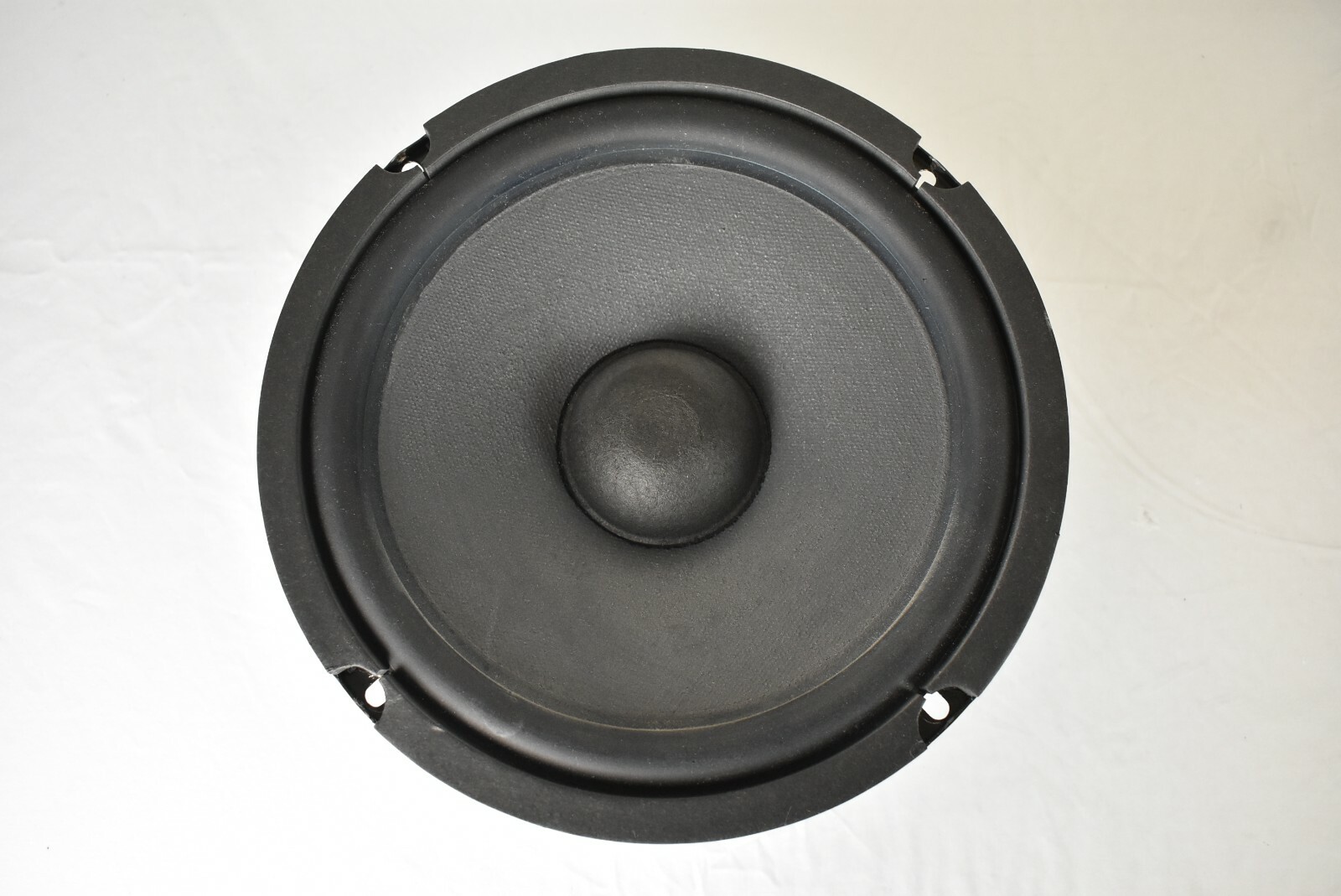


As an eBay Partner, we earn from qualifying purchases. This helps support our independent vintage technology research.
Related Models
- Infinity RS-1B (1975)
- Infinity SM-102 (1979)
- Infinity SM-125 (1975)
- Infinity RS-6 (1976)
- Infinity SM-112 (1975)
- Akai AM-2850 (1975)
- Akai AP-206 (1975)
- Nakamichi BX-1 (1985)
- Acoustic Research research-ar-17 (1978)
- Acoustic Research AR-19 (1994)