Heathkit AS-105: The DIY Enthusiast’s Passive Crossover Solution
In the golden era of do-it-yourself (DIY) electronics, few names carried the weight and respect of Heathkit. From amateur radio gear to full high-fidelity audio systems, Heathkit empowered hobbyists to build professional-grade equipment at home. Among their diverse catalog of audio components, the AS-105 stands out not as an amplifier or speaker, but as a critical passive crossover network designed for use in custom speaker systems. Though often overlooked in discussions of vintage audio gear, the AS-105 played a pivotal role in enabling audiophiles and tinkerers to craft balanced, high-performance speaker setups from scratch.
Released in the mid-1970s—around 1975—the AS-105 was part of Heathkit’s broader ecosystem of audio kits that complemented their speaker drivers and enclosures. It was not a standalone audio product, but rather a precision-engineered passive crossover intended to be paired with specific drivers, most commonly used with Heathkit’s own speaker projects like the A-1122 or A-1384 systems. For the DIY-minded audiophile, the AS-105 represented the final piece in building a truly custom loudspeaker: a way to ensure clean signal separation between tweeters and woofers, preserving clarity and preventing damage from frequency misallocation.
Technical Specifications
The AS-105 is a passive, second-order crossover network, meaning it uses inductors and capacitors (no external power required) to divide the audio signal into appropriate frequency bands for different drivers. It was specifically designed for 2-way speaker systems, making it ideal for bookshelf or floor-standing designs with a single tweeter and woofer.
| Specification | Detail |
| Model | AS-105 |
| Type | Passive 2-way crossover |
| Crossover Frequency | Approximately 2,500 Hz |
| Slope | 12 dB/octave (second-order Butterworth) |
| Components | Inductors, capacitors, resistors |
| Impedance Match | Designed for 8Ω systems |
| Power Handling | Up to 100 watts (per channel) |
| Enclosure | None (intended for internal mounting) |
| Assembly | Kit form (soldering required) |
| Compatible Drivers | Typically paired with Heathkit A-series tweeters and woofers |
The crossover employs a Butterworth alignment, known for its flat frequency response and smooth phase characteristics—ideal for achieving a natural sound when the outputs of the woofer and tweeter are summed acoustically. The use of high-quality air-core inductors and polypropylene capacitors (for the era) helped minimize distortion and inductance saturation, ensuring reliable performance even at moderate power levels.
Sound Characteristics and Performance
As a passive component, the AS-105 doesn’t “color” the sound in the way an amplifier might, but its design significantly influences the overall sonic signature of the speaker system it’s used in. When properly implemented with matched drivers, the AS-105 delivers a cohesive and balanced soundstage, with a seamless transition between the mid-bass and treble ranges.
The 2.5 kHz crossover point is well-chosen for many dome tweeters and 8- to 10-inch woofers, avoiding the upper midrange where the human ear is most sensitive. This reduces the risk of phase cancellation and comb filtering, resulting in a more natural tonal balance. Users of Heathkit speaker systems from the era often praise the clarity and openness of the high frequencies, crediting the precision of the AS-105’s filtering.
Because it was designed specifically for use with Heathkit’s own drivers—such as the T-20 tweeter and W-10 or W-12 woofers—the AS-105 ensures optimal time and amplitude alignment, minimizing the need for post-build tuning. This system-specific engineering is one of the reasons vintage Heathkit speaker builds are still admired today for their coherence and musicality.
Notable Features and Innovations
What made the AS-105 special in its time was not raw innovation, but practical engineering tailored to the hobbyist. Key features include:
- Kit-Based Design: Like all Heathkit products, the AS-105 came as a parts kit with detailed assembly instructions. This allowed users to learn about crossover theory while building a reliable, high-quality component.
- Point-to-Point Wiring: The layout used robust terminal strips and point-to-point wiring, making it easy to inspect, repair, or modify—unlike modern PCB-based crossovers.
- Modular Integration: Designed to fit neatly inside speaker cabinets, often mounted directly to the terminal board or baffle, reducing wire runs and signal loss.
- Protection Components: Some versions included zobel networks (impedance stabilization) and tweeter protection resistors, enhancing long-term driver reliability.
For its era, the AS-105 offered exceptional value. Instead of forcing DIYers to design their own crossover from scratch—a daunting task for beginners—Heathkit provided a tested, optimized solution that "just worked" when paired with their recommended drivers.
Common Issues and Maintenance
Over time, passive crossovers like the AS-105 can suffer from component aging. The most common issues include:
- Capacitor Deterioration: Electrolytic capacitors (if used in damping or protection circuits) may dry out or leak, altering frequency response or causing distortion.
- Inductor Corrosion: Though air-core inductors are generally durable, exposure to humidity can lead to oxidation, increasing resistance.
- Solder Joint Fatigue: Decades of thermal cycling can weaken solder joints, leading to intermittent connections.
Restoration of an AS-105 typically involves recapping—replacing old capacitors with modern equivalents—and checking all connections. Many vintage audio enthusiasts recommend upgrading to metal-film resistors and film capacitors for improved clarity and longevity. Because the circuit is simple and well-documented, repairs are straightforward for those with basic soldering skills.
It’s also important to ensure the crossover is used with drivers of the correct impedance and sensitivity. Mismatched drivers can shift the crossover point and degrade performance.
Current Market Value and Collectibility
The Heathkit AS-105 is not a high-demand collector’s item on its own, but it holds significant nostalgic and functional value among vintage audio enthusiasts and DIY communities. Complete, unused kits in original packaging can fetch $50–$100 on auction sites or forums like Audiokarma or eBay, especially when part of a larger Heathkit speaker system.
More commonly, AS-105 units are found still installed in vintage Heathkit speakers. In such cases, the value is tied to the overall condition of the speaker system. Fully restored A-1122 or A-1384 speakers with original AS-105 crossovers (especially if upgraded with modern components) are prized for their vintage charm and surprisingly competitive sound quality.
While not rare, the AS-105 is increasingly hard to find in pristine condition, making original kits desirable for purists restoring period-correct systems.
Conclusion and Legacy
The Heathkit AS-105 may not have the glamour of a tube amplifier or the presence of a floor-standing speaker, but it represents the essence of Heathkit’s philosophy: empowering individuals to build high-quality audio systems with their own hands. As a carefully engineered, application-specific passive crossover, it played a crucial role in the success of Heathkit’s speaker projects, ensuring that DIY didn’t mean compromised performance.
Today, the AS-105 is a quiet testament to an era when audio enthusiasts didn’t just buy gear—they built it, understood it, and improved it. For those restoring vintage systems or exploring the roots of DIY audio, the AS-105 remains a valuable and authentic component of a bygone, hands-on age of high fidelity.
Whether you’re a collector, a restorer, or simply a fan of vintage audio craftsmanship, the Heathkit AS-105 deserves recognition—not for flash, but for function, fidelity, and the enduring spirit of the hobbyist.
eBay Listings
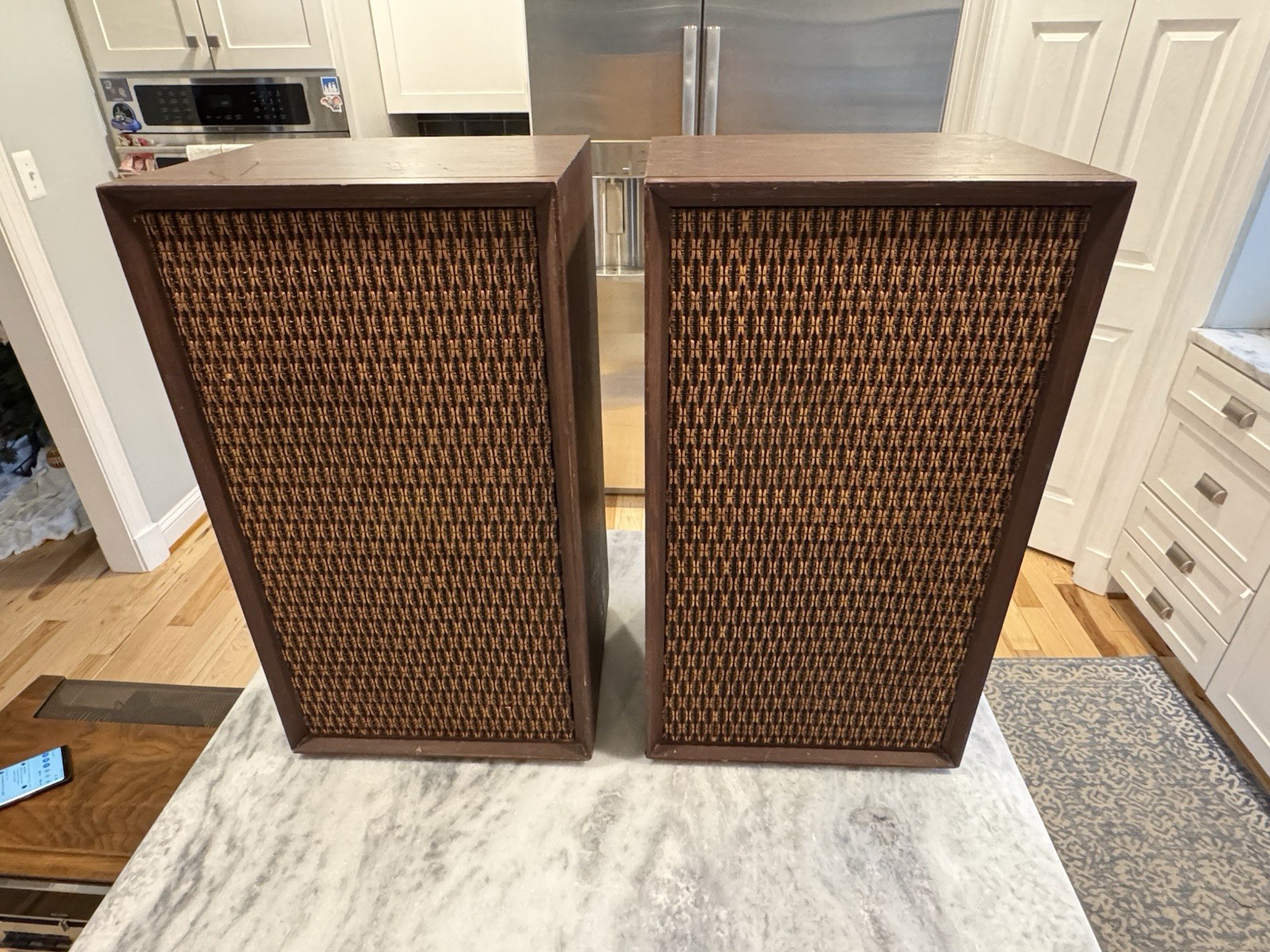


As an eBay Partner, we earn from qualifying purchases. This helps support our independent vintage technology research.
Related Models
- Heathkit AA-32 (1972)
- Heathkit AA-100 (1957)
- Heathkit AA-121 (1972)
- Heathkit AA-40 (1970)
- Heathkit AD-17 (1976)
- Akai AM-2850 (1975)
- Akai AP-206 (1975)
- Nakamichi BX-1 (1985)
- Acoustic Research research-ar-17 (1978)
- Acoustic Research AR-19 (1994)