Heathkit AJ-13: The Vintage Audiophile’s Secret Tool
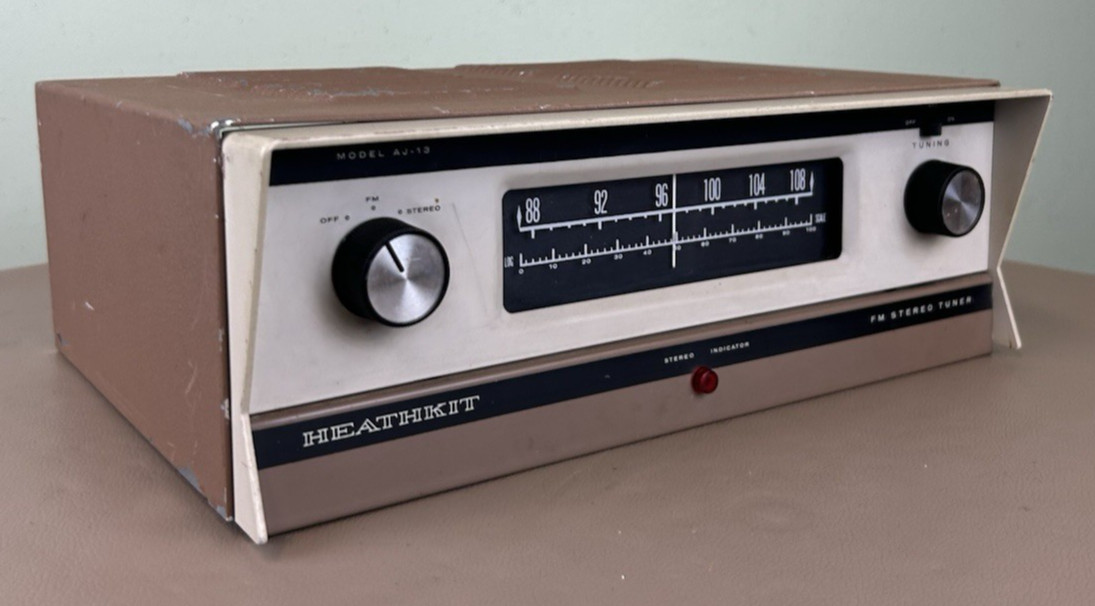
In the golden age of hi-fi, when vacuum tubes glowed warmly and listeners prized precision and craftsmanship, Heathkit stood as a beacon for the do-it-yourself enthusiast. Among their extensive catalog of kits—from amplifiers and tuners to test equipment—the Heathkit AJ-13 occupies a unique, often overlooked niche. Not an amplifier, not a preamp, but a precision audio attenuator and impedance matching device, the AJ-13 was designed for the serious hobbyist who demanded control over signal levels and circuit compatibility in complex audio systems.
Released in 1959, the AJ-13 arrived during a period of rapid expansion in home audio. As audiophiles began combining components from different manufacturers—tuners, phonostages, power amps—impedance mismatches and signal level inconsistencies became common problems. The AJ-13 offered an elegant, passive solution: a high-quality, variable attenuator that allowed users to precisely reduce signal strength while maintaining proper impedance relationships between components.
Though not as glamorous as a tube amplifier or as feature-rich as a receiver, the AJ-13 was a tool of refinement—a quiet enabler of sonic clarity in an era when system synergy was just beginning to be understood.
Technical Specifications
The Heathkit AJ-13 is a passive device, meaning it requires no power supply or active circuitry. Its design centers around precision resistive networks and high-quality switches, all built to Heathkit’s exacting standards for the DIY market.
| Specification | Detail |
| Model | AJ-13 |
| Manufacturer | Heathkit |
| Year Introduced | 1959 |
| Type | Passive Audio Attenuator / Impedance Matcher |
| Channels | 2 (Stereo) |
| Attenuation Range | 0 dB to -40 dB in 2 dB steps |
| Impedance Options | 600Ω, 10kΩ, 50kΩ (selectable input/output) |
| Construction | Kit-based, point-to-point wiring |
| Enclosure | Aluminum chassis with phenolic panel |
| Controls | Two rotary switches (attenuation), two toggle switches (impedance) |
| Connectors | Screw-terminal binding posts |
| Power Requirement | None (passive device) |
| Kit Number | AJ-13 |
| Assembly Time | Approx. 4–6 hours |
The AJ-13 features dual concentric rotary switches, allowing independent attenuation for left and right channels. Each channel has a two-pole, 21-position switch, providing 2 dB increments from 0 to -40 dB. Toggle switches on the front panel let users select between three standard impedance levels: 600Ω, 10kΩ, and 50kΩ, making it compatible with both professional audio gear and consumer hi-fi components of the era.
The kit came with all resistors, switches, terminal strips, hardware, and a detailed instruction manual. As with all Heathkit projects, the AJ-13 was designed for educational value as much as functionality—builders learned about signal levels, impedance matching, and precision resistor networks while assembling the unit.
Sound Characteristics and Performance
Being a passive device, the AJ-13 does not color the sound in the way an active preamplifier might. Instead, its role is transparent and precise: it reduces signal level without introducing noise, distortion, or phase shift—assuming it’s built correctly.
When properly assembled with high-quality resistors (typically carbon composition, as supplied), the AJ-13 delivers a clean, neutral attenuation. This makes it ideal for balancing mismatched components—say, when a high-output tuner overdrives a sensitive amplifier input. By inserting the AJ-13 between stages, users could dial in the optimal signal level, preventing clipping and preserving dynamic range.
Its impedance-matching capability was particularly valuable in systems combining gear from different design philosophies. For example, a 600Ω output from a professional tape recorder could be safely interfaced with a 50kΩ input on a consumer amplifier, minimizing signal reflection and loading effects that degrade frequency response.
While modern audiophiles might reach for a commercial preamp or volume control, the AJ-13 offered a minimalist, high-fidelity alternative—especially appealing to purists who distrusted active circuitry in the signal path.
Notable Features and Innovations
The Heathkit AJ-13’s brilliance lies in its simplicity and versatility:
- Precision Step Attenuation: Unlike potentiometers, which can wear unevenly and introduce noise, the AJ-13 uses precision resistors and rotary switches for repeatable, channel-balanced attenuation.
- Impedance Flexibility: The ability to switch between 600Ω, 10kΩ, and 50kΩ made it adaptable to a wide range of gear, from broadcast equipment to home phonographs.
- Educational Value: As a kit, the AJ-13 taught users about audio fundamentals—impedance, signal loss, and circuit matching—through hands-on building.
- Passive Design: No power supply, no hum, no added noise—just pure, unamplified signal control.
For its time, the AJ-13 was a sophisticated tool, bridging the gap between consumer and professional audio practices. It reflected Heathkit’s broader mission: empowering hobbyists with the tools and knowledge to build and understand their equipment.
Common Issues and Maintenance
As with any vintage kit-built device, the condition of a Heathkit AJ-13 today depends heavily on how well it was originally assembled and how it has been stored.
Common issues include:
- Oxidized Switches: The rotary and toggle switches can develop oxidation over decades of disuse, leading to crackling or intermittent contact. Cleaning with contact cleaner (e.g., DeoxIT) and repeated actuation usually restores function.
- Resistor Drift: Carbon composition resistors can drift in value over time, especially if exposed to heat or moisture. While not critical for attenuation, significant drift can affect impedance matching.
- Loose Terminals: Screw-terminal connections may loosen, leading to poor contact. Tightening and cleaning are recommended.
- Poor Original Assembly: Since it was a kit, some units may have cold solder joints or miswired connections. A thorough inspection by a technician is wise before use.
Maintenance is straightforward: keep it clean, exercise the switches regularly, and store it in a dry environment. Given its passive nature, the AJ-13 has no tubes or capacitors to replace—making it one of the most reliable vintage audio accessories you can own.
Current Market Value and Collectibility
The Heathkit AJ-13 is a rare find today. Unlike popular amplifiers such as the AA-140 or W-5M, the AJ-13 was a niche product, purchased primarily by advanced hobbyists and engineers. As a result, surviving units—especially complete, working kits—are uncommon.
In the current vintage audio market, an assembled and functional AJ-13 typically sells for $75 to $150, depending on condition and originality. Unassembled kits with all parts and manuals can command similar prices among Heathkit collectors.
Its collectibility stems from several factors:
- Historical Significance: It represents a time when DIY audio was both practical and educational.
- Rarity: Few were made, and fewer survive.
- Utility: Still useful in vintage system setups or for studio patch bays.
Collectors of Heathkit gear, broadcast equipment, or early hi-fi accessories often seek out the AJ-13 as a conversation piece or functional tool.
Conclusion and Legacy
The Heathkit AJ-13 may not be a household name, but for those who understand the nuances of signal flow and impedance, it’s a quiet masterpiece of analog engineering. It embodies the Heathkit philosophy: build it yourself, understand it completely, use it with pride.
While modern digital systems have made precise level control routine, the AJ-13 reminds us of a time when audio was tactile, hands-on, and deeply personal. It wasn’t about features or flash—it was about solving real problems with elegant, passive solutions.
Today, the AJ-13 stands as a testament to the ingenuity of mid-century audio design and the enduring appeal of the DIY spirit. Whether used in a vintage system, displayed as a collector’s item, or built from a long-lost kit in the attic, the Heathkit AJ-13 remains a hidden gem in the world of vintage audio.
eBay Listings


As an eBay Partner, we earn from qualifying purchases. This helps support our independent vintage technology research.
Related Models
- Heathkit AA-32 (1972)
- Heathkit AA-100 (1957)
- Heathkit AA-121 (1972)
- Heathkit AA-40 (1970)
- Heathkit AD-17 (1976)
- Akai AM-2850 (1975)
- Akai AP-206 (1975)
- Nakamichi BX-1 (1985)
- Acoustic Research research-ar-17 (1978)
- Acoustic Research AR-19 (1994)