Heathkit AD-27 (1969)
That warm, roll-top hum of late-'60s living room audio—FM stereo, four-speed vinyl, and the satisfying clunk of a BSR changer ready to drop the next record.
Overview
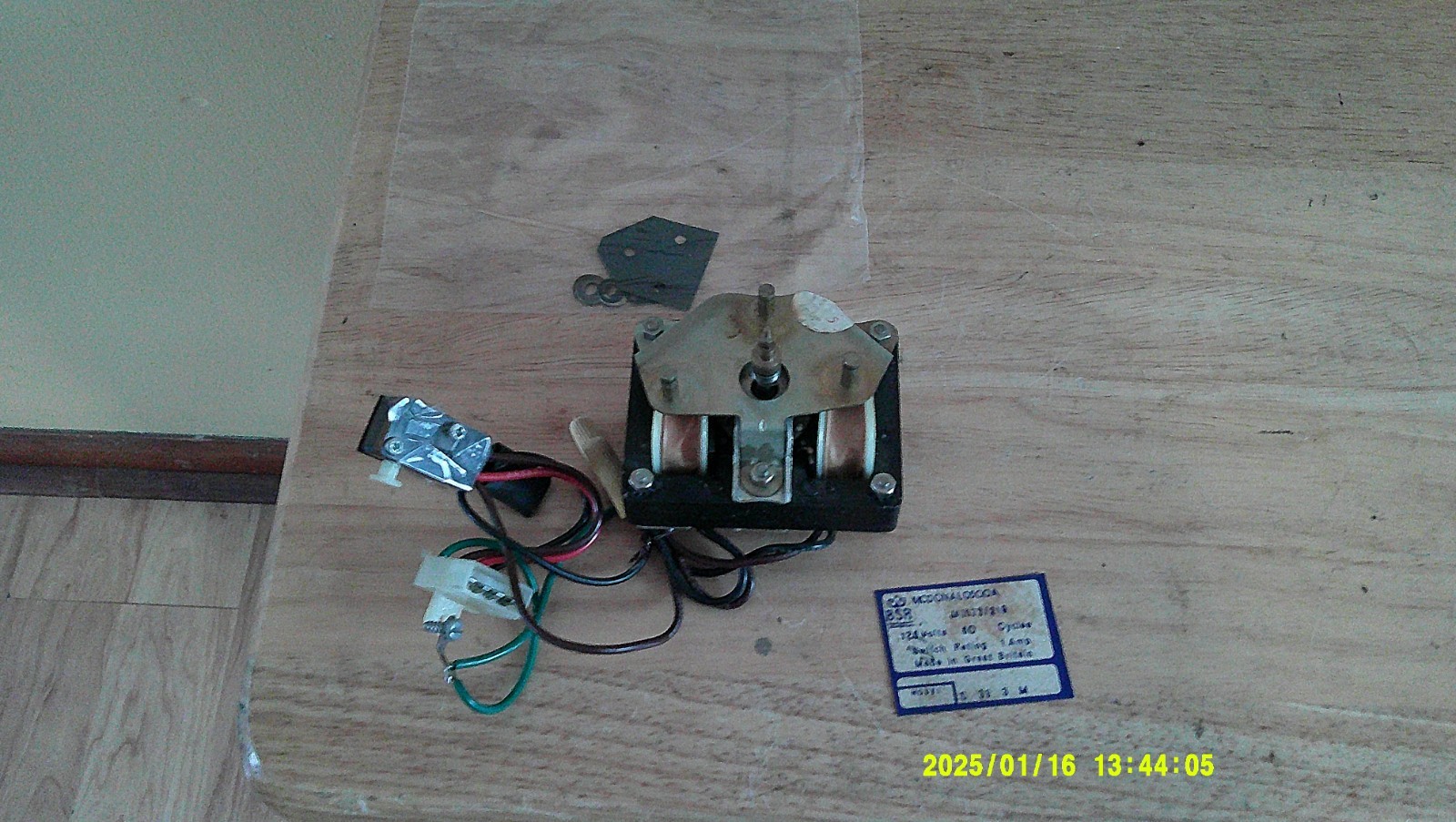
The Heathkit AD-27 Compact Stereo Center isn’t some forgotten PA amplifier—it’s a full-on 1969 living room statement, a self-contained stereo console that rolled FM radio, a multi-speed turntable, and amplification into one handsome wood-cased unit with a tambour roll-up door. Priced at $179 when new, it was a serious investment for home entertainment at the time, aimed at hobbyists who wanted both performance and the pride of building it themselves. This wasn’t just plug-and-play; it was kit-built, meaning owners soldered it together, learned its guts, and formed a bond with every flickering dial and mechanical whir. And what a machine to build: it housed a BSR McDonald 500-A turntable capable of playing 16, 33⅓, 45, and even 78 rpm records, complete with a stacking spindle and size selector—perfect for flipping through an LP stack while the kids’ 78s waited their turn. The FM stereo tuner brought the airwaves into living color, and while some listings call it "FM only," the consensus from original descriptions confirms it was indeed a stereo tuner, a real selling point in the late '60s when stereo broadcasting was still rolling out.
It’s the kind of unit that doesn’t just play music—it announces its presence. At 28 pounds and dimensions of 22" wide, 15" deep, and 8" tall, it’s compact by console standards but still a substantial piece, designed to sit proudly on a shelf or credenza. The all-wood roll-top body gives it a furniture-like elegance, and that sliding tambour door keeps the dust off when not in use, yet invites you in with a satisfying glide when it’s time to spin records. The build reflects Heathkit’s ethos: not flashy, but honest, functional, and deeply tactile. You don’t just listen to the AD-27—you interact with it, flipping switches, adjusting the counterweight, nudging the phase knob that some units include. It’s a hands-on experience in an era when audio was becoming increasingly automated, yet still mechanical enough to feel alive.
Specifications
| Manufacturer | Heathkit |
| Model | AD-27 |
| Year Introduced | 1969 |
| Type | Compact Stereo Center |
| Weight | 28 pounds |
| Dimensions | 22" x 15" x 8" tall |
| Power Output | 50 w/c |
| Turntable | BSR McDonald 500-A turntable |
| Speeds | 16, 33 1/3, 45, and 78 rpm |
| Tuner Type | FM stereo tuner |
| Included Components | FM stereo tuner, BSR McDonald 500-A turntable, original BSR record changer piece for small records |
| Features | record size selector, stacker/stacking center spindle record changer, lifting lever, counterweight adjustment, phase knob |
| Cabinet | Wood case with a tambour roll-up door |
Key Features
Integrated Stereo Console Design
The AD-27 wasn’t just another amplifier with inputs—it was a complete system in one box. By integrating the FM stereo tuner and the BSR McDonald 500-A turntable, Heathkit delivered convenience without sacrificing the DIY ethic. Everything you needed to listen to records or radio was inside, wired and ready, but only after you’d built it. The inclusion of a phase knob on some units suggests attention to stereo imaging, a subtle but appreciated touch for the time. And while it lacked AM reception (confirmed by listings describing it as FM-only), the FM stereo tuner was the star, and owners report it "sounds quite good"—a testament to the tuner section’s design, even if the rest of the system leans more toward practicality than audiophile precision.
Four-Speed BSR Turntable with Full Changer Functions
The BSR McDonald 500-A turntable is the mechanical heart of the AD-27, and it’s a marvel of mid-century automation. With speeds for 16, 33⅓, 45, and 78 rpm, it could handle nearly any disc in a typical household collection. The stacking center spindle let users load multiple records, and the size selector ensured proper drop and play for 7", 10", and 12" discs. The lifting lever, counterweight adjustment, and auto-return function made it user-friendly, though modern owners note the auto feature can be "a real slow go"—a quirk of aging mechanics, not original design. Still, when it works, it’s deeply satisfying. That said, these changers demand maintenance: cleaning, lubrication, and often a new stylus. One listing confirms the "stylus is broken," another notes the turntable "works but I expect it needs clean and lube"—common themes for any vintage BSR mechanism.
Roll-Top Wood Cabinet with Hands-On Controls
The cabinet isn’t just protective—it’s part of the experience. The tambour roll-up door, sometimes described as an "allwood roll top," gives the AD-27 a furniture-like presence, blending into mid-century decor while keeping components dust-free. Open it, and you’re greeted by a functional but uncluttered layout: knobs, switches, and that distinctive BSR changer hub. The tactile feedback of the controls—especially when they’re "wonky at first"—is part of the charm. Cleaning the pots and switches often restores smooth operation, but the mechanical nature means these units age with character, not silence. It’s not sleek; it’s substantial, honest, and built to last, even if it demands a little love to stay that way.
Historical Context
The Heathkit AD-27 emerged from a culture where building your own electronics wasn’t a niche hobby—it was a practical path to high-fidelity sound. The company’s core premise was simple: by assembling a kit, buyers could get performance comparable to factory-built units at a fraction of the cost, and they’d be able to repair it themselves. At $179 in 1969, the AD-27 was no impulse buy—it was a commitment, but one that paid off in both savings and self-reliance. Heathkit wasn’t alone in this space; competitors like Dynaco (with their Dynakits), Eico, Lafayette Radio, and Allied Radio’s KnightKits all fed the same DIY hunger. The AD-27 also reflects a transitional moment in home audio: integrated consoles were still dominant, but the era of separates was dawning. Curiously, the VTA Brand Index categorizes the AD-27 as a "Tape" type product, though no tape function is mentioned in any listing—this may be a classification error or refer to a variant not documented here.
Collectibility & Value
The Heathkit AD-27 is a rare sight—so rare that one seller claimed, "I have not seen any units like this on Ebay or anywhere elso so it should be fairly rare." That scarcity doesn’t always translate to high prices, though. Market values swing wildly: listings have ranged from $20 for non-working shells to $900 for pristine, fully restored examples, with recent sold prices landing between $57+ (untested) and $284.99. A unit described as "fully working lights and everything" sold in 2025, showing that functionality matters. Being "Kit Built" is often highlighted, appealing to collectors who value the Heathkit legacy of hands-on assembly. The original manual, described as "pretty detailed," adds value and aids restoration. But let’s be real: most AD-27s today need work. Common issues include dried lubricants in the tuner, dirty control pots, turntables needing cleaning and adjustment, and worn styli. One owner summed it up perfectly: "they're not worth much or particularly great, but there's just something about it that I love." That emotional pull—part nostalgia, part mechanical affection—is what keeps these units from vanishing into landfill.
eBay Listings



As an eBay Partner, we earn from qualifying purchases. This helps support our independent vintage technology research.
Related Models
- Heathkit AR-19 (1964)
- Heathkit AA-111 (1976)
- Heathkit AA-13 (1957)
- Heathkit AA-14 (1957)
- Heathkit AA-141 (1977)
- Luxman L-530 (1975)
- Luxman R-404 (1975)
- Luxman RV-371 (1975)
- Luxman SQ-38U (1975)
- Luxman T-14 (1972)