Heathkit AA-50: The DIY Gateway to High-Fidelity Sound
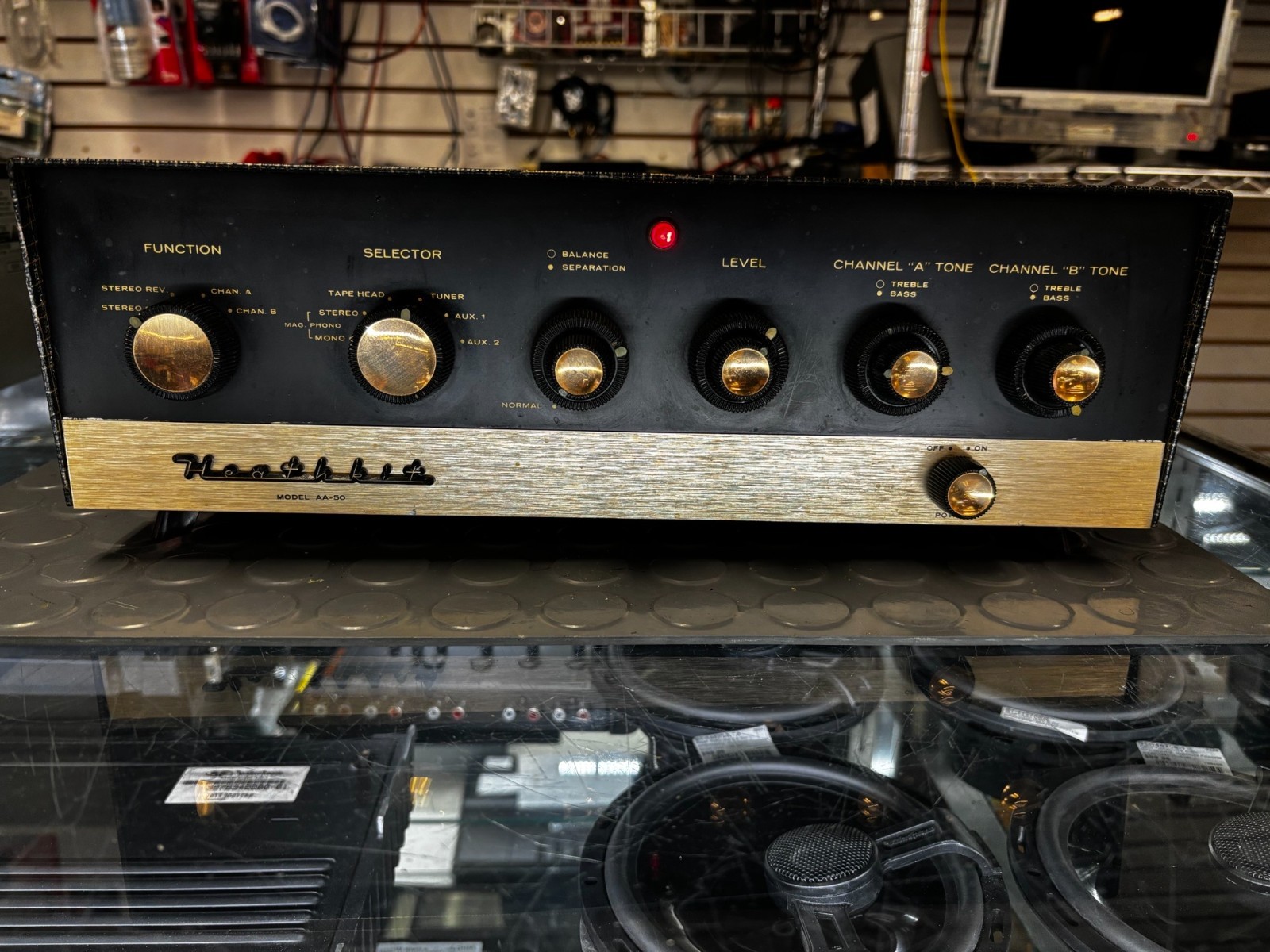
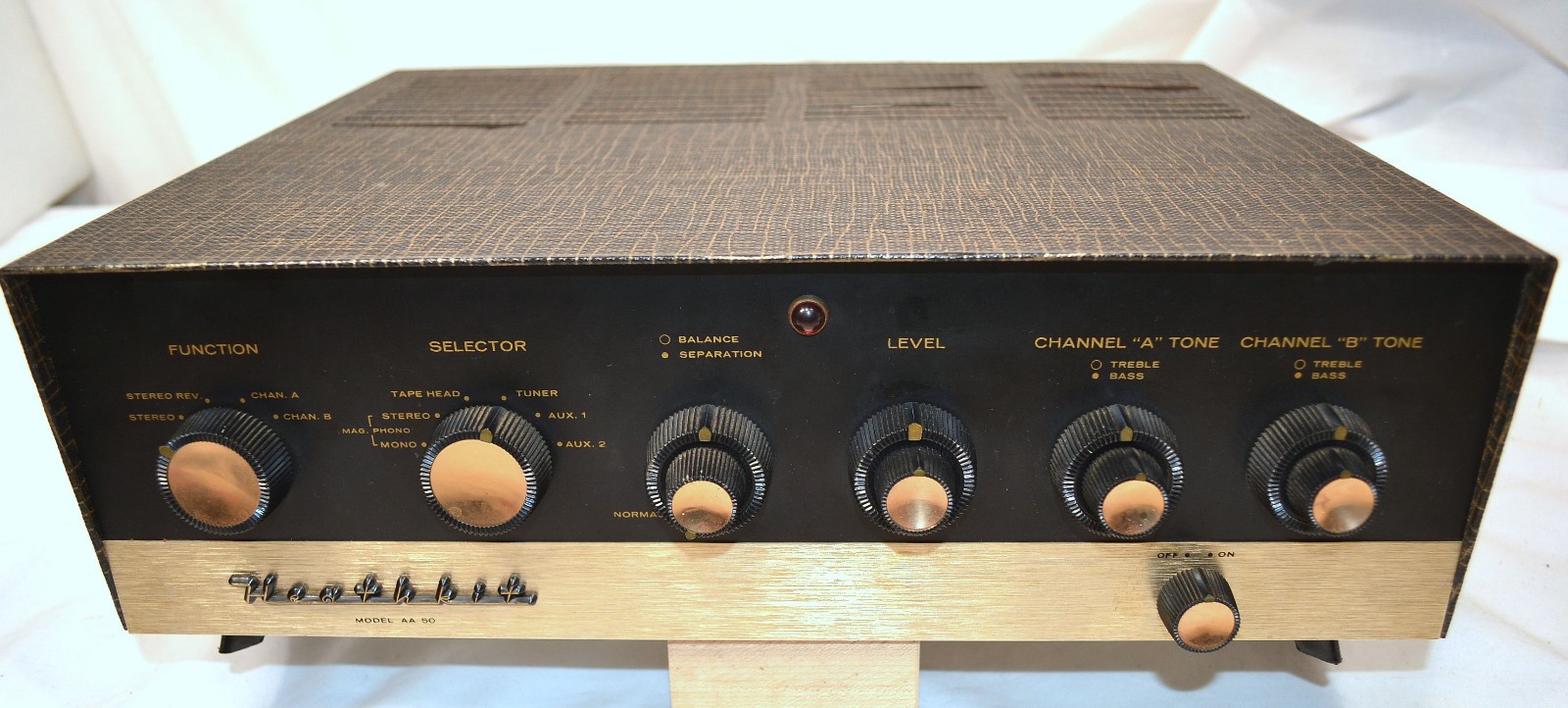
In the late 1950s, as the postwar electronics boom ignited a passion for home audio and amateur engineering, Heathkit emerged as a pioneer in the world of do-it-yourself (DIY) electronics. Among their earliest and most influential audio offerings was the Heathkit AA-50, a vacuum tube-based audio amplifier introduced in 1958. Designed not as a finished product but as a kit for assembly at home, the AA-50 embodied the spirit of hands-on learning, technical curiosity, and the pursuit of high-fidelity sound on a budget. More than just an amplifier, the AA-50 was a rite of passage for a generation of audiophiles, engineers, and tinkerers.
The AA-50 arrived at a pivotal moment in audio history. Hi-fi was transitioning from a luxury for the wealthy to an accessible hobby for the middle class. Record players were becoming common household items, and consumers sought better sound reproduction. At the same time, the culture of electronics hobbyism was flourishing, fueled by magazines like Popular Electronics and the availability of affordable components. Heathkit capitalized on this trend by offering well-designed, reliable kits that allowed users to build professional-grade equipment for a fraction of the cost of pre-assembled units. The AA-50 was one of the first such kits to bring true high-fidelity amplification within reach of the average enthusiast.
Technical Specifications
The Heathkit AA-50 is a classic push-pull, Class AB vacuum tube amplifier, designed to deliver clean, dynamic sound from modest power output. It was intended to be paired with a preamplifier (such as the Heathkit A-7 or A-9) and used to drive high-efficiency speakers of the era. While modest by today’s standards, its specifications were competitive and well-regarded in its time.
| Specification | Detail |
| Year Introduced | 1958 |
| Type | Tube monaural power amplifier (kit) |
| Output Power | 12 watts RMS |
| Output Impedance | 3.2Ω, 8Ω, 16Ω taps |
| Frequency Response | 20 Hz – 20 kHz (±1 dB) |
| Total Harmonic Distortion | Less than 1% at full power |
| Input Sensitivity | 1.4 volts for full output |
| Input Impedance | 1 MΩ |
| Tubes Used | 2 × 6V6GT (output), 1 × 6SN7GT (driver) |
| Power Supply | Transformer-coupled, choke-filtered |
| Dimensions | 10.5" W × 7" H × 7" D (chassis only) |
| Weight | ~8 lbs (chassis) |
| Assembly Time | Approximately 15–20 hours |
The AA-50 was designed as a monaural amplifier, meaning two units were required for stereo operation—a common practice in the era before stereo became standardized. Each kit included all components, a rugged steel chassis, detailed step-by-step instructions, and alignment procedures, making it accessible even to those with limited electronics experience.
Sound Characteristics and Performance
The Heathkit AA-50 delivers the warm, smooth, and harmonically rich sound characteristic of well-designed tube amplifiers. Its 12 watts of Class AB push-pull output may seem modest today, but it was sufficient to drive the high-efficiency speakers of the 1950s and early 1960s—such as Altec Lansing, JBL, and Klipsch models—with authority and clarity.
Listeners often describe the AA-50’s sonic signature as “musical” and “engaging,” with a natural midrange and smooth treble. Bass response is tight and well-controlled, though not overly deep by modern standards. The amplifier’s wide frequency response and low distortion contributed to its reputation for accuracy and fidelity, especially considering its price point. When paired with a quality preamp and speakers, the AA-50 could deliver a listening experience that rivaled far more expensive commercial units.
Notable Features and Innovations
What made the AA-50 truly special was not just its performance, but its role as an educational tool. Heathkit’s detailed manuals walked users through every stage of assembly, from soldering resistors to aligning the output transformer. This hands-on approach demystified electronics and gave hobbyists a deep understanding of how amplifiers worked.
Key features of the AA-50 include:
- Push-pull 6V6GT output stage: A proven and reliable configuration offering good power efficiency and low distortion.
- 6SN7GT dual-triode driver stage: Known for its linearity and durability, this tube provided excellent gain and drive capability.
- High-quality output transformer: Critical to the amplifier’s performance, the transformer ensured proper impedance matching and contributed to the unit’s extended frequency response.
- Choke-input power supply: This design provided excellent ripple filtering, resulting in a quiet background and improved signal-to-noise ratio.
- Point-to-point wiring: Typical of the era, this method allowed for easy troubleshooting and modifications.
The AA-50 also reflected Heathkit’s commitment to quality control. Each kit was engineered to meet strict performance standards, and components were selected for reliability and consistency.
Common Issues and Maintenance
Like all vintage tube equipment, the Heathkit AA-50 requires careful attention to maintain optimal performance. After more than six decades, several components are likely to need servicing:
- Electrolytic capacitors: These dry out over time and should be replaced to prevent hum, distortion, or damage to other components.
- Resistors: Carbon composition resistors can drift in value; checking and replacing out-of-spec units improves accuracy.
- Tube sockets and wiring: Corrosion or loose connections can cause intermittent operation. Cleaning and inspection are recommended.
- Power transformer: While generally robust, old transformers should be checked for shorts or excessive hum.
Restoring an AA-50 is a rewarding project for vintage audio enthusiasts. Many online communities and forums offer schematics, restoration guides, and sourcing tips for replacement parts. Because Heathkit documented their designs so thoroughly, finding information is relatively easy.
Safety is paramount when working on tube amplifiers—high voltages are present even when unplugged. Always discharge filter capacitors and use proper tools and insulation.
Current Market Value and Collectibility
The Heathkit AA-50 is not a high-value collector’s item in the traditional sense, but it holds significant nostalgic and educational value. Complete, unrestored kits in original packaging can fetch $150–$300, while fully restored and functioning units may sell for $300–$500, depending on condition and market demand.
Collectors of vintage audio, DIY electronics, and mid-century technology prize the AA-50 for its historical significance. It represents a time when consumers weren’t just passive buyers—they were builders, learners, and innovators. The AA-50 is also popular among tube audio enthusiasts who appreciate its classic sound and the satisfaction of using a self-built amplifier.
Units that retain original components and documentation are especially desirable. Some hobbyists even build AA-50s from original kits they’ve held onto for decades, completing a project started in their youth.
Conclusion and Legacy
The Heathkit AA-50 is more than a vintage amplifier—it’s a symbol of a bygone era when electronics were accessible, understandable, and built by hand. It empowered thousands to learn about audio engineering, to experience high-fidelity sound, and to take pride in creating something functional and beautiful.
While later Heathkit models offered stereo integration and solid-state designs, the AA-50 remains a beloved entry point into the world of tube audio and DIY electronics. Its combination of solid performance, educational value, and historical importance ensures its place in the pantheon of classic audio gear.
For the modern audiophile or vintage tech enthusiast, building or restoring an AA-50 is not just a technical challenge—it’s a connection to the roots of the hi-fi movement and a tribute to the ingenuity of mid-century engineering. In a world of mass-produced, sealed-box electronics, the Heathkit AA-50 stands as a reminder that sometimes, the best sound comes not just from the speakers, but from the joy of building it yourself.
eBay Listings


As an eBay Partner, we earn from qualifying purchases. This helps support our independent vintage technology research.
Related Models
- Heathkit AR-19 (1964)
- Heathkit AA-111 (1976)
- Heathkit AA-13 (1957)
- Heathkit AA-14 (1957)
- Heathkit AA-141 (1977)
- Luxman L-530 (1975)
- Luxman R-404 (1975)
- Luxman RV-371 (1975)
- Luxman SQ-38U (1975)
- Luxman T-14 (1972)