Heathkit AA-22 (c. 1964–1965)
Twenty transistors, a brushed-gold faceplate, and a review quote Heathkit reprinted for years. The little solid-state integrated that made a skeptic eat his words.
Overview
The AA-22 showed up just as Heathkit was moving its audio line from glass to silicon. The catalog copy is breathless about it: "Enjoy The Sound That Only Transistors Can Give You." Strip away the salesmanship and you get a 20-transistor, 10-diode integrated amplifier that Heathkit rated at 40 watts continuous (20 per channel), with a 66-watt IHF music power figure, specified at ±1 dB from 15 to 30,000 Hz. The kit weighed 22 pounds and sold for $99.95, no money down and ten dollars a month on the Heath Time Payment Plan.
That price is the whole story. In late 1964, a hundred dollars for a transistor integrated was aggressive, and the audio press knew it. Julian Hirsch, reviewing the AA-22 in HiFi/Stereo Review (December 1964, p.127), admitted up front that he'd been skeptical of low-priced transistor amplifiers. Then he revised his opinion on the spot. Heathkit liked the verdict so much it reprinted it in ads that ran in High Fidelity (December 1964, p.91) and Audio (January 1965, p.9). The line that got repeated: the AA-22 could hold its own against any amplifier, tube or transistor, anywhere near its price.
The fuller catalog version of Hirsch's review had measurements, not just impressions. Hirsch reported that the AA-22 delivered more than its rated power across the entire 20 to 20,000 Hz range. He called its power response curve one of the flattest he'd ever measured, and said the same of its RIAA phono equalization. He put intermodulation distortion at roughly 0.5% up to 10 watts and only 1% at 38 watts per channel with both channels driven, and described the hum and noise as inaudible. He also noted that he'd run it at full power for long stretches and "frequently overdrove it mercilessly" without damaging the transistors or shifting the measurements.
One caveat on the power figures. Heathkit's own catalog described the model as a "66-Watt Transistor Stereo Amplifier," while the amplifier's rating is 40 watts continuous, 20 per channel. Both numbers are Heathkit's, and they aren't really in conflict. They're different conventions, IHF music power versus continuous RMS. Read "66 watts" as the marketing headline and 40 watts as the number that governs what the amp will do into a real load.
Key Features
20-Transistor, 10-Diode All-Solid-State Circuit
The AA-22's chassis holds twenty transistors and ten diodes, with no tubes anywhere in the signal path. For 1964 that was still a statement. Heathkit's pitch leaned on the practical consequences: cool running, instant-on operation, freedom from microphonics, and no output tubes to age out and replace. The output devices are 2N2147s, and the circuit is unusual. According to owner discussion of the AA-22E variant, the design uses an OTL output stage with a transformer handling drive and phase-splitting for the lower half. That's not a textbook topology, and it's part of why the amplifier has held a small cult following among people who restore early American solid-state.
Five Stereo Inputs and Filtered Tape Outputs
Heathkit packed a full control center into the AA-22. Five pairs of stereo inputs cover magnetic phono, tuner (stereo or mono), tape recorder, and two auxiliary sources. That's enough for a mid-'60s household running a turntable, a tuner, a reel-to-reel, and whatever else turned up. Outputs are provided for 4, 8, and 16 ohm speakers, and there are filtered outputs for direct stereo taping, which was a real convenience in the days when dubbing off the radio meant managing beat frequencies by hand.
Hinged Lower Front Panel with Concealed Secondary Controls
The visible front panel carries only the controls you touch while listening: a five-position source selector, a three-position mode switch, ganged volume, bass, and treble, and a push-push power switch. Everything else hides behind a hinged lower panel that flips down when you need it. That covers the input level controls, balance, and speaker phase switch. Heathkit's reasoning was domestic: family members and cleaning cloths can't knock the system out of alignment if the sensitive controls aren't sitting out in the open.
Walnut Cabinet and Brushed-Gold Anodized Front Panel
The AA-22 shipped with a factory-assembled walnut cabinet rather than a bare chassis. The front panel is extruded aluminum in a brushed-gold anodized finish, with brown knobs carrying spun-gold inlays. It's a low-silhouette, bookshelf-sized component, and Heathkit designed it to sit beside the matching AJ-33A AM/FM stereo tuner as a visually coherent pair. The wooden case appears in surviving documentation of the AA-22E export variant as well.
Output Taps for 4, 8, and 16 Ohm Speakers
Three speaker impedance taps was a courtesy to the era's speaker market, where 16-ohm drivers were still common and 4-ohm loads were not unusual. The transformerless output arrangement means the taps are doing real work matching the amplifier to the load. Owners pairing the AA-22 with period high-efficiency speakers from the Heathkit catalog will find the taps cover every option those cabinets offered. Those speakers are the AS-21, AS-20, AS-51, and the AS-183/173 and AS-163/153/133 models listed as system mates.
Historical Context
Early solid-state enthusiasts describe the AA-22 as part of Heathkit's first generation of solid-state audio components. Its documented life in the archive is narrow: essentially one advertising campaign that ran in the audio press from late 1964 into 1965. The ads ran in High Fidelity (December 1964, p.91) and Audio (January 1965, p.9), and the same Hirsch review was reprinted in HiFi/Stereo Review and Audio through the middle of 1965. Heathkit also offered an export version, the AA-22E, wired for 115/230 VAC at 50-60 Hz, and a 1966 catalog still listed the domestic kit at $99.95 with the export model priced on request.
Beyond that, the paper trail thins. Radiomuseum's entry for the AA-22E references a 1964 issue of Elektron and a 1973 Heathkit prospectus. Those are publication references, not production dates. There are no factory service bulletins, no serial number ranges, and no confirmed end-of-production year. The advertising survived and the paperwork didn't.
Collectibility & Value
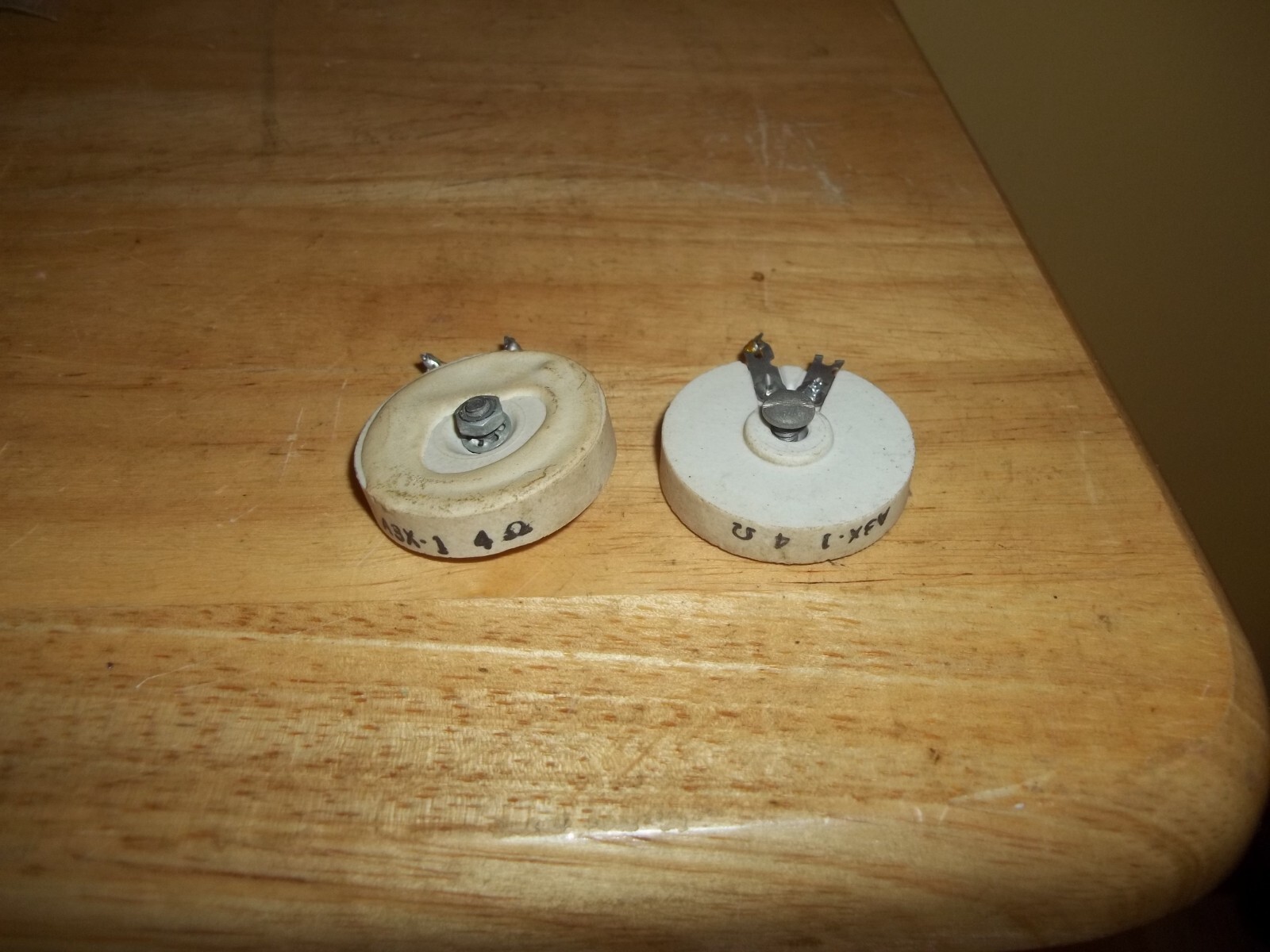
Market data for the AA-22 is scattered and mostly consists of parts listings rather than complete units. A working amplifier paired with its AJ-33A tuner has been listed around $150, and complete integrated amps turn up in the low hundreds depending on condition. Individual components trade regularly: a knob set at $14.99, a resistor lot at $10.90, a control assembly at $11.50. That means the amplifiers are being parted out, and the survivors are being restored rather than scrapped.
Prices outside the US run higher. A Polish listing for an AA-22U appeared at PLN 750, and a Russian-market listing for a complete amplifier-and-tuner set asked 34,490₽. Those figures reflect local scarcity more than global demand, and any single listing is anecdotal. There is no documented failure pattern specific to the AA-22 in the archive's holdings, and no published repair guidance. Anyone buying one should assume the usual early-solid-state work: aged electrolytics, noisy controls, and output transistors that need checking before the amplifier sees power.
The AA-22's collectibility rests on two things: its position as one of Heathkit's earliest solid-state integrated amplifiers, and the fact that Hirsch's review survives in Heathkit's own advertising.
eBay Listings



As an eBay Partner, we earn from qualifying purchases. This helps support our independent vintage technology research.
Related Models
- Heathkit AA-32 (1960s)
- Heathkit A5
- Heathkit AA-111 14W/Ch
- Heathkit AA-151 (1962–1967)
- Heathkit AA-1800 Stereo
- Eico 3150 (1967)
- Fisher CUSTOM-ELECTRA-I (K-14/K-15) (1957)
- Fisher CUSTOM-ELECTRA IV (E33/E44) (1960)
- Akai AM-2400 (1978)
- Akai AM-2600 (1977)