Heathkit AA-14: The DIY Audiophile's Gateway to Tube Sound
In the late 1950s, when high-fidelity audio was transitioning from luxury novelty to household pursuit, Heathkit emerged as a pioneer in the do-it-yourself (DIY) electronics movement. Among its earliest and most influential audio offerings was the Heathkit AA-14, a vacuum tube stereo preamplifier introduced in 1957. Though modest by today’s standards, the AA-14 represented a significant milestone in accessible high-fidelity audio, empowering hobbyists to build professional-grade equipment at a fraction of the cost.
The AA-14 wasn’t an amplifier in the power sense—there was no speaker-driving capability—but it served as a critical component in early stereo systems: the preamplifier. Its role was to select audio sources (like turntables, tuners, or tape decks), control volume, and apply tone adjustments before sending the signal to a separate power amplifier. For audiophiles of the era, the AA-14 offered a clean, warm tube sound and the unmatched satisfaction of building it themselves.
Technical Specifications
The Heathkit AA-14 was designed around the popular vacuum tubes of the time, emphasizing reliability, clarity, and serviceability. It featured dual channels for stereo operation and was engineered to pair seamlessly with Heathkit’s companion power amplifiers, such as the W-2 or W-3.
| Specification | Detail |
| Model | AA-14 |
| Year Introduced | 1957 |
| Type | Stereo Preamplifier (Tube-Based) |
| Channels | 2 (Stereo) |
| Tubes | 2 x 6C4 (oscillator), 2 x 6AT6 (detector), 2 x 12AU7 (voltage amplifier) |
| Input Impedance | 1 MΩ (phono), 500 kΩ (aux) |
| Output Impedance | 10 kΩ |
| Frequency Response | 20 Hz – 20 kHz (±1 dB) |
| Total Harmonic Distortion | < 1% at full output |
| Input Sensitivity | 5 mV (phono), 200 mV (aux) |
| Power Supply | 120V AC, 60 Hz, ~25 watts |
| Dimensions | 17" W × 7" H × 9" D |
| Weight | ~12 lbs (without tubes) |
| Kit Number | AA-14 |
The AA-14 supported two primary inputs: a magnetic phono input for turntables with moving magnet cartridges and an auxiliary (line-level) input for tape recorders or tuners. Its tone controls offered independent bass and treble adjustment, a rarity in budget preamps of the era, giving users greater control over their sound signature.
Sound Characteristics and Performance
The AA-14 delivered the warm, smooth tonal quality characteristic of vacuum tube circuitry. With its 12AU7 dual-triode tubes handling the voltage amplification, the preamp provided a rich midrange and gentle high-frequency roll-off—ideal for vinyl playback, which often benefited from tube softening of surface noise and sibilance.
While not as transparent or dynamically agile as modern solid-state preamps, the AA-14 held its own in its time. Its frequency response spanned the full audible range, and low distortion figures ensured clean signal amplification. The tube complement also contributed to a pleasing harmonic profile, adding subtle even-order harmonics that many listeners describe as "musical" or "organic."
When paired with a quality power amplifier and speakers, the AA-14 formed the heart of a capable mid-fi system. Its low output impedance ensured good drive capability, minimizing signal loss over interconnects—a thoughtful design touch for a kit product.
Notable Features and Innovations
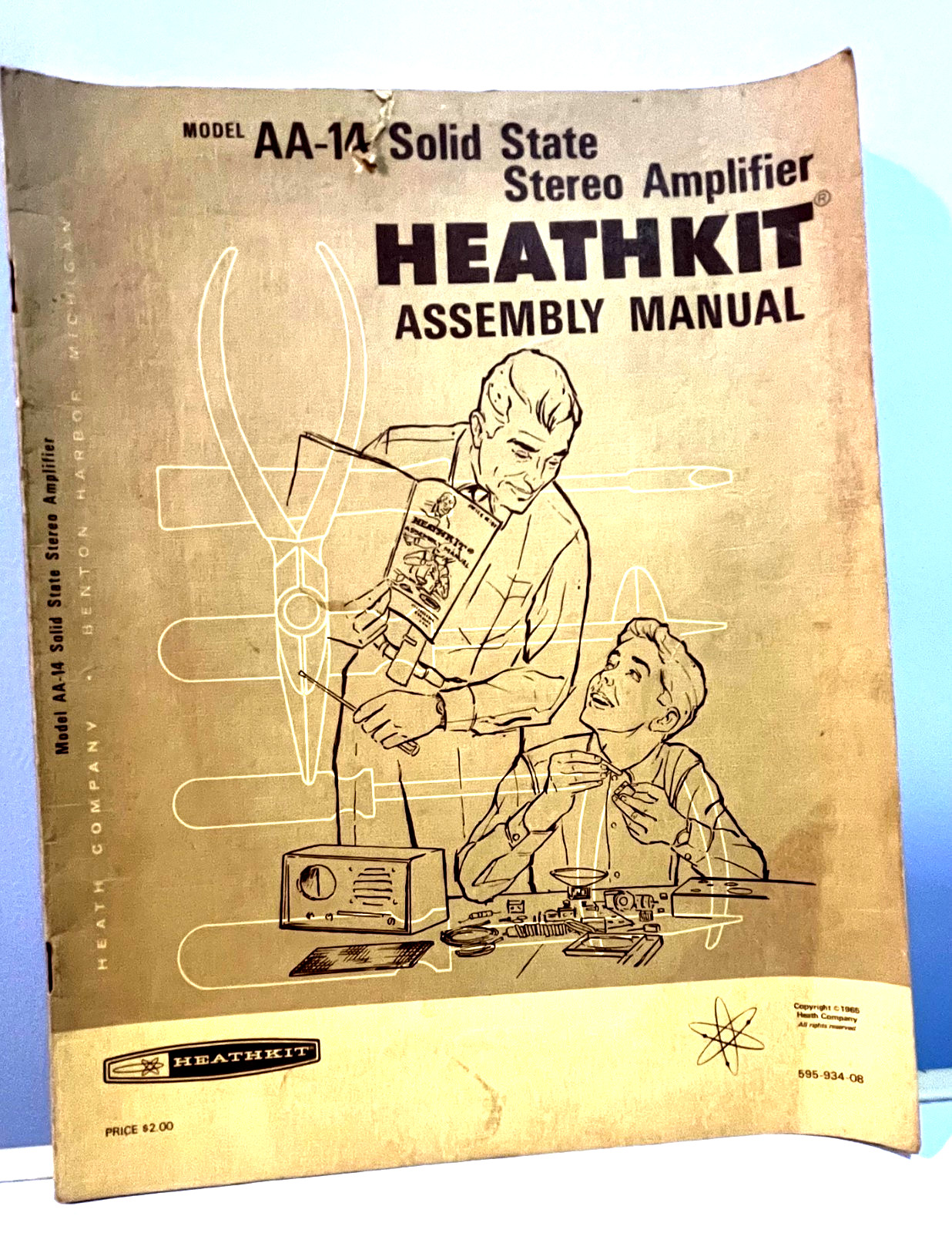
What truly set the AA-14 apart was not just its performance, but its accessibility and educational value. As a kit, it came with all components, a chassis, tubes, sockets, and a detailed instruction manual. The assembly process—typically taking 15 to 20 hours—was designed for hobbyists with basic soldering skills and an interest in electronics.
Key features included:
- Dual-channel stereo design at a time when many home systems were still mono.
- Independent bass and treble controls, allowing precise tonal shaping.
- High input impedance to prevent loading down delicate phono cartridges.
- Modular layout with clearly labeled terminals and point-to-point wiring, simplifying troubleshooting.
- Educational value: Builders learned about tube biasing, signal paths, grounding, and shielding—skills that translated to future projects.
Heathkit’s manuals were legendary for their clarity, featuring step-by-step photos, schematic diagrams, and alignment procedures. The AA-14 manual even included a troubleshooting guide, empowering users to diagnose and fix issues themselves—a radical concept in consumer electronics.
Common Issues and Maintenance
As with any 60+ year-old tube gear, surviving AA-14 units require careful evaluation before use. Common issues include:
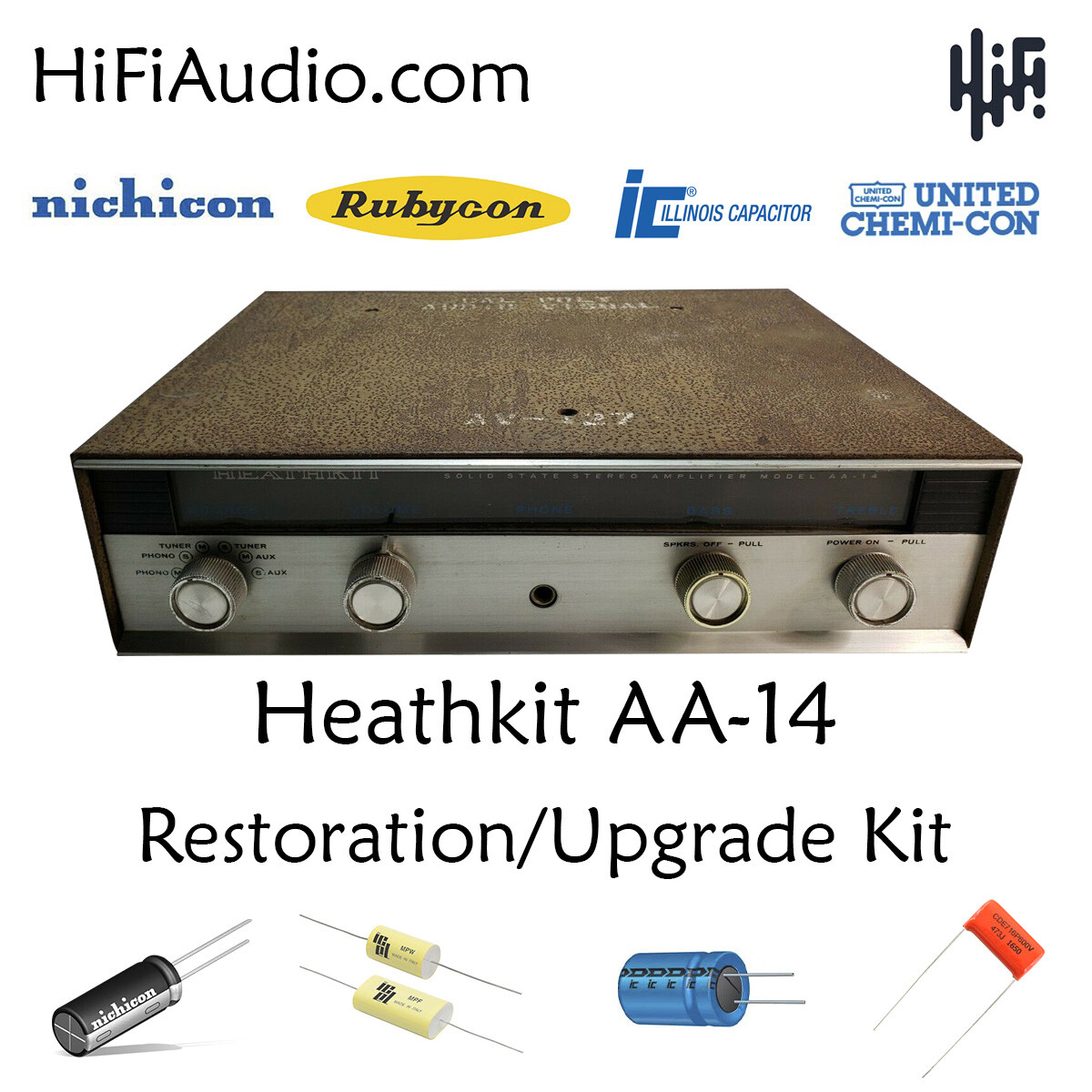
- Capacitor degradation: Electrolytic and paper capacitors often dry out or leak, leading to hum, distortion, or power supply failure. A full recap (capacitor replacement) is strongly recommended before powering up a long-unused unit.
- Tube wear: Original tubes may be weak or gassy. Testing or replacing with NOS (New Old Stock) or modern equivalents like the 12AU7 is advisable.
- Resistor drift: Carbon composition resistors can change value over time, affecting gain and balance.
- Dirty controls: Volume and tone pots often become scratchy. Cleaning with contact cleaner or replacement with modern conductive plastic pots can restore smooth operation.
- Chassis corrosion: In humid environments, the steel chassis may rust. Light surface rust can be treated; severe corrosion may compromise grounding.
When restoring an AA-14, it’s best to power it up gradually using a variable AC transformer (Variac) and monitor for smoke or overheating. Always replace the power cord if it’s original—rubber insulation degrades and becomes a fire hazard.
Current Market Value and Collectibility
The Heathkit AA-14 is not a high-value collector’s item like some rare tube amplifiers, but it holds significant nostalgic and historical value among vintage audio and DIY electronics enthusiasts. Complete, working units typically sell for $150 to $300, depending on condition and originality. Unassembled kits with manuals and all parts can fetch similar prices from restorers and educators.
Its collectibility stems more from its cultural impact than sonic superiority. The AA-14 helped democratize high-fidelity audio and inspired a generation of engineers, audiophiles, and tinkerers. Many credit their interest in electronics to building a Heathkit—be it a radio, amplifier, or the AA-14.
Today, the AA-14 is prized by:
- Vintage audio collectors seeking period-correct components for restored systems.
- DIY educators using it as a teaching tool for analog electronics.
- Tube sound enthusiasts who appreciate its warm, vintage character.
Conclusion and Legacy
The Heathkit AA-14 may not have been the most powerful or advanced preamplifier of its era, but it was one of the most influential. As a kit, it broke down the barrier between consumer and creator, turning passive buyers into active builders. It embodied the postwar optimism and hands-on spirit that defined mid-century electronics culture.
While modern preamps offer greater precision and features, few match the emotional connection of a Heathkit you built with your own hands. The AA-14 wasn’t just a piece of audio gear—it was a rite of passage.
For those exploring vintage audio, restoring an AA-14 is more than a technical project; it’s a journey into the roots of hi-fi. With careful restoration, it can still deliver beautiful tube sound and stand as a testament to an era when understanding your equipment was part of the listening experience. In the world of vintage audio, the Heathkit AA-14 remains a humble hero—a quiet amplifier that helped amplify a generation’s passion for sound.
eBay Listings

As an eBay Partner, we earn from qualifying purchases. This helps support our independent vintage technology research.
Service Manuals & Schematics
Related Models
- Heathkit AR-19 (1964)
- Heathkit AA-111 (1976)
- Heathkit AA-13 (1957)
- Heathkit AA-141 (1977)
- Heathkit AA-15 (1957)
- Luxman L-530 (1975)
- Luxman R-404 (1975)
- Luxman RV-371 (1975)
- Luxman SQ-38U (1975)
- Luxman T-14 (1972)